BULLYING; a known DEVIL

One of the biggest problems that people face these days is bullying. Right from children to adults everyone has faced bullying some or the other way. Bullying is unwanted, aggressive behaviour among school-aged children that involves a real or perceived power imbalance. The behaviour is repeated, or has the potential to be repeated, over time. Both kids who are bullied and who bully others may have serious, lasting problems.

To be considered bullying, the behaviour must be aggressive and include:

  • An Imbalance of Power: Kids who bully use their power—such as physical strength, access to embarrassing information, or popularity—to control or harm others. Power imbalances can change over time and in different situations, even if they involve the same people.
  • Repetition: Bullying behaviours happen more than once or have the potential to happen more than once.

Bullying includes actions such as making threats, spreading rumours, attacking someone physically or verbally, and excluding someone from a group on purpose.

Bullying can occur during or after school hours. While most reported bullying happens in the school building, a significant percentage also happens in places like on the playground or the bus. It can also happen travelling to or from school, in the youth’s neighbourhood, or on the Internet. People usually think of bullying as taking place between children at school. However, it can also occur at work and include aggressive behaviour’s like verbal abuse, sabotaging the victim’s job or work relationship, or misusing authority. Adult bullies who engage in these behaviours are males 60% of the time. While men who bully tend to victimize both genders equally, women bullies target other women about 80% of the time.

Types of Bullying

There are three types of bullying:

  • Verbal bullying is saying or writing means things. Verbal bullying includes:
    • Teasing
    • Name-calling
    • Inappropriate sexual comments
    • Taunting
    • Threatening to cause harm
  • Social bullying, sometimes referred to as relational bullying, involves hurting someone’s reputation or relationships. Social bullying includes:
    • Leaving someone out on purpose
    • Telling other children not to be friends with someone
    • Spreading rumours about someone
    • Embarrassing someone in public
  • Physical bullying involves hurting a person’s body or possessions. Physical bullying includes:
    • Hitting/kicking/pinching
    • Spitting
    • Tripping/pushing
    • Taking or breaking someone’s things
    • Making mean or rude hand gestures

Cyberbullying

As the social life of young people has moved onto the internet, so has bullying, with electronic bullying becoming a significant new problem in the past decade. Whereas bullying was once largely confined to school, the ubiquity of hand-held devices affords bullies constant access to their prey. Cyber harassment can be especially disturbing because it can often be carried out anonymously; victims may have no idea who the perpetrators are.

How has the internet changed bullying?

The anonymity of cyberbullying removes many restraints on meanness and amplifies the ferocity of aggression. It’s easier to inflict pain and suffering on others when you don’t have to look them in the eye. Constantly evolving digital technologies enable new ways of spreading false information about targets.

How do bullies harm others on the internet?

Both direct harassment and relational aggression thrive on the internet. Cyberbullies can spread false rumours with viral speed on social media. They can falsely impersonate someone and conduct all manner of mischief in someone else’s name. Sexual harassment and cyberstalking particularly target women. And long after the active bullying has stopped, malicious information can linger on the internet and continue to harm.

How can people reduce their risk for being bullied?

Since low self-esteem tends to be a risk factor for becoming the victim of bullying, interventions that promote confidence and self-esteem are important ways to reduce the risk of being bullied. Confidence builders can range from engaging in activities at which the person excels (for example, theatrical performances, sports teams, and special work projects) to engaging in psychotherapy. As isolation is both a risk factor and result of bullying, helping the person feel less alone by lending a listening ear and/or engaging in a support group can go a long way toward providing the community needed to prevent a person from being bullied. The government has launched a helpline to take care of bullying please do not hesitate to take help.

Patriarchy

It refers to the hierarchical relations between men and women whereby men dominates and control over women’s sexuality. 

Structures of patriarchy

According to Sylvia walby patriarchy as a system of social structure where men are in the dominant position to exploit and opress women.

She talks about six structures of patriarchy;

1. Patriarchal mode of production,

2. Patriarchal relations in paid work,

3. Patriarchal relations in the state,

4. Male Violence,

5. Patriarchal relations in sexuality,

6. Patriarchy relations in cultural      institutions. 

Now, let us study some of the institutions, practices and norms that maintain patriarchal set up of the society.

Family

Kate millets says “patriarchy’s chief institution is the family”. Family is the main agent of socialization where young boys and girls first encounter patriarchal power.generally, whatever is taught by the patriarchal ideology running in the family is accepted as natural and unchallengeable.

School 

Women need to go to the school to receive education, in order to achieve freedom in true sense. The patriarchal belief system rests on the assumption that there’s no need to enrich women with higher level of education as they just have to remain inside the four walls.patriarchy is able to make women ignorant of her capabilities and makes them highly dependent on the menfolk.

Marriage

Marriage is practiced and institutionalised in our society keeping in mind tha patriarchal ideology and it’s structure. Our society has put certain Norms and values that a man and woman have to follow to make their marriage acceptable by people at large for instance , in the marriage between a man and woman a man should be elder to woman.

Conclusion

Many forms of violence and Crimes against women take place in our society for the sake and defence of patriarchal. Structure and ideology. Other structures like that of caste , class and religion collaborate with patriarchy that leads to violence and oppression like honour killing, female foeticide, forced marriages, control over modes of contraception etc. As a result women and other weaker sections of the society get caught in a vicious circle that leads to never ending modes of domination and suppression. If women and other suffering group identify and acknowledge the source of domination, it would be a great achievement in its own way, this is because the invisibility and acceptability of patriarchy at large is the main reason behind its very existence. So, we may conclude by saying that patriarchy forms the governing ideology that device our experiences when we are born as a girl or as a boy. It directs our socialization and provides us position of submission and domination. 

Women’s empowerment

Most of the time we discuss about this topic Women’s empowerment do you think that now women have there right and compete with men in every field. women’s empowerment is a critical aspect of achieving gender equality. It includes increasing a woman’s sense of self-worth, her decision-making power, her access to opportunities and resources, her power and control over her own life inside and outside the home, and her ability to effect change.Yet gender issues are not focused on women alone, but on the relationship between men and women in society. An educated girl is more likely to postpone marriage, raise a smaller family, have healthier children, and send her own children to school. She has more opportunities to earn an income and to participate in political processes, and she is less likely to become infected with HIV.The political sphere of the country is, by and large, reserved for men alone. The place of women in society is also relegated to contributing minimally to the social development of the country.

As women were not allowed to make decisions  for them, women empowerment came in like a breath of fresh air. It made them aware of their rights and how they must make their own place in society rather than depending on a man. It recognized the fact that things cannot simply work in someone’s favor because of their gender. However, we still have a long way to go when we talk about the reasons why we need it.In other words, women from all over the world have been rebellious to reach the status they have today. While the western countries are still making progress, third world countries like India still lack behind in Women Empowerment.

domestic violence is a major problem in India. The men beat up their wife and abuse them as they think women are their property. More so, because women are afraid to speak up. Similarly, the women who do actually work get paid less than their male counterparts. It is downright unfair and sexist to pay someone less for the same work because of their gender. Thus, we see how women empowerment is the need of the hour. We need to empower these women to speak up for themselves. women must be given equal opportunities in every field, irrespective of gender.women’s empowerment  is a part to encourage women to feel strong by telling them that they can do everything that they want to do. women can work outside their home, have opportunity to make up their mind. women are not depended on men. They can earn money to support their family by working through their abilities.

Women’s empowerment is a part to encourage women to feel strong by telling them that they can do everything that they want to do. Women can work outside their home, have opportunity to make up their mind. Women are not depended on men. They can earn money to support their family by working through their abilities. As some women are not confident to work in a hard condition or a high position because they still determine that it’s not women’s job.

Empowerment helps to reduce in domestic violence due people promote and give the value to women. Women are not abused by any factors such as sexual abuse, emotion abuse and physical abuse.

These day women are achieving high-level job just as man do. Some women are promoted to become a president, leader, chief of commune and other high-level positions. And there are many women now are participating in society, politically, education and economically.

Empowering women and making full use of their labour force for economic growth.

Educating and maintaining the health of women to enhance productivity and social development.and we should also respect every women they deserve equal respect as men please don’t compare with others everyone have their own unique quality.

Employees expectations from employer

If you want to attract and retain great employees, it pays to be a great boss. Here are some simple expectations that the best employees have of their bosses:

1. Be consistent with meaningful communication.

Smart employees want clear expectations and communication when it comes to what’s expected of them. The No. 1 problem people cite with their bosses and managers is a lack of communication. If you can improve your communication skills and create a culture of open communication with your team, you will go a long way to creating an environment where the best employees will be happy.

2. Give recognition and praise.

Across the board, most people like to feel appreciated in their job. According to Entrepreneur, 65 percent of employees would be happier if they got more recognition at work, whereas only 35 percent say they would be happier if they got a raise. If you can build a routine of recognition and praise, you will encourage your best employees to be happy at work — and therefore stay. Don’t worry too much about awards or rewards; words go a long way.

3. Provide feedback, mentorship, and training.

The best employees want to improve and grow, and crave a development and mentorship role from their managers. Watch for opportunities to teach, to provide additional support, or to invite the right training for your employees. Making individual development a part of every job description is an excellent way to encourage and retain strong employees (and help them get even stronger).

4. Create a work culture by design.

Good bosses find ways to foster a sense of community at work. Great bosses build that culture intentionally. A big part of that is finding and attracting the right team members — and making sure that the wrong ones move on quickly. Nothing can hurt morale of your best employees more than feeling like they’re supporting a poor team member. Culture design is also about making sure those team members are in the right roles, the ones that make the best use of their particular talents and skills.

5. Create a safe space for failure.

Employees who trust that their failures will be met with constructive feedback and support are more likely to think creatively, work outside the box, and come up with innovative solutions to problems. It’s important to foster a sense that you succeed and fail together as a team, so that no one is thrown under the bus. If people are too busy worrying about losing their job to take chances, you’ll never get their best work out of them.

6. Provide strong leadership and a clear vision

The captain must steer the ship. If leadership doesn’t know where a project or company is headed, how can the employee know? This isn’t just about action steps or deliverables, either, but a clear vision of the department or company’s future that you can communicate to your employees. The best employees feel more confident when they feel that someone is steering the ship competently.

7. Hold yourself and others accountable

Many bosses hold their staff accountable, but the best hold themselves accountable as well. This means adhering to the same guidelines you set for your employees and taking responsibility for both team successes and failures. If your employees feel like you have their back, no matter what, they are much more comfortable and confident in their jobs, and will produce better work and stay longer.

8. Demonstrate good problem solving

Employees need their boss to be consummate problem solvers. You need to be able to not only spot a problem before it becomes a catastrophe, but brainstorm successful and innovative ways to fix it. When an employee comes to a manager with a problem, he or she needs to have confidence that they will get the help they need to fix it.

9. Avoid micromanaging

Learn to understand the art of delegation. One employee once told me that the best bosses have “fired themselves from their previous job” — meaning that they don’t interfere in the day-to-day and minute-to-minute workflow or processes. In essence, learning to delegate instead of micromanage is about trust, and the best employees want to feel trusted, and thrive in that environment.

10. Be an effective decision maker

Sometimes the worst position an employee can be in is when they are waiting for a decision from above. Effective bosses must be effective decision makers. You cannot vacillate over every tiny decision. Being able to make decisions quickly and decisively — and then take responsibility for the outcome (see number 7) — is an important business skill, especially when managing others. The more quickly and effectively you can make decisions, the better your employees can implement them, and that makes employees feel more efficient and effective.

11. Put people first

A great employee is going to want to find a job that fits his or her lifestyle and work/life balance needs. The best bosses understand that there must be a balance between the company or client’s needs and the needs of his or her employees. You must be willing to listen and talk about any issues an employee may be having and understand that a happy employee is a more productive employee.

12. Manage up, down, and sideways

Managers are expected to manage the people below them on the corporate hierarchy, but the best bosses also have ways of managing their superiors and coworkers on behalf of their team. This might mean effective communication, managing expectations, and requesting help in a timely manner. This sort of support is key from an employee’s perspective, who may not have any direct contact with those other partners.

13. Be honest

There’s nothing worse than a boss who says one thing and does another — and nothing will make a great employee start looking for a new position any faster than being lied to. Just as managers must trust their team, employees must trust their boss to have their best interests at heart. It’s always going to be in your best interest to be honest with your employees. (This is also a great way to ensure that they want to be honest with you.)

14. Be dedicated and balanced

The very best bosses I’ve seen are passionate about their work; they live and breathe their jobs and strive to do the best work possible. Yet at the same time, they have lives outside of work. They understand the need to balance family and work or play and work. And they set a good example of how to do that for their employees. Employees want to know that their outside lives are understood and valued because they can see that you value life outside the office as well.

Some of these expectations may seem obvious or commonplace, but I would challenge you to really look within and make sure that you’re demonstrating these qualities regularly with your team. If you are, you should have no trouble finding and retaining the best employees in your field.

Red fort

There are many historical structures in Delhi. Red Fort is one of them. It is renowned all over the world. It is a sign of Mughal power and majesty. The Emperor Shah Jahan built Red fort in 1648. It is built of red stone. It is located on the west bank of the river Yamuna opposite the famous Chandni Chowk market.

Significance of The Red Fort

Everyone knows Red Fort as one of the several wonders in India. Though it has witnessed many centuries that has a treasured history of our country, Red Fort stands young always.  Every year on 15th August, that is our independence day the Prime Minister of India addresses its country about its virtue and purpose of life. It is one of the greatest and most significant historical formations in India. Thus, we can say that this monument embraces together the walls that have witnessed the Mughal dynasty, imprisoned India during British empowerment to now a democracy.

Origin of Red Fort

This monument embraces the utmost significance in Modern Indian History. It is made of Red Sandstone alone. Sited in central Delhi it was placed where the Mughal emperors lived for many periods. Red Fort was a magnificent castle coated with precious jewels but the Britishers looted these precious jewels during their empowerment over India.

Since Delhi was the capital of India until the British men shifted it, Red Fort was the control place for the whole nation. Built on the banks of Yamuna River, the walls of this magnificence fort have been built from 30 meters high Sandstone. It is supposed that Red Fort was made after 9 years of hard work of numerous masons for day and night during all seasons.

Architecture of Red Fort

The architecture of Red Fort is amazing and appreciable for its creations of five centuries ago without any modern-day technologies and methodologies. It is built with typical Mughal art and view. It has a Dewan-e-Am which is courtroom for all. The king held a hearing from common men about their complaints.

The Red Fort is built right beside the Fort of Islam Shah Suri, namely- Shalimar Fort. He built it in 1546 as his fortified Palace. Both the forts are combined together by a water channel, namely- Stream of Paradise, or Nahr-i-Behisht.

Prominent Structures within the Fort

Though as many as 66% of the buildings within the fort were either broken or badly damaged, the Red Fort still houses many historic structures and some prominent ones are listed below:

  • Mumtaz Mahal – Located in the women’s quarters (zenana) of the fort, Mumtaz Mahal was one of the six palaces inside the fort. All these palaces were constructed along the banks of Yamuna River and the Stream of Paradise.
  • Khas Mahal – The Khas Mahal used as the king’s private residence. The palace was separated into three parts namely the chamber of telling beads, sitting room and sleeping chamber.
  • Rang Mahal – The Rang Mahal which literally means ‘Palace of Colors’ was built to house the emperor’s mistresses and wives. Thus, the palace was built to look colorful with bright paints and ostentatious decorations.
  • Hira Mahal – Bahadur Shah II built it in 1842. the Hira Mahal is probably one of the last constructions of a Mughal emperor before the invasion of the British. It is only a pavilion but has an interesting legend related to it.
  • Moti Masjid – Moti Masjid which literally means to ‘Pearl Mosque’. Aurangzeb built this for his personal use. Therefore, the inhabitants of the Zenana also used the mosque. It is constructed using white marble, Moti Masjid has three domes and three arches
  • Hammam – The Hammam is mainly a building that housed the baths, for the emperors. On the eastern apartment, was the dressing room. In the western apartment, hot water came through the taps.

Red Fort is not only a building but a true witness of the national movement of Indian freedom. Thus, it is a symbol of the great and golden history of India. So the Indian republic, as well as every citizen of India, have great affection and respect towards the Red fort. Undoubtedly it will always be a symbol of great Indian history. Also, it holds a special place in Indian history because Jawaharlal Nehru announced the independence of India from Red Fort.

Waterfalls to visit on your next trip to India

India is a beautiful country with waterfalls originating both from the ice glaciers to the waterfall that caters their way into the sea.  Waterfalls have always been inspiring forces of nature and people travel from all over the world to experience these natural wonders on Earth. However, there are hundreds of beautiful waterfalls in the world but India and its waterfall beauty have something unique in them. They have a charm that can attract a huge number of viewers in and around.

Iruppu Falls, Coorg –

Irpu Waterfalls | Kodagu District, Government of Karnataka | India

Iruppu Falls is located in the Kodagu district of Karnataka. Coorg is one of the most popular hill stations of South India. The Iruppu Falls is located close to Nagarhole National Park. This beauty of Nature attracts a lot of people from all over the world especially during Maha  Shivratri- a festival celebrated in honour of the Lord Shiva probably in the month of February or March every year.

Nohkalikai Falls Meghalaya –

Nohkalikai Waterfalls East Khasi Hills - Timings, Entry Fees ...

Meghalaya is a small state situated in the Northeast of India. It is the wettest region in India. Meghalaya fully justifies its name as “The Abode of Clouds” as this beautiful place situated in the East Khasi Hills District of Meghalaya enjoys rain cats and dogs throughout the year. The seven sister states is the home to India’s tallest waterfall – Nohkalikai Falls. Nohkalikai Falls is located near Cheerapunji Meghalaya and is also known as the seven sister falls because of the seven streams cascading side-by-side.

Bhimlat Falls, Rajasthan –

Bhimlat water falls - Picture of Hotel The Hadoti Palace Bundi ...

Rajasthan is a place known for the extreme temperature, and it is a place where the sun does not hesitate to shine brightly throughout the year. Having one of the top ten waterfalls in such a dry state is no less than a wonder. You would be surprise to know that the Bhimlat Falls crash this stereotypical image of Rajasthan. Bhimlat Falls is just 60 meters high, but for a dry state like Rajasthan and for the people residing there it is no less than a jewel.

Dudhsagar Falls, Goa –

Goa Dudhsagar Waterfall with Spice Plantation Trip -

Goa is the smallest state in India known for a huge tourist spot. It is one of the most beautiful states with one of the top ten waterfalls, Dudhsagar Falls in India. No wonder it is also called as the” Ocean of Milk”. This beauty of the world is 310 meters tall, surrounded by the deciduous forest which is simply worth its see.

Kempty Falls, Uttarkhand –

Kempty Falls 2020, #1 top things to do in mussoorie, uttarakhand ...

Kempty Falls, situated in a northern part of India “Uttarkhand”. It is nearly 1364 meters above sea level, surrounded by the high mountain ranges deserves to be among the top ten waterfalls in India. You can visit it at any time of the year and explore this beauty of Nature.

Chitrakote Falls, Chhattisgarh –

13 Best Waterfalls In India That Would Make You Wanna Forget About ...

The Chirakote Falls is located to the west of the Jagdalpur in Bastar district in Chhattisgarh. It is also known as the Nigara Falls of India, with this waterfall being 29 meters tall, surrounded by dense forest makes it fit in the top ten waterfalls in India.

Jog Falls, Shimoga, Karnataka –

Jog Falls Tourism (2020) - Karnataka > Best Time, Top Things To Do

Jog falls is located near Sagara taluk, Shimoga district in the state of Karnataka. Karnataka is a state which is blessed with some of the highest waterfalls in India. Jog Falls is the second highest waterfall in India. It is a treat to watch this 253 meters tall waterfall as it can almost make you feel the force of it against the rock. This beauty of Nature is also on the 13th number in the world by the waterfall database.

Jang Falls, Tawang, Arunachal Pradesh –

Nuranang Falls Tawang | Experience Northeast India

Arunachal Pradesh has yet another beauty of the Northeast India, which holds the maximum number of population among the states in the Northeast region of India. This beautiful crashing water scares can attract both souls and minds. The beauty of nature is yet not known to many and only came into notice after a song from the movie Koyla, featuring Madhuri Dixit was shot in here.

Athirappilly Waterfall Kerala –

Athirapally Waterfalls Trekking -best time to visit falls-seasonz ...

Kerala is the Land of Gods, situated in South India on the Malabar Coast. Athirappilly falls is situated at Athirappilly Panchayat of Thrissur district. You can visit Athirappilly Falls during the monsoon in Kerala and experience the beauty of this 80 ft. tall waterfall. Athirappilly Waterfalls passes through a landscape of winding roads, small villages and dense green trees.

Impact from social media

Social media are interactive computer-mediated technologies that facilitate the creation or sharing of information, ideas, career interests and other forms of expression via virtual communities and networks.The variety of stand-alone and built-in social media services currently available introduces challenges of definition; however, there are some common features:

  1. Social media are interactive Web 2.0Internet-based applications.
  2. User-generated content such as text posts or comments, digital photos or videos, and data generated through all online interactions, is the lifeblood of social media.
  3. Users create service-specific profiles and identities for the website or app that are designed and maintained by the social media organization.
  4. Social media facilitate the development of online social networks by connecting a user’s profile with those of other individuals or groups.

Users usually access social media services via web-based apps on desktops and laptops, or download services that offer social media functionality to their mobile devices (e.g., smartphones and tablets). As users engage with these electronic services, they create highly interactive platforms through which individuals, communities, and organizations can share, co-create, discuss, participate and modify user-generated content or self-curated content posted online. Networks formed through social media change the way groups of people interact and communicate or stand with the votes. They “introduce substantial and pervasive changes to communication between organizations, communities, and individuals”.[1]These changes are the focus of the emerging fields of technoself studies. Social media differ from paper-based media (e.g., magazines and newspapers) and traditional electronic media such as TV broadcasting, Radio broadcasting in many ways, including quality,reachfrequency, interactivity, usability, immediacy, and performance. Social media outlets operate in a dialogic transmission system (many sources to many receiversThis is in contrast to traditional media which operates under a mono-logic transmission model (one source to many receivers), such as a newspaper which is delivered to many subscribers, or a radio station which broadcasts the same programs to an entire city. Some of the most popular social media websites, with over 100 million registered users, include Facebook (and its associated Facebook Messenger), TikTokWeChatInstagramQZoneWeiboTwitterTumblrBaidu Tieba and LinkedIn. Other popular platforms that are sometimes referred to as social media services (differing on interpretation) include YouTubeQQQuoraTelegramWhatsAppLINESnapchatPinterestViberRedditDiscordVK and more.

Observers have noted a wide range of positive and negative impacts of social media use. Social media can help to improve an individual’s sense of connectedness with real or online communities and can be an effective communication (or marketing) tool for corporations, entrepreneurs, non-profit organizations, advocacy groups, political parties, and governments.

Information and communication technology has changed rapidly over the past 20 years with a key development being the emergence of social media.

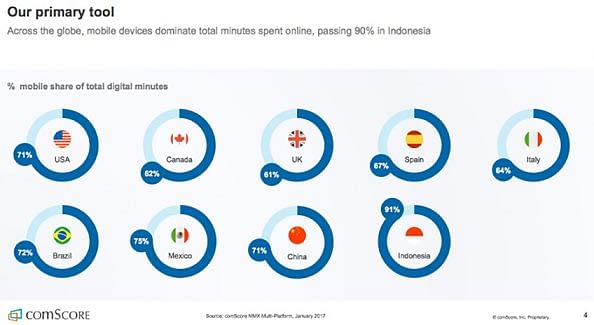
The pace of change is accelerating. For example, the development of mobile technology has played an important role in shaping the impact of social media. Across the globe, mobile devices dominate in terms of total minutes spent online. This puts the means to connect anywhere, at any time on any device in everyone’s hands.

What is the real impact of Social Media
Source: Smart Insights

Why People Share Information

Afascinating study by the New York Times Consumer Insight Group revealed the motivations that participants cited for sharing information on social media. These include a desire to reveal valuable and entertaining content to others; to define themselves; to grow and nourish relationships and to get the word out about brands and causes they like or support.

These factors have caused social networks to evolve from being a handy means for keeping in touch with friends and family to being used in ways that have a real impact on society.

Social media is being used in ways that shape politics, business, world culture, education, careers, innovation, and more.

Assam floods: Over 50,000 people take shelter at relief camps

In flood hit Assam, over 50 thousand displaced people are taking shelter at relief camps. The current wave of floods affected 28 lakh people and washed away houses, cattle stock. 1.28 lakh hectare crop areas are also under water.

96 people lost their lives due to floods so far. Majority portion of national parks and wildlife sanctuaries are also under water. Meanwhile, the Panchayat and Rural Development department would give priority in allocating works under MG NREGA at flood hit areas. Talking to AIR, Principal Secretary J B Ekka said that MG NREGA works are affected to some extent due to floods. Mr. Ekka said that as soon as the flood water recedes priority basis works will be done.

Job satisfaction and motivation

Productivity is defined as the efficient and effective use of resources with minimum waste and effort to achieve outcome. We live in a world that has limited resources. The health care industry faces this limitation more than any other industry. With these challenges facing health care administrators, the concept of productivity, job satisfaction and motivation become very important. Employee satisfaction and retention have always been an important issue for physicians, medical centers and businesses in general. Conventional human resources theories, developed some 50 years ago by Maslow and Herzberg, suggest that satisfied employees tend to be more productive, creative and committed to their employers. People are essential to productivity. The success of productivity improvement strategy is dependent on employee commitment, job satisfaction, skills, and motivation. Maslow’s theory consists of a 5-level pyramid: physiologic or basic survival; physical and mental safety; sense of belonging; accomplishment, creativity, and growth; and self-actualization. Herzberg’s theory suggests there are 2 groups of factors: hygiene (which satisfy) and motivation. The terms “job satisfaction” and “motivation” have, in my experience, become used interchangeably. There is a difference. Job satisfaction is an individual’s emotional response to his or her current job condition, while motivation is the driving force to pursue and satisfy one’s needs. Maslow and Herzberg’s theories can be easily applied to the workplace. Managers can help employees achieve overall job satisfaction, which, with the employee’s internal motivation drive, increase performance on the job.

Govt extends domestic airfare cap till Nov 24

Civil Aviation Ministry has extended its order imposing curbs on airfare till 24th November. The order was issued on 21st May after airlines were allowed to operate after the lockdown.

It had prescribed a range for airfare depending on the flight distance. In the wake of coronavirus outbreak, the Ministry had implemented a cap on domestic airfare. The domestic flights have a cap on fares with both an upper and lower limit. While the upper price limit is aimed at preventing any sharp rise in fares due to increased demand, the lower limit will help ensure that financial viability of airlines does not suffer amid high costs.

Center asks nine high Covid caseload states to ramp up testing with special focus on containment zones

Centre has asked nine high Covid caseload states to ramp up testing with special focus on containment zones. These states are Andhra Pradesh, Bihar, Telangana, Odisha, West Bengal, Assam, Karnataka, Jharkhand and Uttar Pradesh. These nine States are driving the present spurt of the active caseload in the country.  Cabinet Secretary chaired a high level virtual review meeting with Chief Secretaries and Health Secretaries of these states as part of Centre-State coordinated strategy for effective containment and management of the pandemic. Cabinet Secretary had a detailed review on the State specific COVID response strategy with the Health Secretaries and other State officials as well as on the factors that were leading to rising case-load in these States in recent times. Areas of concern with respect to low testing in certain states were highlighted. It was reiterated that sustained and aggressive testing is crucial for early identification of cases and to prevent spread of infection.

Cabinet Secretary stressed the need for prompt and proper delineation of containment zones as per the guidelines of Ministry of Health and Family Welfare, intensive contact tracing and  house-to-house active case search within the Containment Zones so as to effectively break the chain of transmission.

States were advised to have a clear focus on health infrastructure availability including requisite number of beds, oxygen and ventilators across the State with implementation of clinical protocols ensuring the prescribed Quality of Care and seamless patient management. Effective ambulance management with zero refusal rate was also highlighted in the review meeting. Cabinet Secretary also emphasized the imperative of keeping the fatality rates low. For this, mapping of high-risk population must be done, particularly the elderly and aged people and those with co-morbidities.

The attention of the States was drawn to the fact that early detection and timely clinical management is the key to contain the spread of COVID-19. A graded, proactive, progressive and well coordinated strategy of COVID-19 management between the centre and States and UTs has resulted in ever-increasing Recoveries in the country, with progressively falling Case Fatality Rate. There are, however, some States which have in the recent past shown high rise in daily number of active cases and are emerging as concern areas from COVID management point of view. 

Satti pratha: a dark side

The ancient Hindu tradition called ‘sati’ (or ‘suttee’), wherein a widow would burn herself to death on her husband’s pyre, was initially a voluntary act that was considered to be quite courageous and heroic, but it later became a forced practice. Although sati is now banned all over India and no longer practised, it has a rather dark history that you must know.
‘Sati’ originally meant a woman who performed the act of immolating herself after her husband’s death. The word is derived from the Sanskrit word ‘asti’, which means ‘she is pure or true’.

In mythological terms, Sati was the name of the wife of Lord Shiva. Her father never respected Shiva and often despised him. To protest against the hatred that her father held for her husband, she burned herself. While she was burning, she prayed to be reborn as Shiva’s wife again. This did happen, and her new incarnation was called Parvati. People used to justify the practice based on this tale, but when Sati burned herself, she wasn’t a window, and thus the practice is quite unrelated to this tale.
According to ancient Hindu customs, sati symbolised closure to a marriage. It was a voluntary act in which, as a sign of being a dutiful wife, a woman followed her husband to the afterlife. It was, therefore, considered to be the greatest form of devotion of a wife towards her dead husband.

With time, it became a forced practice. Women who did not wish to die like this were forced to do so in different ways. Traditionally, a widow had no role to play in society and was considered a burden. So, if a woman had no surviving children who could support her, she was pressurised to accept sati.

History of sati:
Historical records tell us that sati first appeared between 320 to 550 CE, during the rule of Gupta Empire. Incidents of sati were first recorded in Nepal in 464 CE, and later on in Madhya Pradesh in 510 CE. The practice then spread to Rajasthan, where most number of sati cases happened over the centuries.

Initially, the practice of sati was confined to royal families of the Kshatriya caste and only later spread to the lower castes, becoming widely practised among all social classes.

Sati was at its peak between the 15th and 18th centuries. During this period, as many as 1000 widows were burned alive every year, most commonly in India and Nepal. However, records show that the practice was also popular in other traditions and in countries like Russia, Fiji and Vietnam.

Different ways of execution:
Various accounts tell us about different ways in which the ritual of sati was carried out. Most accounts either describe women seated on their husbands’ funeral pyre or lying down next to the dead body. Some say women would jump or walk into the pyre after it had been lit, while others report that women would sit on the pyre and then light it themselves. The practice also varied from region to region. In some places, a small hut was constructed for the widow and her deceased husband. In several other regions, the corpse of the husband was placed in a pit along with combustible raw materials, and then the widow was required to jump in after the fire had been lit.

Some less torturous methods of execution were also prevalent back then. For example, before being placed on the funeral pyre, a woman could take poison or drugs, so that she would either start dying slowly or at least become unconscious. Sometimes, the widow herself would get snake-bitten or use a sharp blade on her throat or wrist before entering the pyre.

Sati hand prints and sati stones
Sati was frequently practised in Rajasthan, more specifically by the women of royal families. A sati stone was created, which was a memorial of all the wives of the kings who died this way. Before giving up their lives, the queens left their handprints on the wall, to be remembered as valiant and devotional wives. Some of these handprints can still be found inside the Mehrangarh Fort.

A different version of sati – Jauhar
Rajputs from Rajasthan and Madhya Pradesh practised Jauhar. This was collective suicide by the widows of the royal families who preferred dying, rather than being captured, raped and disgraced by soldiers who defeated their kings in the wars. This practice grew in the 14th and 15th centuries, when the Hindu-Muslim wars were at their peak in northwest India. To commit Jauhar, special flammable rooms were built inside the forts out of lacquer and other combustible materials. The practice of Jauhar has been well depicted in the Bollywood movie Padmavat.

Domestic Violence

Domestic violence is an issue that no one takes seriously. Many Indian households don’t have any knowledge on domestic violence or its laws and the punishment awarded for offending the law. The prevalence of domestic violence is arguably one of the top health concerns in the country. Understanding its definition can help you to take more effective action against its many manifestations of abuse. In some cases, abusers may not even realize that they’re inflicting domestic violence on someone else. On the flipside, victims may not take action against their abusers if they don’t realize that the behaviour they’re experiencing is indeed domestic violence.

Also important is that friends and loved ones of victims are in a better place to help if they understand what domestic violence looks like. Therefore, it’s important that people understand the definition of domestic violence and the many forms it can take.

Definition of Domestic Violence: Types of Abuse

According to the United States Department of Justice Office on Violence Against Women, the definition of domestic violence is a pattern of abusive behaviour in any relationship that is used by one partner to gain or maintain control over another intimate partner. Many types of abuse are included in the definition of domestic violence:

  • Physical abuse can include hitting, biting, slapping, battering, shoving, punching, pulling hair, burning, cutting, pinching, etc. (any type of violent behaviour inflicted on the victim). Physical abuse also includes denying someone medical treatment and forcing drug/alcohol use on someone.

  • Sexual abuse occurs when the abuser coerces or attempts to coerce the victim into having sexual contact or sexual behaviour without the victim’s consent. This often takes the form of marital rape, attacking sexual body parts, physical violence that is followed by forcing sex, sexually demeaning the victim, or even telling sexual jokes at the victim’s expense.

  • Emotional abuse involves invalidating or deflating the victim’s sense of self-worth and/or self-esteem. Emotional abuse often takes the form of constant criticism, name-calling, injuring the victim’s relationship with his/her children, or interfering with the victim’s abilities.

  • Economic abuse takes place when the abuser makes or tries to make the victim financially reliant. Economic abusers often seek to maintain total control over financial resources, withhold the victims’ access to funds, or prohibit the victim from going to school or work.

  • Psychological abuse involves the abuser invoking fear through intimidation; threatening to physically hurt himself/herself, the victim, children, the victim’s family or friends, or the pets; destruction of property; injuring the pets; isolating the victim from loved ones; and prohibiting the victim from going to school or work.

  • Threats to hit injure, or use a weapon is a form of psychological abuse.

  • Stalking can include following the victim, spying, watching, harassing, showing up at the victim’s home or work, sending gifts, collecting information, making phone calls, leaving written messages, or appearing at a person’s home or workplace. These acts individually are typically legal, but any of these behaviours done continuously results in a stalking crime.

  • Cyberstalking refers to online action or repeated emailing that inflicts substantial emotional distress in the recipient.

Domestic violence is not physical violence alone. Domestic violence is any behaviour the purpose of which is to gain power and control over a spouse, partner, girl/boyfriend or intimate family member. Abuse is a learned behaviour; it is not caused by anger, mental problems, drugs or alcohol, or other common excuses. Recently a Bollywood movie named ‘Thappad’, it spoke about domestic violence and how disrespecting someone you love is unacceptable under any circumstance. So do not hesitate to call out on anyone disrespecting you, if they love you they should definitely respect you.