

Reserve Bank of India has signed necessary documents for extending a 400 million dollar currency swap facility with the Central Bank of Sri Lanka. This currency swap arrangement will remain available till November 2022.
The agreement followed talks between the two sides over past weeks to find ways of enhancing economic cooperation between the two neighbours. Indian High Commission in Colombo has remained closely engaged in fruitful bilateral cooperation with Sri Lanka on all matters of mutual interest.
Both countries held technical discussions on rescheduling of bilateral debt repayment by Sri Lanka this week. Both sides had discussed the ongoing COVID-19 pandemic and its likely health and economic impacts during Prime Minister Narendra Modi’s telephone conversations with Sri Lankan President Gotabaya Rajapaksa on 23rd of May and Prime Minister Mahinda Rajapaksa on 27th of May.
Prime Minister Modi had assured that India would continue to provide all possible support to Sri Lanka for mitigating the effects of the pandemic. Sri Lanka has around one billion dollar loan commitment from India and has requested to reschedule the payment due to ongoing financial crisis and COVID situation.
Day: July 26, 2020
Centre allocates additional Rs 40 thousand cr under MGNREGA in view of COVID-19 pandemic
In view of the situation arising out of COVID-19 pandemic, an additional allocation of 40 thousand crore rupees has also been made for the Mahatma Gandhi National Rural Employment Guarantee Scheme during this financial year. Union Minster for Rural Development and Panchayati Raj Narendra Singh Tomar has called upon the states to ensure that funds being routed to Gram Panchayats are effectively used for development works at the village level.
Mr Tomar said this while inaugurating a function through video conference on Strengthening of the Risk-Based Internal Audit of Rural Development Programmes. He emphasized that the focus of the government is on ensuring high level of transparency in the implementation of rural development programmes.
Mr Tomar said, his Ministry has developed a multi-pronged strategy for expanding livelihood opportunities through wage and self-employment, providing rural housing, roads infrastructure and providing social safety net.
The Minister said, a provision of about one lakh 20 thousand crore rupees has been made in the Budget Estimates for the financial year 2020-21.
On this occasion, Mr Tomar released a Financial Management Index for Rural Development Programmes to rank the performance of the states. The states will be ranked on the basis of preparation of annual plan, projecting the requirement of funds for the financial year, expeditious release of state’s share, timely utilization of the funds and submission of the Utilization Certificates.
PM Modi to share his thoughts in ‘Mann Ki Baat’ programme on All India Radio today
Prime Minister Narendra Modi will share his thoughts with the people in the country and abroad in the ‘Mann Ki Baat’ programme on All India Radio at 11 this morning. It will be the 67th episode of the monthly radio programme.
It will be broadcast on the entire network of AIR and Doordarshan and also on AIR News website http://eduindexnews.com/ and newsonair Mobile App. It will also be streamed live on the YouTube channels of AIR, DD News, PMO and Information and Broadcasting Ministry.
AIR will broadcast the programme in regional languages immediately after the Hindi broadcast. The regional language versions will be repeated at eight in the evening.
Nation pays tributes to war heroes on Kargil Vijay Diwas today
In Ladakh, General Officer Commanding of Fire and Fury Corps Lt Gen Harinder Singh will lay wreath and pay homage to the martyrs, at Drass War Memorial in Kargil. AIR correspondent reports that Drass War memorial has been decorated for the celebrations of 21years of victory in 1999 Kargil War. Due to Covid 19 Pandemic the celebrations this year are scaled down in magnanimity. Usually, the celebrations run for three days starting from 24th July, have been limited to a single day.
However, several events relating to Kargil Vijay Diwas annually have already been cancelled which includes the most popular Captain Sourabh Kalia cricket Cup, due to the pandemic in the region. This year only wreath lying ceremony will take place, at Drass War Memorial.
However, the celebrations are going to be special on its own. A Senior Army officer in northern region, Lt Gen YK Joshi, a Veer Chakra awardee, was a Commanding Officer in Operation Vijay in 1999. YK Joshi himself led several assault operations, to push the enemy back from Indian territory.
The very Commanding Officer who led the Operation Vijay today attending the 21st anniversary as Chief Guest itself is a special occasion and inspiring for the forces in Ladakh region.
Vice President M Venkaiah Naidu today paid tributes to the martyred heroes of the Kargil war who sacrificed their lives to safeguard the sovereignty and integrity of the country on the occasion of Kargil Vijay Diwas. In a tweet, Mr Naidu said, the grateful nation will always remember their patriotism and valour.
Defence Minister Rajnath Singh will pay tributes to the fallen soldiers who fought valiantly during Kargil War at National War Memorial this morning.
5 Ways to achieve faster typing speed on your fingertips
1) Accuracy
I have been trying to improve my speed for months and I have not seen much progress. I said when I slowed down and started to be more precise instead of trying to type faster I started to see an increase in my typing speed. I feel in control again. I still have a way to go about achieving my own goal but I am happy to see that I am now making progress and relaxing more.
Learn accuracy first and then improve speed. Because if you make mistakes all the time for a long time it will take you to type. Every time you go back it takes a long time if you slow down just to type accurately. I still make a lot of mistakes but I find that when I slow down to understand, I tend to type a little faster.

2) Practice
For new writers: Practice. Familiarize yourself with the function of the home keys until you get to the point where you don’t need to look at both typing, or your fingers on the keyboard.
For key writers: Practice. Improve memory for typing specific types of symbols used to write letters. Identify the combination of letters of certain words that give you trouble and practice typing them especially when you no longer need to think when you do.
My tip to improve your typing speed is not just practice it many times, but do it well. Try to eliminate bad typing habits and replace them with good ones. For example, you should use every single finger when typing instead of relying on the use of very comfortable fingers. Full use of both hands is essential to achieve your highest typing ability.
3) Stretching
When my wrists tighten with a typewriter, I hold my fingers with one hand and stretch my arm at full length and pull my fingers back slightly. As for me, I stretched out my fingers and opened them, folded my arms back and forth, and wrapped my arms around them.
if you feel a small sore on your legs or knees, just put your arms up, and fold your fingers (do this only if your fingers feel sore.) and if your sticks hurt just put your left hand on your wrist and do the same with your right hand. At the bottom of your left fist, tap the arrows to your right and vice versa.
4) Know your keyboard
My tip to improve your typing speed is “F” and “J”. As you know most, those characters you feel for the first time on the keyboard. As time goes on, and you learn to type without looking, I won’t even say the “feel” of the “F” and the “J” will only read the keyboard.
It is also important that you are familiar with the keyboard you are using. – This is important as, if you can calculate the keyboard in your mind, you do not need to look away from the screen to find the key you need. This will reduce the time spent between putting many of your thoughts on the screen before releasing it (again).
If you type 60 wpm or more, and you want to improve, and you don’t get a carpal tunnel buy a functional keyboard. I use the red switch I bought for both games / typing, and after an hour of typing, my fingers still feel right. I would not recommend the red for the most active ones – There is no answer other types of switches have, and it takes a while to get used to not releasing the buttons all the time.
5) Rhythm
The key is to increase the pace, not just the speed, but the accuracy, the priorities. Speed comes naturally with practice and time. In addition, one has to operate on oneself to do better, but acknowledge that only efficiency is established, as well as efficiency. In closing, one must learn to type only what one sees/reads never change words, unless, of course, it is planning exercise/testing.
Business of NGO’s
India, a country of 1.5 billion people has a long tradition of social service, social reform and voluntary agencies. This tradition was further cultivated with the emergence of NGOs that cropped up soon after independence when Mahatma Gandhi made a plea for dissolving the Indian National Congress (the political party which came into power upon Independence), and transforming it into a Lok Sevak Sangh (Public Service Organization). The plea however, rejected did not halt the formation of NGO’s in India. Many followers of Gandhi established voluntary agencies to work closely with the governmental programs on social and economical issues. These agencies organized handicrafts and village industries, rural development programs, credit cooperatives, educational institutions, etc.
But in 1960, the NGO’s went through a second phase of transformation when governmental programs seemed to be inadequate to deal with the deprived sections of India. These grass roots organizations worked at the micro-level with limited resources and lack of coordination to deal with issues such as bonded labourers, landless farmers, poverty etc. With the coming of economic reforms and introduction of the Sixth Five Year Plan (1980-1985), the government identified new areas in which NGOs as new participants could participate in the developmental process of country.
These areas included:
- Optimal utilization and development of renewable source of energy, including forestry through the formation of renewable energy association at the block level.
- Family welfare, health and nutrition, education and relevant community programs in the field.
- Health for all programs
- Water management and soil conservation
- Social welfare programs for weaker sections
- Implementation of minimum needs program
- Disaster preparedness and management (i.e. for floods, cyclones, etc)
- Promotion of ecology and tribal development, and
- Environmental protection and education.
With the opening of avenues in the job sector today NGO is considered as a viable option for many to take it up as a profession.
An NGO stands for Non-government organization. The term originated from the United Nations and is normally used to refer to organizations which are established for some specific purpose but do not form part of the government and are not conventional for-profit business. In the cases in which NGOs are funded totally or partially by governments, the NGO maintains its non-governmental status by excluding government representatives from membership in the organization. NGO’s pursue some wider social aim that has political aspects, but are not overtly political organizations such as political parties Today; India has a vigorous NGO sector. Although there has been no complete census of NGOs, it is estimated that about 25,000 to 30,000 are active in India.
A decade ago, NGOs were fairly peripheral in the global as well as national platform but now they participate actively in various political, economical and social matters. The involvement of NGOs in making decisions on the environment, sustainable development and human rights have increased the legitimacy and transparency of intergovernmental deliberations. NGOs come in all sizes, shapes, ideologies, nationalities, organizing structures and styles. Some focus on mere local issues while some address issues that span the entire globe. Their very diversity reflects the complexity of these organizations.
NGO may be a ubiquitous term, but it is used to describe an array of groups and organizations – from activist groups to development organizations delivering aid and providing essential public services. Few NGOs are research-driven policy organizations, looking to engage with decision-makers. Still others act as watchdogs, casting a critical eye over events like domestic violence or female infanticide. In a nutshell, NGOs encompass everything from charities and relief agencies to political parties; think tanks and academic centers to community organizations; cultural associations to continent wide farmers’ networks; women’s groups to environmental federations; social movements to human rights and religious groups.
Some of the noted NGOs organizations are the International Red Cross, Oxfam Care, Amnesty International, World Federation of United Nations Associations, etc. In India, Smile Foundation, Help Age India, Goonj, Udaan are some of the prominent ones. Many of us view NGOs as promoting socially responsible activities and engaging in philanthropic efforts. What is less known is that several are also partnering with major corporations around the globe to fund themselves ? With the retreat of the state from a number of public functions and regulatory activities, NGOs have begun to fix their sights on powerful corporations – many of which can rival entire nations in terms of their resources and influence.
On the surface, such partnerships may seem strange, since historically business and NGOs have had a somewhat traditional relationship (mostly instigated by the NGOs). But enlightened companies and a few business-friendly NGOs have realized that their interests are more often aligned than not, and they have much to gain from working with one another. With funding or aid becoming an important factor NGOs want to make a big impact so they choose their corporate partners carefully. They look for opportunities where they can participate in a partnership and make a transformative change.
NGOs are also seeking promotion and publicity for their efforts. They insist on being able to communicate the results from corporate projects in the hope that it will spur other companies and industries to adopt similar practices. But sometimes, NGOs often communicate in language that is not relevant for business. Many companies are also reluctant to engage with NGOs because they don’t know where to start, or they consider themselves to be too far behind, and fear they will be ostracized for it. Another concern is the cost of these “partnerships.” Both sides should also clearly spell out their objectives, and identify the outcomes they have in mind to define success, and avoid shocks down the road.
Some research has shown that many are still toddlers and only a few NGOs know how to communicate effectively with business. Businesses cannot relate to goals (however noble) related to climate change and oceans and making the world a better place. They need to know how an NGO can solve their business problems, in language that relates to their objectives and challenges. And with the coming of globalization now NGOs can also be more open to, and pro-active in forming, partnerships with business. NGOs have played a major role in pushing for sustainable development at the international level. Much of the credit for creating these trends can be taken by NGOs. But how should the business world react to NGOs in the future or should they hold out hope those NGOs can sometimes be helpful partners?
Public surveys reveal that NGOs often enjoy a high degree of public trust, which can make them a useful tool but not always sufficient for the concerns of society and stakeholders. Not all NGOs are comfortable to collaborate with the private sector. Some will prefer to remain at a distance, by monitoring, publicizing, and criticizing in cases where companies fail to take seriously their impacts upon the wider community. However, many are showing a willingness to devote some of their energy and resources to working alongside business, in order to address corporate social responsibility. But the paradoxical situation is that with the long-term aid people get aid for being poor. Poor people get extra food and other benefits. But those struggling out of poverty get little or no assistance.
While society by and large would agree that NGOs benefit the world from a social perspective, we suspect most of the business community would say that NGOs’ objectives are not aligned with their own. NGOs in general, and the activist ones in particular, need to do a better job of communicating their value proposition in language that business understands, and business needs to be more receptive to listening to, and working with NGOs.
NGOs want to be heard. Most have noble ideals and goals and want to make a difference. Even if business does not partner with them, it should listen when they come knocking the doors.
Indian Detergent Market
The detergent market in India is divided into three segments – premium, mid-range, and popular. The premium segment comprises Ariel and Surf; the mid-range segment comprises Tide, Henko, and Rin; and the popular segment comprises Mr White, Wheel, Nirma and Ghari. The market share of the detergents in the premium segment is 15%, and that of the mid-range and popular are 40% and 45% respectively. These detergent brands are considered organized players in the industry and comprise 60% of the total market. The remaining 40% of the market is saturated with regional and small unorganized players. Reports show that India’s per capital consumption of detergent stands at 2.7kg – the lowest in the world.
Before 1985, Hindustan Unilever’s Surf held the number one position in the detergent market in India. However, when Nirma Chemicals launched a detergent brand called Nirma, catering to the middle and lower middle class customers, Surf was evicted from its number one position. Soon, HLL realized that there were fragments of the market which were untouched by major detergent players in India and it came up with two low-priced detergents called Wheel and Rin to cater to the lower middle class group. When Hindustan Lever, HLL, and Nirma Chemicals began increasing their market share, Rohit Surfactants, yet another player, launched a detergent brand called Ghari for rural customers, and middle and lower middle class customers.
Today, Ghari is the market leader in the detergent industry, with a market share of 17.3% and Wheel is tagging behind closely at 16.9%. Tide is at present at the third position with a market share of 13.5% and Nirma has less than 6% market share. Ghari has always maintained affordable pricing, which is why it has managed to become a household name in India. To increase its customer base, Rohit Surfactants has spread its distribution network for Ghari detergent to more states in India. In fact, in the last three years, the company has increased its reach to 10 more states and it sells Garhi detergent through more than 3,500 dealers.
The detergent industry is worth Rs 13,000 crores and industry players are constantly improving their products to suit the changing needs of consumers. A few years back, liquid detergents were almost unheard of; however, today, we witness more and more companies producing liquid detergents alongside powder detergents and laundry bar soaps. In the past, consumers in India used to wash clothes by hand but today, with the advancement of technology, more and more people are shifting to washing machines. Hence, detergent companies have tweaked their products to enable the washing of clothes in all types of washing machines – top load, front loading, fully automatic, and semi automatic washing machines. In addition, detergent companies have started manufacturing powder detergents in packs of 20 grams, 200 grams, 500 grams, 1 kg, and 2 kg to cater to the needs of those who prefer to buy in small packets and in bulk. Today, consumers have a number of products to choose from, which is why companies are constantly upgrading their products and coming up with better and innovative advertising campaigns to increase their market share.
The Indian detergent market is largely divided into two markets of organised and unorganised players. The main products sold here are the detergent bars, detergent powder & liquid detergent. The major proportion of Indian market lies in the rural area in which people are less aware of the brands, buys from general retails and are also highly price sensitive. Moreover, they can easily switch to another product if it is being offered at lower price.
Hence, price competition is a major factor in Indian Detergent market. On the other side, urban people are educated and are aware of the trends, brands and fabric hygiene. Furthermore, they also purchase detergents from multibrand retails and e commerce. Hence, the premium detergent products such as washing machine powders and liquid detergents were developed targeting the urban audience.
The Indian Detergent market has always seen a substantial growth and is expected to reach INR 49067 crore with a compounded annual growth rate (CAGR) of more than 9%. The Surf brand of Hindustan Unilever Limited claims to be the first brand of the market but soon with the introduction of indigenous brands such as Nirma and Ghari, the global leader lost its shares in Indian market. The indigenous brands Nirma and Ghari pinched the empathy of Indian consumers and started making available detergent powder in Indian market.
However, Nirma lost its share over the Ghari Detergent and the brand Ghari by Rohit Surfactants is currently leading the Indian Market with highest market share. The liquid detergent was brought by HUL in the year 2013 under the brand name of Surf Excel. Other price friendly brands such as Rin, Active Wheel, Tide, etc came into the market with their pricing strategies.
The detergents are made available to the end consumer through mainly three sales channels- General retail, Multi brand retail and online retails. The rural market have only general retails which restricts the people to have only one buying option. But the urban people enjoy various discounts and festive offers given by Multibrand and online retails. The major working chain in Indian multibrand retails re Big Bazaar, D mart, Bansal, etc. and e commerce such as Amazon, Flipkart, etc. offers variety of detergents in different size and packaging.
Child Trafficking
Trafficking of children is a form of human trafficking and is defined as the “recruitment, transportation, transfer, harboring, and/or receipt” of a child for the purpose of exploitation. The first major international instrument dealing with the trafficking of children is part of the 2000 United Nations Palermo protocols, titled the Protocol to Prevent, Suppress and Punish Trafficking in Persons, especially Women and Children. Article 3(a) of this document defines child trafficking as the “recruitment, transportation, transfer, harboring and/or receipt” of a child for the purpose of exploitation. The definition for child trafficking given here applies only to cases of trafficking that are transnational and/or involve organized criminal groups; in spite of this, child trafficking is now typically recognized well outside these parameters. The International Labour Organization expands upon this definition by asserting that movement and exploitation are key aspects of child trafficking. The definition of “child” used here is that listed in the 1989 U.N. Convention on the Rights of the Child which states, “a child means every human being below the age of 18 years, unless, under the law applicable to the child, majority is attained earlier.” The distinction outlined in this definition is important, because some countries have chosen to set the “age of majority” lower than 18, thus influencing exactly what legally constitutes child trafficking. Though statistics regarding the magnitude of child trafficking are difficult to obtain, the International Labour Organization estimates that 1.2 million children are trafficked each year. The trafficking of children has been internationally recognized as a serious crime that exists in every region of the world and which often has human rights implications. Yet, it is only within the past decade that the prevalence and ramifications of this practice have risen to international prominence, due to a dramatic increase in research and public action. A variety of potential solutions have accordingly been suggested and implemented, which can be categorized as four types of action: broad protection, prevention, law enforcement, and victim assistance.
OBJECTIVE OF CHILD TRAFFICKING IS OFTEN FORCED LABOUR
Children are trafficked for various reasons like children are trafficked for sexual exploitation, begging, child labour, etc.The objective of child trafficking is often forced child labour. Child labour refers specifically to children under a stipulated minimum age, usually 14 at the lowest, being required to work. UNICEF estimates that, in 2011, 150 million children aged 5–14 in developing countries were involved in child labour. Within this number, the International Labour Organization reports that 60% of child workers work in agriculture. The ILO also estimates that 115 million children are engaged in hazardous work, such as the sex or drug trade. Overall, child labor can take many forms, including domestic servitude, work in agriculture, service, and manufacturing industries. Also, according to several researchers, most children are forced into cheap and controllable labor, and work in homes, farms, factories, restaurants, and much more. Trafficked children may be sexually exploited, used in the armed forces and drug trades, and in child begging. In terms of global trends, the ILO estimates that in 2004–2008, there was a 3% reduction in the incidence of child labor; this stands in contrast to a previous ILO report which found that in 2000–2004, there was a 10% reduction in child labor. The ILO contends that, globally, child labour is slowly declining, except in sub-Saharan Africa, where the number of child workers has remained relatively constant: 1 in 4 children aged 5–17 work in this region. Another major global trend concerns the number of child laborers in the 15-17 age group: in the past five years, a 20% increase in the number of these child workers has been reported. A surprised example has occurred in the United States as McCabe (2008) indicates that in the 1990s, huge companies such as Gap and Nike were using industries “sweatshops” that use trafficked children to make their desired products.
CHILD LABOUR
Child labour refers to any work or activity that deprives children of their childhood. In effect, these are activities that are detrimental to the physical and mental health of children and that hinder their proper development. The International Labour Organization (ILO) defines child labor as work that is mentally, physically, socially or morally dangerous and harmful to children; and interferes with their schooling by: depriving them of the opportunity to attend school; obliging them to leave school prematurely; or requiring them to attempt to combine school attendance with excessively long and heavy work.
Child labour includes:
• Child labour before the minimum legal age : The basic minimum legal age at which children are authorized to work is 15 years (14 in developing countries). For light work (only a few hours from time to time) the limit is fixed at 13 to 15 years (12-14 in developing countries). Finally, for hazardous work, the limit is pushed up to 18 years (16 years under certain conditions in developing countries).
• The worst forms of child labour :This encompasses all forms of slavery or similar practices such as forced labour, trafficking, debt bondage, serfdom. It also includes illicit activities and/or activities likely to endanger the safety, health, and morals of children, such as prostitution, pornography, forced or compulsory recruitment for armed conflict, drug trafficking, etc.
• Hazardous work : This encompasses domestic tasks carried out over long hours in an unhealthy environment, in dangerous places requiring the use of dangerous tools or materials, or forcing the child to carry objects that are too heavy.
Certain activities are not considered labour or exploitation. Activities which simply involve helping parents to complete everyday family chores, to which children can dedicate a few hours a week and which permit them to earn some pocket money, are not considered child exploitation because they do not hinder their well being.
Child labour in India:
The use of child labour is very prevalence in India and the cause is deep rooted with poverty. UNICEF India has estimated 28 million children aged five to fourteen involved in work (UNICEF,2011) Child labour is not a new phenomenon in India where children has always worked. During the industrial revolution child labour increased, due to the shift of labour movements to colonial countries. Children can be found in every sector of the informal economy (Molanka,2008).The incidence of working children in India are engaged in hazardous occupations such as factories manufacturing diamonds, fireworks, silk and carpets, glass and bricks. There are several factors that force children to work such as inadequate economic growth, poverty, unemployment over population and lack of education and health care.
On school attendance in India a large number of children between ten to fourteen years of age are not enrolled in school because of household economic condition. Attendance in school or dropout differs for male and female while boys are more likely to provide financial income for the family, girls are more involved in household chores (Kakoli & Sayeed ,2013).High illiteracy and dropout rates are high in India due to inadequacy of the educational system. Even through many poor families don’t see education as a benefit to society, they consider that work develops skills that can be used to earn income (Ahmed, 2012).
NEGATIVE EFFECTS OF CHILD LABOUR
The difficulty of tasks and harsh working are the following:
• Working conditions create a number of problems such as premature ageing, malnutrition, depression, drug dependency etc.
• From disadvantaged backgrounds, minority groups, or abducted from their families, these children have no protection. Their employers do whatever necessary to make them completely invisible and are thus able to exercise an absolute control over them. These children work in degrading conditions, undermining all the principles and fundamental rights based in human nature.
• Additionally, a child who works will not be able to have a normal education and will be doomed to become an illiterate adult, having no possibility to grow in his or her professional and social life.
• In certain cases, child labour also endangers a child’s dignity and morals, especially when sexual exploitation is involved, such as prostitution and child pornography.
• Furthermore, a child who works will be more exposed to malnutrition. These children are often victims of physical, mental, and sexual violence.
INTERNATIONAL INSTRUMENTS CONCERNING THE TRAFFICKING OF CHILDREN
Some international instruments have specific provisions concerning the trafficking of children. The Convention on the Rights of the Child (1989), and the Optional Protocol on the Sale of Children, Child Prostitution, and Child Pornography (2000), prohibit trafficking in children for any purpose, including for exploitive and forced labour. Article 39 of the CRC requires States to “take all appropriate measures to promote physical and psychological recovery and social reintegration of a child victim of: any form of neglect, exploitation, or abuse.” The CRC also requires States to recognize the right of every child to education (Article 28) and “to facilities for the treatment of illness and rehabilitation of health” (Article 24). The Optional Protocol to the Convention on the Sale of Children specifies particular forms of protection and assistance to be made available to child victims.
Additionally, the ILO’s Worst Forms of Child Labour Convention (Convention No. 182 of 1999) prohibits perpetrators from using children under 18 years of age for all forms of slavery or practices similar to slavery, trafficking, debt bondage, serfdom, forced or compulsory labour, and prostitution. Article 7(2)(b) and (c) requires States to take effective and timely measures to provide for the rehabilitation and social integration of former victims of the worst forms of child labour, including trafficking, as well as to ensure their access to free basic education, and, wherever possible and appropriate, vocational training.
NATIONAL CONCERN FOR PREVENTION OF CHILD TRAFFICKING
Constitutional Provision
The Indian Constitution specifically bans the traffic in persons. Article 23, in the Fundamental Rights section of the constitution, prohibits “traffic in human beings and other similar forms of forced labor”. Though there is no concrete definition of trafficking, it could be said that trafficking necessarily involves movement /transportation, of a person by means of coercion or deceit, and consequent exploitation leading to commercialization. The abusers, including the traffickers, the recruiters, the transporters, the sellers, the buyers, the end-users etc., exploit the vulnerability of the trafficked person.
Anti Child Trafficking Laws
The 1949 Convention against trafficking gave rise to the first Indian law against trafficking-
The Suppression of Immoral Traffic Women & Girls Act 1956. Other legislation relations to child trafficking are:
1. Children (Pledging of Labor) Act, 1933
2. Immoral Trafficking (Prevention) Act 1956
3. Child Labor (Prohibition And Regulation) Act, 1986
4. Section 366,360B,372,373,370 of Indian Penal Code.
The judiciary has interpreted the aforesaid laws, in following landmark cases. It was categorically stated in Public at Large Vs. The State of Maharashtra and Ors by H’onble High Court of Bombay that the traffic in children is not confined only to what larger scale than innocent Members of this House may be aware – in what is known as White Slave traffic, namely, the buying and selling of young women including minor girl for export or import, from one set of countries to another; and their permanent enslavement or servitude to an owner or proprietor of the establishments of commercialized. In addition to this it was held by H’onble Supreme Court that a proper cell be created by Women and Child Welfare Department of the State of Maharashtra in order to rehabilitated victim of trafficking in society. On the same thought of line, it was observed in the Prerana Vs. State of Maharashtra & Ors that children who are being likely to be grossly abused, tortured or sold for the purpose of sexual abuse or illegal acts they will have to be produced before the Child Welfare Committee. Furthermore, the H’onble High Court of Bombay gave directions to state for Rehabilitation these victims of trafficking. In Vishal Jeet vs. Union of India H’onble Supreme Court issued directions to the state Government for setting up rehabilitate homes for children found begging in streets and also the minor girls pushed into ‘flesh trade’ to protective homes.
LEGAL FRAMEWORK AND POLICIES TO CONTROL CHILD LABOUR IN INDIA
The India government has established various proactive policies towards elimination of child labour. India has not yet ratified ILO Conventions 138 and 182 on banning child labour and eliminating the worst forms of exploitation. However the government of India implemented a child labour law in 1986(The Child Labour Prohibition and Regulation Act) the legislation sets a minimum age for employment of children at fourteen years and forbid child labour in dangerous sectors. The Government prohibits forced and bonded child labour but is not able to enforce this prohibition. The Child Labour Prohibition and Regulation Act does not forbid child labour but consider about regulating it.But indeed the law does not eliminate all forms of child labour specially when the vast majority of children under the age of fourteen are working in family farms or doing households (Venkatarangaiya Foundation;2005).
India has a number of child labour projects which have been implemented to help children from hazardous occupations and provide them an education. Including the National Child Labour Policy (NCLP) started in 1987. The aim of NCLP is to help children in hazardous activities and provide non-formal education, vocational training, supplementary nutrition etc. The ILO IPEC (International Programme on the Elimination of Child Labour) is also another progarmme which eliminate child labour, the programme sponsors 175 projects in India(Padmanabhan,2010 )
Furthermore, several NGOs like Care India, Child Rights and You, Global March against Child Labour, etc. have taken up the task to get the children back to school and also volunteers along with villagers. The MV Foundation is non-governmental organisation (NGO) whose mission is to tackle child labour through promoting elementary education, even approaching parents to send their children to school. In spite of various laws regarding child labour and much efforts done by the non-governmental organizations, nonetheless children continue to work on a massive scale in most parts of the country. This is a problem because most child labour laws in India do not cover all types of work such as agriculture, wholesale trade, restaurants and domestic works. Usually these children are the most vulnerable child labourers (Venkatarangaiya Foundation;2005).
Despite these efforts, child labour legislation to protect children has been unsuccessful, this is because of the majority of Indian population lives in rural areas with lack of infrastructure and is difficult to enforcement of laws and policies in rural areas. Many of the policies and legislative tools in India are rooted deeply in defection, allowing for illegal behaviours to take advantage of flaws. Many people believe that the cause of these behaviours is something technical, it will be shown that there is a relative heavy percentage of human omitting factor involved, often arising from the mentioned attitudes.
Happiness is unfaltering , or is it?
Science of happiness shenanigans is crazy. Well , apparently the human tendency says it actually is. The things you think make you happy but don’t actually. It’s lot more than just what we stick to the conceptual process side of it. Technically, what you’ll see is many of the things we think are going to make us happy don’t. And so, why are we not accurate about the kinds of things that are going to make us happy? Why are we singling out these things that aren’t going to help us? When we try to connect the dots with the star, are ones where your happiness is statistically different from baseline , the actual spark when you realize that happiness isn’t something that can rationally be measured or limited to a point. We’re all just happily sad humans living under a myth or misconceptions whatever we love to address it as. We’re disguising every exaggeration to be happiness and every tension between fine line to be sad. Most of us don’t want to have our misconceptions cleared once and for all. As of how human tendency works they love to live under a myth and doubt their self worth every now and then. To have the air cleared up it takes real guts to confront , to validate each and every moment , to show up with utmost courtesy at every situation they face. It actually takes more than that. Happiness isn’t symmetrical and it isn’t meant to know its limit. If happiness was supposed to be a resolute subject you wouldn’t be reading this right now or till now.
The ultimate stratagem –
Rational tactics work in a healthy state of logical persuasion which uses rational aspects and persuasive reasoning to convince people and it is what it is suited for those situations in which there are shared goals. People like hard data feel that the rational approach will work best to attain the objectives. This case works best when the leader enjoys respect and credibility. In contrast to logical arguments that rely on rationality, the influence tactic of common vision is an inspirational approach that involves emotional and value-laden appeal. It shows how one’s ideas support the vision of the organization. In order to work effectively and produce more of productive hours the cycle of the working community has to undergo few challenges which includes mutual views of subordinates under the firm.
Play all cool and subtle : Stages of working several tactics have the tricks of impact management, where the leader thinks carefully of how to present ideas in an impactful manner, and create a positive impression.The effectiveness of your influence approach also has implications for your future dealings. There are also other approaches of bargaining or exchanging favors or applying pressure that managers employ to deal with specific challenges. If there is overuse of any influence tactic, it tends to make the tactic ineffective. The whole mixture works thoroughly when the audience has the ability and interest, and the goals are shared. The other influence tactics may be called as organizational awareness or coalition-building.All the tactics and the ways to grasp it work when the superior of the organization is open to rational and decent amount of discussion hours , constructive criticism , patient enough , listens to ideas and responds in a supportive fashion.
Performance Management lessons from LAGAAN
Released in the year of 2001, this sports-based iconic movie was based on a small number of people in a village in the Victorian India where they challenged the British for a game of cricket so as to avoid paying of taxes. The movie is an iconic one because it depicts how the protagonist, Amir Khan as Bhuvan took the responsibility to rescue his fellow villagers and how he taught them to play cricket. And the best part of the movie is that, how in spite of all the major and minor obstacles, Amir Khan won the game against the British and managed to secure an opportunity to not pay taxes for the coming three years.
That being said, this movie is quite extensively used by the B-Schools to teach about the various performance management lessons that can be derived from this movie. So after watching this movie again and following an extensive analysis, I have noticed certain instances which can provide exemplary examples of performance management. Below depicted are some of the instances:
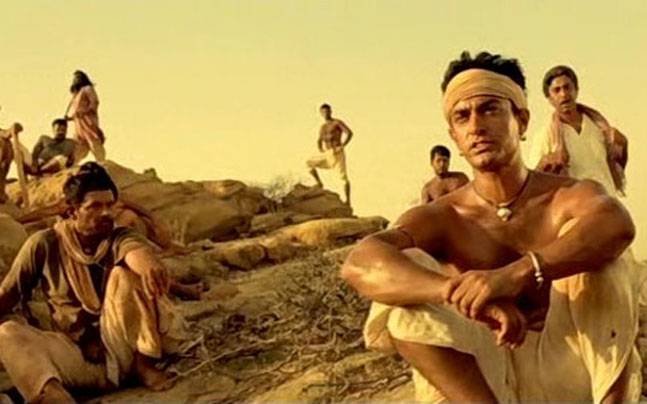
- At the time when the villagers were unable to pay back the taxes, Bhuvan took the responsibility of all the villagers and acted as a leader to carve out a way of glory for them.
- After challenging the British over a game of cricket, Bhuvan took it upon himself to learn the game and then to teach all the fellow members.
- During the selection of the cricket team members, Bhuvan believed in instilling diversity and inclusion policy. Kachra was selected in the team because of a deformity in his hand which made him a good bowler, in spite of all the caste based differences. Bhura was selected because he was an expert in running to catch his hens which was identified as a major parameter to catch the ball. Even the drummer who could not speak, was selected because he spent most of his lifetime playing the drums and hence had a good upper body strength. So from these instance, Bhuvan was recognized to identify the differences in the team which can be a source of competitive advantage.
- At the onset of the game, Bhuvan and his team did not have the necessary resources. But he was more concerned about the performance of his team than about the scarcity of resources. He gave directions to build the necessity from the scratch and that too by the local folks. Being a leader, Bhuvan turned out to be innovative.
- Bhuvan did not just made the team, but he did a good job in allocating roles and responsibilities to each of the team members based on their strengths.
- One of the note-worthy point is that Bhuvan set some measurable goals and he supervised and improved the performance of his team members. His mantra was pure hard work but with empathy and compassion, which shows a good sign of performance management.
- At the end of the movie, even when Kachra facing the last ball, Bhuvan did not give up. He ran for that single run but then it was turned out to be ‘no-ball’. So as a leader of a team, Bhuvan showed immense amount of trust in his team members and a ‘never give up’ attitude.
Lagaan is definitely a movie to watch if one is trying to understand what it is that a leader truly believes in and does. So next time when you watch this movie, you can watch out for these instances of performance management.
Source: Movie ‘LAGAAN’
Mini-lockdown in West Bengal
5 days back on July 20, the Chief Minister of West Bengal, Mamata Bannerjee and the Home Secretary, Alapan Bandopadhyay conducted a meeting where it was jointly decided to impose a 2-day lockdown for every week in West Bengal. The sole reason for this lockdown is community transmission at some places in West Bengal. Due to such high rise of spread of infection, it was came as a verdict that offices, transports services and all the local shops will be closed on these 2 days. For this week 19th July to 25th July, those 2 days were Thursday (23rd July) and Saturday (25th July).
Due to the increase in the number of positive cases in west Bengal, our state minister had to take such a drastic step to contain the transmission. It was also decided that there will be further reviews if there arises any change in decision. To promote the mandatory 2-day lockdown, the city police have also undertaken quite a few steps to ensure compliance. They have released a mask-wearing awareness anthem, sung by Usha Utthup. At the same time, an awareness campaign ‘Mask-up Kolkata’ was promoted by Anuj Sharma, Police Commissioner.

For one, the cases in West Bengal have been rising at an alarming rate. Apparently, Monday recorded 2,282 new cases, taking the total to 44,769. So to take this under control, the West Bengal police is also taking very strict steps to ensure that the citizens are following the lockdown rules. Around 10,000 policemen have hit the streets of West Bengal at around 5:30 am to curb the normal trends. Throughout the day, multiple cases came out where the house maids were trying to reach their places of work, shop owners even tried to open their shops with much disregard for the policemen and so much so, people just wandered off to the street saying that they were not aware of the rules of this new lockdown. But sadly, this time the police was there to check their behaviour and to make sure that there is no relaxation of the rules. The state ensured to circulate drones so as to prohibit people from leaving their homes. Cases arose where the bike riders tried to get away from the situation or where the shop owners forcefully tried to open their shops, ultimately resulting in police booking.
Yes at the end of the day, police cases arose from the places which had been declared as containment zones. As per Thursday’s report, 256 FIRs were registered, 1,273 people were arrested, 19 vehicles were seized, 665 people were booked for not wearing the masks and 128 people were caught for spitting openly on the roads. But in most of the cases, the victims complained that they were not aware of the exact conditions of this 2-day lockdown.
West Bengal, especially Kolkata, is doing a great job while trying to combat the increased transmission. But it is very necessary for Kolkata to stick to its own words to achieve success in this mission. And more importantly, we, the citizens should be cooperative enough to make this mission successful.
 Eduindex
You must be logged in to post a comment.