

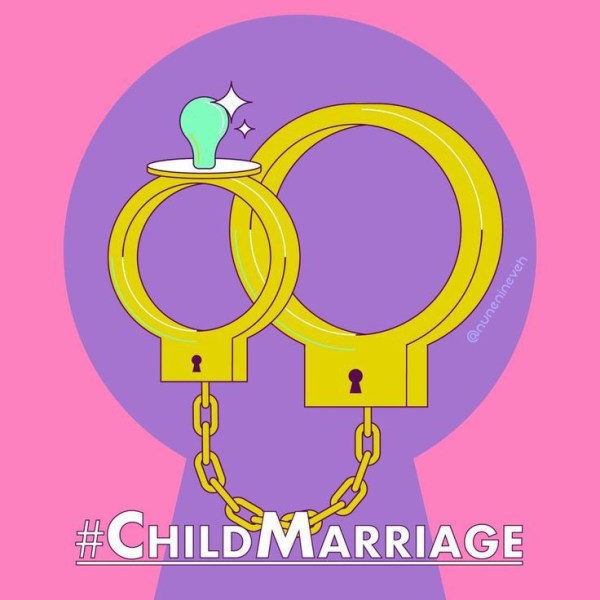
The coronavirus pandemic is reversing progress on ending child marriage and female genital mutilation (FGM), jeopardising the futures of millions of girls, a senior UN official said.
“The pandemic both makes our job harder and more urgent as so many more girls are now at risk,” Natalia Kanem, head of the United Nations’ sexual and reproductive health agency, UNFPA said on Tuesday.
An additional 13 million girls could be forced into child marriage, and two million more could undergo FGM in the next decade, beyond what would have been expected, as COVID-19 disrupts global efforts to end both practices, UNFPA said.
Deepening poverty caused by the crisis may also push more parents to marry their daughters off while they remained children.
“When so many girls and women are unwanted, cut, erased, given, traded and sold, our common future is undermined. We should all be outraged,” she told a news conference.
There are at least 19 harmful practices, including violent sexual initiation rites, witchcraft accusations, branding, dowry-related violence, force-feeding and body modifications such as neck-elongation.
“stubbornly widespread” despite almost universal condemnation: child marriage, FGM and the preference for sons over daughters, which leads to high numbers of female foetuses being aborted.
More than 140 million females are “missing” in the world today, mostly in China and India, due to prenatal sex selection or parents neglecting baby girls so badly that they die, UNFPA said.
Some 33,000 girls are forced into early marriage every day, usually to much older men, the report added, and an estimated 4.1 million are at risk of FGM this year.
Major gender imbalances caused by a preference for sons can leave men unable to find partners, which exacerbates the risks of rape, sexual exploitation, trafficking and child marriage.
Despite legal interventions over the years, India has the largest number of child brides in the world, according to a 2019 report published by UNICEF; one-third of the global total.
Firstpost
“To delay girls’ age of marriage, it will be far more important to improve overall access to education and also invest in better infrastructure. A legal revision alone cannot solve the problem.”

 Eduindex
You must be logged in to post a comment.