

In our series “Expert Speak” on All India Radio, we bring you the views of the leading medical experts on COVID-19.
Dr S Rajeshwari, Department of Anesthesiology, AIIMS has advised the people to stay at homes and maintain hand hygiene.
Dr Purva Mathur, Professor Lab Medicine, AIIMS has said that social distancing is very important to check the spread of virus.
Month: July 2020
PM to take part in Bhumi Pujan for construction of Ram Temple in Ayodhya on Aug 5
The Bhumi Pujan for the construction of Ram Temple in Ayodhya is just one week away. Prime Minister Narendra Modi will take part in the ceremony on 5th of August. While preparations are in full swing for this historic event in this ancient city, many programs are being organized in other parts of the state too. Soil and water from many sacred places in state is being sent to Ayodhya.
AIR correspondent reports that the soil and water of Sangam, the confluence of holy rivers Ganga, Yamuna and saraswati will be sent today to Ayodhya for use in the construction of Ram Temple. People of Mathura,The city of Lord Krishna also performed special Rajat Shila Poojan or worship of Silver brick in which local MP Hemamalini participated online. The brick will be send to Ayodhya along with the holy water of many ponds of the city.
Saints and religious heads in Ancient City Chitrakoot have already sent the holy water from Bharat koop to Mahant Nritya Gopal Das who is head of Shri Ram janmabhoomi teerth shetra trust. Yesterday Deputy Chief Minister of state Keshav Prasad Maurya met Nritya Gopal Das and offered donation of Six lakh six thousands to the Trust on behalf of late Vishwa Hindu Parishad (VHP) president Ashok Singhal, his late guru Gurujan Singh and family members.
Gold smuggling case: Kerala CM’s former Secretary M Shivashankar questioned for 2nd day
National Investigation Agency (NIA) questioned Kerala Chief Minister’s former Secretary M Shivashankar for the second day yesterday in gold smuggling case. He was quizzed by the NIA at its Kochi office.
The interrogation which began in the morning went on for about 10 and half hours. He is being interrogated for his alleged links with some of the accused in the diplomatic baggage gold smuggling case. On Monday also, he was interrogated for over 9 hours.
AIIMS Delhi to hold 2nd session of National CGR on COVID-19 issues today
All India Institute of Medical Sciences (AIIMS), Delhi will hold the second session of National Clinical Grand Rounds (CGR) at 3 PM today. The interactive session, which will be led by AIIMS Director, Dr. Randeep Guleria, is aimed at facilitating insightful discussion on COVID related issues. Senior doctors of the premier health Institute will be discussing on the usage of antiviral and anti-IL6 drugs in moderately severe COVID cases.
Doctors from medical colleges and Senior Physicians from hospitals located across the country and abroad will be participating in the online session. In an effort to share its experience and initiate discussions on management of common issues related to COVID-19, AIIMS Delhi with NITI Aayog and Union Health Ministry launched the National Clinical Grand Rounds (CGR) on COVID-19.
These sessions include presentation of clinical cases by physicians directly involved in COVID management. Challenges faced in the management are also discussed by a panel of eminent experts from across the country and outside India.
NIA arrests DU associate professor in connection with Bhima Koregaon case
National Investigation Agency (NIA) has arrested an associate professor of Delhi University in connection with Bhima Koregaon case. He will be produced before a special court in Mumbai today.
The accused has been identified as Hany Babu Musaliyarveettil Tharayil, a resident of Gautam Buddha Nagar in Uttar Pradesh.
International Tigers day being observed today
International Tiger Day will be celebrated today. The Day is celebrated on 29th of July every year across the globe to create awareness about tiger conservation. Union Environment Minister Prakash Javadekar released All India Tiger Estimation Report-2018 yesterday. He also released a poster on small wild cats of India.
Mr Javadekar said, India is home to nearly 70 per cent of the global tiger population and it leads the world in showing effective conservation of the wild species. He said, tiger is a precious gem of nature and its presence signifies that the forest is in good condition. He said, in 1973 there were only 9 tiger reserves in the country, which has now gone up to 50. Mr Javadekar said that apart from tigers, India is also home to 30 thousand elephants, 3000 single-horned Rhinos and over 500 lions.
He said, the country is ready to provide every assistance to increase the population of tigers in the world. Highlighting the culture of harmonious coexistence with nature in India, the minister noted that despite constraints of physical resources the country sustains nearly 8 per cent of the world diversity. He added by saying that practices like worshipping of trees is what depics unique India’s cohesiveness with nature.
The Heads of the governments of Tiger range countries had resolved to double the tiger population by the year 2022. In this regard, Saint Petersburg declaration on tiger conservation was signed by the countries in 2010. Mr Javadekar informed that the government has also decided to initiate an ambitious water and fodder augmentation programme ensuring adequate water and food to animals. He said the programme aims at further increasing the tiger population in the country.
Speaking on the occasion, Minister of State in the Environment Ministry, Babul Supriyo said, acknowledgement of increased numbers of Tiger in the country by Guinness Book World Record is a matter of pride. He assured, positive steps will be taken to further increase number of Tigers in India.
Commerce Ministry allows export of PPE kits, masks with certain limitations
Commerce Ministry has amended its export policy for Personal Protection Equipment (PPE) and masks. Under the new policy, 2 and 3 ply surgical masks and medical goggles can be exported now with certain limitations.
For 2 and 3 ply surgical masks a monthly export quota of 4 crore has been fixed by the Directorate General of Foreign Trade (DGFT). Medical Goggles can be exported with a monthly cap of 20 lakh units. Government has also removed a prohibition on export of Face Shields from the country.
India conducts more than 5 lakh Covid-19 test in a single day over two consecutive days
India has conducted more than five lakh COVID-19 tests in a single day over two consecutive days. Union Health Ministry said, this is the outcome of the combined and focused efforts of Centre, State and Union Territories governments on aggressive testing. During last 24 hours, India tested a total of five lakh 15 thousand samples. Testing is the first important step in the early detection and isolation of COVID-19 positive cases.
The graded and evolving response resulted in a testing strategy that steadily widened the testing network in the country, and the cumulative testing has crossed one crore 73 lakh.
The Tests Per Million has further improved to 12 thousand 562. Health Ministry said, the testing capacity of India has received another boost with the induction of three high throughput testing facilities in Noida, Mumbai and Kolkata that were inaugurated virtually.
The testing lab network in the country has been strengthened with one thousand 310 labs in the country, 905 labs in the government sector and 405 private labs.
First batch of five Rafale fighter jets to arrive at Ambala airbase today
The first batch of five Rafale jets will arrive in Ambala today. The fleet, comprising three single seater and two twin seater aircraft, will be inducted into the Indian Air Force at the Ambala airbase in Haryana. The fighter jets, built by French aviation firm Dassault, took off from the Merignac airbase in southern France’s Bordeaux on Monday.
The five aircraft are part of 36 planes bought by India from France in a 59,000-crore rupees inter-governmental deal in 2016. The aircraft is covering a distance of nearly 7,000 km from France to India with mid-air refuelling and a single stop at a French airbase in the United Arab Emirates (UAE). Indian Embassy in France in a statement said, delivery of 10 aircraft has been completed on schedule but five will stay back in France for training Mission. The delivery of all thirty six aircraft will be completed on schedule by the end of 2021.
The Rafale fighter jets had mid-air refuelling before reaching the Al-Dhafra air base in UAE. After the layover, the jets will embark on the their final leg of journey to India. The Indian Air Force, appreciated the support provided by French Air Force for the Rafale journey back home. The fighter jets are capable of carrying a range of highly effective weapons, including the Keter air to air missile and scalp cruise missile.
The Rafale jets will come with various India specific modifications, including Israeli helmet mounted displays, radar warning receivers, low band jammers and 10 hour flight data recording. The Air Force has readied the required infrastructure to welcome the jets in its line up.
PM Modi to discuss vision, roadmap for Banks, NBFCs with all stakeholders this evening
Prime Minister Narendra Modi will today join stakeholders from Banks and NBFCs to discuss and deliberate on vision and roadmap for the future. The topics on agenda include credit products and efficient models for delivery, financial empowerment through technology, prudential practices for stability and sustainability of financial sector.
Banking sector plays an important role in contributing to India’s economic growth through financing infrastructure, agriculture, local manufacturing including MSMEs. Financial inclusion can play a big role in financial empowerment through technology. Senior officers from Government will also be a part of the interaction.
Finance Commission
What is the Finance Commission?
The Finance Commission is a constitutional body formed every five years to give suggestions on centre-state financial relations. Each Finance Commission is required to make recommendations on: (i) sharing of central taxes with states, (ii) distribution of central grants to states, (iii) measures to improve the finances of states to supplement the resources of panchayats and municipalities, and (iv) any other matter referred to it.
Composition of transfers:
The central taxes devolved to states are untied funds, and states can spend them according to their discretion. Over the years, tax devolved to states has constituted over 80% of the total central transfers to states. The centre also provides grants to states and local bodies which must be used for specified purposes. These grants have ranged between 12% to 19% of the total transfers.
Over the years the core mandate of the Commission has remained unchanged, though it has been given the additional responsibility of examining various issues. For instance, the 12th Finance Commission evaluated the fiscal position of states and offered relief to those that enacted their Fiscal Responsibility and Budget Management laws. The 13th and the 14th Finance Commission assessed the impact of GST on the economy. The 13th Finance Commission also incentivised states to increase forest cover by providing additional grants.
15th Finance Commission: The 15th Finance Commission constituted in November 2017 will recommend central transfers to states. It has also been mandated to: (i) review the impact of the 14th Finance Commission recommendations on the fiscal position of the centre; (ii) review the debt level of the centre and states, and recommend a roadmap; (iii) study the impact of GST on the economy; and (iv) recommend performance-based incentives for states based on their efforts to control population, promote ease of doing business, and control expenditure on populist measures, among others.
Why is there a need for a Finance Commission?
The Indian federal system allows for the division of power and responsibilities between the centre and states. Correspondingly, the taxation powers are also broadly divided between the centre and states. State legislatures may devolve some of their taxation powers to local bodies.
The centre collects majority of the tax revenue as it enjoys scale economies in the collection of certain taxes. States have the responsibility of delivering public goods in their areas due to their proximity to local issues and needs.
Sometimes, this leads to states incurring expenditures higher than the revenue generated by them. Further, due to vast regional disparities some states are unable to raise adequate resources as compared to others. To address these imbalances, the Finance Commission recommends the extent of central funds to be shared with states. Prior to 2000, only revenue income tax and union excise duty on certain goods was shared by the centre with states. A Constitution amendment in 2000 allowed for all central taxes to be shared with states.
Several other federal countries, such as Pakistan, Malaysia, and Australia have similar bodies which recommend the manner in which central funds will be shared with states.
Commission considerably increased the devolution of taxes from the centre to states from 32% to 42%. The Commission had recommended that tax devolution should be the primary source of transfer of funds to states. This would increase the flow of unconditional transfers and give states more flexibility in their spending.
The share in central taxes is distributed among states based on a formula. Previous Finance Commissions have considered various factors to determine the criteria such as the population and income needs of states, their area and infrastructure, etc. Further, the weightage assigned to each criterion has varied with each Finance Commission.
with the weight assigned to them.
• Population is an indicator of the expenditure needs of a state. Over the years, Finance Commissions have used population data of the 1971 Census. The 14th Finance Commission used the 2011 population data, in addition to the 1971 data. The 15th Finance Commission has been mandated to use data from the 2011 Census.
• Area is used as a criterion as a state with larger area has to incur additional administrative costs to deliver services.
• Income distance is the difference between the per capita income of a state with the average per capita income of all states. States with lower per capita income may be given a higher share to maintain equity among states.
• Forest cover indicates that states with large forest covers bear the cost of not having area available for other economic activities. Therefore, the rationale is that these states may be given a higher share.
Grants-in-Aid
Besides the taxes devolved to states, another source of transfers from the centre to states is grants-in-aid. As per the recommendations of the 14th Finance Commission, grants-in-aid constitute 12% of the central transfers to states. The 14th Finance Commission had recommended grants to states for three purposes: (i) disaster relief, (ii) local bodies, and (iii) revenue deficit.
The Biggest Misconception of Africa – BUSTED
“Most people write me off when they see me.
They do not know my story.
They say I am just an African.
They judge me before they get to know me.
What they do not know is
The pride I have in the blood that runs through my veins;
The pride I have in my rich culture and the history of my people;
The pride I have in my strong family ties and the deep connection to my community;
The pride I have in the African music, African art, and African dance;
The pride I have in my name and the meaning behind it.
Just as my name has meaning, I too will live my life with meaning.
So you think I am nothing?
Don’t worry about what I am now,
For what I will be, I am gradually becoming.
I will raise my head high wherever I go
Because of my African pride,
And nobody will take that away from me.”
Idowu Koyenikan
Africa is a beautiful continent. Yes, a continent!
Africa is a continent. NOT A COUNTRY.
It is amazing to see so many people unaware of such a small fact. So here below is a list of all the 54 countries and 4 dependencies of Africa organized according to location in an alphabetical order.
Northern Africa
- Algeria
- Egypt
- Libya
- Morocco
- Sudan
- Tunisia
Eastern Africa
- Burundi
- Comoros
- Djibouti
- Eritrea
- Ethiopia
- Kenya
- Madagascar
- Malawi
- Mauritius
- Mozambique
- Rwanda
- Seychelles
- Somalia
- South Sudan
- Tanzania
- Uganda
- Zambia
- Zimbabwe
Western Africa
- Benin
- Burkina Faso
- Cabo Verde
- Côte d’Ivoire
- Gambia
- Ghana
- Guinea
- Guinea-Bissau
- Liberia
- Mali
- Mauritania
- Nigeria
- Senegal
- Sierra Leone
- Togo
Southern Africa
- Botswana
- Eswatini
- Lesotho
- Nambia
- South Africa
Middle Africa
- Angola
- Cameroon
- Central African Republic
- Chad
- Congo
- DR Congo
- Equatorial Guinea
- Gabon
- Sao Tome & Principe
Dependencies of other Countries:
- Réunion – France
- Western Sahara – (disputed)
- Mayotte – France
- Saint Helena – UK
There are so many myths about Africa, none of them true. Africa is a beautiful continent and is much more than what the news and documentaries show us. Below, I will attempt to bust as many myths as I can.
- Environment: Thanks to movies like Blood Diamond, we think of Africa as unsafe, poor and completely backward. NOT TRUE. Travel through the beautiful continent to experience how complex, multi-layered and breath-taking it actually is.
- Business: Africa has huge businesses and great employment opportunities. Some of the self-made millionaires owe it to their start in Africa.
- Africa is a relatively expensive place to travel to.
- Africa is safer than prominent tourist spots like Paris and New York
- African leaders are no more corrupt than any developed and developing country.
- Africa is just as advanced technologically and culturally as any other. They have access to 4G and WiFi!
- Africa has a lot of poverty stricken places, but as a whole is a not a poor country.
- The continent is not a dessert! They have mountains and beaches.
- Africa is home to a huge Art Industry
- Africa is not an illiterate country
- Most Africans speak English
- Africa is a huge continent!
- Not Everyone in Africa has AIDS – Africans might be most affected. But this is simply not true and is racist and offensive.
Facts about Africa:
- Africa is the oldest populated continent
- It’s the second largest continent
- Most of the European continent’s ancestors are local to Africa – Many African countries gained independence from the European continent post the WWII.
- South Africa has some of the finest beaches
- Wildlife is only part of all that you could experience in Africa.
- There are over 2000 native languages spoken across the continent
- All of the African cultures and parties and traditions are beautiful and festive.
Africa is a continent like any other. For centuries, and even now, just judging by the colour of their skins, we assume the worst about Black people. They are no better than us, nor are we better them. We are all people living on the Earth. No one reserves the right to make another feel like they don’t belong. Africa and Africans are beautiful and are just as human as the rest of us!
Time waits for no one
Time can also heal things whether external wounds or feelings. Time is the ultimate thing that we cannot measure. time comes and goes it’s our duty how we utilise that time in what manner time is something which is important for everybody you may delay but time will not wait for anyone Time once lost is lost for ever. It can never be regained. It can never be captured. It is the most potent factor. Even the strongest and powerful monarchs have been helpless before time. Even they could not command time to stop. So, we should be careful about the importance of time. We should never waste it. We are successful in life only when we make the best use of time.
To ensure best use of time in life, one needs to be very punctual. Punctuality avoids inconvenience and tension. It offers great opportunity, which, if struck properly brings big results. Opportunity once lost is hardly regained. Proper use of time brings success and achievements. Doing everything in time should be the guiding principle of life.
Man has limited years to live, but there is lots of work to do. So, he should live a purposeful life. He should make maximum use of each and every moment. Time is precious. It should be valued. We should make use of it in best possible way.
Farmers have to keep a close watch of time because they follow strict schedules for planting and harvesting. Their farming schedules are based on the weather and if they delay their planting or harvesting time by even a day, it will spell disaster for them because time will not wait for them. We should have respect for time and not misuse it. You may have heard of this famous saying, “To realize the value of one year, ask a student who failed an examination. To realize the value of one month, ask a mother who gave birth to a premature baby. To realize the value of one minute, ask a person who just missed his train.
To realize the value of one second, ask someone who just avoided an accident”. Time is precious; even one second of your life is valuable. So, do not waste it. Let us have respect for time and time will show the same respect to us.
Time is measured by the hours, days, years and so on. Time helps us to make a good habit of organizing and structuring our daily activities. No one can escape the passing of time. We all subjected to aging and mortality.
Time plays a significant role in our lives. If we better understand the time value, then it can gain experience and develop skills over time. Time can also heal things whether external wounds or feelings.
Everyone has to realize the value of time and spend it unwisely. Such people waste their time and keep unnecessary thinking can backward to them and lost their future. Everyone has to do focus on their important task every day. we should always focus on time once it goes never come again fix your goal just work on it and achieve before time goes.
Judiciary as a third organ of government
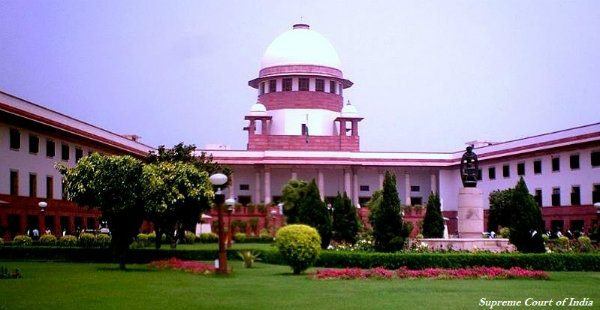
The Supreme Court of India is the highest authority of the judiciary.
The Judiciary is the third organ of the government. It has the responsibility to apply the laws to specific cases and settle all disputes. The real ‘meaning of law’ is what the judges decide during the course of giving their judgements in various cases. From the citizen’s point of view, Judiciary is the most important organ of the government because it acts as their protector against the possible excesses of legislative and executive organs. Role of Judiciary as the guardian-protector of the constitution and the fundamental rights of the people makes it more respectable than other two organs.
Functions of Judiciary and Its Importance:
1. To Give Justice to the people:
The first and foremost function of the judiciary is to give justice to the people, whenever they may approach it. It awards punishment to those who after trial are found guilty of violating the laws of the state or the rights of the people.
The aggrieved citizens can go to the courts for seeking redress and compensation. They can do so either when they fear any harm to their rights or after they have suffered any loss. The judiciary fixes the quantity and quality of punishment to be given to the criminals. It decides all cases involving grant of compensations to the citizens.
2. Protection of Rights:
The judiciary has the supreme responsibility to safeguard the rights of the people. A citizen has the right to seek the protection of the judiciary in case his rights are violated or threatened to be violated by the government or by private organisations or fellow citizens. In all such cases, it becomes the responsibility of the judiciary to protect his rights of the people.
3. Guardian of the Constitution:
judiciary acts as the guardian of the Constitution. The Constitution is the supreme law of the land and it is the responsibility of the judiciary to interpret and protect it. For this purpose the judiciary can conduct judicial review over any law for determining as to whether or not it is in accordance with the letter and spirit of the constitution. In case any law is found ultra vires (unconstitutional), it is rejected by the judiciary and it becomes invalid for future. This power of the court is called the power of judicial review.
4. Advisory Functions:
Very often the courts are given the responsibility to give advisory opinions to the rulers on any legal matter. For example, the President of India the power to refer to the Supreme Court any question of law or fact which is of public importance.
5. To Conduct Judicial Inquiries:
Judges are very often called upon to head Enquiry Commissions constituted to enquire into some serious incidents resulting from the alleged errors or omissions on the part of government or some public servants. Commissions of enquiry headed by a single judge are also sometimes constituted for investigating important and complicated issues and problems.
Independence of Judiciary led by Supreme Court
The Indian Constitution protects the citizens from any partial judgment. And, this gives the power to the judiciary to make decisions based on the rules of the law, in case of any dispute. Due to such authority, the judiciary of the country is an independent body. The courts of India are not controlled by the government and do not represent any political authority. Such independence allows the judiciary to ensure that there is no misuse of power by any section of the government.
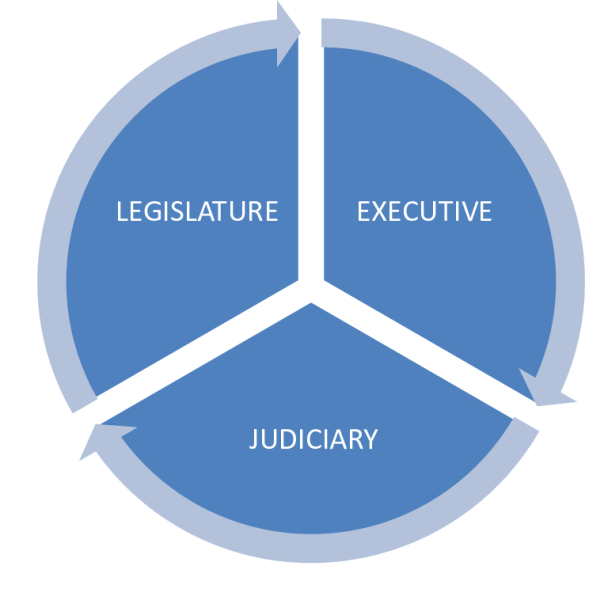
The independence of judiciary calls for ‘separation of powers’. This basically means that both the legislature and the executive branches of the government, cannot interfere with the functions and decisions of the judiciary. So, in order to successfully execute their independent authority, the judges of both high courts and the Supreme Court must be appointed without any influence or interference from other branches of the government. Also, it is very difficult to remove a judge from his/her office, once appointed by the judiciary.
Unlock 3.0
Increase of Corona cases has become routine in India,now government is focusing on unlock 3.0 by giving permissions to movie theaters and gyms
government is planning to shutdown the schools and colleges as usually,only movie theaters with 25% capacity are permitted
Government is planning to conduct entrance exams like jee mains,meet in September inspire increasing of Corona cases
India has crossed 14Million cases
 Eduindex
You must be logged in to post a comment.