The telangana state government decided to conduct online classes for 6 th to 10 th from August 20,and proposed online exams like TSCET is going to conduct on August 31th
intermedia admission for academic year 2020-31 starts from SEP 1 ,Eamcet exam will conduct on sep 9,10,11,14,the final year exams will be decided on the basis of supreme court orders
WE HAVE CAME ACROSS MANY CHANGES THIS YEAR , IN THE MONTHS OF COVID-19 PANDEMIC , IN THE STRUCTURE OF MONETARY POLICY . RBI HAS AGAIN REVIEWED THE MONETARY POLICY BUT THERE ARE NO CUTS IN INTREST RATES RATES BUT FEW CHANGES IN THE POLICY . INDIA IS GOING THROUGH INCREASING INLATIONARY PRESSURES ALONG WITH THE CONSTANT SLOWING DOWN OF THE ECONOMY . IN THE MONTHS OF MAY AND JUNE , WE HAVE SEEN LITTLE RETRIEVE IN DEMAND , GIVING US HOPES FOR THE ECONOMIC RECOVERY . AGAIN , WE SEE THE DOWNFALLS IN COMING MONTHS . THE DEMAND WILL RETRIEVE BUT WILL TAKE TIME , FEW MORE MONTHS .THE KEY POLICY DECISIONS MADE BY RBI IN THIS REVIEW ARE :
BANKS ARE ALLOWED TO RESTRUCTURE STRESSED CORPORATE AND MSME LOANS , DIDN’T EXTEND THE MORATORIUM ON LOAN REPAYMENTS , OFFERED TO BORROWERS AHEAD OF AUGUST 31 . LOANS CAN BE RESTRUCTURED FROM LARGE CORPORATES , MICRO , SMALL AND MEDIUM ENTREPRISES , INDIVIDUALS TO LOWER THEIR RISING STRESS.
BORROWING LIMITS AGAINST GOLD RELAXED , INCOMES AND JOBS HITTING ACROSS SECTORS , HAS ALLOWED INDIVIDUALS TO RESTRUCTURE THEIR LOANS BY DECEMBER 31 , 2020 , WITH MAXIMUM EXTENSION OF 2 YEARS.
RS 10000 CRORES SUPPORT FOR NHB , NABARD.
SUPPORTING THE START UPS WHICH ALL ARE INCLUDED IN THE PRIORITY SECTOR IN THEIR LENDING NORMS.
IT IS BELEIVE THAT THERE WILL BE CONTRACTION IN INDIA’s GDP IN 2020-21 AND INFLATION WILL REMAIN A HUGE BEAR IN FRONT US , SUPPLY CHAIN DISRUPTIONS , PRICE SURGES IN FOOD SECTORS. INFLATION HAD GONE UP FROM 5.8% IN MARCH TO 6.1% IN JUNE 2020 .
RESERVE BANK OF INDIA HAS ALSO EXTENDED THE ONE TIME DEBT RESTRUCTURING FOR THE SMALL BUSINESSE BY ANOTHER 3 THREE MONTHS TO MARCH 2021 , SOME EXISTING PRVISIONS ARE ALSO RELAXED FOR AVAILING OF THIS SCHEME BY MICRO , SMALL AND MEDIUM ENTREPRISES , RECENTLY.
RBI GOVERNOR , SHAKTIKANTA DAS , SAID THAT IMPROVEMENT IS MADE IN THE MONETARY TRANSACTIONS AS LIQUIDITY CONDITIONS ARE BEARABLE AND HAVE GIVEN BENIFIT TO THE BORROWERS BY REDUCING THE LENDING RATES BY 1.62 PERCENTAGE POINTS . RBI HAS OVERALL RS5 LAKH CRORES OF LIQUIDITY AND HAS SLASHED TYHE BENCHMARK OF 250 BASIS POINTS AND OTHERS WERE THE INFORMATION REGARDING THE FOOD CREDITS AND NON BANK FINANCIAL COMPANIES.
Lifelong commitment between two people who decides to grow together, to sculpt each other, to selflessly love each other and to support each other throughout, when legally decide to marry each other, then that bond is known as marriage. Marriage or matrimony or wedlock, is a culturally accepted union between people, called spouses, which establishes rights and obligations between them, as well as between them and their children, and between them and their in-laws. Marriage is said to be a new beginning of one’s life. But the reality of some people’s life is way too different in the actual word.
Violence caused in a unique manner against women, which in all ways it is always murder. The major categories of Dowry death is violence against women, alongside rape, bride burning, eve teasing, female genital mutilation, and acid throwing. The most common way to kill the bride was bride burning, which was the most inhuman activity that was done by either the husband or by her in-laws and the most awful part was that, Bride burning was disguised as suicide or accident.
In 2015, over 7634 brides were burned to death in India due to dowry disputes which is approximately a bride being burned every hour. In Uttar Pradesh (2335 cases) alone were reported which is 30.6% of total cases of dowry deaths in India, followed by Bihar (1154 cases). According to the Indian National Crime Record Bureau, India has by far the maximum number of dowry-related deaths in the world. In 2012, 8,233 dowry death cases were reported across India. This means a bride was burned every 90 minutes, or dowry issues cause 1.4 deaths per year per 100,000 women in India.
Dowry which was always a traditional concept (then) of giving and taking money or gifts from the bride’s family at the time of marriage as a perfunctory of love and acceptance and for the future of the couple, which binds both families into one. Unfortunately, over the years the term has shifted from being an affectionate gesture to a horrifying nightmare. In 1980s, most of the Indian women, who were either newly married or within 2-3 years of their marriage period were spotted dead due to the dowry demands.
Section 304B talks about dowry death, which is defined in IPC, stating:-
304B. DOWRY DEATH. — (1) Where the death of a woman is caused by any burns or bodily injury or occurs otherwise than under normal circumstances within seven years of her marriage and it is shown that soon before her death.
she was subjected to cruelty or harassment by her husband or any relative of her husband for, or in connection with, any demand for dowry, such death shall be called “dowry death”, and such husband or relative shall be deemed to have caused her death. Explanation: For the purposes of this sub-section, “dowry” shall have the same meaning as in section 2 of the Dowry Prohibition Act, 1961 (28 of 1961)
(2) Whoever commits dowry death shall be punished with imprisonment for a term which shall not be less than seven years but which may extend to imprisonment for life.
In other words, if any women who is newly married or is within seven years of her marriage period, is going through cruelty or harassment by her husband or by any relative from his husband’s side and from her in-laws, due to the demand for dowry, which causes her death, either due to the bodily injury or due to burns or which may drive her to commit suicide due to continuous harassment and torture or due to any other circumstance; within seven years of her marriage, then such death shall be called as dowry death.
The necessary ingredients to draw Section 304-B IPC, laid down by the Hon’ble Supreme Court, in Pawan Kumar v. State of Haryana are :-
(1) death of a woman is either by burns or by bodily injury or otherwise than under normal circumstances;
(2) it should be within seven years of marriage;
(3) it should also be shown that soon before her death she was subjected to cruelty or harassment by husband or any relative of husband;
(4) such harassment or cruelty should pertain to demand for dowry.
Another significant aspect of the definition provided under Section 304-B is that the death should be caused “otherwise than under normal circumstances”.
In Kamesh Panjiyar v. State of Bihar, the Court gave a practical aspect to this. The body of the victim was found by her brother, lying in the veranda of the appellant’s house with blood radiating from her mouth and evident marks of violence on her neck. It appeared that the victim had been murdered by choking in the previous night.
The Court counted on the opinion of the doctor, the evidences were recovered and the testimony of the witnesses to hold that the death of the woman had been caused otherwise than under normal circumstances as expressed in Section 304-B, and hence it was a case of “dowry death”.
DOWRY PROHIBITION ACT After 14 years of gaining Independence, a specific Act was introduced that tackled with the problem of dowry called the Dowry Prohibition Act, 1961. This Act prohibits the practice of giving or taking of dowry by either party to a marriage, that is, not only prohibits the groom’s side to take dowry but also restricts the bride’s side as well. The definition of “dowry” provided by section 2 of the dowry prohibition act is:-
“any property or valuable security to be given directly or indirectly by one party to a marriage to the other party to marriage at or before or any time after the marriage in connection with the marriage of the said parties”.
The Act is also punishable on demanding and advertising dowry, as observed in the case of Shanti v. State of Haryana, the court said that the term “dowry” has not been defined anywhere except in Section 2 of the Dowry Prohibition Act, 1961.
OTHER SECTIONS RELATED TO DOWRY DEATH Section 113B of evidence act: – — When the question is whether a person has committed the dowry death of a woman and it is shown that soon before her death such woman has been subjected by such person to cruelty or harassment for, or in connection with, any demand for dowry, the Court shall presume that such person had caused the dowry death.
CLASSIFICATION U/SCHEDULE 1 CrPC The punishment of the offence of dowry death is imprisonment for not less than 7 years, but up to life imprisonment. It is a cognizable and non-Bailable offence. Triable by the Court of Session.
COMPOSITION U/S 320 CrPC Dowry death is an offence which is not listed under compoundable offences.
Indian education system has always been about making the students excel in their academic path. The best way for which is making the students disciplined. The act of making them disciplined has been a part of Indian educational system since time immemorial. Quite often in such an endeavour it involves a teacher beating the student as a form of punishment known as corporal punishment which can be either physically or mentally, a practice which had been followed and was normalized and in fact was even endorsed by many schools and hostels.
It wasn’t until the NCPR survey in 2009- 10 which reviewed that the use of physical punishments was rampant in Indian schools and as brutal as cane beatings were a common practice being inflicted upon young students. Even though there is prevalence of laws to prohibit such an act covered in Cr Pc, Juvenile act etc. yet its roots are so deeply engraved in the education system that the students find themselves in thraldom of physical assault just to make them “well- disciplined”.
Furthermore there have been cases like sexual assault, bullying and physical violence have been on an upsurge in many universities across India indicating a steep administrative failure. Can then the “no touch” policy be implemented to overcome this hurdle and insure a safe and protected environment for the campuses in India as well as a means for the young students to set themselves free from the clutches of corporal punishment?
The ‘no touch’ policy when implemented in any organization or campus discourages any sort of physical touch including hugging and horseplay. Violators of such a policy face the threat of suspension or even expulsion on these grounds if the accusations filed against them are found to be true.
However, rather than being as a relief measure and a firm stance of the administration against corporal punishment, this policy extends to all the people in that school or campus. This ‘no touch’ policy gradually has started being implemented in many schools internationally.
Parents are relieved about a safe and secure environment for the children whereas teachers have a chance to prove their worth and excel in their career as through such a policy in place, it reduces the amount of false accusations and name blaming by the students of having been physically or sexually harassed. This might also lead to a drastic reduction in the number of cases of sexual and physical harassment taking place on school grounds. However, such a policy is not devoid of its disadvantages. Instead this policy might as very well prove to be a double edged sword.
Due to such a policy any physical touch which might be necessary under any uncertain or unwarranted circumstance like a medical emergency where physical touch is necessary or during P.E activities or music lessons, might prove to be inappropriate and give a wrong impression thereby creating a negative atmosphere rather than creating a positive impact in the bodies present at school.
According to child psychologist Sean Cameron, “What’s missing is recognition of how important touch is. And that withholding touch is in itself of form of psychological abuse.” In today’s atmosphere and environment it is more than necessary to impart correct sexual education; its importance can never be stressed enough. Parents and educational institutions play a primary role in articulating this knowledge.
However, this might all go all down the hill if there is adherence to such type of policy as it will only cause a psychological hindrance for them. The whole difference between what is a safe touch and what is an inappropriate touch will become a blurry concept for them as the environment in which they are growing up plays a centrifugal premise in their understanding capacity.
This policy might dazzle the eyes in a first glance but in reality it is nothing but just another form of hindrance in letting the children grow in a proper environment and substantive environment, such a policy might create a negative feeling towards any sort of touch made by the opposite sex and might even lead to a disruptive response of any sort of human touch.
India’s youth suicide rate is among the world’s highest. Thereby, a no touch policy in campus might seem as an adequate step and a head- strong decision in the direction to overcome this social problem in the society as even Combating physical violence and bullying is indeed a difficult obstacle to overcome.
However is physical violence, bullying etc. one of the major contributors of causing and un- cohesive environment among these students in campus to such an extent that it plays a role in student suicide rate and for which ‘no touch’ policy might seem the absolute option?
Almost all students in the country face a tremendous amount of pressure from family members to excel in their academic life in such a coat throat competing academic structure , adopting such a policy will act as a catalyst in detailing their mental health. It needs to be understood that adolescence is a tender age, it is an age where they want to revolt against any sort of tradition or rules set by the society which might seem to hinder their personal liberty or might seem orthodox.
Already as per the set guidelines of UGC the student’s activities are already being monitored through CCTV cameras, security check posts, random checking etc. a regressive policy like this might lead to an aggressive revolt, which shall be nothing but prove to be bane for the university administration as well as in student’s well-being.
As stated earlier the causes for student suicide are family problems, drug addiction etc. rather than addressing these problems, a ‘no- touch’ policy is nothing but a hasty step and a vague attempt in understanding the youth’s problems reasoned by bigot understanding of the situation at hand. What needs to be noted is that
Clearly, such a policy is just a digressive way and does not even address the problem at hand that is prevalent in today’s youth culture. For the children at school so much more can be done.
The principals or the dean can send out a strong message showing zero tolerance over corporal punishment, conducting seminars and campaigns and imparting sex- education in the best way possible from an early age. With regular parents- teacher meet or conducting seminars for parents even they can get involved with their child’s performance and behaviour at school grounds and looking at rather corporal punishment, coming up with other means and effective tools to make them disciplined. Whereas in the university campuses such a regressive policy has no grounds.
The cases of bullying or physical or sexual harassment can be combatted with a strict and active student as well as administrative councils, where the administration staff with a healthy discussion with the student body can come up with strong policies, to combat such hurdles.
Hence, a ‘no touch’ policy in campuses holds no substantive grounds and should be left to just theory rather than coming up with steps on how to implement it effectively.
The cash-for-votes scandal was an Indian political scandal allegedly masterminded by then Opposition Party Bharatiya Janata Party politician Sudheendra Kulkarni in which the United Progressive Alliance, the majority-holding parliamentary-party alliance of India led by Sonia Gandhi, allegedly bribed Bhartiya Janta Party MPs in order to survive a confidence vote on 22 July 2008. The vote in the Lok Sabha arose after the Communist Party of India (Marxist)-led Left Front withdrew support from the government, who wanted to pursue an Indo-US nuclear deal.
A Delhi court on Thursday put 11 former members of Parliament on trial for the 2005 cash-for-query scam. Special Judge Kiran Bansal framed graft and criminal conspiracy charges against the MPs. The trial will begin from January 12.
A sting operation by online news site Cobra post that aired on a private TV channel on December 12, 2005, showed the 11 MPs accepting cash in exchange for raising questions in the Parliament.
Out of the 11 MPs accused in the case, six were from the BJP, three from BSP, and one each from the RJD and Congress. They were Y G Mahajan (BJP), Chhatarpal Singh Lodha (BJP), Anna Saheb M K Patil (BJP), Manoj Kumar (RJD), Chandra Pratap Singh (BJP), Ram Sewak Singh (Congress), Narender Kumar Kushwaha (BSP), Pradeep Gandhi (BJP), Suresh Chandel (BJP), Lal Chandra Kol (BSP) and Raja Rampal (BSP). The Lok Sabha expelled 10 members, while Lodha, who was the sole Rajya Sabha member, was also expelled.
On December 24, 2005, the Parliament voted to expel the 11 MPs in a historic vote. Pranab Mukherjee, the leader of the house at the time, introduced a resolution asking for expulsion of the members while then Prime Minister Manmohan Singh did the same in Rajya Sabha.
While all parties had clamoured for action against the accused MPs, the BJP walked out of the vote saying it was a ‘kangaroo court’. BJP senior leader LK Advani, who was leader of the Opposition at the time, said that while what the MPs had done was corruption, but “more than that it was stupidity” and the punishment of expulsion was too harsh.
In January 2007, a Supreme Court verdict upheld the Parliament’s decision to expel the MPs. The MPs had filed a petition challenging their expulsion, which ignited a debate whether the court could interfere in Parliament procedures.
The Delhi High Court in 2007 directed the Delhi Police to book people involved in the offence. Two cobra post journalists, Aniruddha Bahal and Suhasini Raj, were also named in the chargesheet for abetting the offence under the Prevention of Corruption Act, but the case against them was later quashed, with the court ruling that no one could be prosecuted for carrying out sting operations.
The cash-for-vote scam rocked both the houses of parliament on Thursday after senior BJP leader L.K. Advani challenged the Government to arrest him in connection with the 2008 scandal. Speaking in the Lok Sabha, the BJP Parliamentary Party chief said that if the two BJP MPs are guilty in the cash-for-votes scam, then he should also be arrested.
Advani said that he was aware of a sting BJP conducted in 2008 to expose the UPA’s willingness to buy support to survive a trust vote.
Both the Lok Sabha and the Rajya Sabha had to be adjourned as the BJP pressed for the suspension of the Question Hour and demanded immediate discussion on the issue. While the Lok Sabha was adjourned till noon, the Rajya Sabha was adjourned till 12:30 PM after uproar over the scam.
Advani gave a notice for suspension of Question Hour in the Lok Sabha to discuss the new developments in the case. A similar notice was given in the Rajya Sabha by BJP member Ravi Shankar Prasad. It may be recalled that BJP MPs, Faggan Singh Kulaste and Mahavir Singh Bhagora, along with former Samajwadi Party leader Amar Singh were on Tuesday sent to judicial custody in the cash-for-votes scam.
Advani’s former aide Sudheendra Kulkarni, who has also been charge sheeted in the case, has been ordered to appear in court on September 19. The BJP and other Opposition parties have questioned as to why the Congress-led UPA government, which was the prime beneficiary in the cash-for-votes scam, has not been investigated.
With the onset of political stability and the introduction of universal adult suffrage, the votes had been the greatest liability offered to people of the country to choose their own government. But amidst the growing greed of power, the authenticity of casting of votes within the country and within the parliament had been a far cry. The cash for vote scam is one such type of scam, gained notion now-days, revealing the bitter secrets of the chosen one’s within the parliament.
The elected members of the parliament played a key role in bringing out new reforms and bills that would help the nation and the people of the nation to progress and develop. But seeing the today’s world scenario ,where money and politics go hand-in-hand, this power of the members has opened a door for outside gratifications for his valuable vote in favour of a particular party. The cash for vote scam reveals the involvement of Member of Parliament in changing their votes on the US-India Nuclear deal, thereby bringing in the ambiguity over its authenticity.
The involvement of senior samajwadi party leader Amar Singh and MP’s of Bhartiya Janta Party shows that the fixture on the deal had been on a very high level than thought. The US-India Nuclear deal is one of the important deals between India and US paving way for future development, thus an unbiased voting would have brought in a clear state of response. But the scam brought in an enigma among the members thus making the worst out of the deal, out of which the most can be make out.
The cash for vote scam also put forward the weakened disciplinary acts against the tormenters of democracy and showcases the line of breakage of trust among the members of the same party leading towards a huge political upheaval, showing clear signs of anarchy onset in the country. As the parties are facing a growing distrust from people, bringing in the need for a stable and fare government. A raging behaviour has started to grow up among the people of the country giving a clear sign of cutting off such types of scams.
In a huge relief to former Samajwadi Party leader Amar Singh, L K Advani’s ex-aide Sudheendra Kulkarni and three BJP leaders including two MPs, a Court here today gave a clean chit to them in the 2008 cash-for-vote scam, saying facts on record do not create sufficient grounds for proceeding against them.
While discharging Kulkarni, BJP leaders Ashok Argal, Faggan Singh Kulaste (sitting MPs), former BJP MP Mahabir Singh Bhagora, and party activist Sohail Hindustani, the court said they had “the intention to expose horse was trading” which was corroborated by the fact that currency notes were taken to Parliament House and tabled to be viewed by the entire nation.
However, of the 7 accused, only one, Amar Singh’s former aide Sanjeev Saxena was ordered to be proceeded against under section 12 of Prevention of Corruption Act (abetment of offence relating to illegal gratification to a public servant). He was discharged of criminal conspiracy.
The cash-for-vote scam pertains to the BJP MPs displaying wads of currency notes during the July 22, 2008 trust vote in the Lok Sabha after the Left Front withdrew its support to UPA-I government on the issue Of Indo-US nuclear deal.
While Singh and Kulkarni spent 49 and 52 days respectively in jail before they were granted bail, Kulaste, Bhagora and Hindustani spent two-three months in jail. Argal was granted anticipatory bail.
“…on study of record on the case and the documents submitted and after hearing the parties, this court has come to an opinion that facts that have emerged on record do not create sufficient grounds for proceeding against Sudheendra Kulkarni, Sohail Hindustani, Faggan Singh Kulaste, Mahabir Singh Bhagora, Amar Singh and Ashok Argal.
“They are accordingly discharged of all the offences,” Special Judge Narottam Kaushal said while absolving them of charges of criminal conspiracy and various provisions of the Prevention of Corruption Act.
Indian society suffers from substantial inequalities in education, employment, and income based on caste and ethnicity. Compensatory or positive discrimination policies reserve 15% of the seats in institutions of higher education and state and central government jobs for people of the lowest caste, the Scheduled Caste; 7.5% of the seats are reserved for the Scheduled Tribe. These programs have been strengthened by improved enforcement and increased funding in the 1990s.
The Convention on the Rights of the child has important implications for the education of children. In the Convention are numerous articles that deal with education and with children’s rights education. First is the child’s right to education on the basis equal opportunity (article 28). This includes the right to free primary education and to accessible secondary and higher education. Second are the child’s rights in education (articles 2, 12, 13, 14, 15, and 19). This includes the right to non-discrimination, participation, protection from abuse and violence, and freedom of thought, expression, and religion. Third are the child’s rights through education (article 29 and 42). This refers to education where children are able to know and understand their rights and to develop respect for human rights, including their own human rights.
Discrimination on any grounds- religion, race, caste, sex, place of birth or any other is prohibited under Art 15 of the Constitution. This constitutes an important move away from the graded inequalities and discrimination based on the caste system.
Discrimination is widespread on various counts – caste, ethnicity, religion, gender, age, class, disability, region, language, family occupation, or a combination of these. These have found their way into every aspect of social life, including the education system. Dalit’s face the worst forms of discrimination and violence, given the religious basis of the caste system, concepts of purity, pollution and untouchability.
Article 21A Indian Constitution mandates the state to provide free and compulsory education to all children aged 6-14 years has the right to free and compulsory elementary education with adequate infrastructure facilities, free textbooks, writing materials and uniforms;
the government should ensure that children from disadvantaged social groups are not discriminated against and prevented from pursuing and completing elementary education;
The Constitution categorically abolished “untouchability” and its practice in any form declaring it ‘offence punishable under law’.
In the context of education, Article 30 (2) prohibits the state from discriminating in granting aid to educational institutions on the ground of its management under a minority. Article 46 of Indian Constitution recognises the state should promote with special care the educational interests of scheduled castes.
Caste based discrimination in the education system can be seen at two levels – institutional and relational. Institutional discrimination includes the many ways in which the education system denies equitable education opportunities, education services and supportive mechanisms to facilitate Dalit students to access an equal quality of education and to reduce educational inequalities between Dalit’s and non-Dalit’s.
It may include both active and passive forms of discrimination, default and intentional. The relational forms of caste based discrimination against students in the schools and higher education institutions take various forms too.
At the school level, discrimination has been reported and studied- caste based verbal abuse and name calling, in midday meals, teaching and learning practices, in the use of drinking water, in assigning cleaning tasks in schools, not paying attention to Dalit students and de-motivating them, preventing their participation in schools, heightened corporal punishments, and so on.
Discrimination and violence against Dalit schools have been reported by students across the country, including sexual violence against Dalit girl students. The current and long-term negative impact of this discrimination on Dalit students in terms of their learning, educational achievements as well as future opportunities are yet to be fully grasped.
Adivasis, in addition to suffering from the same low expectations, face a different set of issues. Demographically, tribal habitations are small and sparsely populated and hence lack many infrastructural facilities, including schools and roads.
Even when schools are within walking distance for pupils, it is not unusual for the roads to become impassable during the monsoon and for the teachers, who often live in larger towns, to surreptitiously close the school. These factors are particularly constraining for tribal children who live in isolated communities.
Language poses another major challenge for tribal education. Trial’s normally speak local dialects rather than the main language of the state in which they reside, and tribal students feel further alienated when the teachers are not well trained to communicate in their tribal dialects (Sujatha 2002).
Muslim students suffer from similar disadvantages. Many Muslims would like to see education take place in Urdu, their mother tongue, but few schools accommodate this.
Children often face harassment and ridicule, and rising religious tensions lead to children’s alienation from school. Since Muslim families are disproportionately urban, access to schools is less likely to be a problem, but discrimination by teachers and a hostile school environment may pose a major impediment.
Human rights activists are concerned that the discrimination is preventing the realisation of India’s Right to Education (RTE) that aims to provide quality education to all children between the ages of 6 to 14 till elementary school (till eighth grade).
Since RTE came into force in 2010, nearly all children are in school. Government data shows that the total enrolment of children in primary school increased by 14.6 million in the past five years, which includes 56 per cent girls, as well as 55 per cent backward castes and 41 per cent Muslims.
Meenakshi Ganguly, head of Human Rights Watch in India, said that it was the responsibility of the government to ensure that all the enrolled children feel safe and welcome in school, which allows them to complete their education. “We are a proudly diverse country, we celebrate that diversity, let’s do that with honour, equity and not with discrimination,” she said, making an appeal for zero discrimination at the launch of the report.
But would the appeal cut into the thick cloak of prejudice? Experts believe that few efforts have been made to sensitise teachers, or detecting and preventing discrimination. Vimala Ramachandran, an education pioneer for over two decades, said that at present no mechanism exists to monitor teachers and penalise them for discrimination.
Unaddressed discrimination
Annie Namala, executive director at the Centre for Social Equity and Inclusion, pointed that government bodies and civil society groups had done studies to address discrimination, but these recommendations were not being implemented. “None of these are really getting to the light of the day, nor it translating into any point down the files and papers,” she said.
Increasingly, parents with even some money are opting to send their children to any cheap private school in the vicinity. And so, government schools are filled with the most marginalised children, while their teachers belong to upper castes. Ambarish Rai, national convener at the Right to Education Forum, says that these teachers don’t understand why children of cobblers and washer men should be taught.
Their thinking, he said, is “what will they do with studying”. Besides child labour, girl dropouts are especially vulnerable to early marriages. Government data shows that the dropout rate among girls is more than 41 per cent till the eighth grade and over 57 per cent till the tenth grade. Girls from lower castes are made to clean toilets, while girls from the higher castes make tea for the teacher.
In Rajasthan, she pointed out that government schools for girls don’t offer science and math beyond the eighth grade.
Access to childcare
To succeed in bringing and retaining marginalised children in schools, the government will have to ensure zero discrimination in classrooms. Girls and children with disabilities will need even more attention.
For this, any future teacher training should go beyond improving learning outcomes to focus on inclusive learning practices that are effective, ensure greater participation of children from marginalised communities and healthy interaction among children from different backgrounds. Civil society groups can be important government allies in this venture.
It is also time to expand the Right to Education so that all children are entitled to 12 years of free and accessible education by 2030. Equally, there needs to be universal access to early childhood care and education to guarantee children’s long-term development, health and well-being. These goals are part of the proposed global agenda and India too sees them as priorities. The government should set an example at the World Education Forum by announcing special commitments toward implementing these goals.
The coronavirus pandemic has caused several problems worldwide. One of the biggest problems caused due to COVID 19 is employee termination from their jobs. Due to lockdown imposed by the Government in many economies the businesses have suffered greatly.
According to Times report the World Health Organisation(WHO) on March 11,2020 declared COVID 19 a pandemic situation pointing to the over 118,000 cases of the coronavirus illness in over 110 countries and territories around the world and the sustained risk of further global spread. Since then every economy have been suffered badly.
The worldwide depression in the economies has resulted in employee termination on a very high scale. The pandemic situation has also affected the demand and supply chain of several products except a few of them who were able to meet the demand with the supply. FMCG’s and medicines were the one’s which had regular demand and supply in the market. The pandemic has caused major losses in travel, automobiles, aviation and hospitality industry. As a result, these industries have faced large number of employee’s termination.
Many companies also adopted for pay cuts from their employee’s salary in order to manage the finance of the company. The big market players of aviation industry such as Air India and Air Asia have either terminated their employees on a very large scale or adopted for pay cuts from their existing employee’s salary. The employees of many big aviation companies have challenged their company’s decision regarding the pay cuts and termination of employees in Bombay High court. The corona virus pandemic has majorly impacted the service sector in various economies.
emergency situation called on worldwide has left many people unemployed. The hospitality industry has also experienced high percentage of employee termination because of lack of demand. The Government of India has also taken several steps to re-start the economy again under Atmanirbhar package.
According to the reports the trade impact of the coronavirus epidemic for India is estimated to be about $348 million. The country now figures among the top 15 economies that are most affected by the manufacturing slowdown in China, says a UN report. The corona virus pandemic has also resulted in slowdown in the manufacturing industries which lead to high percentage of employee termination. Employee termination in the service sector has led to increased poverty and starvation in an economy.
The Government of India asked the business firms during the lockdown to avoid pay cut or termination of their employees but the government took its decision back after the same was challenged in the Supreme Court. Many private and Government firms and institutions have either used pay cut or termination in order to manage their finances. The employees union is also taking part actively in the cases where the mega firms and companies are terminating their employees.
From the society point of view the employee termination at a very large scale is totally unethical but on the other hand it may be a necessity of a business to terminate the employees in order to balance their economic condition.
But however the employee termination on a very large scale would lead to increase in crime rates and poverty in the society. A business is the means which create employment in the society and if the businesses are not financially sound and strong they will never be able to create employment in the society.
So in order to create more employment opportunities there must be well established and financially sound firms in the economy. The government should also take certain steps which benefits the businesses and entire society. One such step initiated by the Atmanirbhar package of 20 lakh crores which was announced by Prime Minister Narendra Modi on May 12, 2020.
The objective of the package was to provide relief in the response to COVID19 pandemic and revive the economy. This package majorly focused on Macro Small and Medium Enterprises (MSMEs) and launched several schemes and benefits in order to restart the businesses and industries.
This scheme provided collateral free loans up to Rs 3 lakh core for MSMEs, Tax rebate and loans to have 4 years tenure with moratorium of 12 months on principle of repayment. But the major drawback of this package was that it did not directly focus on service sector. But somehow by giving benefits to MSMEs it focused more on creating employment by helping the small and medium scale businesses to bring the economy back on track.
According to me, the idea of government of creating employment in the economy, by helping the MSMEs is really appreciable. This move of the Government would ensure that there are enough job opportunities created in the economy. Many specialists appreciated the government initiatives for creating the employment while the other specialists criticized the package too. The employee termination during COVID 19 not only impacted people economically but also psychologically.
Due to unemployment many people are suffering from depression or any other mental disease. This period of lockdown and unemployment has left the people across the entire world in mental trauma. The existing employees have also great amount of pressure on them in regard to their job security and may sometime adapt to unethical practices in order to secure their job and future.
The job loss has also created frustration and unpleasant environment in the family. The biggest ever economic crisis faced by major economies has high percentage of employee termination and pay cuts.
The high rate employee termination during COVID 19 is the biggest worry for many economies which has puzzled the task for many governments. The government is also trying hard to revive the things back but it is nevertheless a easy task. Reviving the economy and creating the employment opportunities again according to me is the most difficult task to be carried out in the coming future. Therefore it becomes important for the people to have faith in god and the government and keep their mind set positive.
Whatever the mind of man can conceive and believe, it can achieve. – Napoleon Hill
Hence the people must believe that there would be a time when everything would be sorted and economy would perform very well till then all have to do is keep their mind set positive and work more on skill development and time management. This will help them to become a better human being when they get back to work or job.
In this modern world, we all know that competition is seen almost in every field. It may be for the post office a watchman or even for the post if s Prime Minister. This competition is high even in case of talent. There are many people should are multi-talented, but the harsh reality is they fail to get recognized in society. Those who are struggling hard to seen on the path of success. One such talent is Taylor Swift.Taylor Alison Swift is an American singer aznd song-writer who is emerging as the popular singer of the era. Successful personalities have both followers and haters. Swift is no exception to it. She became the youngest artist, signed with the label Big Machine Records, by the Sony/ATV Music publishing house. She won a number of awards for her works and has the credit that she writes most if her songs on her own. Thus, people who couldn’t tolerate a singer becoming world-famous, in s small age, say that she doesn’t worth the level she is at. Well, this is not the fact as talent never judges anyone and is within everyone. Those who utilize their talent will achieve success for sure.
Swift was interested in singing from early age. She used to travel to New York City for learning vocal and acting lessons. Later her concentration moved towards Country music. She was also faced with rejections. Butn that rejection didn’t stop her from achieving success, rather it inspired her tinbekantidde different from others. Ronnie Creamer taught her guitar and also helped her to write her own song ‘Lucky You’. This journey took her further. She started to work on her albums By herself. The dedication and hard work of Swift was paid off.
Some of her achievements go like this: ‘Taylor Swift’ peaked at number five on the Billboard 200 albums chart in the United States and it was the longest stayed album on the chart. One after another her albums become successful and she told more than 50 million albums. She received the Nashville Song-writers association’s ‘songwriter/Artist if the year 2007′ and become the youngest person to receive the same. Horizon Award for Best New Arttist, Top New Female Vocalist, Favorite Country Female Artist honor achieved by her. She performed as an actress too.
Swift is brave, talented and honest. She received the Big help Award for helping others and inspiring through her actions and also Ripple of Hope Award and others. She donated $100000 to Red Cross to help the victims of the flood in Lowa. She performs in some charity relief events and supports arts, promotes children’s literacy, raises her voice against women harassment and discrimination, works for the development of society and follows her passion. She has won 10 Grammy Awards, 29 American Music Awards, 6 Guinness World Records, 23 Billboard Music Awards, etc. She has been recognized in the Forbes’ list of the 100 mist powerful wome and stands as the youngest woman ever to be included.
Swift is not only a good singer but also knows her duty towards society. She always remained humble. She is one of the most popular artists know today’s time. Her success is the answer that she deserves whatever she has and she worth the level she is at.
LEGAL RESTRICTIONS ON RELIGIOUS SLAUGHTER OF ANIMALS IN EUROPE
I. Comparative Summary.
This report includes surveys of the laws of 25 European jurisdictions concerning the legality of religious slaughter of animals, updating and expanding the Law Library’s March 2018 report. All European countries that do not allow kosher or halal slaughter of animals are included; some but not all countries that permit such slaughter subject to regulation are also included.
In addition, the report summarizes a February 2019 European Court of Justice decision on religious slaughter and organic labelling. The Council of Europe’s Convention for the Protection of Animals for Slaughter and the European Union (EU) Council Regulation 1099/2009 provide that animals should be stunned before they are slaughtered. Both also provide that Member States may allow derogations from the stunning requirement to allow for ritual slaughter.
Jewish and Islamic methods of slaughter developed over centuries, partly to provide for a method of killing that minimized the animal’s suffering. Legislation requiring stunning prior to slaughter began to be adopted in parts of Europe in the late nineteenth century.
Under Islamic law, some authorities reject all forms of stunning prior to slaughter, while other authorities accept certain types of prior stunning.
Given the sincerely-held religious beliefs of observant Jews and many Muslims, requiring stunning before slaughter clearly implicates international human rights law on freedom of religion, including the European Convention on Human Rights. Several European countries do not allow derogations from the general requirement of prior stunning. These include Sweden, Norway, Iceland, Denmark, and Slovenia. Switzerland and Lichtenstein recently amended their prior stunning rules to eliminate exceptions for poultry. Finland requires concurrent sedation; legislation is pending that would require prior stunning. At the subnational level, two of the three regions of Belgium have recently enacted laws requiring prior stunning, and their enforcement has not been stayed while challenges are pending in Belgium’s constitutional court. Some countries mandate post-cut stunning, including Austria, Estonia, Greece, and Latvia.
Other European countries permit derogations from the general requirements to allow for religious slaughter. The cases of Cyprus, France, Germany, Luxembourg, and Spain illustrate different forms that regulation of ritual slaughter may take, while Poland, where religious slaughter is currently legal, offers an interesting history concerning the legality of religious slaughter. Among countries that were states of the former Soviet Union, petitions to outlaw ritual slaughter of animals have not resulted in legislation in Georgia or Russia.
In 2019, the European Court of Justice ruled that meat from animals slaughtered without stunning cannot bear the EU’s logo for organic products because that logo implies the use of processes that minimize the suffering of animals being slaughtered.
II. Country Surveys
Austria
Austria generally prohibits the killing of animals without stunning. A no-stunning permit for ritual slaughter may be obtained if killing without stunning is necessary according to mandatory religious instructions or prohibitions of a recognized religious denomination. The ritual slaughter must take place in slaughterhouses specially established and authorized by the authorities for this purpose. In addition, the permit will only be granted if
• the ritual slaughter is performed by persons possessing the necessary knowledge and skills;
• the ritual slaughter is performed exclusively in the presence of a veterinarian in charge of slaughtering and meat inspection;
• equipment is available to ensure that the animals intended for ritual slaughter can be brought into the position required for slaughtering as quickly as possible;
• the slaughter is performed in a way that the large blood vessels in the throat area are opened with one single cut;
• the animals are effectively stunned immediately after opening of the blood vessels (post-cut stunning);
• the stunning becomes effective immediately after the cut is performed; and
• the animals intended for ritual slaughter are not brought into the required position before the anesthetist is ready to perform the stunning.
Belarus
Presently, in select constituent components of the Russian Federation, religious offerings of animals are prohibited in public places by the order of local governors and must be conducted at designated slaughterhouses. It appears that the ongoing customary practice of religious slaughter disregards Customs Union rules in force since 2014 concerning production of meat and meat products jointly adopted by the governments of Belarus, Kazakhstan, and Russia that provide that preliminary immobilizing (stunning) of an animal is required for slaughter for food consumption.
Belgium
Religious slaughter is not prohibited at the federal level, but two of Belgium’s three regions have recently adopted legislation to prohibit the practice. The Parliament of Wallonia issued a decree on May 18, 2017, requiring that animals be stunned before slaughter regardless of whether religious rules allow it. This prohibition on religious slaughter took effect on August 31, 2019. The Flemish Parliament adopted a similar measure on June 28, 2017, which took effect on January 1, 2019. Violation of these prohibitions is made punishable by fines of between €52 and €2,000 (approximately US$64 and $2,463). The Brussels-Capital region, however, does not appear to have adopted any similar prohibition yet. The Belgian court has declined to suspend enforcement of the decrees while the cases are pending, and it is unclear when the Constitutional Court will render its decision.
Luxembourg
Luxembourg has required since at least 1995 that animals be stunned prior to being slaughtered, and previously did not provide any exception for religious slaughter. The 1995 regulation has since been repealed and replaced by one that transposes European Union Regulation (EC) No. 1099/2009 of 24 September 2009 on the protection of animals at the time of killing into Luxembourger law. Under this new regulation, there now is an exception for religious slaughter, subject to authorization by the government upon written request on the part of the religious authority.
Netherlands
Until recently, Dutch law made an exception for killing animals without stunning for ritual slaughter and also allowed the export of such meat. However, in July of 2017, the Dutch government, representatives of slaughterhouses, and Muslim and Jewish faith leaders concluded an addendum to their original agreement, which established rules for ritual slaughter. The addendum states that ritual slaughter is only allowed insofar as it is “necessary to meet the actual needs of the local religious community in the Netherlands,” thereby effectively banning the export of such meat. The stricter rules apply from January 1, 2018, onwards.
Norway
Norway has a population of almost 5.3 million, of which an estimated 1,200 are Jews and an estimated 30,000 are Muslims. Norway is a member of the European Economic Area. It has thus transposed European Union Regulation (EC) No. 1099/2009 on protecting animals at the time of slaughter into its domestic legislation.
Slaughter of animals is regulated in the Norwegian Animal Welfare Act. It provides that animals must be sedated prior to slaughter, specifically noting that sedation is also required for religiously slaughtered animals.
The sedation method accepted under law depends on what animal is to be slaughtered. Poultry and sheep may be sedated using electricity, a non-penetrating bolt, or a penetrating bolt. Cattle may only be slaughtered using a penetrating bolt pistol. There are no additional requirements for religiously slaughtered animals.
Norwegian law allows for the import of kosher and halal meat that has been slaughtered without prior sedation. In addition, halal slaughter is performed in Norway by Muslims who allow for sedation prior to slaughter. Halal meat slaughtered in Norway may be exported, provided the slaughter is performed in accordance with Norwegian law. Halal-marked food must meet the same labelling requirements as other food products, including not being misleading to consumers as to the content and origin of the product. There are no pending proposals in the Norwegian Parliament to allow for religious slaughter without prior sedation.
Poland
The slaughter of animals without stunning has at times been prohibited in Poland, but at present it is permitted. A provision of the Animal Protection Act that allowed for religious exceptions to pre-slaughter stunning, the only accepted method of animal killing, was repealed in 2002. Nonetheless, the Jewish community has been allowed to continue slaughtering animals for religious purposes pursuant to the 1997 Act on the Relationship between the State and Jewish Religious Communities in the Republic of Poland. Followers of Islam, however, had not been legally permitted to conduct ritual slaughter without stunning the animal. An attempt to correct this situation was initiated by the Minister of Agriculture in 2004 when he issued a decree allowing for an exception to the requirement to stun an animal prior to slaughter in the case of animals slaughtered according to the religious traditions of registered religious communities. This decision was overturned by a 2012 decision by the Constitutional Tribunal of Poland, made effective January 1, 2013, which said that a government minister does not have the authority to amend the laws. However, in December 2014, in another decision, the Constitutional Tribunal ruled that insofar as the Animal Protection Act does not allow an exception to permit religious forms of slaughter, it is inconsistent with freedom of religion provisions of the Polish Constitution and the European Convention on Human Rights, and therefore ritual slaughter must be permitted. Recent news reports have indicated that pending legislation to revise the animal welfare law could impose restrictions on kosher slaughter and block the export of kosher meat from Poland. The extent to which the legislation would in fact affect religious slaughter is unclear.
Russia
As in Georgia, Russia’s national legislation is silent regarding the protection of animals with respect to methods of slaughter for religious purposes. See the discussion of Customs Union rules under Belarus.
Slovenia
Slovenia’s Animal Welfare Act was amended in 2012 to add provisions banning all ritual slaughter of animals.
Spain
Under Law 32/2007 on the Care, Exploitation, Transportation and Sacrifice of Animals, Spain allows religious slaughter without previous stunning in approved slaughterhouses, provided that such procedure does not violate fundamental rights, public safety, health, and morality protected by law. The religious community or slaughterhouse must notify the competent authority that religious slaughter will be carried out or seek the pertinent permission. Religious slaughter must be carried out under the supervision and instructions of an official veterinarian. Royal Decree 37/2014 Regulating Aspects Related to the Protection of Animals to Be Slaughtered implements Law 32/2007 and provides for specific licensing, training, and certification requirements for slaughterhouses and veterinarians carrying out the slaughter of animals. It provides for the requirement of a license certifying their competence, to guarantee that the persons in charge of carrying out the slaughter have the necessary ability and experience. Violations of the Law and its Regulation are subject to fines of €601 to €6,000 (approximately US$740 to $7,384). Additionally, violators may be subject to the suspension of activities and/or closing of the slaughterhouse. No restrictions on the export of kosher or halal meat were identified.
Sweden
Sweden has a population of approximately 10.1 million people. Statistics Sweden (the national statistics bureau) does not provide statistics for religious affiliation or ethnic background, but others have estimated that there are 18,000 Jews and 810,000 Muslims living in Sweden. Sweden banned slaughter without prior sedation in 1937. The slaughter of animals is regulated by Sweden’s Animal Protections Act, which provides that animals must be sedated prior to slaughter. There is no exception for religious slaughter.
The sedation method accepted under law depends on what animal is to be slaughtered. Poultry and sheep may be sedated using electricity. Cattle may only be slaughtered using a penetrating bolt pistol. There are no additional requirements for religiously slaughtered animals compared with non- religiously slaughtered animals.
Swedish law allows for the import of kosher and halal meat that has been slaughtered without prior sedation. In addition, halal slaughter is performed in Sweden by Shafi and Hanifi Muslims who allow for sedation prior to slaughter. Halal meat, like all other meat slaughtered in Sweden, may be exported, provided the slaughter is performed in accordance with Swedish law. There are no requirements that halal meat be marked as halal. There are no pending proposals (motioner) in the Swedish Parliament to allow for un-sedated religious slaughter. The anti-immigration Sverigedemokraterna (Swedish Democrats) party has put forward a proposal that would require labelling of imported meat from animals slaughtered without prior sedation, specifically referring to a ban on kosher and halal products. Both the Jewish congregation in Stockholm and Muslim representatives are actively lobbying the Swedish Parliament to allow for slaughter in accordance with kosher and halal practices, i.e., without prior sedation of the animal. The Swedish government has presented a proposal to the law council (lagrådsremiss) for a new Animal Welfare Act. The proposal would not allow for religious slaughter without prior sedation.
Switzerland
Previously, Switzerland generally prohibited the killing of vertebrate animals without stunning. In 2018, its Animal Welfare Regulation was amended and an exception allowing the ritual slaughter of poultry without stunning was eliminated. Anyone who intentionally violates the provisions on animal slaughter is liable to a fine of up to CHF20,000 (around US$21,371).
III. European Court of Justice
The European Court of Justice ruled on February 26, 2019, that meat from animals slaughtered without stunning cannot be labelled using the EU’s logo for organic products. While affirming that Regulation 1099/2009 permits slaughter without prior stunning as a derogation from general requirements to preserve freedom of religion, the Court ruled that the EU regulation governing organic production requires the use of processes reflecting a high level of animal welfare, including minimizing the suffering of animals at the time of slaughter. The Court found that slaughter without stunning is inconsistent with the high level of animal welfare implied by the organic logo.
Product counterfeiting is a form of consumer fraud: a product is sold, purporting to be something that it is not. Counterfeit is illegally made products that resemble the genuine goods but are typically of lower quality in terms of performance, reliability or durability.
There is a need to learn as much as possible about the counterfeit market and the luxury good’s market, as well as learning about the customers of both of these markets. A large number of counterfeits are purchased online as the customer relies only in the information provided by the seller that is easy to manipulate.
The Internet makes it possible for counterfeiters to sell fake goods without prior consumer inspection. Thus, if the presentation of the product online is elaborated and advanced, it would influence the user’s perceptions of the authenticity of products in a positive way, which leads to an increase in the user’s willingness to buy online.
Counterfeiting has emerged as a major problem for global marketers. As long as the demand is thriving, counterfeiters will always find new ways to serve customers. As to managerial implications, consumers cherish and value brands (particularly Adidas). So if they had money and would have the trust in the sales outlet they choose to buy an original not a fake, they would select the original.
Therefore, selling original brands through authorized dealers AND keeping tight control of them would in still confidence in consumers. Health concerns were quite prominent in our interviews, offering another starting point for a communication campaign of brand manufacturers to counter fakes in these markets.
While consumers cherish the German origin of Adidas, they at the same time realize that Adidas products are made in China etc. (as are the fake Adidas products). This undermines their confidence in the brand promise and may decrease their brand loyalty to the original. Go through these tell-tale signs that can help you identify an original from a counterfeit, and make sure you are not taken for a ride.
Unreal discount: If you buy something, especially online, at a fraction of the price, or the deal is too good to be true, it usually is. Know how much discount is typically available on branded or luxury items and if the offer is unrealistically low, say, 70-80% of the MRP, then you are definitely buying a fake. Flimsy packaging: This is a dead giveaway as good brands and businesses take a lot of care and spend a lot of money on packaging.
If the item is shabbily packed, doesn’t fit properly in the box, uses substandard material like cheap plastic or sagging cardboard, take it as a sign of counterfeiting.
Similarly, if you get a product without any packaging at all, know it to be a fake. Grammatical & spelling mistakes: Counterfeit products can be easily identified through wrong spelling (an extra or a missing letter) or grammatical errors. For instance, Hewlett Packard will be written as Hew let, or Louis Vuitton may be spelt as Viton.
While these mistakes in brand names are deliberate to lure the careless customer, those in the product information or instruction manual reflects the fraudsters’ lack of education. So read carefully for this clear give away… Fake websites: If you are shopping online, one easy way to counter the purchase of fake items is to check the authenticity of websites.
If the site is fake, so are the products. Confirm the URL and ensure that the site is safe by looking for ‘https’ (instead of http) and the lock sign. You can also verify the site’s authenticity by pasting the website address on http://www.scamadviser.com and http://whois. domaintools.com/. These let you know whether it’s a reliable site. Poor quality of products: The quality of counterfeit products is usually suspect, with cheap alternatives used in place of the original. The material can be tacky plastic, fake leather, cheap glass, poor quality cloth, old or used parts in electronic appliances and gadgets.
Even the shape of the containers can be slightly different. If the product has a course, used feel to it, do not buy it. Omissions & mismatch: The Company prints several features like codes, serial or model numbers, trademark, and patent information on the package or product. Typically, fake products miss out on a few details while copying the information.
You can also crosscheck the numbers with the original products online, especially for electronic items or appliances. Flawed fonts, logos: Much like the spellings, it is easy to detect fake logos, brand names and trademarks, if you are paying attention. If you are observant and know the original logos well, you can catch even the smallest variation.
If this is difficult for you, take a picture of the product you think is fake, and compare it with the original online. The font could be slightly different or of the wrong size. Even the colouring could be faded or altered minutely from the orb… No contact details: If the manufacturer’s physical address, e-mail, phone number or contact details are not listed on the product or package, it should be cause for concern.
This implies you have no means of contacting anyone for grievance redressed. It is best to avoid such products. If the contact details are mentioned, try to verify these on the website or call to confirm before you make a purchase. Missing accessories: Make sure that all the supplementary parts and accessories that have been mentioned on the package are present in the box.
If the instruction manual, warranty card, wires, plugs or other items are missing, get back to the retailer immediately. Better still, open the box and check it in the store before buying. In case of an online purchase, make a video recording of the unboxing while taking delivery. Unauthorised centres: It’s best to buy electronic items, appliances, gadgets and branded ware from authorised retailers, licensed sellers and genuine brand outlets.
If you are getting a good discount elsewhere, check the store’s address by going online and make sure you have genuine contact details. The company prints several features like codes, serial or model numbers, trademark, and patent information on the package or product. Typically, fake products miss out on a few details while copying the information. You can also crosscheck the numbers with the original products online, especially for electronic items or appliances.
Transactional sex refers to sexual relationships where the giving and/or receiving of gifts, money or other services is an important factor. The participants do not necessarily frame themselves in terms of prostitutes/clients, but often as girlfriends/boyfriends, or sugar babies/sugar daddies. Those offering sex may or may not feel affection for their partners.
Transactional sex is a superset of sex work, in that the exchange of monetary reward for sex includes a broader set of (usually non-marital) obligations that do not necessarily involve a predetermined payment or gift, but where there is a definite motivation to benefit materially from the sexual exchange.
The omnipresence of transactional sex in sub-Saharan Africa, prevalent in non-marital relationships across all income groups, is closely related to gender socio-cultural norms, whereby a man is expected to act as a provider to their partners, and women expect a compensation or reward for “giving” sex. This results in implicit exchange expectations whereby a man could buy a woman a drink for example, and her acceptance implies a willingness to have sex.
Transactional sex also becomes a tool for migration in areas where younger women, for example from Europe or North America, have romantic relationships with older men. The general consensus among those studying transactional sex is that it is associated with the combined effects of poverty, the influence of Western consumerism, the differences in economic power between men and women, and the breakdown of traditional African marriage customs involving bride wealth.
Some scholars also associate transactional sex with the use of female erotic power and new inter-generational strategies and argue that these are part of a broader moral economy where the money that young women earn from transactional sex is redistributed to kin and peers. It is a prevalent in the relationships of basically young women and adolescent girls.
The meanings and notions attached to the exchange vary from one person to person and from society to society, with key motivations being to meet basic needs and to acquire items of modernity. Gender inequalities shape sexual relationships by giving men greater social and economic power than women and create the material and ideological conditions that encourage transactional sex.
Though transactional sex is often seem to be connected with the women only but in reality it is associated with all gender, even men also have transactional sex. The practice of transactional sex matters and requires intervention to the extent that it is associated with HIV and related risk behaviours and therefore endangers the health and well-being of adolescent girls and young women and their male partners in sub-Saharan Africa.
Transactional sex through a public health perspective
Transactional sex has been shown to raise the risk of HIV and other sexually transmitted diseases from a public health perspective and can also contribute to unplanned pregnancies as well as other undesirable sexual and reproductive health consequences, such as intimate partner abuse, sexual harassment and increased alcohol consumption among the Adolescent Girls and Young Women. Being in relationship where there is a young girl and an older person, situations can be detrimental and leading to worsen the situation.
Most attempts to tackle transactional sex have originated from the area of HIV prevention, typically prioritizing the provision of information and the shift in attitudes as the primary drivers of change. Such approaches have given less attention to psychosocial and economic causes and transactional sex implications for young girls, such as decreased access to services and education, which strengthens the cycle of deprivation in which girls engaged in transactional sex are usually locked up.
Likewise, structural, cultural, and community-level variables that could explain these gender roles and relationship power imbalances are typically under-theorized.
Transactional sex through human rights and child protection perspective
It leads to the exploitation of young and adolescent girls, wherein they involve in situations and enter into a relationship where they receive something (money, gifts) for performing sexual acts and indulging into the sexual activities. International frameworks derived from this perspective, such as the United Nations Convention on the Rights of the Child, consider these exchanges to be a form of child sexual exploitation when the encounter involves an adult and a young person below the age of 18.
However, according to a well-established body of literature arising from the African context AGYW involved in these relationships and others within their communities may not perceive these relationships to be exploitative, demonstrating that these definitions are not always as clear-cut in practice.
Addiction is a disease that affects the brain of a person and their behaviour, when a person is addicted to drugs and they cannot resist the urge to use them, no matter how much harm the drugs may cause. Drug Abuse is when a person use legal or illegal substances in ways they should not. He might take more than the regular dose of pills or use someone else prescription.
He may abuse to feel good, ease stress or avoid reality. Around 50% of death occurs through the drugs. It leads to the depression and the anxiety seen in the person who is addicted to drugs, they can harm any person like family or friends or anyone. It harms the society and the coming generations.
Drugs related to crime because using of drugs is a criminal activity in India, if they do not have money they indulged themselves in different way to get money. Drugs control the human mind and their behaviour and the person become depressed or may either go on trauma of drugs because drugs have the direct connection with brain of the person. Drugs have very harmful effect on the human body but people enjoy the drugs and we can directly see the side effect within a week or a month and person become habitual day by day.
Approximately 40 lakhs people are addicted to drugs in the country and according to scientific theory when a person consumes drug, it immediately kills 1 lakh cells in seconds which will result in memory loss.
Drugs Abuse has a variety of symptoms which varies with the drug being used. Such symptoms can include aggression, irritability, personality changes, depression, and poor physical coordination.
Development of Drug Abuse
It is difficult to identify the regular drug use and drug abuse. When a drug fulfils a valuable need and it becomes a mechanism to calm or energize oneself it will result in drug abuse. Drug abuse start when a victim gets to know of a drug for the first time in social situation with friends and desire to fit in the society give way to drug abuse.
Drug abuse starts deteriorating a person both mentally and physically. It stops social and intellectual development of a person.
Laws for Drugs in India
The main drug laws in India are the Narcotic Drugs and Psychotropic Substances Act (1985) and the Prevention of Illicit Trafficking in Narcotic Drugs and Psychotropic Substances Act (1988). The Narcotic Drugs and Psychotropic Substances Act came into force on 14 November 1985.
It was introduced in the Lok Sabha on 23 August 1985 and passed by both the houses of Parliament. Under this act, it is illegal for a person to produce/manufacture, possess, sell, purchase, transport, store and consume any narcotic drug. Narcotics Control Bureau was set up on March 1986. This act has been amended three times- in 1988, 2001 and 2014. In 2014 Amendment recognizes the need for pain relief as an important obligation of the government. It creates medicines called Essential Narcotic Drugs (ENDs).
Country now has a uniform law covering and power for legislation on ENDs has been shifted from state government to central government. In 2015, government announced that NDPs rule would be applicable to all states and union territories. It included six drugs namely Morphine, Fentanyl, Methadone, Oxycodone, Codeine and Hydrocodone. There is a single agency- the state drug controller who approved recognized medical institutions (RMIs) for stocking and dispensing ENDs.
RMIs are obliged to ensure proper documentation and submit annual consumption statistics to drug controller of the state. The prevention of Illicit Trafficking in Narcotic Drugs and Psychotropic Substances Act is a drug control law passed in 1988 by the Parliament of India. It was established for the full implementation and enforcement of the Narcotic Drugs and Psychotropic Substances Act of 1985.
Punishment
Sentencing of punishments under NDPS Act based on the quantity of the drugs. If the contravention involves small quantity which is smaller than 1kg, the imprisonment may extend to six months and fine may extend to 10,000.
If contravention involves quantity lesser than commercial quantity but greater than small quantity, the imprisonment may extend to 10 years and fine may extend to 1 lakh. Commercial quantity involves imprisonment which shall not be less than 10 years and fine may be extend to 2 lakh.
2. Death penalty has also been included as a form of punishment under NDPS Act. In case of repeated offence like manufacturing, production which involved large amount of drugs, courts can award death sentence. Death penalty was mandatory through 1989 amendment but in 2014 amendment death penalty was made discretionary and an alternative punishment of imprisonment was introduced.
Chief Law Enforcement- National Control Bureau
National Control Bureau established on 17 March 1986. The Narcotic Control Bureau (NCB) is the chief law enforcement and intelligence agency of India. It is responsible for fighting drug trafficking and the abuse of illegal substances. It was created for the full implementation of Narcotic Drugs and Psychotropic Substances Act (1985).
Most Common Drugs Used in India
Heroin: This drug is derived from opium from the poppy pant before it is refined to morphine then chemically modified into heroin. When heroin is consumed by a person then it will affect the receptors of the brain. Frequent usage of this drug causes collapsed veins and infection of the blood vessels and heart valves.
Cocaine: It is used as an anaesthetic in the medical field. It is commonly ingested through nose or rubbing it on the gums. Cocaine increases the dopamine levels in the brain without allowing it to reset. Its short term effects are extreme mental alertness, irritability, restlessness and hypersensitivity. Long term effects include deterioration of the respiratory tract and permanent damage of the organs.
Lysergic acid diethylamide (LSD): This drug is available in the form of tablets and it creates a state of hallucinations causing the user to lose touch with reality. LSD is responsible for consciousness and it stimulates the serotonin receptors in the brain. Person loses the ability to comprehend physical sensations correctly.
Crystal meth: This drug is highly addictive. It is manufactured illegally. This drugs travels through the blood stream to the brain and release dopamine. It can cause hyperactivity and making the user to push their body beyond its limit.
Conclusion
Drug Abuse is a big problem in India and it affects the victim’s life and destroys their life. It changes the behaviour of the victims and they cannot resist without consumption. Different laws were made by the legislature to decrease the risk of drug use. It is a self-destructive of a person with the symptoms of aggression, irritability, personality changes, depression and sleep cycle disorder. We should take some action against the evil of drug abuse and if things go well it will help to cure the society.
THE CHIEF MINISTER OF DELHI , ARVIND KEJRIWAL HAS LAUNCHED THIS EFFECTIVE POLICY , FOR THE UPLIFTMENT OF THE ECONOMY AND THE REDUCTION IN THE LEVELS OF THE POLLUTION IN DELHI . IT WILL LEAD TO THE UPGRADATION OF TRANSPORT SECTOR , AS IT WILL ACT AS AN EMPLOYMENT GENERATOR FOR THE PEOPLE OF DELHI. IT WILL REQUIRE INCENTIVES FOR THE PROMOTION OF THE PURCHASE OF ELECTRIUC VEHICLES. IN ADDITION TO THIS , CHINA IS AT THE FIRST POSITION IN THE WORLD IN THE DEVOLOPMENT OF ELECTRIC VEHICLES . THIS SCHEME WILL ALSO PROVIDE A SUBSIDY OF 30000 ON THE PURCHASE OF TWO WHEELER. IT ALSO SERVES US INCENTIVES BY OFFERING LOW INTRESTS RATES , WAIVE OFF REGISTRATION FEES , LOWERING THE ROAD TAX ON NEWLY REGISTERED ELECTRIC VEHICLES . THE OBJECTIVES OF THIS SCHEME IS
TO CREATE A NETWORK OF CHARGING STATIONS IN THE CITY .
TO DRIVE RAPID ADOPTION OF BATTERY ELECTRIC VAHICLES , CONTRIBUTING TO 25% OF ALL NEW VEHICLE REGISTRATIONS BY 2024.
TO SUPPORT THE CREATION OF JOBS IN DRIVING , SELLING , SELLING , FINANCING , SERVICING AND CHARGING OF ELECTRIC VEHICLES .
POLICY SHALL REMAIN FOR THREE YEARS .
A PURCHASE INCENTIVE OF MINIMUM RS 5000 PER KWH OF BATTERY CAPACITY WILL BE GIVEN TO EACH VEHICLE TO THE REGISTERED TWO-VHICLES AND MAXIMUM OF RS30000 PER VEHICLE .
PERSONS WHO ALL ARE THE REGISTERED OWNERS OF ELECTRIC TWO-WHEELERS , MAKING THEM ELIGIBLE FOR SCRAPPING AND DEREGISTERING OLD TWO WHEELERS REGISTERED IN DELHI , UP TO RS5000.
TO DRIVE 50% DELIVERY FLEET TO E-MOBILITY BY MARCH 31,2023 AND 100%, BY MARCH 31 ,2025, RELATED TO FFOD DELIVERY , E-COMMERCE LOGISTICS PROVIDERS , COURIERS ARE ALSO EXPECTED TO SWITCH TO ELECTRIC TWO-WHEELERS.
USE OF ELECTRIC AUTOS AN OPEN PERMIT SYSTEM APPLICABLE FOR FOR E-AUTOS WHICH IS FIRST COME , FIRST SERVE BASIS , AN INCENTIVE OF RS30000 PER VEHICLE WILL BE PROVIDED.
CHANGES MADE IN BUILDING BYE-LAWS , FOR AN ‘EV- READY PARKING ‘ AT YOUR SWEET HOMES AND AT YOUR WORK PLACE WITH 20% OF HOLDING CAPACITY , ALONG WITH THE POWER SUPPLY INFRASTRUCTURE , ELECTRIC VEHICLE CHARGES ACOORDINGLY.
IT’S GONNA BE AN ALL ROUNDER SCHEME ACTING BOTH AS A SAVIOUR OF ECONOMY AND AS A CONSERVATIVE FOR OUR ENVIROMENT.
I don’t believe that any situation can be dealt with simply by empathy and helping those in need.
The latest Corona virus outbreak is a glittering example of this respect. Much of the time , at least, mankind seems powerless in the face of the Corona virus and in assisting others in desperate need of support.
Because we all know, through millennia, the world has experienced disasters in one sort or another every 10 years. Whether we accept or not, yet Mother Earth herself, she is angry with us humans because of the way we have handled God’s gift itself. As mankind is part of Mother Earth and, at the same time, to survive itself in the universe of ours, it, i.e. civilization, must preserve its co-relationship or co-relationship. Not valuing this immense privilege has forced humans to confront the crisis as well. As a mere being, mankind must survive the crisis as well as carry out the varied gifts of nature for too long, mankind must value nature as its wife, but not as its lord. In the long run, it is civilization itself who will bow before Mother Earth in order to resolve all such crises.
Scientific advances also made life simpler for mankind. Around the same time, mis-use or over-use of technological innovations can certainly be a boomerang for mankind. I sincerely agree that, with the immense advancement of technology, research has often made us trustworthy and ignorant about how it influences nature. Therefore, research and technical developments may be defined as valuable, but at the same time efficient, servants.The use of atom bombs in the two cities of Hiroshima and Nagasaki and their impact on Japan during the Second World War is a glittering example of this. This has taken decades to resolve the effects of the two nuclear bombs, because humans can always sense their effect.
Looking at the entire situation, it should be prudent for mankind to honor existence, and not to yield to its dominance. The planet has witnessed the wrath of nature in different ways, such as hurricanes, flooding, epidemics, to name a handful. Each example of a natural disaster will teach its own lesson.People and human efforts to mitigate natural disasters must also be combined with the ability and grace of nature to maintain themselves in times of such crisis. It is because existence itself is both the maker and the killer of Mother EarthIt is therefore high time for mankind, in terms of coping with crises and helping citizens in need, that instead of moving through crises and then attempting to resolve them, it will be prudent for mankind to control crises (to the degree possible) by pursuing the will and rules of nature in every phase of its existence.In this respect, let the serene spirit of nature triumph over the devilish spirit of mankind. And, as it is properly said, ‘he is the founder of his own fate,’ the same principle extends to disaster management and to supporting others in desperate need of assistance. Around the same time, in this endeavor, mankind will behave according to the laws of nature and, in fact, on its own.
Indian defence Minister Rajnath Singh on Sunday tweeted and informed that India will stop the imports of 101 defence equipments after the pact with the respected countries on this regard ends.
This is done keeping the agenda of self reliant India. The decision will be e applied between December 2020 to December 2025. And Indian manufacturers will be motivated to create the equipments within the country. Kab will be on equipments like Assault rifle, Sniper rifle, Drone, Survey vehicle, Floating Dock, etc.
India currently imports 59% from Russia, 19% from America, 11% from Israel and 7% from France. Till date India has bought weapons worth ₹24 lakh crore from America since the year 2007. India has an agreement for S-400 missile defence system amounting to ₹45000 crore with Russia and 36 Rafale fighter jets from France. It is to be noted that India is the third biggest buyer of weapons in the world.
The top 5 government countries who you may be given the permission to produce the weapons are Hindustan Aeronautics Limited, Bharat electronics Limited, BEML Limited, Mishra Dhatu Nigam Ltd. and Bharat Dynamics Limited. In the next 6 to 7 years, around ₹4 lakh crore will be given to the Indian companies. In this 1.3 lakh crore for army, 1.4 lakh crore for navy and 1.3 lakh crore for air force will be used to buy the necessary defence equipments.


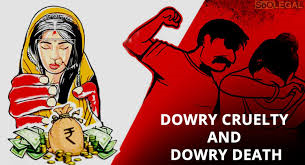
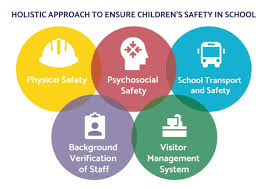

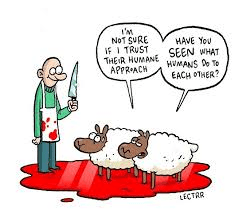


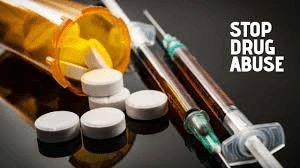
 Eduindex
You must be logged in to post a comment.