

Addiction is a disease that affects the brain of a person and their behaviour, when a person is addicted to drugs and they cannot resist the urge to use them, no matter how much harm the drugs may cause. Drug Abuse is when a person use legal or illegal substances in ways they should not. He might take more than the regular dose of pills or use someone else prescription.
He may abuse to feel good, ease stress or avoid reality. Around 50% of death occurs through the drugs. It leads to the depression and the anxiety seen in the person who is addicted to drugs, they can harm any person like family or friends or anyone. It harms the society and the coming generations.
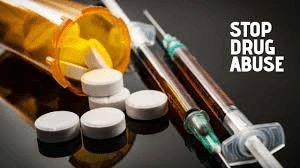
Drugs related to crime because using of drugs is a criminal activity in India, if they do not have money they indulged themselves in different way to get money. Drugs control the human mind and their behaviour and the person become depressed or may either go on trauma of drugs because drugs have the direct connection with brain of the person. Drugs have very harmful effect on the human body but people enjoy the drugs and we can directly see the side effect within a week or a month and person become habitual day by day.
Approximately 40 lakhs people are addicted to drugs in the country and according to scientific theory when a person consumes drug, it immediately kills 1 lakh cells in seconds which will result in memory loss.
Drugs Abuse has a variety of symptoms which varies with the drug being used. Such symptoms can include aggression, irritability, personality changes, depression, and poor physical coordination.
Development of Drug Abuse
It is difficult to identify the regular drug use and drug abuse. When a drug fulfils a valuable need and it becomes a mechanism to calm or energize oneself it will result in drug abuse. Drug abuse start when a victim gets to know of a drug for the first time in social situation with friends and desire to fit in the society give way to drug abuse.
Drug abuse starts deteriorating a person both mentally and physically. It stops social and intellectual development of a person.
Laws for Drugs in India
The main drug laws in India are the Narcotic Drugs and Psychotropic Substances Act (1985) and the Prevention of Illicit Trafficking in Narcotic Drugs and Psychotropic Substances Act (1988). The Narcotic Drugs and Psychotropic Substances Act came into force on 14 November 1985.
It was introduced in the Lok Sabha on 23 August 1985 and passed by both the houses of Parliament. Under this act, it is illegal for a person to produce/manufacture, possess, sell, purchase, transport, store and consume any narcotic drug. Narcotics Control Bureau was set up on March 1986. This act has been amended three times- in 1988, 2001 and 2014. In 2014 Amendment recognizes the need for pain relief as an important obligation of the government. It creates medicines called Essential Narcotic Drugs (ENDs).
Country now has a uniform law covering and power for legislation on ENDs has been shifted from state government to central government. In 2015, government announced that NDPs rule would be applicable to all states and union territories. It included six drugs namely Morphine, Fentanyl, Methadone, Oxycodone, Codeine and Hydrocodone. There is a single agency- the state drug controller who approved recognized medical institutions (RMIs) for stocking and dispensing ENDs.
RMIs are obliged to ensure proper documentation and submit annual consumption statistics to drug controller of the state. The prevention of Illicit Trafficking in Narcotic Drugs and Psychotropic Substances Act is a drug control law passed in 1988 by the Parliament of India. It was established for the full implementation and enforcement of the Narcotic Drugs and Psychotropic Substances Act of 1985.
Punishment
- Sentencing of punishments under NDPS Act based on the quantity of the drugs. If the contravention involves small quantity which is smaller than 1kg, the imprisonment may extend to six months and fine may extend to 10,000.
If contravention involves quantity lesser than commercial quantity but greater than small quantity, the imprisonment may extend to 10 years and fine may extend to 1 lakh. Commercial quantity involves imprisonment which shall not be less than 10 years and fine may be extend to 2 lakh.
2. Death penalty has also been included as a form of punishment under NDPS Act. In case of repeated offence like manufacturing, production which involved large amount of drugs, courts can award death sentence. Death penalty was mandatory through 1989 amendment but in 2014 amendment death penalty was made discretionary and an alternative punishment of imprisonment was introduced.
Chief Law Enforcement- National Control Bureau
National Control Bureau established on 17 March 1986. The Narcotic Control Bureau (NCB) is the chief law enforcement and intelligence agency of India. It is responsible for fighting drug trafficking and the abuse of illegal substances. It was created for the full implementation of Narcotic Drugs and Psychotropic Substances Act (1985).
Most Common Drugs Used in India
Heroin: This drug is derived from opium from the poppy pant before it is refined to morphine then chemically modified into heroin. When heroin is consumed by a person then it will affect the receptors of the brain. Frequent usage of this drug causes collapsed veins and infection of the blood vessels and heart valves.
Cocaine: It is used as an anaesthetic in the medical field. It is commonly ingested through nose or rubbing it on the gums. Cocaine increases the dopamine levels in the brain without allowing it to reset. Its short term effects are extreme mental alertness, irritability, restlessness and hypersensitivity. Long term effects include deterioration of the respiratory tract and permanent damage of the organs.
Lysergic acid diethylamide (LSD): This drug is available in the form of tablets and it creates a state of hallucinations causing the user to lose touch with reality. LSD is responsible for consciousness and it stimulates the serotonin receptors in the brain. Person loses the ability to comprehend physical sensations correctly.
Crystal meth: This drug is highly addictive. It is manufactured illegally. This drugs travels through the blood stream to the brain and release dopamine. It can cause hyperactivity and making the user to push their body beyond its limit.
Conclusion
Drug Abuse is a big problem in India and it affects the victim’s life and destroys their life. It changes the behaviour of the victims and they cannot resist without consumption. Different laws were made by the legislature to decrease the risk of drug use. It is a self-destructive of a person with the symptoms of aggression, irritability, personality changes, depression and sleep cycle disorder. We should take some action against the evil of drug abuse and if things go well it will help to cure the society.

 Eduindex
You must be logged in to post a comment.