

LEGAL RESTRICTIONS ON RELIGIOUS SLAUGHTER OF ANIMALS IN EUROPE
I. Comparative Summary.
This report includes surveys of the laws of 25 European jurisdictions concerning the legality of religious slaughter of animals, updating and expanding the Law Library’s March 2018 report. All European countries that do not allow kosher or halal slaughter of animals are included; some but not all countries that permit such slaughter subject to regulation are also included.
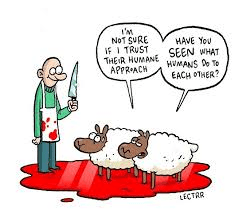
In addition, the report summarizes a February 2019 European Court of Justice decision on religious slaughter and organic labelling. The Council of Europe’s Convention for the Protection of Animals for Slaughter and the European Union (EU) Council Regulation 1099/2009 provide that animals should be stunned before they are slaughtered. Both also provide that Member States may allow derogations from the stunning requirement to allow for ritual slaughter.
Jewish and Islamic methods of slaughter developed over centuries, partly to provide for a method of killing that minimized the animal’s suffering. Legislation requiring stunning prior to slaughter began to be adopted in parts of Europe in the late nineteenth century.
Under Islamic law, some authorities reject all forms of stunning prior to slaughter, while other authorities accept certain types of prior stunning.
Given the sincerely-held religious beliefs of observant Jews and many Muslims, requiring stunning before slaughter clearly implicates international human rights law on freedom of religion, including the European Convention on Human Rights. Several European countries do not allow derogations from the general requirement of prior stunning. These include Sweden, Norway, Iceland, Denmark, and Slovenia. Switzerland and Lichtenstein recently amended their prior stunning rules to eliminate exceptions for poultry. Finland requires concurrent sedation; legislation is pending that would require prior stunning. At the subnational level, two of the three regions of Belgium have recently enacted laws requiring prior stunning, and their enforcement has not been stayed while challenges are pending in Belgium’s constitutional court. Some countries mandate post-cut stunning, including Austria, Estonia, Greece, and Latvia.
Other European countries permit derogations from the general requirements to allow for religious slaughter. The cases of Cyprus, France, Germany, Luxembourg, and Spain illustrate different forms that regulation of ritual slaughter may take, while Poland, where religious slaughter is currently legal, offers an interesting history concerning the legality of religious slaughter. Among countries that were states of the former Soviet Union, petitions to outlaw ritual slaughter of animals have not resulted in legislation in Georgia or Russia.
In 2019, the European Court of Justice ruled that meat from animals slaughtered without stunning cannot bear the EU’s logo for organic products because that logo implies the use of processes that minimize the suffering of animals being slaughtered.
II. Country Surveys
Austria
Austria generally prohibits the killing of animals without stunning. A no-stunning permit for ritual slaughter may be obtained if killing without stunning is necessary according to mandatory religious instructions or prohibitions of a recognized religious denomination. The ritual slaughter must take place in slaughterhouses specially established and authorized by the authorities for this purpose. In addition, the permit will only be granted if
• the ritual slaughter is performed by persons possessing the necessary knowledge and skills;
• the ritual slaughter is performed exclusively in the presence of a veterinarian in charge of slaughtering and meat inspection;
• equipment is available to ensure that the animals intended for ritual slaughter can be brought into the position required for slaughtering as quickly as possible;
• the slaughter is performed in a way that the large blood vessels in the throat area are opened with one single cut;
• the animals are effectively stunned immediately after opening of the blood vessels (post-cut stunning);
• the stunning becomes effective immediately after the cut is performed; and
• the animals intended for ritual slaughter are not brought into the required position before the anesthetist is ready to perform the stunning.
Belarus
Presently, in select constituent components of the Russian Federation, religious offerings of animals are prohibited in public places by the order of local governors and must be conducted at designated slaughterhouses. It appears that the ongoing customary practice of religious slaughter disregards Customs Union rules in force since 2014 concerning production of meat and meat products jointly adopted by the governments of Belarus, Kazakhstan, and Russia that provide that preliminary immobilizing (stunning) of an animal is required for slaughter for food consumption.
Belgium
Religious slaughter is not prohibited at the federal level, but two of Belgium’s three regions have recently adopted legislation to prohibit the practice. The Parliament of Wallonia issued a decree on May 18, 2017, requiring that animals be stunned before slaughter regardless of whether religious rules allow it. This prohibition on religious slaughter took effect on August 31, 2019. The Flemish Parliament adopted a similar measure on June 28, 2017, which took effect on January 1, 2019. Violation of these prohibitions is made punishable by fines of between €52 and €2,000 (approximately US$64 and $2,463). The Brussels-Capital region, however, does not appear to have adopted any similar prohibition yet. The Belgian court has declined to suspend enforcement of the decrees while the cases are pending, and it is unclear when the Constitutional Court will render its decision.
Luxembourg
Luxembourg has required since at least 1995 that animals be stunned prior to being slaughtered, and previously did not provide any exception for religious slaughter. The 1995 regulation has since been repealed and replaced by one that transposes European Union Regulation (EC) No. 1099/2009 of 24 September 2009 on the protection of animals at the time of killing into Luxembourger law. Under this new regulation, there now is an exception for religious slaughter, subject to authorization by the government upon written request on the part of the religious authority.
Netherlands
Until recently, Dutch law made an exception for killing animals without stunning for ritual slaughter and also allowed the export of such meat. However, in July of 2017, the Dutch government, representatives of slaughterhouses, and Muslim and Jewish faith leaders concluded an addendum to their original agreement, which established rules for ritual slaughter. The addendum states that ritual slaughter is only allowed insofar as it is “necessary to meet the actual needs of the local religious community in the Netherlands,” thereby effectively banning the export of such meat. The stricter rules apply from January 1, 2018, onwards.
Norway
Norway has a population of almost 5.3 million, of which an estimated 1,200 are Jews and an estimated 30,000 are Muslims. Norway is a member of the European Economic Area. It has thus transposed European Union Regulation (EC) No. 1099/2009 on protecting animals at the time of slaughter into its domestic legislation.
Slaughter of animals is regulated in the Norwegian Animal Welfare Act. It provides that animals must be sedated prior to slaughter, specifically noting that sedation is also required for religiously slaughtered animals.
The sedation method accepted under law depends on what animal is to be slaughtered. Poultry and sheep may be sedated using electricity, a non-penetrating bolt, or a penetrating bolt. Cattle may only be slaughtered using a penetrating bolt pistol. There are no additional requirements for religiously slaughtered animals.
Norwegian law allows for the import of kosher and halal meat that has been slaughtered without prior sedation. In addition, halal slaughter is performed in Norway by Muslims who allow for sedation prior to slaughter. Halal meat slaughtered in Norway may be exported, provided the slaughter is performed in accordance with Norwegian law. Halal-marked food must meet the same labelling requirements as other food products, including not being misleading to consumers as to the content and origin of the product. There are no pending proposals in the Norwegian Parliament to allow for religious slaughter without prior sedation.
Poland
The slaughter of animals without stunning has at times been prohibited in Poland, but at present it is permitted. A provision of the Animal Protection Act that allowed for religious exceptions to pre-slaughter stunning, the only accepted method of animal killing, was repealed in 2002. Nonetheless, the Jewish community has been allowed to continue slaughtering animals for religious purposes pursuant to the 1997 Act on the Relationship between the State and Jewish Religious Communities in the Republic of Poland. Followers of Islam, however, had not been legally permitted to conduct ritual slaughter without stunning the animal. An attempt to correct this situation was initiated by the Minister of Agriculture in 2004 when he issued a decree allowing for an exception to the requirement to stun an animal prior to slaughter in the case of animals slaughtered according to the religious traditions of registered religious communities. This decision was overturned by a 2012 decision by the Constitutional Tribunal of Poland, made effective January 1, 2013, which said that a government minister does not have the authority to amend the laws. However, in December 2014, in another decision, the Constitutional Tribunal ruled that insofar as the Animal Protection Act does not allow an exception to permit religious forms of slaughter, it is inconsistent with freedom of religion provisions of the Polish Constitution and the European Convention on Human Rights, and therefore ritual slaughter must be permitted. Recent news reports have indicated that pending legislation to revise the animal welfare law could impose restrictions on kosher slaughter and block the export of kosher meat from Poland. The extent to which the legislation would in fact affect religious slaughter is unclear.
Russia
As in Georgia, Russia’s national legislation is silent regarding the protection of animals with respect to methods of slaughter for religious purposes. See the discussion of Customs Union rules under Belarus.
Slovenia
Slovenia’s Animal Welfare Act was amended in 2012 to add provisions banning all ritual slaughter of animals.
Spain
Under Law 32/2007 on the Care, Exploitation, Transportation and Sacrifice of Animals, Spain allows religious slaughter without previous stunning in approved slaughterhouses, provided that such procedure does not violate fundamental rights, public safety, health, and morality protected by law. The religious community or slaughterhouse must notify the competent authority that religious slaughter will be carried out or seek the pertinent permission. Religious slaughter must be carried out under the supervision and instructions of an official veterinarian. Royal Decree 37/2014 Regulating Aspects Related to the Protection of Animals to Be Slaughtered implements Law 32/2007 and provides for specific licensing, training, and certification requirements for slaughterhouses and veterinarians carrying out the slaughter of animals. It provides for the requirement of a license certifying their competence, to guarantee that the persons in charge of carrying out the slaughter have the necessary ability and experience. Violations of the Law and its Regulation are subject to fines of €601 to €6,000 (approximately US$740 to $7,384). Additionally, violators may be subject to the suspension of activities and/or closing of the slaughterhouse. No restrictions on the export of kosher or halal meat were identified.
Sweden
Sweden has a population of approximately 10.1 million people. Statistics Sweden (the national statistics bureau) does not provide statistics for religious affiliation or ethnic background, but others have estimated that there are 18,000 Jews and 810,000 Muslims living in Sweden. Sweden banned slaughter without prior sedation in 1937. The slaughter of animals is regulated by Sweden’s Animal Protections Act, which provides that animals must be sedated prior to slaughter. There is no exception for religious slaughter.
The sedation method accepted under law depends on what animal is to be slaughtered. Poultry and sheep may be sedated using electricity. Cattle may only be slaughtered using a penetrating bolt pistol. There are no additional requirements for religiously slaughtered animals compared with non- religiously slaughtered animals.
Swedish law allows for the import of kosher and halal meat that has been slaughtered without prior sedation. In addition, halal slaughter is performed in Sweden by Shafi and Hanifi Muslims who allow for sedation prior to slaughter. Halal meat, like all other meat slaughtered in Sweden, may be exported, provided the slaughter is performed in accordance with Swedish law. There are no requirements that halal meat be marked as halal. There are no pending proposals (motioner) in the Swedish Parliament to allow for un-sedated religious slaughter. The anti-immigration Sverigedemokraterna (Swedish Democrats) party has put forward a proposal that would require labelling of imported meat from animals slaughtered without prior sedation, specifically referring to a ban on kosher and halal products. Both the Jewish congregation in Stockholm and Muslim representatives are actively lobbying the Swedish Parliament to allow for slaughter in accordance with kosher and halal practices, i.e., without prior sedation of the animal. The Swedish government has presented a proposal to the law council (lagrådsremiss) for a new Animal Welfare Act. The proposal would not allow for religious slaughter without prior sedation.
Switzerland
Previously, Switzerland generally prohibited the killing of vertebrate animals without stunning. In 2018, its Animal Welfare Regulation was amended and an exception allowing the ritual slaughter of poultry without stunning was eliminated. Anyone who intentionally violates the provisions on animal slaughter is liable to a fine of up to CHF20,000 (around US$21,371).
III. European Court of Justice
The European Court of Justice ruled on February 26, 2019, that meat from animals slaughtered without stunning cannot be labelled using the EU’s logo for organic products. While affirming that Regulation 1099/2009 permits slaughter without prior stunning as a derogation from general requirements to preserve freedom of religion, the Court ruled that the EU regulation governing organic production requires the use of processes reflecting a high level of animal welfare, including minimizing the suffering of animals at the time of slaughter. The Court found that slaughter without stunning is inconsistent with the high level of animal welfare implied by the organic logo.

 Eduindex
You must be logged in to post a comment.