PERFECT COMPETITION MARKET

Market refers to all such system or arrangements that bring the buyers and sellers in contact with each other to settle the sale and purchase of goods.

PERFECT COMPETITION- It is a form of form of market where there is large no. of buyers and sellers of a homogeneous product whose price is determined by forces of supply and demand. An individual buyer has no control over price.

FEATURES- i) Large no. of buyers and sellers: All producers contribute insignificantly to the market. A firm can sell any amount of good at given price it cannot influence market price. So firm is considered as price taker, not maker.

ii) Homogeneous Product- Zero degree of product differentiation led uniform price in market. There is no selling or advertisement costs.

iii) Free entry and exit conditions- Firm earn only normal profits in long run as in case of extra normal profits new firms will join industry and supply increases causing fall in price and vice-versa.

iv) Perfect knowledge on the part of buyers and sellers- The buyers know in full about the commodity sold and the price prevailing in the market. The sellers know the potential sales at various price levels in the market.

v) Independent decision making- Firms do not form trusts or cartels so we have maximum output and minimum price.

vi) Absence of transport cost- If transport costs are incurred, prices should be different in different sectors of the market.

vii) Perfect mobility of factors of production- It leads to uniform price of factor, no matter who hires it.

In the long run, perfectly competitive firms will react to profits by increasing production. They will respond to losses by reducing production or exiting the market. Ultimately, a long-run equilibrium will be attained when no new firms want to enter the market and existing firms do not want to leave the market, as economic profits have been driven down to zero.

So this competition is hypothetical in nature.

Price Determination under Perfect Competition: Equilibrium of Firm
PRICE ELASTICITY IS INFINITY.

Need of the Hour

Retrieved from thedailymeal.com

We all love a fit body whether it’s a guy or girl. From old to young, nobody wants to be fat, obese or overweight. But when it comes to eating, most of us love eating outside food, junk food, street food, overall, the food which tastes delicious. When somebody talks about getting up early in the morning or to sleep early at night, we grumble. When someone talks about having fruits, juices etc, we like the idea but when we have to do it, we give it a toss. We love talking about health and healthy food but when it’s time to corporate that healthy habit in our lifestyle, then we take a back foot. We all love that aromatic pizza, yummy burger, spicy pani-puri, sizzling chats and other things more than vegetables, grain, legumes as they look and taste awesome and satiate out taste buds whereas veggies and other things are just boring.

This is the era when everyone is running at a fast pace and in this fast-paced world, fast food has just made its place silently without letting anyone know that where they are full of taste, they are packed with hazardous food chemicals which look innocent but are dangerous for our bodily system. A poor diet may lead to health risks like heart disease, hypertension, diabetes, osteoporosis, obesity and certain types of cancer as well.

But if we switch to healthy food habit and make our youngsters learn about healthy food habit as habits are carried from childhood to adulthood, we can save ourselves from such problems. Migrating to healthy diet doesn’t mean that we have completely forget food which tastes good but we can find a good alternative of those. And when we follow healthy habits for a longer time, it changes our mindset as well. Then our mind also comes in our control and all those things which looked tastier earlier, we would not like to look at those things.

When we talk about a healthy diet, many people will come about the idea of keeping fast, dieting or other such rituals which may help you in taking shortcuts and becoming lean soon but never ever forget that for a long run success, shortcuts are never an option. With shortcuts we may lose our weight soon but along with it will come weakness from inside because of which we lose our energy.

It’s not some short time process which will lead to a miracle. It’s a long-term commitment to ourselves to become healthy, fit, charged up, energetic and disease free. To achieve that we have to work on ourselves daily, by adapting to a good diet, eating proper amounts of veggies and legumes to fulfill our proteins, calcium and vitamin intake.

Apart from this we have to incorporate working out or exercising in our daily routine. When we exert out, we help excretion of toxic substances present in our body through perspiration. We can opt for dancing, go for a brisk walk, running, yoga, Zumba or adapt any other technique which helps to flush out the waste materials out of the body. It helps us to keep our body in shape and makes us feel fresh throughout the day. It helps us in sleeping well and keeping our cholesterol level in check and increases our bone-density.

We can opt for meditation as well; it calms us from inside. Meditation helps us in achieving mental stability, improves our cognition and keeps our mental health in check. It is really necessary to keep our body and mental health balanced as both body and mind are connected, one cannot function without another. Meditation along with soft music not only helps us to keep our mental health stable, it helps us to connect with ourselves as listening to good music enhances capability of minds and instills peace in a person. We all have seen that when we are going through a rough patch in a day, listening to music helps us in healing us from inside and boosts us to be cheerful instantly. Right music has the power of vanishing all of the worries we go through.

Along with giving attention to right food, meditation, exercising daily, we have to follow one more thing religiously and regularly, and we have to be strict about that habit. Yes, I am talking about drinking water. Drinking water is really mandatory for our body and it is advised that a person should drink 10-12 glasses of water daily that is approximately, 2-3 litres daily. We may find alternatives to everything, from food to exercise but water has no other alternative. We have to drink it without any excuse. We all know that 60% of our body constitutes water and water is excreted from the body mainly in the form of perspiration and urine. So, to keep ourselves hydrated, we have to drink water otherwise we will become prone to all types of diseases. Having a doubt why to drink so much water daily. Here are its benefits:

Water helps us in lifting our mood. Water is a miracle drink which helps us in keeping fit by delivering oxygen throughout the body, maintaining body temperature, flushing out body waste, lubricating our body joints, keeping our digestive system fit, keeping our kidneys strong and maintaining our weight as well.

B.K.S. Iyengar has rightly said, “Health is a state of complete harmony of the body, mind and spirit. When one is free from physical disabilities and mental distractions, the gates of the soul open.” We don’t need to be fit to lose weight only, we need to be physically and mentally fit to be happy and attain peace and wisdom.

Northwest-Shoals Community College (NW-SCC)

 Welcome to the online and distance education experience at Northwest-Shoals Community College (NW-SCC).  NW-SCC is proud to offer a variety of educational opportunities through online education. Our courses teach the very same objectives and outcomes as courses offered on campus; the difference is in the delivery. Instead of attending a class where an instructor provides a lecture and leads a classroom discussion, distance courses are delivered over the Internet and/or through video capture. Most courses require approximately 9-12 hours per week during the semester to complete the assigned work. These courses require as much commitment as any traditional on-campus class. They require dedicated, ongoing, and regular participation.

While the requirements and commitment are the same for online and distance courses versus on-campus courses, online and distance education offers definite advantages. Students may complete their coursework at any point during the day, instead of a set class time. Online classes fit within students\’ work schedules or family commitments. Concerns such as lining up transportation to and from class or arranging for childcare while in class aren\’t an issue with online classes; the classes may be attended from any place where you have a working computer.

NW-SCC will be working on improving Distance Education programs and support over the next five years through the college\’s Quality Enhancement Plan (QEP) titled In-Sync: Improving Distance Learning, Support, and Success.  To learn more about this project, visit our QEP Website.

Earn an Associate\’s Degree 100% Online

NW-SCC offers students the ability to earn an Associate in Science or Associate in Arts degree completely online. These degrees prepare students to transfer to another institution to pursue a four-year degree. Based on Spring 2019 tuition and fee rates, approximate total cost for courses in this program is $9,360 plus books and possible test proctoring charges if students choose to take exams off-campus.

Academic Plan (Fall Admit)
Academic Plan (Spring Admit)

Getting Started

A variety of online and distance course options are available each semester at NW-SCC. To view this semester’s class offerings, click here to view the current course schedule.

To get started:

  • View Steps for New Distance Students

  • ​Complete the Distance Education Orientation (Operation: Early Launch)

  • To access the orientation:

    • Log into Moodle

    • Username:  NW-SCC \’N\’ Number (student number)

    • Password:  Six-Digit (mmddyy) Birthdate

  • With the exception of possible test proctoring fees, tuition & fees for Distance Education courses are the same as for on-campus courses.  Please see current tuition and fee listing for updated cost information.

  • Registration is the same as for on-campus courses.  All students may register online, but new students should talk with an advisor in our campus advising center before registering (advising@nwscc.edu or 256-331-5221).

  • ​View current class schedule

  • Review the Distance Education Student Handbook for policies and services related to Distance Education.

  • Visit the Technology Resources site for information on Computer and Personal Skills needed to be successful as well as information on tools used in our courses.

NC-SARA Logo

State Authorization

To protect students located outside the state of Alabama who may take distance education courses, NW-SCC has joined the National Council for State Authorization Reciprocity Agreements (NC-SARA).  This enables students to take distance courses with us who are located in other states, with the exception of California.  Students located in the state of California or outside of the U.S. should contact the Distance Education Office before enrolling.

Note to Students Located Outside the State of Alabama:   If you are located outside the state of Alabama and are seeking certification or licensure, must pass an exam administered by a particular state, or are required to complete some type of internship such as cosmetology or nursing, you should verify that credit will be accepted in the state where you are located before enrolling in classes.

Students enrolling in the blended NAS100 (CNA) course must complete clinical requirements in the state of Alabama; this program prepares students to take both the written and skills examinations required by the Alabama Department of Health (ADPH) to be a Certified Nurse Assistant (CNA) in the state of Alabama.  It is not intended to prepare students for certification in states other than Alabama.  However, we are contacting other states to determine if course credit / certification earned at NW-SCC may apply in those states.  Those determinations will be posted to the chart linked here.

NW-SCC must provide enrolled and prospective distance education students with information on filing complaints or grievances with the college, with its accrediting agency, and with the appropriate state agency for handling complaints in the student\’s state of residence/location.  Please review the information linked below from our Distance Education Student Handbook for details.

Northeast Alabama Community College

 Whatever your education needs, Northeast Alabama Community College (NACC) will provide you with an opportunity to set the foundation for your future. As a comprehensive community college, NACC provides educational programs in academic transfer, career and job training, cultural activities, the fine arts, and adult basic education. College personnel strive for excellence and the result is a community college that is one of the best in the South.

Know that when you enroll in one of our academic transfer programs and follow the appropriate guidelines that your courses are guaranteed by state law to be accepted at any public college in Alabama. For more information on this visit the STARS website at http://www.nacc.edu/STARS.htm. Know, also, that our career programs are among the best in the state. Our nursing students, for example, consistently pass National Council Licensure Examination (NCLEX) for registered nurses at a rate much higher than state and national averages. Take part, or simply enjoy our outstanding cultural arts programs at Northeast, such as those in theatre, music, art, and the humanities. NACC has steadily built a reputation as a major center for the arts in North Alabama. Perhaps you need job skills training and refresher courses in developmental studies; these opportunities are available at NACC as well.

As you read through this catalog, know also that financially there is a way for you to attend NACC. Our tuition is very affordable — only fifty to sixty percent of that at a four-year school. Additionally, NACC operates an outstanding financial aid and scholarship program. Our student loan program, in fact, provides anyone with the opportunity to attend Northeast. Loans are made with little or no interest in the repayment schedule. The college has never been so accessible.

While at Northeast, students may take part in a diverse range of activities, such as intramural sports, physical activities, academic honoraries, professional and career groups, student government, clubs, and organizations. We want our students to enjoy their experiences here at Northeast and our campus is lined with courtyards, flower gardens, sidewalk tables, and benches. The college has a walking/nature trail around a four-acre lake on the north end of campus. We know that at a college much learning takes place in the interaction of fellow students, faculty, and staff. Our college is designed toward providing that interaction.

We at Northeast are proud of the national recognition that we have received in recent years. The prestigious Aspen Institute, for example, has named NACC is one of the top community colleges in America. Also, CNNMoney ranked the college the fifteenth best among the approximately 1,200 American community colleges, and BestSchools.org named Northeast the twentieth best in the nation. The college has doubled its enrollment over the past decade and added new programs and buildings. Our state-of-the-art Mathematics, Science, and Engineering Technology Center was recently opened. As one of the first completely Wi-Fi access locations in Alabama, we take special pride in the educational technology that we have on campus. This technology includes twenty-two computer labs that serve students. Attend Northeast and find out why our Instructors are so often described as the “best teachers I ever had” by so many people who attend the college. Come join us at Northeast and feel the energy and pride of an institution that is on the move. You will forever be a part of the Northeast family! Begin your future here!

Dr. David Campbell, President

Northeast Alabama Community College

Douglas MacArthur State Technical College


History of the College

Douglas MacArthur State Technical College

Douglas MacArthur State Technical CollegeOn May 3, 1963, Governor George C. Wallace announced that Opp would be the site of a postsecondary technical institution that would serve five South Alabama counties.  A local committee, chaired by Opp City Schools Superintendent Vernon L. St. John, directed plans for the construction of the school one mile north of downtown Opp on a 100 acre campus provided by the City of Opp and the Covington County Board of Revenue.  Mr. E. C. Nevin, then principal of Kinston High School, was appointed President.

On November 22, 1965, Douglas MacArthur State Technical College opened its doors, admitting 116 students in twelve departments.  The campus consisted of four buildings, the George C. Wallace Administration Building and three shop buildings. 

In the next several years, six additional buildings were added to the campus.  These were the Gaines Ray Jeffcoat Building, the Vernon L. St. John Building, the Henry R. Donaldson-Bennie Foreman Building, the E. Claude Nevin Building, an electronics building and the Student Center.

Mr. E. Claude Nevin retired in December of 1982, and Dr. Raymond V. Chisum was appointed President in January of 1983.  The Raymond V. Chisum Health Sciences Building was added in 1996. 

After Dr. Chisum’s retirement in August of 1996, Mr. L. Wayne Bennett was named Interim President and served until the merger with Lurleen B. Wallace Junior College in January of 2003.

Lurleen B. Wallace Junior College

Lurleen B. Wallace Junior CollegeOn December 14, 1967, the Alabama State Board of Education authorized the development of a junior college to be located in Andalusia, Alabama.  On August 15, 1968, the State Board of Education named the College the Lurleen Burns Wallace State Junior College in honor of the former governor.  Dr. William H. McWhorter was appointed the first president.  In September of 1969, the College opened in the Bethune School, a temporary location leased from the Covington County Board of Education.  In May of 1970, the College moved to its new campus consisting of 112 acres, an administration/classroom building and physical education dressing rooms.

The 160 acre Andalusia campus consists of nine buildings, six lighted tennis courts, a lighted baseball field, a lighted softball field, a two-mile scenic trail, a nine-hole golf course and driving range, and expansive parking.  Dr. and Mrs. Solon Dixon of Andalusia, Alabama, through the Solon and Martha Dixon Foundation, have provided more than $3 million through the years for facility development, such as the Solon and Martha Dixon Center for the Performing Arts and the Dixon Conference Center.

On August 31, 1990, Dr. McWhorter retired and Dr. James D. Krudop was named Interim President until February 1, 1991, when Mr. Seth M. Hammett was selected as the new President.

Extensive renovation, remodeling, and refurbishing of the infrastructure of the College took place with twenty-six major projects undertaken.

On October 6, 1992, groundbreaking ceremonies took place for construction of a new 11,300 square foot facility on seventeen acres of property in Greenville, Alabama.  This facility opened for classes in the fall of 1993.

President Hammett retired in June of 2002 and Dr. James D. Krudop served as Interim President until the merger with Douglas MacArthur State Technical College in January of 2003.

Lurleen B. Wallace Community College

Lurleen B. Wallace Community College in AlabamaOn January 23, 2003 the Alabama State Board of Education took official action to merge Lurleen B. Wallace Junior College and MacArthur State Technical College.  Dr. Edward Meadows was appointed President on that date, with the responsibility of providing leadership to bring about the consolidation of the two colleges to create Lurleen B. Wallace Community College.  The Commission on Colleges of the Southern Association of Colleges and Schools recognized the two institutions as a singly accredited community college in December, 2003.  The Alabama State Board of Education took final action regarding the merger in December, 2003, and the U.S. Department of Education recognized the two colleges as a single institution in January, 2004.  The successful consolidation resulted in a multi-campus, comprehensive community college with campuses in Andalusia, Greenville, and Opp, Alabama, serving the counties of Butler, Crenshaw, Coffee, Covington, and Geneva. 

In 2004, a ten-year Facilities Master Plan was developed to facilitate the programmatic growth of the College as a result of the consolidation and expanded mission of the College.  Major renovations and new construction were undertaken at the Andalusia and MacArthur campuses to accommodate new programs and courses.  In 2005, construction of a 30,000 square foot technology center was initiated on the Greenville campus to facilitate the expanded comprehensive mission of that campus.

In January 2006, the College established a center in Luverne with the primary function of offering adult education and training for business and industry.  Classes were held in the former National Guard Armory which was leased from the Armory Commission.  The State Board of Education approved the purchase of the Luverne facility in July 2007.  In February 2015, SACSCOC gave its approval to offer complete programs of the College at this center.

In October, 2006, the Vermelle Evers Donaldson Cosmetic Arts Center was dedicated on the MacArthur Campus.  In November, 2007, the College celebrated the completion of two new buildings:  the Child Development Center on the Andalusia Campus and the Technology Building on the Greenville Campus.

Dr. Meadows retired as President in August, 2008 and Mr. L. Wayne Bennett served as Interim President of the College until December 31, 2008.  On January 1, 2009, Dr. Herbert H. J. Riedel began his service as President of Lurleen B. Wallace Community College.

The Wendell Mitchell Conference Center on the Greenville Campus was completed in August, 2009.  Renovations to the Luverne Center were completed in 2009 as well.   This year also saw completion and implementation of the college’s five-year strategic plan.

Renovation to the Martha and Solon Dixon Center for the Performing Arts entrance was completed in 2010 and a landscape enhancement plan for the Andalusia Campus was developed. The first phase was completed in 2012, and included a drop-off area in front of the performing arts center, an enhanced streetscape along Dannelly Boulevard with improved drainage, new curbs, angled parking, more than 40 new trees, and additional attractive street lighting.  A concrete patio with picnic tables and benches was also added in front of the Jeff Bishop Student Center as a place for students to sit and relax outdoors.

A collaborative effort between LBWCC, the LBWCC Foundation, and local, state, and national government entities resulted in the creation of Saints Hall in 2013, a Foundation-owned student housing apartment complex adjacent to the Andalusia campus. This collaboration resulted in the College being named a 2014 Bellwether Award Finalist by the Community College Futures Assembly.

In 2015, following the passage of Alabama Act No. 2015-125, LBWCC was placed under the governance control of the newly created Alabama Community College System Board of Trustees.  That same year, LBWCC celebrated the 50th anniversary of providing higher education in South Alabama. 

In 2016, LBWCC received a five-year, $2.25 million grant under the U.S. Department of Education’s Title III “Strengthening Institutions” program.  This grant is designed to improve academic and student services and includes online advising and early intervention tools, success coaches, and resources for starting a new Physical Therapist Assistant program.

In 2017, the College’s federally funded Upward Bound program was not refunded and ceased operation.  However, a grassroots community effort secured sufficient local funds to start a new program, called Apex, that serves the same population of high school students to prepare them for college success.

As a result of several initiatives contained in the 2014-2019 Strategic Plan, LBWCC won national recognition in 2018 as an AACC Awards of Excellence finalist in Student Success, based on exceptional increases in fall to fall retention, graduation rates, and other measures.

The members of the Douglas MacArthur State Technical College Foundation (DMSTCF) and the Lurleen B. Wallace Community College Foundation (LBWCCF) voted in May 2019 to merge the DMSTCF into the LBWCCF.  The combined Foundation will administer endowed scholarship funds from both prior foundations and raise money to support students at all locations of LBWCC.

On June 12, 2019, the ACCS Board of Trustees authorized LBWCC to enter into an agreement with the LBWCC Foundation for the lease, operation, and management of the Foundation’s student residential property known as Saints Hall.  Under the terms of this agreement, the College has the option to purchase the housing complex for a nominal amount at the end of the United States Department of Agriculture loan, on January 8, 2044.

Following the retirement of Dr. Herbert H. J. Riedel, the Alabama Community College System appointed Mr. Bryan Helms as Acting President of Lurleen B. Wallace Community College on September 3, 2019.  Mr. Helms served in this role until December 31, 2019.  Effective January 2, 2020, The Alabama Community College System appointed Dr. Chris Cox as Interim President of Lurleen B. Wallace Community College. 

LBWCC’s 2020-2025 Strategic Plan was approved by the College’s Executive Council on February 11, 2020.  The goals and objectives in this document will serve as a roadmap to guide the College over the next several years.


live the life YOU want!

It is very devastating to know there are millions of people in the world who are sacrificing their entire life because of the complications that the society tagged in every relationships. I have seen situations where our gender tries to win over the base of our very existence. What is the purpose of living? Amidst the relentless battle to live and survive, we often forget why are we living for? I am sure people may have different reasons to run their lives but the basic reason is to make themselves happy. But we are living in such a world now, where seeking our own happiness, seeking the very base of our existence has been termed as selfish. Just imagine, what it would have been, if everybody lives on account of their wishes. What if everybody was happy in their life, what if everyone loved their way of life. What a heaven it would have been! Why do we have to sacrifice this? Why can’t we decide our life the way we want. Why is it very hard to realize that being divorced is okay? Why is it so confusing and daring to seek second marriage? Why is it so shameful to be single always? And for heaven’s sake why is it so simple and common to spend our life with people who don’t value us? Live life freely! You have got only one. Live peacefully. Every single individual deserves to be happy. Everybody has the sole right to decide what’s good for them.
If deciding your future for your happiness is considered as selfish, then proudly accept you are selfish. Because you don’t have to give your life up for others.

How to balance both work & life ?

There used to be a time when the domain of work and personal life were clearly distinct. But with globalization becoming the norm of the day the chances of work encroaching into one’s personal life and vice versa has become alarming. If you think one day you will be lucky enough to get everything set and then relax, you are bound to be disappointed. Life will be always demanding and may not slow up any time soon. Learning to strike a balance between work and life is an ongoing art. Despite the never ending quest for ‘Work-Life Balance’ it has been cropping in our mind what does it actually mean.  

Work–life balance is a broad concept including proper prioritizing between “work” ( career and ambition ) on the one hand and “life” ( health, pleasure, leisure, family and spiritual development ) on the other. It is also related to “lifestyle balance” and “life balance”. Sadly, there is no perfect ‘one-size fits all’, balance you are looking for. It is different for each of us because we all have different priorities and different lives. Trying to schedule an equal number of hours for each of your various work and personal activities seems unrealistic and robotic. Life is and should be more fluid than that.  

The paradox is that right balance for you today will probably be different tomorrow say when you are single or when you get married, or when you start a new career or are nearing your retirement. Work-life balance is a two-pronged approach. The other prong of work-life balance, which many individuals overlook, relates to what individuals do for themselves. Our haphazard lifestyle has put us in the paraphrase of “I am running all the time.” At the core of an effective work-life balance are two key concepts that are relevant to all of us. They are daily achievement and enjoyment. Why do you want a better income, a new house, a good college or a dream job ? Achievement and Enjoyment are the front and back of the coin of value in life. Trying to live a one sided life is why so many “successful” people are not nearly as happy as they should be.  

Engraining a fuller meaning of these two concepts is like half the battle won to define a positive ‘Work-Life Balance’. Most of us already have a good grasp on the meaning of achievement. But enjoyment is not restricted to simply ha ha. It means pride, satisfaction, happiness, celebration, love, a sense of well being, in a nutshell it means all the joys of living. On the other hand corporate world today has become exceedingly demanding. The changing economic conditions and social demands have changed the nature of work throughout the world. Within the ramped up competition of a 24/7 business cycle, ‘work-life’ balance is becoming unbalanced. The imbalance also has a negative impact in the personal life of working people- increasing number of divorces, infertility due high stress levels, advent of nuclear families etc.  

While we strike for a work life balance, we are not merely balancing our profession and family, we are also balancing our mental and status quo and thereby balancing our emotional intelligence, which is the worldly ability to manage you and to handle others. This benefits the company in the long-run. Similarly, women work force now constitutes a significant percentage of the total work force in any organization today. Women executives have to deal with- running a home, doing daily chores like cooking/cleaning, raising family and handle the tight deadlines at home and work. The society over the years has recognized women’s need to legal and financial independence. But the transition to motherhood still continues to have practical and emotional consequences. It also affects their professional stature when they return to work.  

Organizations today to some extent have realized the importance of the employee-work-life balance and its importance in the efficiency of the employees. They can help facilitate work-life balance for their employees through work-life programs and training. In offices also, efforts are being made to provide friendly work atmosphere for the employees by providing all sorts of refreshments available for the employee. The employees are given the freedom to have their own ways of doing the work. They are given the assignments with deadlines and they can have their own schedule as far as they are meeting the deadlines. Some organizations have gone to the extent of involving the families of the employees by introducing maternity leaves / paternity leaves and various holiday packages and insurance schemes. Organizations now focus on grooming their employees who are now not considered merely a work force but regarded as the ‘Human Capital’ of the organization.  

To maintain work-life balance is an arduous task. But still it is within one’s reach, if one follows the simple tips listed here :  

Plan your agenda : Start your day by taking care of the little things you have to do at home. A little planning is essential. Taking care of home needs in advance will help you to be less tensed during working hours. Strike a work-life balance by evaluating your work-home relationships like listing out the amount of time you are spending at work and home.  

Organize : Everything in your business should be set up using logical systems so anyone needing anything can find it when they need it.  

Prioritize ruthlessly : The secret to booking your time effectively boils down to knowing what’s important and what can wait. Ask questions that help you determine the level of urgency.  

Don’t overbook : Things rarely go according to a prearranged agenda. Don’t try to plan on doing too many things. Assume that only 50% of the things you plan on doing today will actually get done. If you don’t, you’ll just waste valuable time trying to find out why things didn’t happen.  

Be Productive : Switch on to the work mode when you are at work. Be sure that you shut off the part of the brain that makes you worry about your home life. Remind yourself that it is work time and you need to be most productive.  

Learn to say no : One of the biggest land mines to effective time management is recognizing you don’t have to agree to everything and with everyone. Use your priority criteria to identify requests that simply aren’t worth your time.  

Everything is not perfect : Time management isn’t an exact science. Do what you can and enjoy whatever time you spend more pleasantly or productively.  

Focus on Home Life : While you are enjoying your home life, try to avoid intruding into work life by checking emergency e-mails or answering work- related phone calls. The best way to focus on home life will be crumbled to pieces if you intrude into your work life while at home.  

Hence, the concept of ‘Work life balance’ is becoming more and more relevant in a ever-dynamic working environment. The role played by the individual is as important as that of the organization in managing this tumultuous see saw. One of the best approaches to this is by the use of one’s emotional intelligence. Be sure to remember that striking a work-life balance is a continuous process, rather than a one-shot deal. Work and home life should be balanced. If there is a tilt in the balance there are chances of soaring stress levels.

Business success in failure

No business is a failure until you give up. Business literature is full of people, who despite having faced setbacks, have risen beyond the challenges and moved forward in life. There are ups and downs in any business and it is important to learn from one’s mistakes and make improvements on existing plans. In particle physics, it is said that sub-atomic particles are so small that they cannot be observed until they collide with one another. The same principle applies in the business arena. If your business is doing well, it is difficult or even impossible to tell the difference between success and failure. However, once problems arise, your tenacity and determination to succeed are tested. This is when success and failure becomes evident.   

Walt Disney, co-founder of Walt Disney Productions, dream of becoming a newspaper cartoonist when he was young. However, no one was willing to hire him. So, he established a commercial art studio and took up a part-time job to support himself. Later, he started an animation company, which was a huge success in Kansas City, US. Unfortunately, the company went bankrupt. But this did not stop Walt Disney from pursuing his dreams and interests. Despite his initial failure, he rose to the challenge, learnt from his mistakes and started all over again in Los Angeles, US. Today, Walt Disney is considered one of the greatest entrepreneurs of all time. And Walt Disney Productions, now popularly known as The Walt Disney Company, is a multi-billion dollar company, with more than 150,000 employees worldwide.   This is a true example of ‘business success in failure’. In every setback, Walt Disney learnt important and valuable lessons, which acted as seeds that eventually grew into a tree of success.  

According to experts, acceptance of failure is essential for business growth. Making mistakes is not taboo; not understanding your mistakes is taboo and detrimental to progress. Kingfisher Airlines was one of the top performing companies in India till December 2011. In fact, its customer base was growing by leaps and bounds and it had the second largest share in India’s domestic air travel market. Unfortunately, due to a major financial crisis faced by the company in early 2012, its market share fell sharply and it was forced to shut down its operations. There are many airline companies in the world that have faced financial problems. However, they have managed to enhance their services and products to gain more market share. One such company is Southwest Airlines.  

Every year, Southwest Airlines manages to turn a profit, even during difficult times. After many trials and errors, Southwest Airlines managed to come up with a policy that works for them – keep operations simple. This way, the airline company saves cost and manages to attract more passengers. Southwest Airlines does not assign seat numbers. This way, when there are last minute changes to an airplane, the crew need not make changes to seating arrangement and issue new boarding passes. Such innovations and novel ideas are essential for the survival of businesses. It is true that failure is the forgotten ingredient of business success. People associate failure with shame, embarrassment and weakness. Failure is disappointing, no doubt, but it makes a business stronger. Once you know what can hurt your business, you will try your best to avoid them and prevent mistakes from occurring again. Plus, failures make you more confident of your abilities. Business leaders who have faced challenges are more determined and confident than those who have been enjoying success all along. So, business is not considered a failure when its market share drops or it loses revenue; it is a failure when you give up.  

Businesses fail for many reasons. The following list includes some of the most common reasons :

1 – Lack of planning – Businesses fail because of the lack of short-term and long-term planning. Your plan should include where your business will be in the next few months to the next few years. Include measurable goals and results. The right plan will include specific to-do lists with dates and deadlines. Failure to plan will damage your business.

2 – Leadership failure – Businesses fail because of poor leadership. The leadership must be able to make the right decisions most of the time. From financial management to employee management, leadership failures will trickle down to every aspect of your business. The most successful entrepreneurs learn, study, and reach out to mentors to improve their leadership skills.

3 – No differentiation – It is not enough to have a great product. You also have to develop a unique value proposition, without you will get lost among the competition. What sets your business apart from the competition? What makes your business unique? It is important that you understand what your competitors do better than you. If fail to differentiate, you will fail to build a brand.

4 – Ignoring customer needs – Every business will tell you that the customer is #1, but only a small percentage acts that way. Businesses that fail lose touch with their customers. Keep an eye on the trending values of your customers. Find out if they still love your products. Do they want new features? What are they saying? Are you listening? I once talked to the CEO of a training company who told me that they don’t respond to negative reviews because they are unimportant. What? Are you kidding me?

5 – Inability to learn from failure – We all know that failure is usually bad, yet it is rare that businesses learn from failure. Realistically, businesses that fail, fail for multiple reasons. Often entrepreneurs are oblivious about their mistakes. Learning from failures is difficult.

6 – Poor management – Examples of poor management are an inability to listen, micro-managing – AKA lack of trust, working without standard or systems, poor communication, and lack of feedback.

7 – Lack of capital – It can lead to the inability to attract investors. Lack of capital is an alarming sign. It shows that a business might not be able to pay its bills, loan, and other financial commitments. Lack of capital makes it difficult to grow the business and it may jeopardize day-to-day operations.

8 – Premature scaling – Scaling is a good thing if it is done at the right time.  To put it simply, if you scale your business prematurely, you will destroy it. For example, you could be hiring too many people too quickly, or spend too much on marketing. Don’t scale your business unless you are ready. Pets.com failed because it tried to grow too fast. They opened nationwide warehouses too soon, and it broke them. Even the great brand equity that they have built couldn’t save them. Within a few months, their stock went from $11 to $0.19.

Book Review: The Alchemist

Books are our best friends. Every book makes us learn something new which and gives us knowledge. The genre of the book doesn’t matter.

But the most loved genre of a book is fiction, because it takes a reader in a whole new dimension, a new world and let the reader feel the story of the book. It makes us so connected with the characters of the book that it feels like we are one of them.

Their are some books who are total fiction and aren’t possible in real life. Books like, Harry Potter are example of this. But few fictions have the stories which is actually possible in reality. One of those book is The Alchemist by Paulo Coelho who is a Brazilian author. Initially, the books was written in Portuguese but has been translated in around 70 languages.

The Alchemist is a story of a shepherd, Santiago, who leaves his flock and his land to pursue his dream. A boy who is on a journey of discovering his destiny and realising his dream of finding a treasure. This story tells us that the happiness, contentment, peace & joy of one’s life lies within his journey towards his dream of life.

While reading this novel , the reader enjoys the journey of Santiago and learns a lot of t hings which Santiago learns from his journey.

Most importantly, one learns the idea of living in present and investing all your strength and energy in your present is really helpful for a better future.

Overall, it is a fantastic book and the storytelling is beautiful. The choice of words are impeccable, full of wisdom and philosophy. The story is very enchanting and bursts with optimism which I think is very important in our lives. The book shows that the journey to your destiny is as important as the destiny itself. The way in which the book emphasizes on the importance of faith, hope and spirituality through the story of an ordinary boy is amazing. I think this book appeals to everyone because we all have dreams and sometimes we just want someone to tell us that they may come true. I can’t believe how one can write such beautiful words in his very first book. There are many quotes written inside the book which gives the reader the way to live the life. This exciting fiction novel deserves a space in everyone’s bookshelf.

Angular and React

To increase the efficiency of programming these technologies are used by web developers especially frontend developers. Angular is a Typescript which is a superset of Javascript whereas React is a library used in javascript. By using these in-demand technologies you can take your programming skills to the next level, making code more clearer and user-interface more intuitive.

React

Maintained by Facebook, React.js is an open-source JavaScript framework for the creation of desktop, cloud, and smartphone device user interfaces. Unlike most websites, those built with React do not have server-side rendering but are rendered in the browser. This ensures that users don’t have to wait for a server answer to make a new tab. It’s a lot smoother ride, which is especially essential for smartphone apps.

The React Tool Library helps developers to create components that have been dropped to a web page. Such modules, which are like unique HTML parts, are what visitors can use on the web. Components can be shared through applications and can be modified even more quickly than digging for lines of code. Organizations utilizing React include Twitter (and Instagram), Uber, and Netflix, among many.

Angular

Angular is an all-in-one open-source JavaScript platform developed by Google to develop extremely sensitive single-page applications. Unlike React, the Angular-based platform can display any improvements created to the app in the window. Instead of connecting with a server to load info, the browser-side interface enables a website to make a more mobile-like interface easily. Angular, which recently saw the introduction of the newest edition of Angular 9, is based on TypeScript, a JavaScript superset.

Because React is a JavaScript library as opposed to Angular ‘s full JavaScript framework, many developers will add more libraries when using React to give it full framework functionality.

The output of the website itself is the most critical aspect for potential users of your application. Load time and runtime affect how long your consumers can connect with your web page.

Although Angular is usually a quick platform, its package size, which means the code created and uploaded for deployment, tends to be huge. For Angular now utilizing the Ivy generator, the scale of the stack is decreasing. It’s also built with enough optimizations that users are unlikely to encounter major performance issues on the larger Angular website. React continues to shine on smaller devices as it’s designed to prioritize certain page activities over others so that it feels smoother to the end-user.

Tell another app developer if you should go for Angular or React, and you’re sure to get a separate answer from each other. Sadly, there is no one-size-fits-all approach when it comes to software applications and repositories, or how they would better support the project or business needs. Until selecting one method over the other, continue playing with each one by testing the Angular and React courses.

Hope you guys find this helpful. Happy learning!

New Epidemics Pouring In!

No, I am not talking about any movie but about our earth which is continuously under threat of one disease or other. The reason is nothing else but our own habits and activities. Day by day global warming is increasing at a higher rate. Our encroachment of wildlife areas always lands us in a soup. COVID-19 is one of the major examples how our trespassing in wild areas has led to the death of 772,000 humans. If we won’t stop interfering with nature, soon we may see more catastrophic situations.

Our Eco prints may harm the earth in other ways: warming of the planet has led to the change in the climate with an increase in Celsius helping infectious diseases to regain their footprint. As the infectious diseases which are sealed under deep snow have the risk of coming out due to thawing of ice. In Serbia, a child got ill from a disease which had vanished from the place 75 years ago.

It is speculated that if ice thaws too much and brings out our biggest fear, which is, the diseases which have made Neanderthals, woolly rhinos, mammoths sick and disappear from this earth. The small pox which was said to be eliminated, their return in those areas after 50 years is not a coincidence.

We are just getting the taste of our medicine and it has just started. So it’s a high time to wake up and give our best shot in saving the earth.

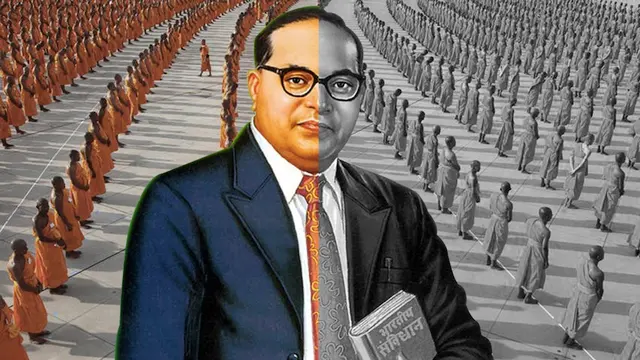
B. R. Ambedkar

Bhimrao Ramji Ambedkar was an Indian economist, politician and social reformer. He was also known as Babasaheb Ambedkar. He campaigned against social discrimination against the lower castes or Dalits of the country. Completing his doctorate from Columbia University and The London School of Economics, he gained reputation as a scholar for his research in economics, law and political science. 

In the early phases of his career, he was an economist, professor and lawyer. Towards the later phases, he was actively involved in campaigns for India’s independence. He published journals and advocated for political and social rights for Dalits. He made a significant contribution to the establishment of the state of India. He was the first Minister of Law and Justice of India and the chief architect of the Constitution of India. 

He had a Marathi family background and was from the town of Ambadawe in Ratnagiri district of modern-day Maharashtra. Ambedkar was born into a poor Mahar (Dalit caste), who were treated as untouchables and faced a lot of socio-economic discrimination. Although he attended school, Ambedkar and other untouchable children were segregated from the rest of the children and given little attention by teachers. They were not even allowed to sit inside the class. He had to sit on a gunny sack which he took home after school. When they needed to drink water, someone from a higher caste had to pour that water from a height as they were not allowed to touch the water vessel. It was usually the peon who did this for him and on days when the peon was not available, he had to go without water. He had later described this as “No peon, No water” in one of his writings.  

During British rule, Ambedkar’s effort for the political representation of the oppressed untouchables of India bore fruit in the 1920s. The colonial state was forced to include two members from among the Dalits in the Round Table Conference in 1930. This eventually led to the framing of the Government of India Act, 1935.   

From 1927, Ambedkar launched active movements against untouchability. He began public movements and marches to open up public drinking water resources for all. He led a satyagraha in Mahad to fight for the right of the untouchable community to draw water from the main water tank of the town. He also began a struggle for the right of Dalits to enter Hindu temples. In a conference in1927, Ambedkar publicly condemned the Hindu text Manusmriti (Laws of Manu), for ideologically justifying caste discrimination and “untouchability”. He ceremonially burned copies of the ancient text. On 25th December 1927, he led thousands of followers to burn copies of Manusmrti. Since then 25 December is celebrated as Manusmriti Dahan Din (Manusmriti Burning Day) by Ambedkarites and Dalits.  

In 1956, he converted to Buddhism, initiating mass conversions of Dalits which eventually led to the Dalit-Buddhist movement. 

A few days after completing his final manuscript ‘The Buddha and His Dhamma’, he died in his sleep on 6 December 1956 at his home in Delhi.  

WHY SO NEGATIVE FOR BURKHA ?

IT WAS EVENING , I WAS CHILLING OUT WITH MY FRIENDS ONLINE , AS EVERYTHING IS VIRTUAL NOW A DAYS ,BUT , WE GET CHANCE TO TASTE NEW THINGS AND SAVING NEW MEMORIES . WE WERE TALKING ABOUT RANDOM THINGS AND TAKING FREQUENT SWITCH FROM ONE TOPIC TO ANOTHER . MY BUDDIES ARE VAERY MUCH IN INTRESTED IN KNOWING ABOUT MY RELIGION ‘ISLAM’ , THEY USUALLY ASK ME QUESTIONS AND OPINIONS ABOUT NUMERABLE THINGS REGARDING IT AND I LOVE ANSWEREING IT . ONE OF THEM ASKED ME ABOUT MY FAMILY ‘s NATURE REGARDING MY STUDIES , ARE THEY OPEN MINDED IN THIS CASE ? , I SAID YES , IF THEY WERE NOT , THEY WOULD HAVE ENROLLED IN DISTANCE EDUCATION RATHER THAN IN A REGULAR COLLEGE . HE FURTHER ELABORATED THE QUESTION BY ADDING HIS THOUGHTS ABOUT BURKHA IN IT . I WAS NOT SHOCKED WHEN HE SAID , ” MTLB ZADA SHADI KRDO N BHURKHA , VGERA ” . MY EYES SHINED UP AFTER READING THEESE WORDS AND I TOOK IT AS AN OPPORTUNITY TO CLEAR THE VISION REGARDING “BURKHA WEARING ” .

AN IDEA CLICKS IN MY MIND , TO WRITE AN ARTICLE ON IT . I KNOW HE IS NOT THE ONLY ONE WHO HAS THIS PERCEPTION BUT THERE ARE MANY WHO HAVE THIS KIND OF THINKING , DUE TO WHICH THEY ALL MOCK . HERE , I AM GOING TO CLEAR YOUR VISION ABOUT IT AND GIVING YOU A POSITIVE OUTLOOK . HONESTLY SPEAKING , I DON’T WEAR BURKHA , BUT , I AM NOT AGAINST IT . I DON’T SEE IT WITH DEMEANING EYES . EVEN , IN MY FAMILY , FEW WEAR BURKHA AND FEW NOT , THERE IS NO PROBLEM UNLESS AND UNTIL YOU ARE FULLY COVERED. IT’s NOT ISLAM FORCING US WEAR TO BURKHA , BUT , THOSE LITTLE MINDS WHO HAVE INJECT POISON TO THIS WITH THIER NEGATIVE THINKING. I LOVE TO WEAR BURKHA AND HIJAB , IT GIVES SO ELEGANT AND CLASSY LOOK , IS N’T IT ? YOU ALL MUST HAVE SEEN GIRLS , THEY LOOK SO BEAUTIFUL AND THEIR BURKHAS ARE ALSO VERY MODEST . THEY TOO WEAR WESTERN DRESSES JUST BECAUSE THEY LOVE TO WEAR , BUT , THEY WEAR BURKHA OVER IT WHEN THEY STEP OUT , BUT , IN THEIR OWN PERSONAL SPACE , THEY DON’T WEAR BURKHA , THEY FLAUNT WESTERN DRESSES IN THEIR PERSONAL SPACE .

NOW , ITS TIME TO CHANGE YOUR PERSPECTIVE TOWARDS IT , WE ALL GIRLS KNOW THE SUFFERING OF TANNING , SUN BURN , RASHES AND WHAT NOT DUE TO THE CHANGES IN ENVIROMENT . WE USE SKEEVES , WEAR SCARFS , COVER OUR WHOLE FACE WITH A CLOTH THAT MEASURE EVERY CORNER FROM OUR FACE TO OUR HANDS , JUST TO SAVE OURSELVES FROM TANNING . THEN WHAT DOES BURKHA DO ? IT COVERS US AND SAVE US FROM ALL THE PROBLEMS , ALL THE DUST AROUND RIGHT ? . THEN WHY SO MUCH LOVE FOR SCARF WHICH IS THE SIMPLER VERSION OF BURKHA WHAT WE CALL HIJAB , BUT WHY HATE FOR BURKHA ? BOTH ARE SO MUCH CONNECTED , ARE N’T THEY ? . IT’S NOT ABOUT WEARING BURKHA , IT’S ABOUT THE ‘LITTLE MINDS’ BEHIND, FORCING GIRLS TO WEAR IT AND SPREADING NEGATIVES REGARDING IT .

JUST THINK ABOUT IT !

Effect of covid-19 on working culture and recruitment of workers from market for an organisation

With the ongoing COVID-19 pandemic, many organizations have to rapidly adjust their way of working. It’s forcing a digitalization that many companies had spoken about, and perhaps mentioned in their marketing, but are now having to implement at breakneck speed.

Fortunately today, the technical aspects of remote work are much easier. Everything from Google docs, Hangouts, Zoom, and Skype for communication, as well as cloud-based process management tools such as Jira, make life significantly easier. However, there is a difference between being technically ready, and being culturally and emotionally ready for this new world.

Maintaining the company culture during the tremendous change

During times of change, and when almost from one day to the next, your workforce needs to shift how it works, your culture will come under strain. You may have individuals and teams working for the first time both at home, and physically separated.

While the initial focus will, of course, be on maintaining your customer relationships and ensuring your business can successfully navigate this new world, it’s also critically important to consider the impact on your employees and on your culture.

Meanwhile, we all have to understand that the current situation is like a tunnel and we don’t know how long this tunnel is, so better we should respect the time & liberty given by the organization and stay connected with each other through technology.

Work from home is “New Normal “

All the organizations worldwide have ordered their employees to work from home. Work from home has become an unprecedented event or a shift in the working culture but is it working the way the employer is expecting.

The responsibility of bringing movement on in the work is on the shoulders of both Employer and employee. Company culture, leadership, employee experience, and digital workplace experiences are now being put to the test. The way many companies work changed overnight. Massive numbers of workforces have gone remotely. Travel restrictions have gutted the ability to accomplish certain tasks. Team collaboration, moral support and the ability of executive teams to pivot, and quickly, have seemingly never been more paramount.

Dawn of the new era of digital workplace : Whatever the future of digital workplaces may one day look like, it is already true to say that people working from home face some specific challenges:

Those who work from home or remotely from elsewhere inevitably accept that the clear boundaries between their professional and private lives will blur. And while teleworking can provide more freedom and flexibility, it is also associated with the need for greater personal responsibility. Managers and affected employees must therefore jointly examine how the balance between private and professional needs can be maintained – not least from the point of view of protecting health.

THE PANDEMIC HAS FORCED THE ADOPTION OF NEW WAYS OF WORKING. ORGANISATION MUST REIMAGINE THEIR WORK AND THE ROLE OF OFFICES IN CREATING SAFE, PRODUCTIVE AND ENJOYABLE JOBS AND LIVES FOR EMPLOYEES.

Covid-19 has brought human and humanitarian challenges. Many companies around the world have risen to the occasion, acting swiftly to safeguard employees and migrate to a new way of working that even the most extreme business-continuity plans hadn’t envisioned. Across industries, leaders will use the lessons from this large-scale work-from-home experiment to reimagine how work is done—and what role offices should play—in creative and bold ways.

Changing attitudes on the role of the office

Before the pandemic, the conventional wisdom had been that offices were critical to productivity, culture, and winning the war for talent. Companies competed intensely for prime office space in major urban centers around the world, and many focused on solutions that were seen to promote collaboration. Densification, open-office designs, hoteling, and co-working were the battle cries.

organizations are looking ahead to the reopening and its challenges. Before a vaccine is available, the office experience probably won’t remain as it was before the pandemic. Many companies will require employees to wear masks at all times, redesign spaces to ensure physical distancing, and restrict movement in congested areas (for instance, elevator banks and pantries). As a result, even after the reopening, attitudes toward offices will probably continue to evolve.

These steps reimagine work and workplace :We recommend that organizations take the following steps to reimagine how work is done and what the future role of the office will be.

  1. Reconstruct how work is done

During the lockdowns, organizations have necessarily adapted to go on collaborating and to ensure that the most important processes could be carried on remotely. Most have simply transplanted existing processes to remote work contexts, imitating what had been done before the pandemic. This has worked well for some organizations and processes, but not for others.

For both processes and cultural practices, it is all too tempting to revert to what was in place before the pandemic. To resist this temptation, organizations could start by assuming that processes will be reconstructed digitally and put the burden of proof on those who argue for a return to purely physical pre–COVID-19 legacy processes. Reimagining and reconstructing processes and practices will serve as a foundation of an improved operating model that leverages the best of both in-person and remote work.

2. Decide people to work or work to people

Roles can be reclassified into employee segments by considering the value that remote working could deliver:

  • fully remote (net positive value-creating outcome)
  • hybrid remote (net neutral outcome)
  • hybrid remote by exception (net negative outcome but can be done remotely if needed)
  • on site (not eligible for remote work)

3. Redesign the workplace to support organisational priorities

We all have ideas about what a typical office looks and feels like: a mixture of private offices and cubicles, with meeting rooms, pantries, and shared amenities. Few offices have been intentionally designed to support specific organizational priorities. Although offices have changed in some ways during the past decade, they may need to be entirely rethought and transformed for a post–COVID-19 world.

To maintain productivity, collaboration, and learning and to preserve the corporate culture, the boundaries between being physically in the office and out of the office must collapse. In-office videoconferencing can no longer involve a group of people staring at one another around a table while others watch from a screen on the side, without being able to participate effectively.

4. Resize the footprint creatively

The pandemic has forced the adoption of new ways of working. Organizations must reimagine their work and the role of offices in creating safe, productive, and enjoyable jobs and lives for employees.

.

?

.

Foreign investment increasing in India

Economies of many countries have been affected due to coronavirus. India is no different. But India is trying its level best to attract companies from all over the world to invest in India and setup there branches here in India. Many companies across the world have announced that they will be setting up their factories in India.

It will help India become a manufacturing hub which in turn increase India’s export business and at the same time provide employment opportunities to a lot of people. Almost 22 mobile companies will be able to create around 12 lakh employment opportunities. Among these, there will be 3 lakh direct and 9 lakh indirect jobs. All this mobile companies cumulated will be investing ₹1 lakh crore, producing mobiles worth ₹11 lakh crore. The foreign companies investing in India include companies like Apple, Samsung, Rising Star.

Currently China which has a global supply chain across the world is seeing many companies backing out from there. India at the same time is trying to attract all these companies to India. According to sources alomost 300 out of 1000 companies which have come out from China are in talks with the Indian government. If things work out there is chance of more investment and employment opportunities in India.