
CHANGING ERA OF TELEVISION IN INDIA!

Television plays a very important role in human’s life. It is one of the main and the common source of entertainment. TNS consultancy report says that mostly people stay loyal to television every day. Television is considered as a main source of entertainment because it contains variety of channels related to news, music, sports, entertainment, movies, multilingual, bhakti, informational, cartoon, reality shows and many more. So, it’s suitable for every age group whether a child, youngster or an adult. Anyone can watch it according to their preference from anywhere.

Earlier in 1959 when television was introduced in India it was very heavy in weight with a small screen inside it. Everyone can’t afford it at that time so then it was only found in some rich houses. People has to adjust their antenna to find signal for watching T.V. That time it came with only one national channel named as ‘Doordarshan’ which was introduced by government. Colour of the screens were black and white so it was also considered as black and white T.V. People have to adjust volumes with the regulator that was fitted with T.V. as that time remotes were not invented to operate T.V. Later Doordarshan channel was the combination of all the news programmes, fictional or non-fictional shows or drama and many other categories of programmes. Then many shows like ‘Yeh toh hai zindigi’, ‘Buniyaad’, ‘Vikram Betal’, ‘Mahabharat’, ‘Ramayana’ etc. were telecasted on T.V. These shows gained so much of popularity among the people. That age was considered as the golden age of Television as all the family members sit together to watch it.

With new innovations in technology, television industry also changed slowly and gradually by the time. Many people started affording T.V. at their homes. Now we can find T.V. almost in every house. Black and white T.V. were converted to the colour T.V. and its content quality also enhanced by the time. Afterwards, remote was invented, remote is the device by which we can operate our television we can adjust volumes or channels easily by sitting at one place. Antenna T.V. has been replaced by DTH (Direct-to-home) T.V. DTH is a digital satellite service through which variety of channels are broadcasted on television. We can enjoy approximately 800+ channels in one set top box. T.V screens became bigger by the time and now variety of brands (Panasonic, L.G, Videocon d2h, Sony etc.) of television are available in market. Anyone can afford television according to their choice or preferences related to brands, resolutions (3D, OLED, LCD, LED, 4K etc), size or DTH services (Tata sky, Dish T.V., Videocon d2h, etc.)

In India the new age of Television is more advanced and innovative. Now we can choose our favourite channels according to our preferences as it is a cost and time saving option. We can easily choose/deduct the channel we want/ remove from our DTH packs just by just calling our cable operator or through a particular DTH app. Smart T.V. are newly introduced in market. These televisions come with advanced features, technology and better resolutions. Now we can access over thousands of web series, movies, shows and cartoon through internet on television. Android apps like YouTube, Facebook, Instagram, twitter, Netflix, Amazon prime, Voot and many more apps can be accessed on T.V. Smart T.V. are really big in their size and screens and it also gives 3D picture quality. Some Smart T.V.’s even contains web cam in it through which we can easily connect with anyone by just sitting at our homes or at any other place.

So, in coming years Television will be introduced with more such advanced and interesting features and innovations like Wifi, increased piracy etc. And social media trends like Facebook, Instagram, twitter etc will provide inputs for marketing, pricing and story trends too and many more. These features will make life easier as it will save more time and cost too with full entertainment in return.      
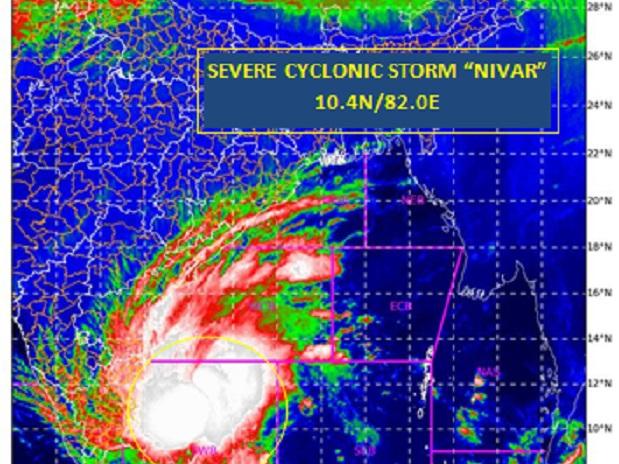
Nivar storm will hit in few hours.

Due to low pressure in the Bay of Bengal, the storm is going to hit in southeast India. Whose name is nivar.Which can have the highest impact in Tamil Nadu, Pondicherry, and Andhra Pradesh.

The effect of which is already visible. some trees have fallen on top, winds have intensified in some places. Today 6 trains have been canceled due to preventive storm.According to the Meteorological Department, the storm is moving at a speed of 6km / hr. Prime Minister has spoken to the Chief Minister of Andhra Pradesh, Pondicherry, Tamil Nadu and assured of all possible help. There has been complete preparation from the government. 1200 and other 800 people of ndrf have been deployed in rescue operations. Simultaneously, orange alert has been declared in the coastal areas. It is believed that a hurricane may hit Mallapuram in Tamil Nadu on the coastal areas of Konackarai. The storm is likely to hit mallapuram to konackarai coastal areas.

Public Centered Democracy & Far Fetched Healthcare

Kerala’s proactive reaction to the COVID-19 pandemic was made conceivable as a result of the solid establishment set somewhere around the Kerala Model of Development also. Directly from the first communist government in 1957, social mobilizations by Left and progressive associations and the reactions to them by the state governments now and again, have made an additional people – focused and responsive majority rules system in the state. This, thusly, has fortified open interests in health and education, making ready for Kerala to accomplish social records that are at standard with the most developed countries on the planet.

The Kerala Model weaves in a rights-based methodology in the formative and government assistance activities embraced by the state. This methodology has been maintained in the state’s battle against COVID-19, as well.

COVID-19 shows itself not just as a health crisis, yet in addition as a financial emergency. The way that Kerala declared a far reaching COVID-19 monetary help bundle of Rs. 20,000 crore on March 19, much before reporting a lockdown on March 23, is an unmistakable marker that directly from its onset, Kerala has been tending to the two sides of this test. It was a far reaching measure which accommodated welfare annuities, ration and basic supplies, interest free credits, salary through the rural job guarantee schemes MGNREGS, relaxation in taxes and pay of utilities and a healthcare package.

Indeed, even amidst this pandemic, the state government’s methodology was rights-based and individuals focused. This guaranteed the overall population, including migrant laborers, was dealt with. What’s more, since they were guaranteed of the help because of them well ahead of time, they didn’t need to come out of their homes looking for help, or damage lockdown conventions for their survival It is this blend of arrangement ahead of time and doling out of relief measures that encouraged Kerala to continue with its healthcare intercessions in an issue free way.

Kerala’s emphasis on general wellbeing began directly from the times of the EMS Namboodiripad-drove Left government of 1957–1959. The methodology was clear in those days, to give general wellbeing administrations to all, with no distinction based on money related capacity or societal position. Likewise, present day offices and administrations were to be set up in District Hospitals, Local Fund Dispensaries were to be taken over by the government and research was to be led on transferable illnesses in order to take up preventive measures.

Thusly, to guarantee general wellbeing all around, logical and network intercessions were depended on in healthcare, undertaking mass crusades for immunization, etc. Measures of general wellbeing were step by step raised through centered intercessions directly from the low base, at the degree of Primary Health Centers or PHCs.

In spite of progression, Kerala’s general wellbeing part has stayed hearty on the grounds that, when health was looked to be made a ‘trade in services’ under the World Trade Organization’s GAT or General Agreement on Trade and Services, Kerala immovably opposed it.

The Left and progressive movements in the state took a harsh remain against it, saying that general health services can’t be changed into a profit-making sector for private entities. General health services  ought to be available to the whole society, as a right; this was the view that was advanced by  Kerala’s progressive sections when that debate was raging.

Remaining consistent with that convention, the current Left Democratic Front (LDF) government has additionally significantly put resources into the general health frameworks in Kerala, especially through the Aardram Mission, planned for making government hospitals human inviting. It has improved infrastructural offices and services in government hospitals and health focuses.

PHCs have been moved up to Family Health Centers with the goal that way of life sicknesses and third gen medical issues can be tended to. Super-specialty treatment – for heart and kidney ailments –  is presently accessible at District and Taluka Hospitals. Special treatment is given to handling second and third world medical issues and lifestyle diseases.