India has recorded a milestone in COVID-19 vaccination with administration of over seven crore vaccine doses. The country has also administered the first dose to more than six crore beneficiaries.
The Health Ministry Ministry said, so far a total of seven crore six lakh 18 thousand 26 vaccine doses have been given to the beneficiaries. Yesterday, over 12 lakh 76 thousand vaccine doses were given till 8 pm on the 77th day of nationwide COVID19 vaccination.
In a significant step to exponentially expand the countrywide Vaccination drive, the Centre has decided to operationalise both public and private sector COVID Vaccination Centres on all days this month.
The Centre has written to all the States and Union Territories and asked them to make necessary arrangements to provide COVID vaccination in these Centres on all days of the month including gazetted holidays.
Meanwhile, Covid-19 vaccination for persons above 45 years of age is gaining momentum. India’s immunisation drive which began on 16th of January this year is the World’s largest vaccination programme. Healthcare and frontline workers got inoculated first.
Then it was extended to people over 60 years of age and people with comorbidities. And from yesterday onwards people above the age of 45 and without any comorbidities are being given the jabs.
The Centre has asked the States reporting a surge in COVID-19 cases to take immediate and high effective measures to ensure containment of active cases and daily deaths through adherence of the standard Clinical Management Protocol. Eleven States and Union Territories including Maharashtra, Punjab, Karnataka, Delhi, Haryana and Chhattisgarh have been categorised as States of grave concern on account of rising daily cases and higher deaths.
Cabinet Secretary Rajiv Gauba yesterday chaired a high-level review meeting with Chief Secretaries, DG Police and Health Secretaries of all States and Union Territories. During the meeting, it was pointed out that Tier II and Tier III cities along with peri-urban areas have recorded the recent rise in COVID cases. It was also highlighted that the spread of infection from these areas to the rural areas with weak health infrastructure would overwhelm the local administration.
The States have been asked to increase testing continuously to ensure that positivity comes down to five per cent or less. Focus on ensuring RT-PCR tests should comprise 70 per cent of total tests and setting up of Containment Zones and Micro Containment Zones to break the chain of transmission were also advised.
Taking note of the present situation due to the continuous deterioration of the COVID scenario over a fortnight, the Cabinet Secretary pointed out that the current COVID case growth rate of 6.8 per cent last month has surpassed the previous record of 5.5 per cent in June 2020.
The country also reported 5.5 per cent growth rate in daily COVID deaths in this period.
External Affairs Minister Dr S Jaishankar has said that India remains committed to further building the momentum of regional cooperation under the BIMSTEC framework and make the organization stronger, vibrant, more effective and result-oriented. Delivering a statement at the 17th BIMSTEC Ministerial Meeting being held virtually today, Dr Jaishankar expressed confidence that BIMSTEC would scale new heights in the times to come with the collective efforts and spirit of cooperation. He said, BIMSTEC enjoys the unique strength of connecting South and South-East Asia and it has steadily gained prominence in the Indian foreign policy.
Dr Jaishankar said, participation of BIMSTEC leaders at Indian Government’s swearing-in ceremony in May 2019 was a testament to it. He said, BIMSTEC over the years has emerged as a promising sub-regional grouping with growing strategic and economic interests of the Member States, as well as of the international community in the Bay of Bengal region. The Minister said, our collective resolve to impart a fresh dynamism to BIMSTEC has rejuvenated the organization. He expressed happiness that the region is witnessing rapid economic growth with growing political and economic cooperation among the Member States.
Dr Jaishankar said India had announced several initiatives at the last BIMSTEC Summit in Kathmandu to further strengthen BIMSTEC cooperation and capacity-building in diverse areas. He expressed happiness that many of these initiatives have already been implemented.
Dr Jaishankar said, development and prosperity go hand in hand with peace and security. He said, the region face both traditional and non-traditional security challenges and cooperation in the security sector has a special significance for the region. The Minister said, National Security Advisors of Member States have met thrice since 2017 and they have been working closely and moved forward in several aspects of security cooperation including counter terrorism, intelligence sharing, coastal security and cyber security in a tangible manner.
Dr Jaishankar expressed happiness that BIMSTEC Convention on Cooperation in Combating International Terrorism, Transnational Organized Crime and illicit Drug Trafficking has come into force last month and BIMSTEC Convention on Mutual Legal Assistance in Criminal Matters has been finalized for signing at the fifth BIMSTEC Summit. He said, these Conventions will provide a robust legal basis to further strengthen our cooperation in this sector.
The Minister said, disaster management is another important area of collaboration among the BIMSTEC countries having similar geo-climatic conditions. He said, BIMSTEC Centre for Weather and Climate, being hosted in India, is fully functional with state of the art facilities to provide Disaster Early Warning.
In Jammu and Kashmir, at least three terrorists were killed in an encounter by the security forces in Kakapora area of south Kashmir’s Pulwama district this morning. The operation was underway till a short while ago. Further details are awaited.
The Finance Ministry has released an amount of 4 thousand 608 crore rupees to the States for providing grant-in-aid to the local bodies. The grants are both for the Rural Local Bodies and Urban Local Bodies. The grants have been released as per the recommendations of the 15th Finance Commission.
In the last financial year, Centre released a sum of 87 thousand 460 crore rupees to 28 States as local body grants. Out of the total amount 60 thousand 750 crore rupees have been released for Rural Local Bodies while the remaining 26 thousand 710 crore rupees have been released for Urban Local Bodies.
The grants to the Rural local bodies will be partly utilised for sanitation and maintenance of open-defecation free status and supply of drinking water, rain water harvesting and water recycling. In the Urban areas, the fund will also cater to the needs of improvement in air quality, solid waste management and sanitation.
Hectic campaigning going on in poll bound states of West Bengal, Assam, Tamil Nadu, Kerala and Union Territory of Puducherry.
In Tamil Nadu, senior BJP leader and Prime Minister Narendra Modi slammed the opposition Congress and the DMK for posing as defenders of Tamil culture. Campaigning at a public meeting for the NDA alliance parties at Madurai, Mr.Modi said there were several issues like Jallikattu and reclassifying of Devendra Kula Velallar and in such issues both DMK and Congress did nothing and even had opposed them. He listed out the achievements of both the AIADMK at the state and the BJP government at the Centre. Mr. Modi will also be campaigning at Kanyakumari for the Lok abha bye poll at and also for six assembly constituencies in the district.
Meanwhile DMK Leader M.K. Stalin while electioneering at Aravakuruchi said that neither he nor his party workers are scared of the IT raids . He criticised the BJP Government for trying to gag the opposition parties out of political vendetta.
Senior BJP leader and Home Minister Amit Shah is in Chennai city as part of electioneering. State Congress President K.S. Alagiri also criticised the BJP for trying to malign opposition parties by conducting IT raids.
AIR correspondent reports that the Income tax department conducted raids in the residences of several DMK members including the residences of the daughter of M.K.Stalin at Chennai this morning. Paramilitary personnel could be seen outside the residence as IT officials were conducting raids. Houses and office establishments of party Candidate Mohan, Karur Candidate Senthil Balaji and some others were also raided in the State.
Police officials had to converse peacefully to disperse them. Party workers gathered in front of the houses where raids were conducted. Cases were booked against some AIADMK party workers on money distribution . The unaccounted money kept for distribution was seized by the authorities.
In Kerala, as the public campaign ends on coming Sunday, all the three major fronts are campaigning intensively with active participation of National leaders and star campaigners.
AIR correspondent reports that Senior BJP leader, Prime Minister Narendra Modi, is reaching Kerala this afternoon for campaigning for NDA in the State. He will address a rally in Konni, Pathanamthitta district. Security has been beefed up in the area ahead of the Prime Minister’s visit.. Both the districts are expected to have a tough triangular contest as LDF, UDF and NDA is fielding their strong candidates. Union Minister Amit Shah will join the last leg of NDA campaign tomorrow. Later, Mr. Modi will proceed to Kanyakumari in Tamil Nadu for electioneering.
Meanwhile Congress leaders Rahul Gandhi and Priyanka Gandhi will also reach the State tomorrow to boost the final campaign of UDF.The senior CPM leaders Prakash karat, Brinda Karat is already camping in the State garnering votes for LDF.As just 4 days are left for polling, heated political debates are ongoing in the State on issues such as development, employment, Sabarimala, corruption etc. Meanwhile, the postal voting for officials having polling duty is continuing.
Election campaigning for the third and fourth phases in West Bengal is to reach its peak today as senior leaders of the BJP and the Trinamool Congress will be locking horns in the same districts of North Bengal.
Senior BJP leader Home Minister Amit Shah has said that it was evident from yesterday that TMC leader Mamata Banerjee is losing at Nandigram. Addressing a public meeting at Sitalkuchi in Coochbehar today, Mr Shah said that on 2nd May Didi will be ousted from power.
Accusing Mamata Banerjee of doing injustice to North Bengal, he claimed that now she will be looking for another seat for contesting in the election. Mr Shah also claimed that if voted to power, BJP will take up lots of development work including building an AIIMS at Coochbehar.
On the other hand, addressing a rally in the same district at Dinhata constituency, TMC supremo Mamata Banerjee refuted the claim of Mr Shah and said that she will be winning from Nandigram. The TMC leader has also accused the BJP of doing divisive politics. She criticized the central government for privatizing PSUs and asked the people of Coochbehar to vote for her party in order to ensure development and secularism in the state.
In Assam, election campaigning has reached its peak for the third phase of polls to be held on 6th of this month. The third and final phase will cover 40 seats. BJP’s star campaigner and National President J P Nadda addressed a rally at Patacharkuchi for state BJP President Ranjeet Kumar Dass.
Mr. Nadda alleged that the Congress is a communal force. The party is contesting elections in Assam with Badruddin Ajmal’s AIUDF. Mr. Nadda termed Congress leader Rahul Gandhi as a political tourist. He further said that the party would give employment to 1 lakh youths by March next year if voted to power again.
Other leaders including Chief Minister Sarbananda Sonowal, NEDA Convenor Himanta Biswa Sarma, BPF Chief Hagrama Mahilary, State Congress President Ripun Bora and AIUDF President Badruddin Ajmal are also holding rallies and road shows.
Over six crore eighty seven lakh doses of Covid-19 vaccines have been administered to the beneficiaries in the country so far. The Health and Family Welfare Ministry has today informed that more than thirty six lakh seventy one thousand doses of Covid-19 vaccines have been administered in the last 24 hours.
Meanwhile, the country is witnessing continuous rise in daily new cases and deaths due to Covid-19. According to the Health Ministry, Maharashtra, Karnataka, Chhattisgarh, Kerala, Punjab and Madhya Pradesh together account for over 80 per cent of the total active cases in the country.
The Health Ministry informed that more than eighty one thousand new cases have been reported in the country in last 24 hours taking the cumulative positive cases to over one crore twenty three lakh. A total of four hundred sixty nine deaths have also been reported in the country within the last 24 hours, taking the toll to over one lakh sixty three thousand across the country.
The active caseload is also continuously rising due to sudden spike in the cases reported from various States. At present, there are more than six lakh fourteen thousand active cases in the country which comprises five per cent of the total positive cases.
Amid the rising new cases, the recovery rate has declined to 93.67 per cent. The Ministry informed that more than fifty thousand people have recovered from the corona virus infection within 24 hours. So far, more than one crore fifteen lakh patients have recovered from this disease.
In a significant step to exponentially expand the countrywide Vaccination drive, the Centre has decided to operationalize both public and private sector COVID Vaccination Centres on all days this month. The Centre has written to all the States and UTs today and asked them to make necessary arrangements to provide COVID vaccination in these Centres on all days of the month including gazetted holidays.
This step has been taken after detailed deliberations with the States and UTs to optimally utilize all COVID Vaccination Centres across the public and private sectors to ensure rapid increase in the pace and coverage of COVID vaccination. This decision is in line with the graded and pro-active approach employed by the Government of India along with the States and UTs for COVID-19 vaccination.
Scoring good marks and acing the exams should be easy if you have studied every lesson by heart, solved the questions and had good revision schedules. But majority of the students do not seem to be getting that amount of time and motivation to keep up. To keep up with the massive amount of syllabus seems impossible and as a result we have to leave out some parts of the syllabus or do not get a chance to revision the lessons. And then add procastination to it even worse. However modern research has been able to crack the code to score well in exams while eliminating inefficiency and increasing efiiciency.
So, while studying the two most important aspects are-
Understanding
Memorising
The first aspect is understanding. If we do not understand what we are studying we will never be able to produce the lessons in our exams. It is quite common that if we understand the lesson once we will be to remember it better. Understanding is truly the most crucial step to acing the exams.
The best scientific method to understand our lessons have been given by an American psychologist Richard Feynman. He gave a pretty simple technique or method. He said that if we are able to explain what we are studying to a 5-year-old clearly, we have understood it. And if we have understood it, we are good to go. We need to get the basic concepts clear in our head. Children like stories and easy explanations so that is what is going to help us. Get to the core of the subject. This was the main idea given by him but it is not practical to get a 5-year old to listen to you. So a better and more appropriate way to inculcate this approach is to get your friends listen to you explaining a concept. It will be beneficial for both you and your friend.
Alright, the next essential thing to studying is memorizing. The two most helpful study methods are
Active Recall and
Spaced Repetition
So the idea behind spaced repetition is that the more we actively recall something, the brain cells register them better in our memory. This is the main idea behind active recall. The ways by which you can practise this method is by first understanding a topic and then answering all the possible questions from it. If you cannot answer a question it is completely fine, go back and check the answers. This will strengthen the brain connections and you will be good to go for a long time. Just be active with your studies even if you sit to study for just 30 minutes.
Another great method that is extremely good for memorizing is Spaced Repetition. To follow this technique is by studying a lesson deliberately at intervals. So if say you decide to study something for the first time then the next time study it for revision only when you have forgotten it to a certain extent. So again the idea behind this technique is to actively strengthen the brain cells when you have forgotten them. A study has shown that with time the brain connections seem to fade away. So the best way to recall is to delay the study only when you have forgotten some parts of it.
Ali Abdaal, a famous youtuber explains these concepts in his videos really well, do not forget to check them out.
I hope this article helps me as much it did to me.
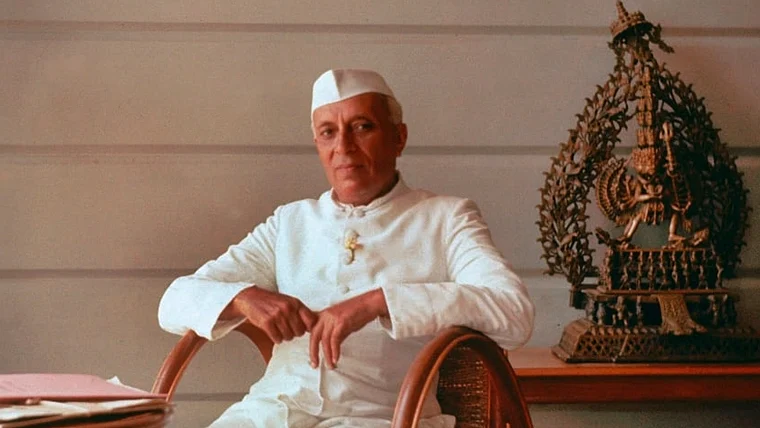
The first Prime Minister of India, Pandit Jawaharlal Nehru gave India a new hope to dream of a free nation. He, along with other leaders gifted us the biggest democracy, the most ambitious republic, a colossal Constitution and an advanced form of secularism. He alsmost single-handedly integrate the entire nation after Indepence from India. He stirred emotions and tears when he said in his speech, “Long years ago we made a tryst with destiny, and now the time comes when we shall redeem our pledge, not fully or in whole measure, but very substantially. At the stroke of the midnight hour when the world sleeps, India will awake to life and freedom.”
Such invoking and inspiring speeches is one of the reason why Jawaharlal Nehru is deeply loved and revered among the Indians. It is said that during the first General Assembly Election 0f 1952, Dr.Nehru addressed almost 1/10th population of India. A brilliant statesman and orator, he is even respected in the global sphere.
However, a successful person is not without failures and setbacks. Nehru was an idealist hence even the slightest contrary caused him discomfort. Though he handled them with grace and elan.
The first setback he faced in his illustrious political career was when Subhas Chandra Bose resigned from Congress. Jawaharlal Nehru had attachment towards Gandhi but he also wanted Subhas to be in the Congress as he was modern and had socialist beliefs. Nehru never wanted this division in the Congress but in vain.
The next major dilemma Nehru faced was the Partition and the horrors of the communal riots and the immigration of thousands of refugees. Nehru always wanted peaceful coexistence and equality of all religions. He had to agree to the Partition to avoid more deaths and a civil war. Though his policy of secularism helped him gather people’s support during the election campaign.
In between of all these political conflicts, he was not without personal losses. He lost his dear wife, Kamala Nehru who was Indian activist. Jawaharlal lost her to tubercolosis in Switzterland in 1936. Nehru recalls in his book, “The Discovery of India” reading out to Kamala when she could no longer read due to her weakness. Nehru recounts in his book that he would look at the moon from his prison window and think of her. Kamala was his strength.
Another major and mammoth task after Independence was the consolidation and integration of the Indian states into the Indian Union. States like Kashmir, Junagad and Hyderabad proved to be troublesome. Though it was the work of Srdar Vallabhai Patel to integrate the states. Nehru gave the Tribal Panchsheel policy to integrate the tribal states using humane and considerate ways. One of his principle was that development should be assessed with qulaities and not statistics. He was successful but had faced immense amount of resistance. Nehru never used the Indian Armed Forces until it was the breaking point.
Nehru has been extremely respected by his opposition parties. Nehru had internationalist views as well. Nehru was the brainchild of the NAM or Non Aligned Movement. He shared his idealist vision with the other leaders of newly independent states of Asia and Africa. When the world was grasping in fear of another war due to the Cold War, he saved us from fear and promoted his non-alignment views. He promoted far more modern ideas like economic assistance, non-interferance, integrity and pecaeful co-existence. But this policy was brutally criticized by the Western theorists as it did not fit into the American view. The policy of NAM was also blatantly violated by even his NAM counterparts.
Last but not atleast, Nehru was badly betrayed by his ally he trusted. He had signed an agreement with the Chinese premier Zhou Enlai only to be attacked badly at the Tibetian fronts during the Indo-China War of 1962. Nehru had never felt this betrayed and the condition of his heart worsened. For the first time he was criticized largely by his oppositions in the Parliament. It was a huge embarrassment for him in the world forum. He only wanted to share good values with the still-developing China but alas.
Many information in this article are from the book The Discovery of India by Jawaharlal Nehru. In the book he has delved deep into the foundation of the Indian society since the Indus Valley Civilization and the Aryan society. He fully embraced Indian culture but mixed it with ancient wisdoms that are relevant even n today’s hostile political climate.
Jawaharlal Nehru believed in the Indian people when the British rulers could not even entrust upon us the task of making a Constitution. His failures made him strong and resilient. He truly was the quintessential administrator and the ‘Chacha’ of the beloved children of his nation.
External Affairs Minister Dr S Jaishankar today held talks with his Tajik counterpart Sirojiddin Muhriddin in Dushanbe on all aspects of the bilateral agenda, including development cooperation. They also exchanged views on regional and international issues of interest. Both leaders agreed to focus on further enhancing the economic partnership.
In his press statement, Dr Jaishankar said, Foreign Minister Sirojiddin and he shared a common view that while the bilateral strategic relations have grown and expanded over the years, there is potential for further strengthening the economic cooperation. He said, both countries will encourage the business community, the Chambers and trade bodies on both sides to engage more intensively with each other while the governments will continue to play a facilitating role. He said, development cooperation has also become an important pillar of India-Tajikistan bilateral relationship. Dr Jaishankar said, a number of projects have been successfully commissioned over the years in Tajikistan under Indian grant assistance.
On the last day of his three day visit to Tajikistan, the External Affairs Minister met Speaker Zokirzoda Mahmadtohir Zoir and appreciated the strong parliamentary support for Indo-Tajik cooperation.
Earlier in the day, the Minister paid his respects at the monument of Ismoili Somoni, the founder of the first Tajik state at Dusti Square in Dushanbe.
The fourth batch of three Rafale fighter jets arrived in India from France yesterday. The Indian Air Force in a tweet said that the three IAF Rafales landed on Indian soil after a direct ferry from Istres Air Base France.
It said, Rafales were refueled in-flight by UAE Air Force tankers. It said, this marks yet another milestone in the strong relationship between the two Air Forces.
World Bank has raised Indian GDP growth prediction for 2021-22 fiscal to 10.1 percent from 5.4 percent projected in January. The international bank said, given the significant uncertainty amid Covid-19 effects on the economy, the real India GDP growth could be in the range from 7.5 percent to 12.5 percent.
The World Bank in its South Asia Economic Focus Spring update report said that it has revised the projection amid a strong rebound in private consumption and investment growth. The international bank noted that government consumption is expected to rise by about 16.7 percent during the reported fiscal.
The World Bank, however, sounded a warning as economic activity is well below pre-Covid-19 estimate. It said that businesses need to make up for lost revenue and millions of workers, most of them in the informal sector, still reel from job losses and falling incomes should be taken care.
Government has extended the last date for linking of Aadhaar number with PAN upto 30th June this year in view of the difficulties arising out of the COVID-19 pandemic.
The deadline to link PAN with Aadhaar had ended yesterday. Earlier, the Centre had extended the deadline to 31st March 2021 from the previous deadline of 30th June 2020 because of the pandemic.
Union Health Secretary Rajesh Bhushan yesterday held a review meeting with all States and Union Territories on the COVID-19 vaccination drive and preparations. The meeting focused on the identification of low vaccine coverage pockets particularly in districts showing COVID surge and for taking corrective actions there.
With regards to the vaccination coverage of Health Care Workers and Front Line Workers, the states have been advised to ensure that only eligible beneficiaries are registered and vaccinated under these categories. Besides, the states were also asked to conduct regular reviews of vaccinations at Private COVID Vaccination Centres with respect to their capacity utilization. They were advised to ensure that there is no sedimentation of vaccine stocks at any level of storage.
In the meeting, Chairperson, Empowered Group on COVID Vaccination, Dr. R S Sharma assured that there is no problem in the storage and logistics of vaccines. He reiterated that there is no value in conserving vaccines for the second dose and states must promptly supply vaccines to all government and private hospitals.



 Eduindex
You must be logged in to post a comment.