

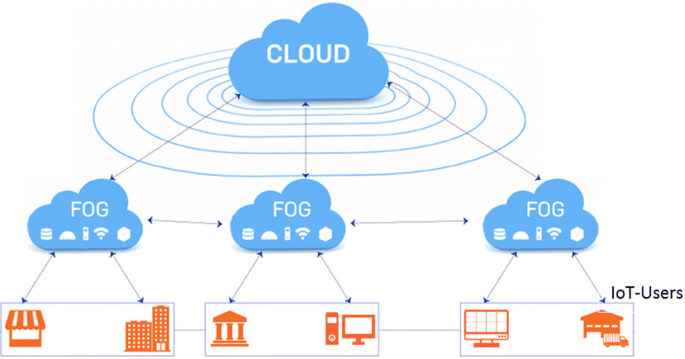
Fog computing, also known as fog networking or fogging, is a decentralised computing architecture that exists between the cloud and data-generating devices. Users may put resources, such as programmes and the data they generate, in logical areas to improve performance using this flexible structure.
In simple words, Fog computing is a type of decentralised computing infrastructure in which data, machines, storage, and applications are distributed between the data source and the cloud.
The term “fog nodes” is used in fog computing. These fog nodes are closer to the data source, and they have more processing and storage power. When compared to sending the request to the cloud for centralised processing, fog nodes can process the data much faster.
The large number of devices connected to the internet makes the cloud more clogged. Fog computing has become important for IoT devices since cloud computing is not feasible in some circumstances. It is capable of handling the huge amounts of data generated by these devices.
Advantages of Fog Computing
- Privacy:Fog computing could be used to limit the amount of information shared. Instead of transmitting sensitive user data to a centralised cloud infrastructure, any sensitive data may be examined locally. The IT staff will be able to track and operate the device in this manner. Also, any subset of data that requires analysis may be transmitted to the cloud.
- Bandwidth: There are pretty minimal bandwidth requirements since the selected data may be processed locally rather than being sent to the cloud. These bandwidth reductions will be particularly useful as the number of IoT devices grows.
- Latency: Another advantage of processing data locally is the reduction in latency. The data can be processed at the data source that is closest to the user geographically. This can result in immediate answers, which is very useful for time-sensitive services.
- Productivity: Fog apps can be used by customers who want the machine to perform the way they want it to. With the appropriate set of tools, developers may quickly create these fog apps. They can deploy it whenever they wish when the work is completed.
Disadvantages of Fog Computing
- Complexity: Fog computing is a difficult concept to grasp because of its complexity. Many devices, situated in various places, each store and analyse their own collection of data. This might add to the network’s complexity. In addition, a fog infrastructure has more complex fog nodes.
- Power Consumption: In a fog environment, the number of fog nodes present is proportional to their energy consumption. This means that these fog nodes demand a lot of energy to work properly. There is higher power usage in a fog infrastructure when there are more fog nodes. Most businesses attempt to cut costs by utilising fog nodes.
- Authentication: Fog computing is a large-scale service provider. End users, internet service providers, and cloud providers are all part of fog computing. In the fog, this might lead to difficulties with trust and authentication.
- Maintenance: In comparison to cloud architecture, where maintenance is smooth, fog is not. Because controllers and storages are dispersed throughout the network, additional maintenance is required. Processing is decentralised in the fog architecture.

 Eduindex
You must be logged in to post a comment.