

STEM CELL RESEARCH
We all are in the era of major developments occurring around us in the field of scientific research. Research studies make it very convenient for us to understand and go through the minute details be it any disease or it’s treatment based on it; or if we want to know about certain causes of the disease such as a virus, bacteria, protozoa and many other microbes.
Now a days, many of us come across this word ‘stem cell’ either in science magazines or on internet in several journals. Stem cells are basically those special human cells that have the ability to develop into many different cell types. It is very surprising to know that it can range from muscle cells to brain cells. In some cases, they can also fix or heal the damaged tissues. Stem cells can also be considered as regenerative cells because of their ability to regenerate different tissues. The key properties of a stem cell were first defined by Ernest McCulloch and James Till at the University of Toronto in the early 1960s. They discovered the blood forming stem cell- the hematopoietic stem cell(HSC) through their pioneer work on a mice. Their research on mice paved different paths for other scientists to unleash this field. Scientists discovered ways to derive embryonic stem cells from early mouse embryos way back in 1981. The detailed study of the biology of mouse stem cells led to the discovery of the method to derive stem cells from human embryos and grow the cells in laboratory in the year 1998. Although it seems to be very recent but through all these discoveries on stem cells we have come a long way to know various techniques to store and preserve them for future purposes.

WHY ARE STEM CELLS IMPORTANT?
What sleep is to our brain, stem cells are to our body tissues. This maybe a little contradicting but the relation comes in a way that if we are stressed and tired, a good sleep can regenerate our energy similarly our torn and damaged tissues can be regenerated back by the stem cells.
Stem cells provide new cells for the body as it grows and replaces the specialized cells that are damaged or lost. They have two unique properties that enable them to do so: (i) they can divide over and over again to produce new cells. (ii) as they divide, they can change into other types of cells also that contribute to our body’s framework.
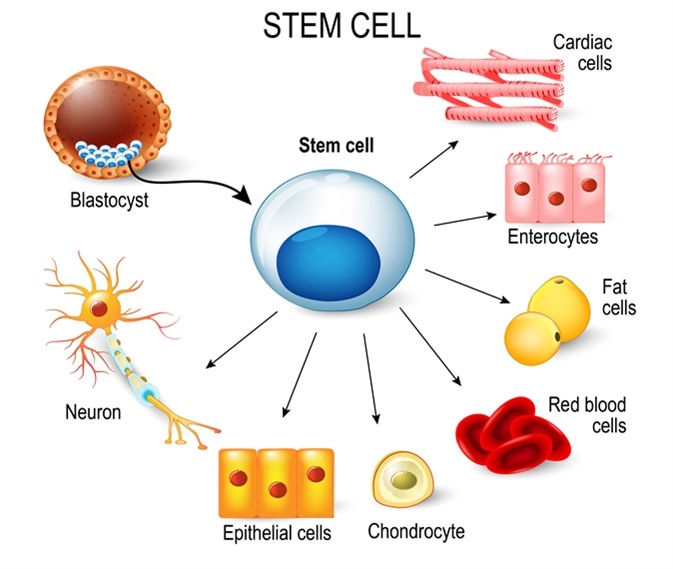
Stem cells are useful in both research as well as therapy. For research- they help us to understand the basic biology of how living things work and what happens in different types of cell during disease. For therapy- they replace the lost or damaged cells of our body.
STEM CELL RESEARCH
Apart from the things that stem cells do to our body they can also be useful to study how cells become specialized for specific functions in the body, and what all mistakes in this process can lead to a disease. We grow tissues and organ structures from stem cells which can then be studied to find out how they function and how they get affected by different drugs.

APPLICATIONS OF STEM CELLS
Adult stem cells are said to be multipotent which means that they have the capacity to self-renew by dividing and developing into multiple specialized cell types. These cells are currently being used to treat some conditions such as blood stem cells used to provide a source of healthy blood cells for people with some blood conditions like thalassemia, cancer who have lost their own blood stem cells during treatment; and skin stem cells can be used to generate new skin for people with serious burns.
Stem cells can also be used to generate new organs for their use in transplants. This can be done by replacing damaged organs with the healthy organs obtained from a donor. Although this process is quite a good alternative for people with organ failure but they may face a rejection from their body’s immune system considering the organ grafted to be a foreign substance.

 Eduindex
You must be logged in to post a comment.