Positive and Negative Impacts of Industrialization

How Can Industrialization Affect National Economies of Less Developed  Countries (LDCs)?

IMPACT OF THE INDUSTRIAL REVOLUTION

The Industrial Revolution started in the 18th century in the United Kingdom and later spread too many other parts of the world, during which the agrarian and handicraft economies changed rapidly to industrial and machine-manufacturing-dominated ones. Not only did this economic change alter how work was done and goods were produced, but it also altered how individuals related to each other and to the world as a whole. Today, this wholesale shift in social organization continues and has created many impacts that have rippled through the political, ecological, and cultural spheres of the World.

POSITIVE IMPACTS OF INDUSTRIALIZATION

Goods became cheaper and more affordable:

The factories and equipment they housed started making goods faster and cheaper than they could make by hand. As the availability of different goods increased, their cost to the customer declined (see supply and demand). Shoes, clothes, household goods, equipment, and other products have become more common and less costly to improve people’s quality of life. For these products, international markets were also established, and the balance of trade changed in favor of the consumer, bringing increased prosperity to the businesses that manufactured these products and adding tax revenue to government coffers. It has, however, also led to the disparity in income between countries producing products and consuming goods.

Manual labour was replaced by machine work:

The rapid manufacture of hand tools and other useful objects has led to the development of new types of instruments and vehicles for moving goods and people from one location to another. The development of road and rail transport and the formation of the telegraph (and its related telegraph infrastructure and later telephone and fiber optic lines) meant that progress in manufacturing, agricultural harvesting, energy production, and medical techniques could be easily communicated between stakeholders. Also well-known products of the Industrial Revolution are labor-saving machines such as the spinning jenny (a multi-spindle machine for spinning wool or cotton) and other inventions, particularly those driven by electricity (such as home appliances and refrigeration) and fossil fuels (such as cars and other fuel-powered vehicles).

Evolution in the field of medicine:

The Industrial Revolution was the catalyst behind numerous medical advancements. Industrialization has made it possible to manufacture medical instruments more rapidly (such as scalpels, microscope lenses, test tubes, and other equipment). Using machine production, refinements to these tools could be more effective for the doctors who wanted them to roll out. When contact between doctors in various fields increased, it was possible to easily spread the information behind new cures and disease treatments, resulting in better care.

Increased standard of living:

Mass production reduced the cost to the common (i.e. non-aristocratic) people of much-needed tools, clothing, and other household goods, which allowed them to save money for other things and create personal wealth. Furthermore, new job opportunities emerged as new manufacturing devices were developed and new factories were established. The average citizen was no longer so tightly tied to land-related issues (such as being dependent upon the wages farm labor could provide or the plant and animal products farms could produce). The emphasis on land ownership as the chief source of personal wealth was diminished by industrialization. The increasing demand for manufactured goods meant that as factory workers and as employees of companies that sponsored the factories, average individuals could make their fortunes in towns, paying better salaries than farm-related positions.

Rise of Professional jobs:

As industrialization advanced, in search of better pay in the factories, more and more rural folk flocked to the towns. To improve the overall productivity of the factories and to take advantage of new business opportunities, factory employees have been qualified to perform specific tasks. The owners of the factory divided their employees into numerous groups, each group concentrating on a particular mission.

Some groups secured and transported the raw materials used in the mass production of goods (namely iron, coal and steel) to factories, while other groups worked different machines. When they broke down, some groups of workers repaired equipment, while others were tasked with making changes to them and the overall operation of the plant.

Additional teachers and trainers were required to pass on advanced skills as the factories expanded and employees became more specialized. Furthermore, factory workers’ lodging, transportation, and leisure needs contributed to the rapid growth of cities and towns. To support these, governmental bureaucracies expanded, and new specialized departments were formed to manage traffic, sanitation, taxation, and other services. As more builders, doctors, attorneys, and other staff were added to handle the diverse needs of the new inhabitants, other industries inside the cities also became more skilled.

NEGATIVE IMPACTS OF INDUSTRIALIZATION

Over crowded cities:

The prospect of better pay attracted refugees, who were ill-prepared to manage them, to cities and manufacturing cities. Although initial housing shortages ultimately gave way to construction booms and the development of new buildings in many areas, first existed crowded shantytowns made up of shacks and other types of poor-quality housing. The sudden influx of people overwhelmed local sewerage and sanitation schemes, and drinking water was frequently polluted. Ideal conditions for outbreaks of typhus, cholera, smallpox, tuberculosis, and other infectious diseases were provided by people living in such close proximity, fatigued by bad working conditions, and consuming contaminated water.

Environmental degradation:

In India two centuries ago, factories emitted toxins such as carbon di oxide, carbon monoxide, and other harmful gases that caused air pollution along with vehicular exhausts that were not heard or seen before. Because of Greedy Indians and their Expansionist conquests, India lost many of its forests and natural ecosystems and botanical and zoological species became Endangered or Extinct overnight. Water contamination is caused by heavy metals, arsenic, lead; hard water and industrial hazardous waste are released into lakes, rivers and other water bodies. Aquatic and aquatic animals are dying as a result of water bodies being polluted. As the human population of the planet continues to rise and more and more people are chasing the material benefits promised by the Industrial Revolution, more and more of the resources of the Earth are appropriated for human use, leaving a diminishing stock of plants and animals on which ecological services the biosphere depends (clean air, clean water, etc.).

Moreover, more than 40 percent of the Earth’s land-based net primary production is used by human beings, a measure of the rate at which plants transform solar energy into food and development. Coal, which had to be extracted or obtained after wood burning, was used by most factories, creating smoke and photo chemical smog in North Indian cities such as New Delhi, where visibility and breathing was difficult. Fossil fuels had to be imported from foreign countries and would again produce smoke, Green House Effect, Global Warming by using them for industrial purposes.

Poor working conditions:

Their owners valued production and profit above all else as factories appeared in the cities and industrial towns. Security and salaries of employees were less important. Compared with farm workers, factory workers received higher wages, but this also came at the cost of time and less than desirable working conditions. Factory staff frequently work six days a week for 14-16 hours a day. Human beings (employees) have become more vulnerable to exploitation, violence at work, more working hours and fewer fixed payments, job instability, and after retirement or termination of their employment, a bleak future. Also, finished Indian products were not on par with global standards and labels, but were more costly than comparatively cheaper imports from countries such as China, Hong Kong, Japan, etc.

Other problems

Nuclear plants are a threat to health and different forms of diseases can be caused by human beings living in close proximity. Farmers, who were in heavy debt to pay their dues to industrialists and real estate sharks, sold agricultural land with fertile and cultivable soil, and these lands have now become less yielding as factories or buildings have been constructed upon them. Inflation in India has always been increasing due to scarce natural resources or lack of availability.

India’s Anti-Hacking Laws


Many Indian official websites have been hacked, including state government and defence websites. Defense officials were unable to view their compensation information when the website of the Principal Comptroller of Defense Accounts was hacked. The government has agreed to DEITY’s recommendation to cease using popular email ids for official purposes, and has sanctioned a budget of Rs. 100 cores to protect the data, in order to reduce hacking of precise work. State government websites have previously been compromised.
Images of Hacker vs. Cracker

Following the revision of the IT Act in 2008, a very thin line of demarcation has been formed between the two words: hacking and cracking. Hackers are persons who are highly talented at computer programming and utilise their expertise to help the government and numerous other companies protect their sensitive information and trade secrets. They look for flaws in the software and try to figure out why they exist.


The Cracker’s Liability


Liability in civil cases
The IT Act’s Section 43A addresses the legal culpability of cyber criminals. The section deals with the compensation that should be paid in the event that the date is not protected. His was included as part of the Act’s modification in 2008. Section 43A, which requires corporations to establish reasonable security policies, emphasises corporate responsibility for data protection.
Liability for the consequences
When the cracker’s intent or liability to destroy the system or steal crucial information is demonstrated, criminal liability for cracking arises. If the cracker simply trespasses the system without intending to do harm, section 43A only applies to civil culpability. Criminal trespass can lead to further criminal behaviours that are punishable under the Indian Penal Code, such as computer theft, which is penalised under section 378.

India’s cybercrime laws
Data theft and hacking are covered by sections 43 and 66 of the IT Act, respectively, as civil and criminal offences.

A simple civil crime under section 43 occurs when a person gains access to a computer without the owner’s authorization and removes or damages the data stored on it. The cracker will have to compensate the persons who have been harmed. The maximum compensation cap under the ITA 2000 was Rs. One crore in fines. This ceiling, however, was eliminated in an amendment issued in 2008. Section 43A was inserted in the 2008 amendment to encompass the corporate shed, when employees took information from the secret files of the company.

Receiving a stolen computer resource or information is punishable under Section 66B. A year in prison or a fine of one lakh rupees, or both, are possible punishments. Under section 66A, mens rea is an important component. The existence of criminal purpose and the wicked mind, i.e. the concept of mens rea, destruction, deletion, alteration, or diminishment in the value or utility of data, are all major factors to bring any act under this Section. 2

How to File a Hacking Complaint

Any cyber cell in the world can receive a complaint regarding cybercrime. In India, there are several cyber crime units where a complaint can be filed.

To begin, write an application to the director of the cyber cell department, including your name, address, e-mail address, and phone number.
Second, accompany the cell with the following documents:

1. Log files that are automatically sent to the server when files are opened are known as server logs. It keeps track of daily activities.
2. All material that has been tampered with by the hacker must be submitted to the cyber unit as proof, in both hardcopy and soft copy format.
3. A tangible copy of both the original and defaced web pages should be submitted so that the work may easily identify the defaced or manipulated material.
4. Details of the control mechanism, including who had access to the password and the computer, as well as the complainant’s contact information.
5. If any person is suspected, a list of suspects should be provided for future reference, since this will aid the cyber cell in their investigation.

Conclusion
Hacking is an undeniable danger to the virtual world. This theft is largely unknown throughout the country. Hacking and cracking must be made more widely known throughout the country. The government’s rules are strict, yet they lack the power to be enforced and public knowledge. The majority of minor hacking cases go undiscovered because people are hesitant to file criminal charges for minor offences, even if the penalties are severe. Additionally, due to a lack of equipment, it is extremely difficult to track a virtual hacker. Because hacking can occur anywhere on the planet, it is difficult for authorities to track him down and prosecute him in another country.

GST which stands for Goods and Services tax

Definition and meaning

Goods and services tax is an indirect tax which is levied by government on taxable value of goods, services or both were supplied by persons. It is a value added tax which is charged in every stage of supply.

Goods and services tax came into force in India on 1st July 2017, which is marked as one of the historical dates in India’s tax history.

Goods and services tax which helped remove various taxes under one.

Excise duty, Service tax, VAT, CST, Entry tax, etc. = GST

Goods and Services tax is a destination-based tax which is levied on every stage from the manufacturing level to the final consumer of that goods or services, only on the value addition.

Salient features of GST or GOODS AND SERVICES Tax.

Levy on Good and ServicesGoods and services tax is only levied on taxable goods and services on each stage of transaction a tax on, Except supply of alcohol and liquor for human consumption
Indirect TaxGST is an indirect tax which means tax liability on consumer in indirect they pay tax indirectly to the government.
Dual GST in IndiaIndia is a federal country there fore a Dual GST system has been adopted.

1. On Intra state supply- The GST to be levied on intra state supply of goods or services would be called CGST or SGST. E.g., A transaction took place inside the state.
2. On Inter state supply- The GST to be levied on interstate supply of goods and services would be called IGST. E.g., A supply took place between M.P. and C.G.
Uniform GST law in India.SGST tax of each state is just a copy of CGST act passed by central government, except changing reference from central tax to state tax.
Forms and procedures are all same all over India and rates are also expected to be uniform.
There would be no difficulty for a businessman to set his/her business in many states.
Consumption based TAXGST is a consumption-based tax which means the state which is finally consuming the goods and services.
RegistrationA supplier of Goods and services or both should be registered under GST law –

1. Supplier of goods or/and services within the state.
2. Registration is not required for farmers and supplier of wholly exempted goods.
Multi point TAXGST is applied on every state of transaction.

GST is not only implied in India it is on effect in many parts of the words.

When the GST was not implemented in India and was in the process there were various challenges IN front of the makers. But with continuous efforts GST was implemented successfully in India.

Though the revenue collected from GST in the fiscal year 2019-2020 was about Rupee 10 lakh crore which is less than expected.

A administration is been set up to govern the Goods and services Act properly in India.

Sone of the link just for reference :

GSD WIKI: https://en.wikipedia.org/wiki/Goods_and_services


Difference Between Goods and Services: https://keydifferences.com/difference-between-goods-and-services.html#:~:text=%20The%20basic%20differences%20between%20goods%20and%20services,a%20different%20approach%20of%20carrying%20out…%20More%20

Hope this post helps you..!

BOOK REVIEW: The Magician’s Nephew

Author: C.S. Lewis

The Magician’s Nephew is the first book in The Chronicles of Narnia series. There are total seven books in the series. Three of them have been adapted into theatrical films. The Magician’s Nephew serves as the prequel to the movie ‘The lion, the witch and the wardrobe’.
The Chronicles of Narnia series is set up in a fictional world known as Narnia where talking beasts walk, and magic exists. The series follow stories of various people who are associated with Narnia. Each book is has it’s own timeline and is connected with other without loosing essence of it’s own.

Being a prequel of the film, this book deals with a lot of stuff that wasn’t completely explained in the film. It explains the origins of Narnia and the wardrobe and also deals with the backstories of characters which were in the film like white witch and professor. Reading this book prior watching the film make the experience better.

“This is a very important story”, explains the author at the beginning, “because it shows how all the comings and goings between our own world and the land of Narnia first began”.

https://www.goodreads.com/community_answer/93466/comments?reverse=true

The story revolves around a boy named Digory. He befriends a girl named Polly and both agree to go on some sort of adventure for fun but things don’t go so well when they encounter Digory’s uncle Andrew. He tricks the girl into using one of his experimental rings which send her to unknown dimension. Digory goes after her in a quest to save her and find a way back home.
The story then follows their journey through different worlds. The book has a total of 15 chapters. Chapter 3 and 4 in particular are very interesting. They represent the feeling of unfamiliarity very well. The sense of adventure when you try something new yet the feeling of uneasiness which comes out of fear are very well portrayed.
The writing style of the author is very casual and conversational yet very cunning and ominous. It is very descriptive and makes you imagine the stuff in the novel real quick. The world building in this novel as well as the series on the whole is phenomenal. There is a lot of referencing in this book as well and lot of foreshadowing too. The book is written in such a way, it feels like distant past and gives nostalgic vibes. The narration changes from third person to first person many times throughout the series. The later chapters deal with the creation of Narnia, the origins of Jadis, the white witch, who serves as the main antagonist in the sequel. The end of this story marks the beginning of all others and it serves a perfect intro for the rest of the series.

Talking about the lessons it teaches, the first one would be learning to contain your curiosity. Throughout the story, most of the problems occur because the characters are curious to find out what’ll happen if you do a certain thing or so. Values of friendship, loyalty and commitment are also presented well. Overall, this book is a must read.

https://youtu.be/nVBMw372IxU

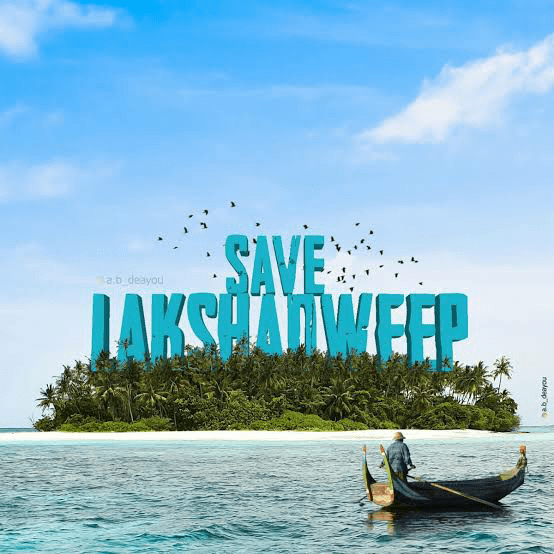
Capitalism Over Purity In Lakshadweep

Lakshadweep is the smallest UT in India, most popularly known for its sandy white beaches with crystal blue waters and secluded lagoons.

But Lakshadweep is now in the news for all the wrong reasons. The accountability of such disturbance and row in Lakshwadeep can be credited to the fascist and corrupted minds of politicians. 

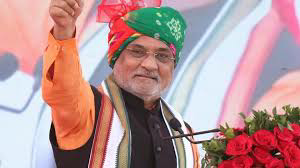
It has a population of around 60,000 people with 90% of Muslims and consists of somewhat 30 small islands. Once a peaceful area is now facing disruption because of the capitalistic, islamophobic and exploitative mentality of politicians. Praful Khoda Patel, a political leader of BJP presents the ideological projects as an idea for development. But these actions by him will only fill the pockets of capitalists on the mainland and will hurt the islanders.

Unlike Delhi and Puducherry, this union territory has no legislative assembly nor a Chief Minister. The President of India appoints an administrator to govern the whole territory.

Until 2020 this responsibility was given to bureaucrats, they were either IAS or IPS officers. In December 2020 misfortune happened, a greedy politician got the responsibility of the administration there. His ignorance and eagerness for materialism disrupted the lives of islanders.

Praful Khoda Patel | Mastermind for Lakshwadeep Row

The man who created a storm in India’s island of peace.

Before digging deep into the main cause, let’s have a brief history of our antagonist Praful Khoda Patel.

In 2014, when the reign of Narender Modi began, Praful Khoda Patel was allocated the administration of Daman And Diu. There also before him the bureaucrats were selected as the administrator for the governance.  In 2019, the administration of Dadar and Nagar Haveli was also allocated to him.

There were several instances in his tenure, where the houses on the seafront land were demolished in the name of progression. This step led to protests by the dwellers of the union territory. To harass and detain the protestors, section 144 was imposed several times.  

In February 2021  Mohan Delkar, a tribal rights activist and seven-time MP of Dadra and Nagar committed suicide. In his 15-page long suicide note, he mentioned Praful Khoda Patel. Patel allegedly harassed Mohan Delkar for 25 crore rupees. Patel threatened him that if he fails to do so, he’ll be falsely accused under the “prevention of anti-social activities” act. 

What is Happening in Lakshwadeep Right Now?

Since December 2, 2020, when the administrator took charge of the Union Territory, Patel has issued a series of orders, which haven’t sat too well with the island dwellers.

1. Spike in Covid cases: From Zero to 7000+

In 2020 Lakshadweep was one of the few areas in India, which was unscathed from the grasp of the coronavirus. As in Lakshwadeep, there were strict and mandatory quarantine rules for travelers.

But in 2021, more than 7,000 cases have been reported there. Citizens of Lakshadweep alleged that the spike was due to a change introduced in the covid management protocol by a new administrator Praful K Patel. The change was that anyone could enter within 48 hours of getting a negative RT-PCR test.

Thus, this proved that such ignorant politicians can work as a catalyst in making the Covid related situation worse. Just like political leaders who organized rallies all over the country and gave permission for ‘Kumbh Mela’ to take place, here also the leader is running from accountability.

Patel claimed that such a surge in cases is ‘natural’ as in Kerela to which Lakshadweep has strong links also witnessed the increase in cases. But that is evidently baseless, as he was the one who changed the earlier protocols.

2. Goonda Act- Equivalent to UAPA and TADA

Past events prove that a state always tries to introduce immoral acts to forcefully silent the masses when the rise of questioning the authorities occurs.  

Patel’s administration has proposed to enact the ‘Goonda Act’ (prevention of anti-social activities bill) which allows a person to be detained without public disclosure for up to a year.

This island already witnesses a very low crime rate. A question that comes up is- What is the need for such an ‘act’ to be implemented?

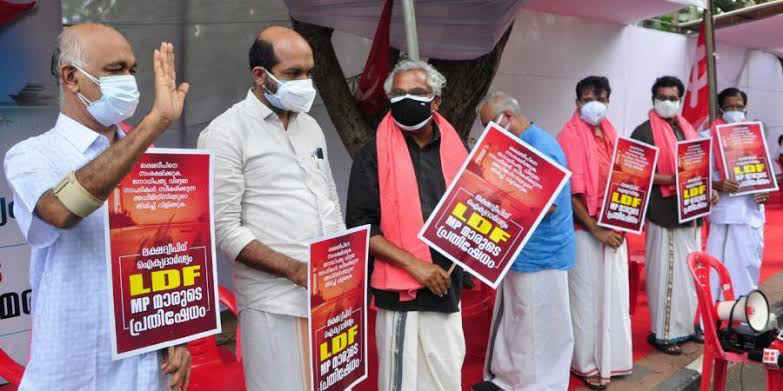
Just like UAPA, TADA, and Prohibition of Unlawful Religious Conversion Ordinance (Love jihad) this unnecessary implementation of the act could be interpreted as a means for misuse to disrupt the uprising of resistance against the bigotry.

3. Prioritising Alcohol Over Beef

A proposal to ban beef while removing the alcohol sale led to outrage on the island, which has a Muslim-dominated population. This particular step is being used to trigger and hurt the sentiments of the population there. The administration also invited criticism for stopping non-vegetarian food in school midday meals. 

4. Disruption in the name of Development?

The ‘Development’ agenda was one of the most controversial changes that were proposed.

It is a law that gives sweeping powers to the administration to take over private property for developmental activities. Critics said that this might leave people at risk of eviction and relocation and that unchecked construction could threaten the ecological balance of the islands. Patel argues that these laws were necessary to bring in development and to create a smart city in the atolls.

But, is there truly a need for resources to be used for a smart city, when people of an already beautiful island are fine with what they have?

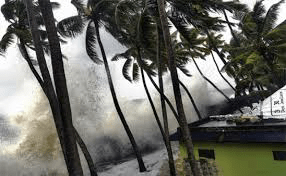
Prioritizing development over the sanctity of the ecosystem is one of the causes of spoiling the harmony in the world. While the world battles climate change and the rising sea levels, this step might just contradict the effort being made by hurting the ecological balance of the islands.

Victims of The Lakshadweep Row

During the row in Lakshadweep, we witnessed how an entry of a single person disturbed, disrupted, and even ended the lives of the people on the island.

In a place where the existence of COVID was negligible, the cases have risen to 7,000 and resulted in 22 deaths.

The work of politicians is to govern and maintain harmony in the system. But when the introduction of such acts and bills makes the people of the state insecure about their existence, then it might not be a step worth taking.

Medical negligence during Covid-19

Law on Medical Negligence in India: How and when to file a case | Medical  Negligence Law Guide

NEGLIGENCE DURING THE COVID-19 PHASE

With the COVID 19 pandemic surrounding the globe and in excess of 2 million active instances of the same, the caring administrations by the medical experts is the main redeeming quality going with the careful steps that are the duty of the considerable number of citizens. Be that as it may, the security of the residents is being taken consideration by the clinical organization yet what it involves for the clinical clique who is over and over being blamed for negligence in discharge of average duty. On one hand the medical practitioners are being hailed as ‘Corona warriors’ but on the other hand, with the increase in cases wouldn’t there be a increase in negligence?

India had only 111 Covid-19 testing   centers to deal with a population of 1.35 billion people. This accounts to the medical negligence of the practitioners along with the hospital administrations especially at a time when every state is trying to reduce the number of cases. The number of beds available in the hospitals is comparatively less and as a result the citizens are dependent on understaffed and under-funded state run health facilities for COVID 19 diagnosis and treatment. This is a serious issue as people do not believe on the state authorities. A lady who was quarantined after her Spain visit states that there is a lack of basic amenities in the hospitals. People fear to come forward as they doubt the skills of the administration to treat their disease. Global health experts claimed that India does not have enough infrastructure and other facilities to face the pandemic. The claim nearly became evident with the increasing number of cases in India. Not only hospital authorities but the government has been lacking service, testing is another major concern. India has performed a little over 100,000 tests — a rate of nearly 47 tests per million people compared with 4,572 tests per million in the U.S., 2,753 tests per million in the U.K, and 8,800 per million in South Korea[1]. At present, India is not adequately testing to identify new cases, which might be hiding the true number of cases. An incident of severe medical negligence was noted when the Patna All India Institute of Medical Sciences (AIIMS-P) handed over the body of a COVID-19 positive patient to his family members.

In the midst of the vulnerability made by the COVID-19 pandemic, the judiciary remains the sole symbol of would like to review the worries of residents oppressed by the absence of satisfactory medical framework and the rising occasions of clinical negligence. There is trust that vital estimates will be taken by the Supreme Court, to safeguard the confidence and any expectation of the individuals.

VIEWS

Medical Negligence is, by and by, a hard issue to set up. On the off chance that negligence cases result from the current emergency, they will be tried comparable to target norms of care. The courts will think about the real factors and conditions of the case, including that the medicinal services staff were acting in an emergency. Considering past cases and the law’s methodology, the significance of clinical rules, conventions, staff preparing, ability appraisal, and enlistment expect a fundamental centrality, and all means should be completely reported. Documentation of steps taken in every one of these issues will demonstrate pivotal in safeguarding any cases brought. In any case, the COVID 19 is a phenomenal occasion and the relevance of the above laws in such conditions of most extreme criticality and affectability stays to be questionable. After the lockdown ends it would be unmistakable component of the lawful framework to observe such case emerging out of clinical carelessness in taking care of crown positive patients.

It isn’t expressed that specialists (doctors) are careless or reckless, however while carrying out a duty which requires a great deal of knowledge and care, regularly numerous experts fail to perform their duty towards the patient. Medication which is perhaps the noblest profession requires setting a domain which can profit the victims of different diseases. Numerous specialists even the expert in some cases dismisses little things to be dealt with while practicing which may bring about harms to the patients that could have been maintained with a permanent disability from that time or even the demise of the patients.

This type of negligence makes patients more prone to harm than to heal. And to avoid these sorts of accidents, prevention and careful behavior of doctors is important. The most prevalent way of doing this is relevant laws and statutes to ensure a patients well being. In a case where a US-based doctor who was Indian from origin lost his 29-year-old wife who was a child psychologist during their visit to India fifteen years ago. The Supreme Court asked the Kolkata-based hospital and three doctors to pay over Rs 11.41 crore[2]. “A bench of justices C K Prasad and V Gopala Gowda arrived at a figure of Rs 6.08 crore as compensation after considering aspects such as loss of consortium, pain and suffering and the cost of litigation.”

Another such case was noted where the Apex Court awarded a compensation of 1.8 crores to a women who had lost her eyes in 1996.[3] Cases like this are evidence of the medical malpractice in India. The government requires making strict rules to prevent the same, so that the justice prevails. People of India should be provided with adequate medical facilities, hygiene and sanitation. Laws should be strict for not only medicine but for all such professions to maintain a certain standard of care and prevent breach of duty.


[1] https://www.bbc.com/news/world-asia-india-51922204

[2] THE OUTLOOK

[3] Krishna Iyer v. State of Tamilnadu and Others, 2015 STPL(Web) 1239 SC

The Indian Tax System

There are various references in History which act as evidence that taxation existed in olden times also. Some references are ‘Arthashastra’ by Chanakya, King Dalip’s regime and Caesar Augustus. The word “Tax” originated from “Taxation” meaning ‘an estimate’. These were imposed and collected on the trade of commodities or livestock in a disorganised manner. The importance of tax increased with time and became a source of government income and expenditure.

TAX STRUCTURE IN INDIA 

India has a well developed taxation structure. The tax system in India is mainly a three-tier system which is based between the Centre, State governments and the Local Government organisations. In most cases, these local bodies include the local councils and the municipalities. According to the Constitution of India, the Government has the right to levy taxes on individuals and organisations. However, the Constitution states that none has the right to levy or charge taxes except the authority of law. 

The tax structure in India is divided into two components: Direct Taxes (such as income tax) and indirect taxes (such as custom duty). 

I. Direct Taxes: Direct taxes are those taxes that are not shifted, that is, the incidence of which falls on persons who pay them to the government, the taxpayer. According to Article 265, each tax levied or collected has to be backed by an accompanying law, passed either by the Parliament or the State Legislature. 

The direct taxes in India are: 1. Wealth Tax- 

Wealth tax is one of the major direct taxes in India. It is also known as the Wealth Tax Act, 1957. This tax is applicable to all the citizens of India. Wealth tax is the cess levied on owned property. It applies to those who enjoy property ownership benefits. It is applicable to every property owner till he or she retains the ownership of that particular property. The tax paid on property depends entirely on the current market rate. In case the property is not generating any income, then also wealth tax has to be paid. 

2. Corporate Income Tax- 

Corporate income tax is levied in many different forms in India. Corporate Income Tax is primarily meant to be paid by domestic corporations. Domestic corporations in India pay a minimum income tax rate of 35 per cent along with a surcharge of 2.5 per cent. Corporate income tax is also applicable to foreign organisations that have their own economic bases working in the country. These types of corporations are required to pay tax on 40 per cent of their income along with a surcharge of 2 per cent. This surcharge goes as a reservation for funding the state‘s education. Corporate income tax is also applicable to all the people that are working for any corporation in or outside India. 

3. Personal Income Tax- 

This is the most common form of tax in India. The system of personal income tax in India is very similar to the taxation system in the United States of America. It is based on the personal income of an individual. If the annual income of an individual is under Rs. 1, 80, 000/- then he or she is exempted from paying any personal tax. There are further allowances made under the personal income tax domain for the physically handicapped and elderly. 

II. INDIRECT TAXES: An indirect tax is defined as a tax levied on goods and services rather than on income or profits. Given below are the indirect taxes imposed in India: 

1. Sales Tax- 

Sales tax is the tax levied by the State Government on goods bought and sold in the country. This policy is followed in most industrially developed countries in the world. The taxes levied under sales tax are not the same for all kinds of goods. 

2. Custom Duties-

Custom duties were introduced in India through the Customs Act in 1962. This duty was introduced with the aim of checking illegal exports and imports of goods. Taxes are charged for all the goods that are imported into the country, mainly to protect the industries in India. 

Shortcomings of Indian Tax System: 1. Canon of Justice: The increased activities of the Government of India to develop the infrastructure and economy indicate a regressive tax structure that is against the canon of justice. The lower and middle income groups have to bear more burden of taxation as compared to the higher income groups because the government tries to raise amounts by indirect taxation. 

2. Agricultural Income: Agricultural income is not taxed in India. Hence, there is a higher burden of taxes on the urban areas. 

3. Complex Tax Framework: India has a complex tax framework with contradictory tax exemptions. Efforts are being made by the IT Department to enhance and simplify transparency of the tax system to help the individual taxpayers by reducing their compliance costs. 

4. Removal of Tax Incentives: Tax exemptions are given to achieve the objectives of development but they promote rent seeking behaviour, contributing to the complex tax laws. Exemptions lead to tax leakage and tax abuse which makes the system counterproductive and dysfunctional. 

5. Refunds: Getting refunds of tax from the Income Tax Department is a difficult process. It should be made easier by easy accessibility through internet services and refunding electronically. 

6. PAN: The tax base must be increased by extending PAN to cover all citizens serving as a Citizen Identification Number. 

7. Monopolistic Power of Tax Officials: The tax officials operate within a geographical limit with ambiguously defined roles that leads to abusive behaviour on their part. A high degree of discretionary power and lack of adequate monitoring and reporting mechanisms leads to corruption. The tax officials misuse the rules of the government and extract illegal payments from taxpayers. 

8. Lack of Supervision: There is a lack of supervision and monitoring of officers and holding them accountable for their actions. There must be promotion and enforcement of ethical standards, merit based recruitments, promotion procedures and regular staff rotation schemes to prevent the creation of a nexus. 

9. Decrease in Tax Revenue due to Corruption: Corruption decreases tax revenue, which leads to a shortfall in the funds of the government. This forces governments to resort to public borrowing and public debt, thereby endangering fiscal sustainability. Corruption adds to the adverse effect over investment and growth. 

10. Broadening the Tax Base: The majority in India do not file personal income tax. To bring them into the tax net, the government adopted a “one-in-six” scheme under which an individual satisfies one out of six criteria. This measure has increased the number of individual income tax payers, but a lot needs to be done still. 

India was different from other countries as they were made by the Indian citizens without any sort of external interference. 

There are different types of taxes in India. The system of taxation in India is clearly vested in the hands of authorities such as the central government, state government and the local governments. The taxes that are levied by the central government are on personal income, central excise, custom duties and service tax.

Bulletins

Bulletins are the news that are published everyday. The bulletins are a synonym for the news. So this article is going to give a huge information about the news world.

The news is what is new. A news is what everyone want to know about. As per John Bogart( city editor,New York)

“When a dog bites a man that is not news but when a man bites a dog it is news”.

The news is the unusual events or happenings. Former managing director of New York Times says “you can find out today that will be not known”. Joseph publishers New York world original distincts among romantic, thrilling, unique, curiosi, humorous or apt to talked about.

Elements of news

  • New fresh and updated
  • Unpublished
  • Unusual
  • Interesting
  • Informative

Ingredients of news

Ingredients of news means news worthiness. The things that makes a news worthy are:

  • Timeliness
  • Proximity
  • Prominence
  • Conflict
  • Sports and weather
  • Human interest
  • Government policies and interest
  • Follow up

Values of news

  • Accuracy
  • Balance(not biased)
  • Clarity(clear cut presentation)
  • Brevity(presented in simple language with proper fact and figure and exact words used)
  • Impact (present in such an attractive way that readers take interest)

Sources of news

  • News agencies (international, national, local)
  • Reporters( channels, newspapers, radio stations)
  • Internet(social media)
  • Television, Radio( electronic media)
  • Important places – assemblies, parliament, courts, railway stations, bus stops, police stations, airports, schools, colleges, universities, companies, corporate offices, industries etc.

How are the news processed

  • Gathering of the news by different news sources
  • News selection
  • Editing

Different types of news

  • Literary news : The news which is full of imagination, consists of elaborate explanation which is not so important though. Language is given much importance.
  • Journalistic news : The news which has no imagination and the content is only the gist of the incident. Language is not given much importance.
  • Hard news : The news which is published as soon as the incident takes place as the news get stated faster.
  • Soft news : The news which do not lose its importance with time.

Now let us take a look on some famous quotes on news

“It’s amazing that the amount of news that happens in the world every day always just exactly fits the newspaper”. – Jerry Seinfeld

“Fake news is cheap to produce. Genuine journalism is expensive.” – Toomas Hendrik Ilves

“The media transforms the great silence of things into its opposite. Formerly constituting a secret, the real now talks constantly. News reports, information, statistics, and surveys are everywhere.” – Michael de Chateau

Keywords used in the world of news

  • Deadline : After 12am, no news will be published in the newspaper and this is called deadline.
  • Dateline : The place and date should be written at the beginning of the news and this is called dateline.
  • Credit line : A line of copy acknowledging the source or origin of a news dispatch, published article or other work.
  • By line : The line following the heading in a news item that gives the name of the writer of the article.

https://www.brainyquote.com/topics/news-quotes

https://news.google.com/foryou?hl=en-IN&gl=IN&ceid=IN:en

23 Million Women Drop Out Of School Every Year When They Start Menstruating In India

In India, 23 million girls drop out of school early when they start menstruating and many of them end up facing acute health problems

1.71% adolescent girls in India remain unaware of menstruation .

2.Menstruation is a rarely discussed topic in homes and schools in India.

3.Since 2010, the government has stepped up to address menstrual hygiene.

It was the occasion of an annual function at a secondary school in Rajasthan’s Dholpur district in May 2017. Manoj Kumar, the district health officer was one of the dignitaries invited to the function. While giving a short speech on the importance of education, Mr Kumar noticed the alarmingly low number of girls present in the crowd of school students. On enquiring further, he was told that many girls drop out of school on reaching the sixth or seventh standard as they reach puberty. In a remote district like Dholpur, a primary school is barely equipped with a functional toilet, let alone something as essential as sanitary napkin dispensers. But more than the infrastructure for young girls in Dholpur, like millions of others in districts, towns and cities across India, menstruation remains a biological event shrouded in mystery and taboo, not to be spoken about openly.

355 million is the number of menstruating women in India, accounting for nearly 30 per cent of the country’s population. Menstruation continues to be a subject of gender disparity in India. Myths about menstruation are largely prevalent, forcing many girls to drop out of school early or be ostracised for the duration of their menstrual cycle every month. A 2014 report by the NGO Dasra titled Spot On! found that nearly 23 million girls drop out of school annually due to lack of proper menstrual hygiene management facilities, which include availability of sanitary napkins and logical awareness of menstruation. The report also came up with some startling numbers. 70 per cent of mothers with menstruating daughters considered menstruation as dirty and 71 per cent adolescent girls remained unaware of menstruation till menarche. A 2014 UNICEF report pointed out that in Tamil Nadu, 79 per cent girls and women were unaware of menstrual hygiene practices. The percentage was 66% in Uttar Pradesh, 56% in Rajasthan and 51% in West Bengal.

Lack of Awareness

Lack of awareness makes for a major problem in India’s menstrual hygiene scenario. Indian Council for Medical Research’s 2011-12 report stated that only 38 per cent menstruating girls in India spoke to their mothers about menstruation. Many mothers were themselves unaware what menstruation was, how it was to be explained to a teenager and what practices could be considered as menstrual hygiene management. Schools were not very helpful either as schools in rural areas refrained from discussing menstrual hygiene. A 2015 survey by the Ministry of Education found that in 63% schools in villages, teachers never discussed menstruation and how to deal with it in a hygienic manner.

Lack of Sanitary Napkins and Adequate Facilities

In a city, availing a sanitary napkin for a woman aware of menstrual hygiene is a normalised process. Not only are sanitary napkins available in pharmacies and grocery stores in cities, they are commercialised via advertisements so that they are treated as any other product. In rural areas, sanitary napkins are found with difficulty. Most girls rely on home-grown or other readily available material, the latter often being unhygienic and unsanitary. Only 2 to 3 per cent women in rural India are estimated to use sanitary napkins. The lack of demand results in storekeepers not stocking up on sanitary pads. This results in women resorting to unhygienic practices during their menstrual cycle, such as filling up old socks with sand and tying them around waists to absorb menstrual blood, or taking up old pieces of cloth and using them to absorb blood. Such methods increase chances of infection and hinder the day-to-day task of a woman on her period.

Impact on Women’s Health

Surveys by the Ministry of Health in 2002, 2005, 2008 and 2012 found out that most problems related to menstrual hygiene in India are preventable, but are not due to low awareness and poor menstrual hygiene management. This resulted in development of some serious ailments for adolescent girls. Roughly 120 million menstruating adolescents in India experience menstrual dysfunctions, affecting their normal daily chores. Nearly 60,000 cases of cervical cancer deaths are reported every year from India, two-third of which are due to poor menstrual hygiene.

Other health problems associated with menstrual hygiene like anaemia, prolonged or short periods, infections of reproductive tracts, as well as psychological problems such as anxiety, embarrassment and shame.

Government Schemes On Menstrual Hygiene

From a ban on advertisements on sanitary napkins in 1990, to a full-fledged feature film, PadMan, on a low-cost sanitary napkin entrepreneur in 2018, India has indeed come a long way. It was eight years back in 2010, when the Ministry of Health and Family Welfare launched the Freeday Pad Scheme, a pilot project to provide sanitary napkins at subsidised rates for rural girls. The scheme was launched in 152 districts across 20 states and sanitary napkins were sold to adolescent girls at the rate of Rs. 6 per pack of six napkins by Accredited Social Health Activists (ASHAs). The estimated cost for the entire scheme was Rs 70 crore.

A year later, the Union government launched the SABLA scheme across 2015 districts in the country. The scheme aimed at improving health conditions for adolescent girls with menstrual hygiene as an important component. Two years later, under the then ongoing Nirmal Bharat Abhiyan, focus on menstrual hygiene was added as a key component of the sanitation mission. In 2014, the Union government launched the Rashtriya Kishor Swashthya Karyakram, aimed at improving the health and hygiene of an estimated 243 million adolescents. Menstrual hygiene was also included as an integral part of the programme.

Under the ongoing Swachh Bharat Abhiyan, menstrual hygiene has been given high importance. The Swachh Bharat (Gramin) guidelines explicitly state that funds allocated for information, education and communication (IEC) maybe spent on bettering awareness on menstrual hygiene in villages. Adequate knowledge of menstrual hygiene and development of local sanitary napkin manufacturing units is encouraged by Swachh Bharat Mission (rural) and self-help groups are to help in propagating such efforts.

Recently, Union Minister for Drinking Water and Sanitation Uma Bharti said that sanitary napkin, similar to a toilet, is a right of every woman. Reiterating that menstrual hygiene was a key concern for the ministry, Ms Bharti at a recent press conference said that she spoke to Union Minister for Textile Smriti Irani and Union Minister for Woman and Child Development Maneka Gandhi on making affordable sanitary napkins available to women in rural areas.

Looking Ahead: An India With Proper Menstrual Hygiene

“The myths and taboos surrounding menstruation need to be broken down effectively before schemes and incentives make their way to make life better for menstruating women,” said a WaterAid India official.

Conditions for menstruating women in India can only improve when awareness on menstrual hygiene is spread. IEC on menstrual hygiene, under Swachh Bharat Abhiyan or any other state scheme must educate women across all ages on what menstruation is and why the taboos surrounding it do tremendous harm. Simultaneously, sanitary napkins must be provided to menstruating women to ensure that they do not fall prey to age old unhygienic traditions of using cloth, soil or sand. It must be remembered that 88% of India’s menstruating women do not use sanitary napkins. Making sanitary napkins available to over 300 million women and ensuring that they do use these will be a herculean task, and can only be achieved with due cooperation all stakeholders and proper coordination between them to improve the status menstrual hygiene in India.

Education Policy from 1968-2020

OVERWIEW
It has been a major step for our education sector. The policy that we were following before was the National Policy on Education (NPE) formulated by the Government of India to promote and regulate education in India. The policy covered elementary education to higher education in both rural and urban India. The first NPE was promulgated by the Government of India by Prime Minister Indira Gandhi in 1968, the second by Prime Minister Rajiv Gandhi in 1986, and the third by Prime Minister Narendra Modi in 2020.
THE EDUCATION POLICIES
In 1968
The government of Prime Minister Indira Gandhi announced the first National Policy on Education in 1968, which called for a “radical restructuring” and proposed equal educational opportunities in order to achieve national integration and greater cultural and economic development. The policy called for fulfilling compulsory education for all children up to the age of 14, as stipulated by the Constitution of India and specialized training and qualification of teachers. The policy called for a focus on the learning of regional languages, outlining the “three-language formula” to be implemented in secondary education – the instruction of the English language, the official language of the state where the school was based, and Hindi. Language education was seen as essential to reduce the gulf between the intelligentsia and the masses. Although the decision to adopt Hindi as the national language had proven controversial, the policy called for the use and learning of Hindi to be encouraged uniformly to promote a common language for all Indians. The policy also encouraged the teaching of the ancient Sanskrit language, which was considered an essential part of India’s culture and heritage. The NPE of 1968 called for education spending to increase to six percent of the national income.
In 1986
The government led by Rajiv Gandhi introduced a new National Policy on Education. The main points of this policy was that, it was called for “special emphasis on the removal of disparities and to equalize educational opportunity,” especially for Indian women, Scheduled Tribes (ST) and the Scheduled Caste (SC) communities; to achieve such social integration, the policy called for expanding scholarships, adult education, recruiting more teachers from the SCs, incentives for poor families to send their children to school regularly, the development of new institutions, and providing housing and services. The NPE called for a “child-centred approach” in primary education and launched “Operation Blackboard” to improve primary schools nationwide; the policy expanded the open university system with the Indira Gandhi National Open University, which had been created in 1985; the policy also called for the creation of the “rural university” model, based on the philosophy of Mahatma Gandhi, to promote economic and social development at the grassroots level in rural India; 1986-education policy expected to spend 6% of GDP on education.
2020
In 2019, the Ministry of Human Resource Development released a Draft New Education Policy 2019, which was followed by a number of public consultations. The Draft NEP discusses reducing curriculum content to enhance essential learning, critical thinking and more holistic experiential, discussion-based and analysis-based learning. It also talks about a revision of the curriculum and pedagogical structure from a 10+2 system to a 5+3+3+4 system design in an effort to optimize learning for students based on the cognitive development of children.
On 29 July 2020, the cabinet approved a new National Education Policy with an aim to introduce several changes to the existing Indian education system.
RECENT EDUCATION POLICY 2020 BRIEF
Another major step taken in the History of India becoming a global superpower was awaited with the change in the Education Policy. In 2019, Modi Government released a draft which stated about changing the Education Policy. It was approved by the Union Cabinet at a meeting presided by Prime Minister Narendra Modi on Wednesday, 29th July 2020. The new education system aims at bringing in transformation reforms in the education system of schools and higher education. Replacing the 34-year old education system is another major move in the direction of strengthening India as a global power. The new NEP also includes the renaming of the HRD Ministry back to the Education Ministry. Promoting the spirit of “Ek Bharat Shreshtha Bharat”, Prime Minister Narendra Modi tweeted, “Aspects such as widening the availability of scholarships, strengthening infrastructure for Open and Distance Learning, Online Education, and increasing the usage of technology have received great attention in the NEP. These are vital reforms for the education sector.”
Key Points-
~All higher education institutes excluding the medical and law colleges will be governed by a single regulator.
~MPhil courses will now be terminated.
~Board exams will now be more application and knowledge-based.
~Both the public and private higher education institutes will be governed under the same norms.
~To promote and give more emphasis on the regional language/mother-tongue, instruction medium up to class 5 will be in local/home languages.
~All entrance exams for higher education institutes and universities will be held commonly.
~School curriculum to focus more on core concepts.
~Vocational education will also be imparted from 6th grade onwards.
10+2 study cultures discontinue and new structure of 5+3+3+4 will be followed, subjecting to the respective age group of 3-8, 8-11, 11-14, and 14-18 years.
These were all the changes in detail that were proposed and introduced in the New Education Policy 2020.

SOCIAL MEDIA

One in three-person have heard this word before and may had used it too frequently. But what social media stands for? Social media is a collective term for websites and applications which focus on communication, community-based input, interaction, content-sharing, and collaboration.  There are plethora of social media platforms present out there, which not only allow you to share your thoughts and ideas with the world but also provide a stage to do online business.

Types of platforms-

  1. Facebook and Instagram: they are a popular free social networking website that allows registered users to create profiles, upload photos, and videos, send messages and keep in touch with friends, family, and colleagues.
  2. Twitter: it is a free microblogging service that allows registered members to broadcast short posts called tweets. Twitter members can broadcast tweets and follow other users’ tweets by using multiple platforms and devices.
  3. Linkedln: it is a social networking site designed specifically for the business community. The goal of the site is to allow registered members to establish and document networks of people they know and trust professionally.

And much more others.

Social media networks help a person to expand his clients and work with larger networks easily.  You need to answer the question-  how much social media help my business to grow? And you are all set to join a large community of people needing your goods.

social media monitoring- analytics: what is happening at websites, who visited there and are interested in your business help you find a target audience you can put efforts to make a sale.

Social media is a large field where you can do diverse actions, make friends, learn new things, see what is trending in the world, stay updated with current happenings, and much more.

But you need to use it wisely due to ongoing cyber threats and lots of misshaping. to every coin, there are two sides you need to know both before flipping the same!

India And Superstitions.

Superstition, a belief or practice typically resulting from ignorance, a misunderstanding from Science or causality, a belief in fate or magic, perceived supernatural influence, or fear of that which is unknown.

Superstitions allow people to explain events that otherwise seem random and to feel they have a measure of control over outcomes that would otherwise seem out of their hands.

Approximately 70% of people in India believe in superstitions and force others too to believe in them.

Some common superstitions believed in India and their scientific reasons…..

Avoid standing under Peepal tree at night.

Peepal tree is defamed as it is said that if one will stand or go near the Peepal tree at night then that person will be possessed by an evil spirit.

Scientific reason – In the morning when photosynthesis happens, trees and other plants absorb carbon dioxide, change it into energy and give out oxygen in the air that we breathe. But at night, plants exhale carbon dioxide while there is a lack of sunlight.

Why should we not sleep under a peepal tree at night?

Lemon and Green chilies.

Shop keepers, businessmen, people at home usually hang lemon and green chilies so as to avoid bad luck and evil spirits.

The logic here is that since goddess of misfortune ( who can bring bad luck to the shop owners or business), likes pungent, sour and hot things, individuals hang lemon and green chilies so that the goddess eats her favorite food and goes back from their fully satisfied.

What is the significance in India of hanging lemon and chili tied to a  thread outside of one's house? - Quora

Not to sleep facing the North side.

It is said if one sleeps facing the North side then he/ she would die.

Scientific reason – It’s about the relation between Earth’s magnetic field and the human body’s field. They made this rule of sleeping with our heads in the South direction to avoid harmful effects related to blood pressure and other diseases that asymmetry with the Earth’s magnetic field would create.

north sleep facing

Broken mirrors.

People of ancient Rome spread the rumors that breaking mirrors will give you 7 years if bad luck.

Scientific reason – The logic behind the number 7 is that as per Roman beliefs, it takes 7 years for a life to renew itself.

Broken Mirror Superstition - How to Avoid 7 Years of Bad Luck!

Twitching eyes.

It is believed if your left eye blinks then you are going to hear a bad news. If your right eye jumps, you will see someone you haven’t seen in a long time. If your left eye jumps then your loved one/ friend is doing something behind your back. If your left eye jumps, then your loved one/ friend is in trouble.

Scientific reason – The logical reason behind it is that twitching is caused due to alcohol, stress, allergies, strain or dry eyes.

What Does It Mean if My Eye Won't Stop Twitching? - The Atlantic

Adding one rupee to a gift sum.

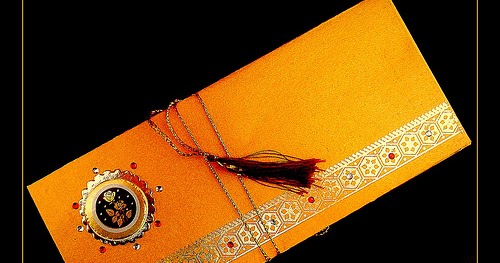
Whenever we hand over a sum of money to anyone as a gift we often out in a coin of Rs. 1 to it and the wedding ‘lifafah’ always has a coin stuck to it.

Scientific reason – The main reason to add extra coin is to make the entire sum an odd number which becomes indivisible, and therefore it is good for the person or the newly married couple. If the number is even by that logic, then the sum will end in a zero which means ‘the end’.

DharamVigyaan: Why we add 1Rs to a gift sum?

Swallow Tulsi leaves, never chew.

There is one popular belief that Tulsi is Goddess Lakshmi’s Avtar and hence one should not chew the leaves, not show disrespect.

Scientific reason – Although a Tulsi leaf is healthy, it also contains a little amount of Arsenic. So to save your teeth from turning yellow, and saving the enamel from degrading, you do not chew but swallow.

Eating Tulsi leaves can have these 5 side effects! | The Times of India

Why are cashews so expensive?

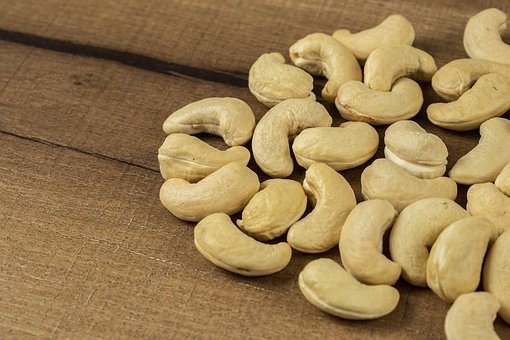
Cashews are delicious. When we’re in the mood for a nutty snack, cashews are hard to resist. The only problem is, they can really hurt your wallet over time, especially when compared with other nuts.Cashews are not a cheap indulgence.  No wonder gorging on roasted, salted or plain cashews is pure bliss, but what makes this rich, crunchy, silky nut so expensive?

The reason behind the expensive cashew nuts is their growing climates. Cashew can only be harvested in tropical climates such as India, Vietnam, Brazil, and some African countries. It grows in a single nut attached to the bottom of a fruit called cashew apple which takes two to three months to develop.

Cashews are in high demand and supply is limited. That is the primary reason for their high price.

The seed is removed from the apple. The cashew seeds have to be steamed and then dried for 24 hours to make it easier to remove the outer shell. Cashew seeds are cracked individually by hand. Cashews need proper processing in order to make them edible, but most of the extraction and processing is done manually, which makes this task tough!

The cashews have a toxic substance under the shell similar to poison ivy, therefore workers oil their hands to protect them. The shell’s oils cause damage to the skin of the workers responsible for processing the seeds. Roasting the cashew nuts to destroy the toxins is dangerous as well, as the toxins are released into the air. After the toxins are removed, the cashews must be graded and sorted. The entire process is labor-intensive as well as hazardous, which helps explain part of why cashews are so expensive. Cashews are then dried to reduce the moisture content making it easier for peeling. Lastly the kernel is carefully peeled one by one to reveal the final product!

I was amazed at the long labour intensive techniques involved in bringing cashew nuts to our table.  This made me realise the reason behind the high price tag of the cashew nuts I love.

THE BEAUTY OF MOVIE POSTERS

When I was in primary school, I would always look outside my school bus through the window to look up at the billboards that had the movie posters. And I was so captivated by it that I started to read and study different kinds of posters.

Movie posters is something that most of us don’t pay much attention to, but it is far more important than just a piece of design or art. Movie posters fall somewhere between the realm of design and art. To make the poster feel cinematic, it requires a certain kind of aesthetic, sensibility and should also share a glimpse of the story. A movie poster can work wonders for the film, it can make it or break it. That’s why there are multiple poster designing agencies that only work in making the poster for the film.

In Hollywood, there are awards for remarkable poster art. The bar for posters is much lower in our country (mainly Bollywood). Before the trailer or the teaser of the film, the first thing that the audience sees is the poster. Without a poster, we are solely relying on words which can get dull very quickly.

As people who are not into filmmaking, we do not break down these posters and find the true meaning, so I will be breaking down 3 movie posters and show how I analyse a poster and discover the beauty that it holds.

Poster #1 : PSYCHO (1960) By Alfred Hitchcock

Psycho is a 1960 psychological thriller-horror movie directed by Alfred Hitchcock. The poster was designed by legendary graphic designer, & academy award winning film maker Saul bass. The poster contains 3 major things- the lead character of the movie, the title and the names of the cast, director, producer etc. the colours that are mainly used here are yellow, blue, red, white and black.

In the poster, the girl is looking away from the man in the back on the left side of the poster. She is also in her undergarments which indicates that she’s either a model or she is a victim to an assault. The picture of this character and the title are both in yellow, which indicates that there might be a connection between the two. The two men in red are smaller compared to the women in yellow, which indicates that their role is smaller compared to that of the woman’s. The fact that they are in red might symbolise that one could either be the love interest or a murderer. It also highlights the genre of the movie- which is thriller- horror. The colour black in the background sets the mysterious tone of the film.

So, what message does this poster send? The artist is trying to send the genre across to the viewers as the message. The genre is psychological thriller-horror. (Although it would have been easier had there been a weapon to give more clarity to the viewers)

Poster #2: JAWS (1975) by Steven Spielberg

Jaws is a 1975 horror-adventure film whose poster was designed by Roger Kastel.  This is a well know and an iconic film. It is still well known throughout the different age generations.

When we first look at the poster two things capture our attention. The first thing is the title “jaws” which is written in red bold letters. The red colour could be seen as representing blood and violence which is a hint to the films content. This allows the audience to know what they are getting into and what they can expect out of this film. The second thing that captures our attention is the shark attack and the victim who is unaware of her fate. The teeth of the shark are also visible which suggests that what was about to happen to the woman. The colour of the shark and the colour of the water are pretty similar, which tells us that the shark is camouflaged in water and also gives the element of surprise which makes it eviller. All these elements make the audience want to buy a ticket to the film and find out what happens next. 

Poster #3: LITTLE MISS SUNSHINE (2006) by Valerie Faris & Jonathan Dayton

Little Miss Sunshine is a comedy-drama film and its poster was designed by BLT Communications.

The first few things that we notice about this poster is the bright yellow colour, the Volkswagen van, and the characters running towards it. The image used on the poster is a still from the film. The yellow van signifies freedom and the word Volkswagen means ‘people’s car’ in German. These vans are notorious for breaking down and the films has used this to comic effect in their poster portraying a family running to keep up with a vehicle which has trouble breaking. The image of the car denotes travel which also has connotations of adventure and freedom, all key themes in the film. The image gives a clear visual representation of the plot and reflects the light-hearted tone of the film. The colour yellow ties in with the name of the film. This poster gives a clear visual representation of the story, cast, crew and genre. Together the image, colours and tag-lines create a representation of the film’s genre. From the poster, it is clear that audiences can expect a comedy, adventure drama.

Hence, posters are more important than you think. The saying “a picture is worth 1000 words” is true. One picture can tell a story in more detail than 1000 words ever could.

4 MAJOR LEARNING LESSONS FROM THE BOOK ‘THE ALCHEMIST’

1. NEVER GIVE UP

While pursuing your dream, you will come along many obstacles in your path, and they may make your moral down and you will think that you are not capable of achieving that thing, but don’t give up because god is testing you so give your best shot every time.

2. OVERCOME THE FEAR OF FAILURE

Fear of failure is worse than the failure itself and this the only thing that will hold you back from attaining your dream. So, the best way is to embrace this failures as learning and move ahead in your quest of finding your destiny.

3.TAKE ACTION

You will never learn how to do things unless you implement them , by taking actions because actions are the only ways of learning how to correctly do the things, and if you don’t take actions you will never learn.

4. ENJOY THE JOURNEY

Enjoy this journey of reaching towards your destiny, because this is the moment where you will learn many things ,you will meet many people, there will be ups and downs but these things only makes your journey memorable. So, enjoy every bit of these journey.

The Alchemist by Paulo Coelho