


Social Class refers to a hierarchy in a society wherein people are grouped on the basis of their wealth status. Jane Austen’s Pride and Prejudice (1813) is acknowledged for its keen commentary on these aspects of the society. The influence of social class and the greed to climb up this social hierarchy is much of novel’s criticism.
Austen’s works usually focus on the preoccupations of the middle class and the upper class, and are rarely focused on the Aristocrats (people with title) or the working class. But even within that, there are several other differentiations as Regency England so working for money something of low standards. They acquired wealth through property, marriage, and inheritance. For instance, although the Bingley family are economically farer than most, on the basis of class, they are considered equal or maybe even lower than that of the Bennets as they are said to have made their money through trade or business.
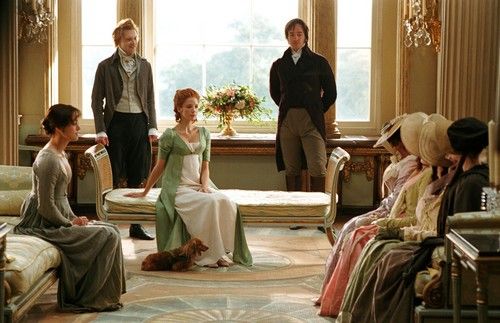
The novel also portrays characters who react differently to class. Characters like Bingley sisters and Mr. Collins fawn over the rich and try to please them. Especially Mr. Collins who depends on largely on Lady Catherine De Borough to gain social acceptance. He does all their biddings and constantly attempts to flatter them in order to ensure his good associations with them. Lady Catherine on the other hand, is very proud of her richness and sees everyone as beneath her. The novel satirises these characters who move only in relation to class, and are portrays the conceited idea that social distinction is an important factor in judging someone’s character. Lady Catherine is so used to people doing her biddings and obeying her orders that she is taken off-guard when Elizabeth stands up for herself. She objects to Lizzy marrying Darcy due to her fear that it would indirectly affect her own social class through association. Elizabeth in return, replies that she’d marry whomever she wishes to for her own happiness.
“In marrying your nephew, I should not consider myself as quitting that sphere. He is a gentleman; I am a gentleman’s daughter; so far we are equal.”
Jane Austen (Chapter 56)
Characters such as Mr. Bingley and the Gardeners seem much more as they do not discriminate on the basis of class even if they are financially well-to-do. Darcy can be seen as an example of Austen’s ideal high-class gentleman. Despite seeming selfish and arrogant initially, he later proves that he is capable of change. His innocence also becomes evident when Lizzy talks to the residents of Pemberly. The social status of the Bennet family is threatened to a large extant when Lydia runs away with Mr. Wickham. They are saved from ‘social degradation’ only when Darcy covers up the issue with money.
Pride and Prejudice shows that class might determine a character’s social situation, but it doesn’t signify anything about their behavior. The marriage between Elizabeth and Darcy shows that even though class restrictions are rigid, it does not determine one’s character and that love can overcome all material obstacles like class. It proves that class is ultimately an arbitrary and meaningless distinction between people.
Reference Links:

 Eduindex
You must be logged in to post a comment.