Internshala is an internship and online training platform, based in Gurgaon, India. It is founded by Sarvesh Agarwal. He studies at IIT, Madras. The website helps students find internships with companies in India. It is started in 2010 and aggregated internships across India and articles on education, technologies and skills. It has millions of students and thousands of companies.
It provides wide range of opportunities for students to do internships on various domains in wide range of companies as per our availability.It also contains companies of work from home. Internshala provides trainings and certifications on wide range of skills that are required for Internship.It is a great opportunity for college students to find out internships in an easy way.
Plastic items have played noteworthy parts in securing individuals amid the COVID-19 widespread. The far reaching utilize of individual defensive adapt made a gigantic disturbance within the supply chain and squander transfer framework. Millions of disposed of single-use plastics (veils, gloves, smocks, and bottles of sanitizers) have been included to the earthly environment and might cause a surge in plastics washing up the sea coastlines and littering the seabed. This paper endeavors to evaluate the natural impressions of the worldwide plastic squanders created amid COVID-19 and analyze the potential impacts related with plastic contamination. The sum of plastic squanders created around the world since the flare-up is evaluated at 1.6 million tonnes/day.
We assess that around 3.4 billion single-use facemasks/face shields are disposed of every day as a result of COVID-19 widespread, universally. Our comprehensive information investigation does demonstrate that COVID-19 will invert the energy of years-long worldwide fight to diminish plastic squander contamination. As governments are looking to turbo-charge the economy by supporting businesses climate the widespread, there’s an opportunity to revamp unused businesses that can enhance unused reusable or non-plastic PPEs. The unforeseen event of a widespread of this scale has come about in unmanageable levels of biomedical plastic squanders. This master understanding endeavors to raise mindfulness for the selection of energetic squander administration methodologies focused on at lessening natural defilement by plastics created amid the COVID-19 widespread.
Coronavirus lockdowns around the globe have driven to a sensational 5% drop in nursery gas emanations, agreeing to UNCTAD gauges, but not all measures to contain the widespread have had a positive affect on the environment. Our lanes, shorelines and sea have been hit by a tidal wave of COVID-19 squander counting plastic confront veils, gloves, hand sanitizer bottles and nourishment packaging. “Plastic contamination was as of now one of the most prominent dangers to our planet some time recently the coronavirus outbreak,” said Pamela Coke-Hamilton, UNCTAD’s executive of worldwide exchange. “The sudden boom within the every day utilize of certain items to keep individuals secure and halt the malady is making things much worse.” Global deals of expendable confront veilsmasksveilscovers alone are set to skyrocket from an evaluated $800 million in 2019 to $166 billion in 2020, concurring to commerce counseling firm Grand See Research. But typically as it were portion of the story. Social separating has moreover driven to a surge of items conveyed every day to homes – wrapped
Plastic is an fixing in endless items exchanged globally each day – from cars to toys to family machines. Indeed merchandise that contain no plastic, such as apples or chocolate bars, are dispatched in millions of tons of plastic bundling each year. “Plastic generation and utilization are a worldwide framework that has parts of exchange dimensions,” Ms. Coke-Hamilton said. “But the vital part that worldwide exchange approaches may play within the battle against plastic contamination has not earned the consideration it deserves,” she said whereas showing an UNCTAD investigation of exchange in plastics, maintainability and advancement to the World Exchange Organization’s exchange and environment committee on 3 July. The number of exchange measures specifying plastics – such as specialized controls, appropriations, licenses and bans – detailed to the WTO has expanded yearly by 28% over the past decade, appearing developing concern among WTO members. “But the way nations have been utilizing exchange approach to battle plastic pollution
Other than directing the generation and utilization of plastics, UNCTAD inclinations governments and businesses to recognize non-fossil fuel plastic substitutes. The list of non-toxic, biodegradable or effortlessly recyclable materials that seem supplant plastic incorporates numerous well-known materials, such as glass, ceramics, characteristic strands, paper, cardboard, rice husk, common elastic and creature proteins. As creating nations are key providers of numerous plastic substitutes, expanded worldwide request seem make unused, greener exchange and venture openings for them. Developing countries supply, for case, 92% of the world’s jute, with the most providers being Bangladesh (74%) and India (9%). They moreover accounted for 94% of worldwide common elastic sends out in 2019, with Thailand (31.5%), Indonesia (30%) and Côte d’Ivoire (8.5%) driving the pack. Developing nations have a enormous stake within the worldwide plastics economy. Their share of worldwide plastics generation hopped from 43.5% in 2009 to 58% in 2018. And two
The Social Dilemma, which published in 2020, discusses the rise of social media and how it impacts society’s thinking as a whole. It is a documentary film made by Jeff Orlowski that discusses many facets of social media and how it may affect people’s thoughts if not handled appropriately. The artificial intelligence video also sheds attention on teenage mental health concerns. It demonstrates how artificial intelligence algorithms could operate in the context of social networking. The social problem also includes interviews with former Facebook, Google, and Apple employees.
iHuman
iHuman is a documentary on machine learning, political order, and power that demonstrates how AI has transformed human lives. It also discusses how AI influences society and our destiny. The documentary features interviews with AI researchers Ilya Sutskeve and Jürgen Schmidhuber, as well as discussions about how AI may be created and applied. Some personalities symbolise AI and demonstrate its significance in today’s society. iHuman premiered at the 2019 International Documentary Film Festival Amsterdam.
Hi, A.I
Hi, A.I is a film about how people connect with artificial intelligence robots. In 2019, Isa Willinger directed the film, which was funded by Stefan Kloos. It highlights human interactions while also discussing AI progress, degrees of AI, and other AI and robotics research.
Lo and Behold
Wener Herzog produced the documentary movie Lo and Behold, reveries of the linked world, which was released in 2016. It covers robots, artificial intelligence, the web, the internet of things, and other topics. Interviews with luminaries in the fields of artificial intelligence and innovation, such as Elon Musk, Sebastian Thrun, Bob Kahn, and others, are included in the film.
AlphaGo
The trip from Cambridge to Seoul is shown by AlphaGo. Go, a Chinese game, has been viewed as a test for AI, and in March of 2016, the worlds of Go and AI clashed in South Korea, where hundreds of thousands of people viewed a game tournament. For the very first time in human history, a famous Go master faces off against an AI adversary in AlphaGo. The film explores what artificial intelligence can teach us about mankind and what it can disclose about the 3000 years old game.
TechnoCalyps
TechnoCalyps is a 2006 documentary directed and written by Frank Theys on the advancement of technology. It’s a 3-part documentary that covers automation, artificial intelligence, cybernetic implants, nanotechnology, and other topics. Interviews with renowned specialists in the area are also included in the film.
Technology has advanced rapidly over a period. This century saw a technological revolution which enthralled not only India but the whole world. In today’s world electronic devices used everywhere. And it is not only limited to established organizations or institutions but available to every individual at swipe of a finger. It helps people to communicate locally and globally with ease. Due to which the reliance on electronic means of communication, e-commerce and storage of information in e-form increasing rapidly. This growth of reliance on electronic means of communications, e-commerce and storage of information in e-form has most certainly caused a need to modify the law relating to information technology and rules of admissibility of electronic records both in civil and criminal matters in India. Electronic evidence is defined as information and data of asset to an investigation that is stored on, received or transferred by an electronic device. It is any probatory information stored or transferred in electronic form that a party to a court case may use at trial. As courts continue to wrestle with this new electronic frontier it is crucial to stress that electronic evidence is subject to the same rules of evidence as paper documents. It can be obtained in mails, digitized photos, transaction logins, instant messages, documents from accounting programs, spread sheets, browser history data, backups, printouts, GPS tracks, videos or audio files. E-records inclines to be more abundant, more difficult to annihilate, not difficult to modified, easily duplicated, potentially more expressive and more readily available, and such unique nature of e-evidence, as well as the ease with which it can be exploited or falsified, creates obstacle to admissibility not faced with other evidence. Electronic evidence challenge evidentiary rules grounded in a more tangible way. Certification of such record is perhaps the most difficult test as courts seek to determine its admissibility.
During trials, judges are often asked to order on the admissibility of electronic records. How the court orders on questions of admissibility could eventually impact the outcome of a civil lawsuit or determine the difference between conviction and acquittal of a defendant. These gadgets, the result of technology can be used for legal and illegal acts. For example, when data recorded or stored in the memory of a computer is printed out in paper if it is not easy to say that the version in the memory is a document. Nor is it easy to determine that the print out is an original or a duplicate. Also, even if such things (audio, tape recording, a video tape recording, electronic mail on computer screen) when submitted as evidence and such things as electronically transmitted directs in commercial transactions can be regarded as document.
The growth of computers, the social impact of information technology and the ability to store information in digital form have all required Indian law to be amended to include provisions on the appreciation of e-records.
In 2000 Parliament enacted the Information Technology (IT) Act 2000, that amended the existing Indian statutes to allow for the admissibility of electronic evidence. The IT Act is based on the United Nations Commission on International Trade Law Model Law on Electronic Commerce and, at the side of providing amendments to the Indian Evidence Act 1872, the Indian Penal Code 1860 and also the Banker’s Book Evidence Act 1891, it recognizes transactions that are administered through electronic information interchange and different means of electronic communication.
Bangladesh government has imposed strict lockdown in the country from today following a sharp rise in COVID 19 infection. All government and private offices will remain closed during the lockdown. No vehicles will be allowed to operate except for emergency and medical services.
Movement of people out of their home without urgent reason will be restricted but it will not be applicable for people working in media organisations. Bangladesh has been witnessing a sharp rise in COVID cases in recent weeks.
AIR correspondent reports that the COVID-19 situation in Bangladesh continues to remain grim. On Sunday, 119 people died in the country due to Corona. This is the highest number of deaths in a single day since the first coropa positive case was detected in the country in March last year. The sample positivity rate in the country is also at an alarming level of over 21 percent. Several districts in the country were under complete lockdown since the last 10 days. However, in view of the continuing surge in infections and deaths, the government on Sunday announced a number of COIVD 19 restrictions.
From today morning, movement of all public transport except cargo vehicles and rickshaws across the country has been suspended till the morning of 1st July. All shopping malls, markets, tourist places, resorts, community centres and recreation centres will also remain closed. Hotels and restaurants will be allowed to serve takeaways or take online orders from 8 a.m. to 8 p.m. Offices will remain open and the arrangement for transportation of their staff is to be made by the concerned organisation. Further announcements regarding the lockdown are likely to be announced over the next few days.
Haryana government has announced extension of the coronavirus lockdown by another week till July 5, while granting certain relaxations.
In a fresh order issued under the Disaster Management Act, the state government allowed university campuses to open for research scholars and practical classes in laboratories.
Anganwadi centres and creches under Women and Child Development Department will continue to remain closed till July 31 in the state.
The relaxations on reopening of shops, malls, restaurants, religious places, corporate offices, gatherings in weddings, funerals, open spaces etc will continue as currently in place.
Covid restrictions imposed in the national capital were further relaxed today as Delhi is witnessing decline in the Corona cases. As a part of further opening up of activities, Gyms and Yoga institutes have been permitted to open. The new relaxation came into effect at 5 this morning.
AIR correspondent reports that Covid situation in Delhi has significantly improved in the last few weeks due to continuous decline in corona virus cases. In view of this, Delhi Disaster Management Authority has decided to permit few activities. Gyms and Yoga Institutes have been allowed to function with 50 per cent capacity. Ceiling on the number of guests in the marriage function has also been raised from 20 to 50.
Owners of banquet halls, marriage halls, hotels, gyms and Yoga Institute shall be responsible for ensuring strict compliances of Covid Appropriate behaviour. However, Schools, colleges and other educational institutions will remain closed. All social, political, cultural and religious activities will be prohibited. Cinema Halls, theatres, multiplexes, entertainment parks, spas, assembly halls and auditoriums are not allowed to open. All these restrictions and prohibitions in the national capital will continue till 5th July of next month.
From Kungyam village in eastern Ladakh, Defence Minister Rajnath Singh will virtually inaugurate 63 bridges today. From Kunjan bridge on Leh-Loma road, Minister will inaugurate 63 bridges built by Boarder Roads Organization (BRO) in Eight States across the country.
On the second day of his 3-day visit in Ladakh, defence minister Rajnath Singh virtually inaugurate a record number of 63 bridges at a click. Amongst the bridges, 11 in Ladakh, Four in Jammu and Kashmir, Three in Himachal Pradesh, Six in Uttarakhand, Eight in Sikkim, 29 in Arunachal Pradesh and one each in Nagaland and Manipur.
BRO used the latest technologies in building of these bridges. These are Class-70 bridges and can bear the load of movement of Tanks and other heavy vehicles. These bridges facilitate strategic and quicker access not just to Armed forces but to people living in the border villages as well.
Prime Minister Narendra Modi has said, India accomplished an unprecedented feat when a record number of vaccine doses were administered to over 86 lakh people in a single day. Addressing the nation through his Mann Ki Baat programme on All India Radio, Mr Modi said, the country achieved this feat on 21st June, when the next phase of vaccination campaign commenced.
Mr Modi stressed that efforts must continue to ensure that every citizen is able to avail the safety that the vaccine provides. He encouraged people to end vaccine hesitancy. He pointed out that myriad organizations and members of civil society have come forward in many places in order to end vaccine hesitancy.
The Prime Minister said someday, people of villages and forest dwellers displaying their capabilities and understanding in the pandemic will become a subject of case study for the world.
National Programme for Technology Enhanced Learning is a joint initiative from IITs and IISc to offer online courses and certification in various topics. Learn for free, Pay a small fee to write an exam and get a certificate. NPTEL was initiated by seven Indian Institutes of Technology (Bombay, Delhi, Kanpur, Kharagpur, Madras, Guwahati and Roorkee) along with the Indian Institute of Science, Bangalore in 2003.NPTEL is a good opportunity for who is willing to do course based on their qualification. It is fully online course. Here Five core disciplines were identified, namely, civil engineering, computer science and engineering, electrical engineering, electronics and communication engineering and mechanical engineering and 235 courses in web/video format were developed in this phase.
Coursera is one of the leading learning online platform with International standards.The professors are from world’s top educational institutions.It helps poor people with free video lectures in audit mode. It also provides financial aid to finanacially weak sectors.Coursera partners with more than 200 leading universities and companies to bring flexible, affordable, job-relevant online learning to individuals and organizations worldwide.They offer a range of learning opportunities—from hands-on projects and courses to job-ready certificates and degree programs.
The children’s day in India is celebrated on November 14 since the year 1964. Before 1964, India celebrated children’s day along with the world on November 20 – the Universal Children’s Day. In1964, after Pandit Jawahar Lal Nehru’s death, it was decided unanimously to commemorate his birth anniversary as Children’s Day in the country.
It is celebrated to increase awareness of the rightsof childre.Nehru considered children as real strength of a nation and foundation of society.On this day, many educational and motivational programs are held across India for children.It is mainly celebrated in schools with a face of Joy by children.
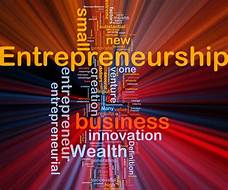
Actually there are 4 types of enterprenuerships. now let us discuss breifly about these 4 types of enterprenuerships.
SMALL BUSINESS: It represents the overwhelming majority of U.S enterpreneurial ventures. a small business could be any company.founder withou any inyention of growing the business into the chain. for example opening a single grocery store falls under the small business model creating a nationwide chain of grocery stores dosent small business enterprenuers usually invest their own money to get their companies off the ground, and they only make money if the business suceeds.
SCALABLE STARTUP: These startups are less common than small businesses, though they tend to attract a lot of media attention. these business begin on a very a very small scale, often as just the seeds of an idea. this germ is then nurtured and scaled typically through the involvement of the outside investors, until it becomes something much larger many silicon valley tech companies fall under this model they begin in an attic, garage, or home office before eventually scaling into large corporate headquarters.
LARGE COMPANY: Sometimes, enterprenuers work within the context of a larger, established company. imagine that you work at a large auto manufacturing company. through careful market research you realise there is a high demand for motorcycles and that your company has many of the technologies and process in place to branch into motorcycle production. you go to your boss and ask for the funding to launch a brand new motorcycle division and you are approved this is an example of what the large company enterprenuership model might look like in the practice.
SOCIAL ENTERPRENUERSHIP: The final model to consider is social enterprenuership which seeks innovative solutions to community based problems. social enterprenuers are willing to take on the risk and effort to create positive charges in society through their intiatives. in other words a social enterprenuer launches an organisation thats fundamentally about enacting positive social change not merely generating profits.
CHALLENGES FOR WOMEN TO SUCEED IN BUSINESS
Such progress is encouraging but there are still many challenges for women in business. some of the most common roadblocks that women enterprenuers face include:
DEFYING SOCIAL EXPECTATIONS: Too often enterprenuership is still considered a predominently male under taking.
ACCESSING NEEDED FUNDS: There remain significant funding gaps for women enterprenuers as compared to male enterprenuers women of color are at the greatest disadvantage of all.
BUILDING SUPPORT NETWORKS: In feilds that are still dominated by men can be difficult for women
BALANCING BUSINESS AND FAMILY: Remains a challenge for women particularly for working moms.
Jawaharlal Nehru was born on 14th November,1889.He was born in Allahabad in British India.He was first prime minister of independent India , who established parliamentary government and became noted for his neutralist (nonaligned) policies in foreign affairs. He was also one of the principal leaders of India’s independence movement in the 1930s.
Nehru was born to a family of Kashmiri Brahmins, noted for their administrative aptitude and scholarship, who had migrated to Delhi early in the 18th century. He was a son of Motilal Nehru, a renowned lawyer and leader of the Indian independence movement, who became one of Gandhi’s prominent associates. Jawaharlal was the eldest of four children, two of whom were girls. Vijaya Lakshmi 1pandit,sister of Jawaharlal Nehru later became the first woman president of the UN general Assembly.
Cyber Crime is an illegal activity or crime which involves computer and a computer network. It can a also be a crime wherein a computer is targeted either to retrieve an information or for other harmful purposes. Cyber Crime can harm someone’s security and Financial Health. There are many privacy concerns surrounding Cybercrime when confidential information is intercepted or disclosed, lawfully or otherwise. Internationally, both governmental and non-state actors engage in cybercrimes, including espionage, financial theft, and other cross-border crimes. Cybercrimes crossing international borders and involving the actions of at least one nation-state are sometimes referred to as cyberwarfare. Warren Buffet describes Cybercrime as the “number one problem with mankind” and “poses real risks to humanity. Most, but not all, cybercrime is committed by cybercriminals or hackers who want to make money. Cybercrime is carried out by individuals or organizations. Some cybercriminals are organized, use advanced techniques and are highly technically skilled. Others are novice hackers. Rarely, cybercrime aims to damage computers for reasons other than profit. These could be political or personal.
Types of Cybercrime
1. Phishing: using fake email messages to get personal information from internet users;
2. Misusing personalinformation (identity theft);
3. Hacking: shutting down or misusing websites or computer networks;
4. spreading hate and inciting terrorism;
5. distributing child pornography;
6. grooming: making sexual advances to minors.
Nowadays, all digital devices (including computers, tablets, and smartphones) are connected to the internet. And, hence the devices are more prone to cyber crime.
Categories of Cyber Crime
Cyber crime falls under two main categories-
Criminal activity that targets
Criminal activity that uses computers to commit other crimes.
Cybercrime that targets computers often involves viruses and other types of malwares.
Cybercriminals may infect computers with viruses and malware to damage devices or stop them working. They may also use malware to delete or steal data.
Cybercrime that stops users using a machine or network, or prevents a business providing a software service to its customers, is called a Denial-of-Service (DoS) attack.
Cybercrime that uses computers to commit other crimes may involve using computers or networks to spread malware, illegal information or illegal images.
Sometimes cybercriminals conduct both categories of cybercrime at once. They may target computers with viruses first. Then, use them to spread malware to other machines or throughout a network.
Cybercriminals may also carry out what is known as a Distributed-Denial-of-Service (DDos) attack. This is similar to a DoS attack but cybercriminals use numerous compromised computers to carry it out.
How to protect yourself from cyber crime
Now you have learned about cyber crimes, so let’s also know how to stay protected from it. Here are some points to consider-
Keep software and operating system updated– ensures that you benefit from the latest security patches to protect your computer.
Use antivirus and keep it updated– Using anti-virus or a comprehensive internet security solution like Kaspersky Total Security, Mc Afee, Quick heal, and other antivirus softwares are a smart way to protect your system from attacks. Anti-virus software allows you to scan, detect and remove threats before they become a problem. Having this protection in place helps to protect your computer and your data from cybercrime, giving you piece of mind. If you use anti-virus software, make sure you keep it updated to get the best level of protection.
Use strong passwords– Be sure to use strong passwords that people will not guess and do not record them anywhere. Or use a reputable password manager to generate strong passwords randomly to make this easier.
Never open attachments in spam emails– A classic way that computers get infected by malware attacks and other forms of cybercrime is via email attachments in spam emails. Never open an attachment from a sender you do not know.
Do not click on links in spam emails or untrusted websites- Another way people become victims of cybercrime is by clicking on links in spam emails or other messages, or unfamiliar websites. Avoid doing this to stay safe online.
Do not give out personal information unless secure- Never give out personal data over the phone or via email unless you are completely sure the line or email is secure. Make certain that you are speaking to the person you think you are.
Contact companies directly about suspicious requests- If you get asked for data from a company who has called you, hang up. Call them back using the number on their official website to ensure you are speaking to them and not a cybercriminal.
Be mindful of which website URLs you visit- Keep an eye on the URLs you are clicking on. Do they look legitimate? Avoid clicking on links with unfamiliar or spammy looking URLs. If your internet security product includes functionality to secure online transactions, ensure it is enabled before carrying out financial transactions online.
Keep an eye on your bank statements- Our tips should help you avoid falling foul of cybercrime. However, if all else fails, spotting that you have become a victim of cybercrime quickly is important. Keep an eye on your bank statements and query any unfamiliar transactions with the bank. The bank can investigate whether they are fraudulent.
Governments Role
Government is also working to minimize such crimes taking place everyday, as the no. of such cases are increasing day-by-day. Government has also created a separate branch for this named Cyber Cell.
How can you file a complaint in cyber cell?
Few simple steps are as follows-
The very first step to file a cyber-crime complaint is to register a written complaint with the cyber-crime cell of the city are currently in.
When filing the cyber crime complaint, you need to provide your name, contact details, and address for mailing. You need to address the written complaint to the Head of the Cyber Crime Cell of the city where you are filing the cyber crime complaint.
In case you are a victim of online harassment, a legal counsel can be approached to assist you with reporting it to the police station. Additionally, you may be asked to provide certain documents with the complaint. This would, however, depend on the nature of the crime.
Register a Cyber Crime FIR: If you do not have access to any of the cyber cells in India, you can file a First Information Report (FIR) at the local police station. In case your complaint is not accepted there, you can approach the Commissioner or the city’s Judicial Magistrate.
Certain cyber crime offenses come under the Indian Penal Code. You can register a cyber crime FIR at the nearest local police station to report them.
Most of the cyber crimes that are covered under the Indian Penal Code are classified as cognizable offenses. A cognizable offense is the one in which a warrant is not required for an arrest or investigation.
Zero FIR offers some solace to victims of cases that require immediate attention/investigation as it avoids wasting time in enlisting the offense on police records.





 Eduindex
You must be logged in to post a comment.