


PANDITA RAMABAI SARASVATI
Remembering the times when girls were just meant to be at home, cook and take care of the rest of family and were taught to speak less, not go outside often, wear saree as soon as they reach the age of 8 and were denied education, there was this girl Pandita RamaBai born to a liberal Brahmin Pandit, Anant Shastri Dongre in 1858. Born in a liberal family meant that she was already saved from the twin curse other girls faced i.e the lack of education and child marriage. Her father, Anant Shastri Dongre, was a Sanskrit Scholar and used to teach his wife Sanskrit which was very unlikely in those times. However, due to some adverse material conditions of the family Pandita RamaBai lost her parents and her sister. She was orphaned at the young age of 16. Eventually, she had to move to Calcutta along with her brother in the year 1878. There she met many other Scholars with whom she shared her knowledge in Scripture and Sanskrit she had inherited from her father and it was quite impressive for the Scholars. This was the turning point of her life after all what she had gone through. She was conferred with the titles of “PANDITA” and “SARASVATI”.
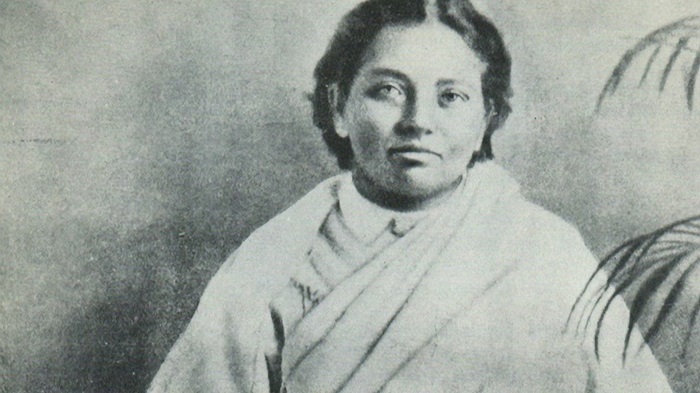
In Calcutta she met Keshab Chandra Sen, who was the supporter of Brahmo Samaj (societal component of Brahmoism- reformist movement of the Hindu religion). He suggested RamaBai to read the Vedas and Upanishads more carefully, going deeper through the contents. Slowly, she started to gain a little confidence she had lost long ago due to bad incidents that happened to her. RamaBai gained exposure to public speaking by participating in the family’s public recitation of Puranas at pilgrimage sites across India, which is how they earned a meager living. Somehow they had started to lead a normal life by now when a sudden demise of her brother in 1880 completely shock her.
She was all alone now. To overcome the emptiness in her life she decided to marry Bipin Behari Medhvi, who was a Bengali lawyer. The groom was a Bengali Kayastha, and so the marriage was inter-caste and inter-regional and therefore considered inappropriate for that time. They were married in a civil ceremony on November 13,1880. The couple had a daughter, after a year of their marriage, whom they named Manorama. But her happiness of a complete family was very short-lived. She lost her husband in the year 1882, just after 2 years of their marriage. She was completely broken but had to hold upon her as she now had a daughter to raise and there were many more revolutions left to be brought by her. RamaBai moved to Pune where she found ARYA MAHILA SAMAJ(ARYA WOMEN’S SOCIETY), influenced by the ideas of Brahmo Samaj and Hindu reformers, the purpose of the society was to promote the cause of women’s education and deliverance from the oppression of child marriage.
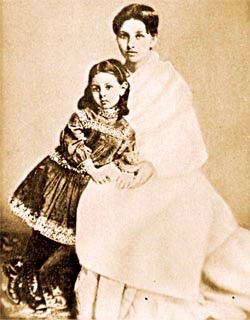
When in 1882 the Hunter Commission was appointed by the Government of India to look into the education system, RamaBai gave evidence before it. In an address before the Hunter Commission, she declared, “In 99 cases out of a 100 the educated men of this country are opposed to female education and the proper position of women”. She also wrote her first Marathi book, Stri Dharma-Niti (Morals for Women) which was published in 1882. With no support coming towards a widows’ institution, RamaBai decided to go to England to seek British support for her Widows’ home- Sharda Sadan in Pune. During the time she travelled from Britain to United States to attend the graduation of her relative and the first female Indian doctor AnandiBai Joshi, she published one of her most important books- The High-Caste Hindu Woman. This was her first book written in English. When she returned back to India she founded the Widows’ shelter, promoted women education and their well-being and later got herself converted to Christianity and changed her name to Marry Rama.

 Eduindex
You must be logged in to post a comment.