

Every year June 29 ,is celebrated as the National Statistics Day ,on the birth anniversary of late professor Prasanta Chandra Mahalnobis ,The Father of Indian Statistics.Due to pendemic ,this year the event being organized through video conferencing at NITI aayog,New Delhi.The chief guest for this event will be Rao Inderjit Singh , Hon’ble union minister of state of ministry of statiscs and programme implementation and ministry planning.This year the theme is Sustainable development goal (SDG)-2 ,End of hunger ,achieve food security and improved nutrition and promote sustainable agriculture.
Month: June 2021
What is RTI?
The right to information is abbreviated as RTI. The 2005 Right to Information Act requires the government to respond to citizen requests for information in a timely manner. Every citizen has the right to request any information from the government, to see any government papers, and to obtain certified photocopies of those records. Citizens have the right to inspect any government work or collect a sample of any substance utilised in that work.
Right to Information is a part of fundamental rights under Article 19(1) of the Constitution. Article 19 (1) says that every citizen has freedom of speech and expression. Even though RTI is a fundamental right, still we need RTI Act to give us this right.
RTI Act’s Purpose
The Right to Information Act’s primary goal is to empower citizens, promote openness and accountability in government operations, combat corruption, and make our democracy truly function for the people. A well-informed public will be better able to maintain required vigilance over government instruments and hold it more accountable to the people it governs.
RTI Act Schema
The Parliament acknowledged that a democracy’s healthy and efficient functioning requires an informed citizenry and information transparency, and that such transparency is essential for combating corruption and holding government and its agents accountable to the country’s citizens. The Parliament was also aware that the release of information at random and without oversight could jeopardise other public interests, such as effective governance, efficient use of limited budgetary resources, and the protection of sensitive information’s confidentially.
What may RTI be used for?
Any citizen may request information from a “public authority” (a government entity or “state instrumentality”), which is required to respond promptly or within thirty days under the Act’s provisions. Every public entity is also required by the Act to computerise their records for wide dissemination and to proactively reveal specific types of information so that citizens only need to make formal requests for information. Parliament passed this law on June 15, 2005, and it went into effect on October 12, 2005. Inspection of works, documents, and records are all covered by the right to information. Take down notes, extracts, or certified copies of any documents or records you come across. Take samples of material that have been certified. Printouts, diskettes, floppies, tapes, video, cassettes, or any other electronic method or printouts can all be used to obtain information. Records, documents, memos, e-mails, opinions, advice, press releases, circulars, orders, logbooks, contracts, reports, papers, samples, models, data material held in any electronic form, and information relating to any private body that can be accessed by a public authority under any other law currently in force are all examples of information.
Right to Information Act’s Importance
1. This law gives citizens the right to request information from the federal, state, and local governments, as well as non-governmental groups that receive government funding.
2. The law equips Indian citizens with the necessary instruments to combat corruption.
3. RTI empowers citizens to hold government and government-funded institutions accountable.
4. Citizens have the right to request information under the Right to Information Act and determine whether their constitutional rights have been violated based on the information received.
5. Individuals are given information in order to advocate for themselves under this law.
AP EAMCET applications live now
AP EAMCET stands for Andhra Pradesh Engineering,Agriculture and Medical Common Entrance Test. It is qualifier exam to get into colleges of Engineering,Agriculture and Medical.Government has released EAMCET application form in apsche.ac.in website.The last date to apply is 25th July.Exams are planned from August 19 to 25.The exam is considered to be very important students to get into colleges.
Engineering Agricultural and Medical Common Entrance Test (EAMCET), is an entrance examination conducted by Jawaharlal Nehru Technological University on behalf of Andhra Pradesh State Council for Higher Education (APSCHE).
National Education Day
National Education day is celebrated on the birth anniversary of Maulana Abul Kalam Azad.Abul Kalam Azad is the first eduaction minister of India.It is celebrated on 11 November every year.The day is also seen as an occasion to remember Azad’s contribution in laying the foundations of the education system in an independent India, and evaluating and improving the country’s current performance in the field.
While literacy plays a huge role in the overall development of an individual through better opportunities, collectively it is the nation that progresses. Therefore, the need of the hour is to help young minds learn and be well-equipped to guide the country towards significant growth.
National Youth Day
National Youth Day is also known as Swami Vivekananda Jayanthi.It is celebrated on 12th January on the ocassion of Vivekanada birthday.It observed all over India at schools and colleges, with processions, speeches, music, youth conventions, seminars, Yogasanas, presentations, competitions in essay-writing, recitations and sports on 12 January every year. Swami Vivekananda’s lectures and writings, deriving their inspiration from Indian spiritual tradition and the broad outlook of his Master Sri Ramakrishna Paramahansa. These were the source of inspiration and have motivated numerous youth organizations, study circles and service projects involving the youth.
Swami VIvekananda is a social reformer,preacher and thinker. It is a day to educate people to behave properly in the country. The main objective behind the celebration is to make a better future of the country by motivating the youths and spreading the ideas of the Swami Vivekananda. National Youth Day is also famous as Yuva Diwas.
CYBERSECURITY
Cyber security is the practice of defending computers, servers, mobile devices, electronic systems, networks, and data from malicious attacks. It’s also known as information technology security or electronic information security. The term applies in a variety of contexts, from business to mobile computinge e.t.c. The global cyber threat continues to evolve at a rapid pace, with a rising number of data breaches each year. A report by RiskBased security, revealed that a shocking 7.9 billion records have been exposed by data breaches in the first nine months of 2019 alone.
The security of data is very important in this digitalised world and the demand of cybersecurity is increasing exponentially. It is our duty to maintain our privacy and to reduce risk of breaching. Information security is a broader category that looks to protect all information assets, whether in hard copy or digital form.
LGBTQIA+ – A Road to Love and Acceptance
“If you are in the closet and fall in love with someone of the same gender, it doesn’t automatically remove the same and the fear that’s kept you locked away. The love you are experiencing encourages you to face the reality that this is who you really are and also has the power to set you free. “
– Anthony Venn Brown
India has become more accepting towards the LGBT community over the years. Nonetheless, majority of LGBT people in the country fear the judgement, discrimination from the society who might see homosexuality as shameful or abnormal. During the British rule, homosexuality was considered to be unnatural and was declared to be a criminal offence under chapter 16, Section 377 of the penal code. Even after gaining independence homosexuality continued to remain an offence.
If one traces the path of the movement, the first gay protest was held on August 11, 1992. An organization which was called AIDS Bhedbhav Virodhi Andolan (ABVA) assembled people in front of Delhi Police Headquarters protesting against the rounding up of men from Connaught Place on charges of homosexuality. Due to the ignorance and insensitivity of people the protest couldn’t gain significant amount of support and outcome. The activists from ABVA continued to fight for equality and acceptance their enthusiasm to decriminalize homosexuality led them to file a public interest litigation in Delhi high court challenging the constitutionality of section 377. This PIL became the first attempt to raise concerns for legalizing homosexuality but unfortunately the organization couldn’t follow through the petition and the case was dismissed in 2001.
In 1999, Kolkata hosted India’s first Gay pride parade which only had 15 attendees and was called Calcutta Rainbow Pride and was successful to spread the message which was being queer and being proud.
There are numerous reasons as to why accepting the community is important. Advantages of legalizing homosexuality will provide them with protection in terms of healthcare, finances and taxes which they have been denied too. It will reduce the number of crimes in the country. There have been many gay couples who want to start a family and have children, there are orphans in the world who would want to have a family and a house which they can call as their own this would benefit the adoption rate in a lot of countries. Despite of equality being given importance in the country the number of atrocities faced by the community is innumerable. People from LGBT have been hurt, mistreated, judged, humiliated and have been termed as mentally ill in the society. No matter what category of third gender they fall into at the end of the day they will always be considered to be humans. If we want to help them in any way, we should understand that more than support of the society they want their mere existence to be accepted, to make them feel that their emotions are taken into consideration. If we as society build sensitivity for them everyone would feel safe, confident and accepted in their homes and families. No one deserves to suppress their identity and feelings of who they truly are.
From 2010 the community has tirelessly raised their opinions and voices to grant them equal rights. There have been judgements that paved way for the community which are –
- NAZ Foundation Judgement, 2014 – The first judgement to declare section 377 as unconstitutional which violates article 14, 15 and 16
- NALSA Judgement, 2014 – for the first time in the country, transgender people were recognized as the citizens of the country.
- Arun Kumar Judgement, 2019 – expanded the category of women to include transgender people to identify them as brides as well.
The turning point for the community was the year of 2018, when a five-judge constitution bench was headed dealing with section 377 “refers to unnatural offences’’ which was against the law of the nature. On September 06, 2018 Supreme court ruled those consensual sexual relations between adult is Not a Crime. At the end, being a supporter of the community
I would conclude that as humans we hold no authority to tell anyone who they are supposed to fall in love with, there should be no judgements when it comes to Love – It is the highest form of mankind it heals and overcomes anything!
10 countries that are open to Indian travellers right now
01. 10 countries that are open to Indian travellers right now
As India was struggling with the second wave of Coronavirus, many countries restricted entry of Indian travellers to their countries. However, with the cases gradually declining now, and with the threat of a third wave looming at large, it is advisable that one travels with caution. Subject to certain conditions, some foreign countries are now opening to Indian travellers; however, those arriving from India will either have to provide a negative RT-PCR report, or will be required to undergo quarantine there.So, if you are keen to pack your bags once again, here is a list of 10 countries that are open to Indian travellers right now.
02. Russia
Russia recently resumed flight operations in a move to revive its tourism industry. Travellers will, however, be required to carry a negative RT-PCR test result, which must be issued not less than 72 hours before their arrival. Note, antibody tests will not be accepted.
03. Turkey
It’s mandatory to carry a negative PCR test result to travel to Turkey. The test must have been conducted not more than 72 hours before boarding their flight. Also, travellers will have to undergo quarantine for 14 days in locations determined by Turkish authorities. One may also be subjected to random PCR testing upon their arrival.
04. Iceland
All travellers ‘regardless of their origin’ can now visit Iceland. A proof of previous infection and recovery or certificate of vaccination (Covishield in India’s case) will even exempt one from providing a negative PCR-test result. However, all travellers will be required to undergo a COVID screening upon arrival, without any exceptions. Travellers will be required to undergo quarantine till one takes another test five days later. If that test result comes negative, your quarantine period will also end.
05. Serbia
Serbia’s doors are also open for Indian travellers. But, unlike most countries, where travellers are required to show a negative RT-PCR report, which is less than 72 hours older prior to boarding their flight, Serbia requires one to provide a report that is no older than 48 hours for entry.
06. Egypt
Indians can now travel to Egypt, although the number of flights to the country has been reduced. However, you will need to produce an RT-PCR test report that is not older than 72 hours prior to arrival. Travellers are expected to undergo quarantine at their place of stay till they receive a negative test result.
07. Uzbekistan
If you want to holiday in Uzbekistan this year, along with providing a negative RT-PCR test report that is not older than 72 hours prior to arrival, they will also be required to undergo quarantine for 14 days.
08.Afghanistan
Indians will need to produce a negative RT-PCR test report that should not be older than 72 hours prior to arrival, to travel to this landlocked country. However, it is advised that travellers should avoid travelling to Kabul for the next few weeks, owing to the rise of COVID cases in the capital city.
09. South Africa
All you need to visit this destination is an RT-PCR test report, which should not be older than 72 hours prior to arrival. As per the reports, if those arriving in South Africa fail to present their negative PCR test as the certificate of proof, they will need to self-quarantine at their own expense.
10. Costa Rica
Indians can now travel to Costa Rica, and will neither need a vaccination certificate or an RT-PCR test report. However, do note that travellers will have to fill out a health pass form upon arrival at the rainforested Central American country.
Arificial Intelligence
Artificial Intelligence(AI) is simulation of human intelligence by machines. It mainly focus on making machines think like human and mimic their action. Artificial Intelligence has grown to be very popular in today’s world. It is the simulation of natural intelligence in machines that are programmed to learn and mimic the actions of humans. These machines are able to learn with experience and perform human-like tasks. As technologies such as AI continue to grow, they will have a great impact on our quality of life. It’s but natural that everyone today wants to connect with AI technology somehow, may it be as an end-user
why should women in rural areas get sanitary napkins, for free.
India is a country, where women make up half the population. more than 60 percent of population India lives in rural areas. women lack access to sanitary napkins and menstrual cycle becomes a burden and bane for them. women are god’ s precious creation. For us, the privileged, periods are normal, something which occurs every month. we might have to deal with pain and discomfort But for those who live in rural areas this prevents them to do their daily activities. Myths and taboos which are embedded with periods, makes lives of these women even worse. According to a report only around 35 percent of women in India use sanitary napkins. The cost of sanitary napkins are expensive for the people of rural areas, who hardly get to earn money to have some food. Some follow hand to mouth process. Sanitary napkins are not a luxury, they are a necessity and every women deserves to have access to them. A lot of women in rural areas use cloth during their periods, this can cause infection and fungal diseases. Due to Menstruation, a lot of young adults in villages are forced leave the schools. Free sanitary napkins and some encouragement might help the child to not to discontinue their studies and their daily activities. Menstruation is a topic, people resist talking about, they feel its shameful. It is disheartening to see people thinking of it to be dirty. The Government of India, is indeed, working towards the progress of our country but some steps like these would definitely work towards achieving the India, we all wish for.
The Secret by Rhonda Byrne

The Secret by Rhonda Byrne, genre-spirituality, was published in 2006. ‘The Secret’ was first released as a film. The Secret is inspired by Wallace Wattles book, The Science of Getting Rich(1910), which the author received from her daughter when she was going through personal trauma. Also, the book has a reference from the life of various personalities like Bob Proctor(author), Charles Haanel(A successful American businessman), Wallace Wattles, etc.
‘The Secret’ the title itself is so eye-catchy that I also bought this book to know what is the secret. But the day I started reading the book I got to know what the secret is, and how to achieve it. And believe me one should read ‘The Secret’ once in a lifetime. It completely changed my idea for life.
The book has 10 chapters. In the first three chapters, you’ll be introduced to the universal law of attraction and how to use it to make life worth living. And rest of the 7 chapters signify the secret in various aspects of life like the secret to you, the secret to money, the secret to relationship, etc.
Between all the chapters you’ll find various stories of individuals who have used the secret and have got the outcome.
All the readers get to know about how like thoughts attract each other and how gratitude and mediation help us to achieve our goals and manifest whatever we need. It also tells the readers about how the greatest minds have used the ‘secret’ and were able to achieve their objectives.
“The power of thoughts” is the key highlight in all the chapters.
This book can take you out of any crisis by introducing you to the secret and can also change your point of view towards life.
“Think truly, and thy thoughts shall be world’s famine feed.” – Horatio Bonar (1808-1889).
LEAST KNOWN SOCIAL REFORMERS OF INDIA: PART-2

PANDITA RAMABAI SARASVATI
Remembering the times when girls were just meant to be at home, cook and take care of the rest of family and were taught to speak less, not go outside often, wear saree as soon as they reach the age of 8 and were denied education, there was this girl Pandita RamaBai born to a liberal Brahmin Pandit, Anant Shastri Dongre in 1858. Born in a liberal family meant that she was already saved from the twin curse other girls faced i.e the lack of education and child marriage. Her father, Anant Shastri Dongre, was a Sanskrit Scholar and used to teach his wife Sanskrit which was very unlikely in those times. However, due to some adverse material conditions of the family Pandita RamaBai lost her parents and her sister. She was orphaned at the young age of 16. Eventually, she had to move to Calcutta along with her brother in the year 1878. There she met many other Scholars with whom she shared her knowledge in Scripture and Sanskrit she had inherited from her father and it was quite impressive for the Scholars. This was the turning point of her life after all what she had gone through. She was conferred with the titles of “PANDITA” and “SARASVATI”.
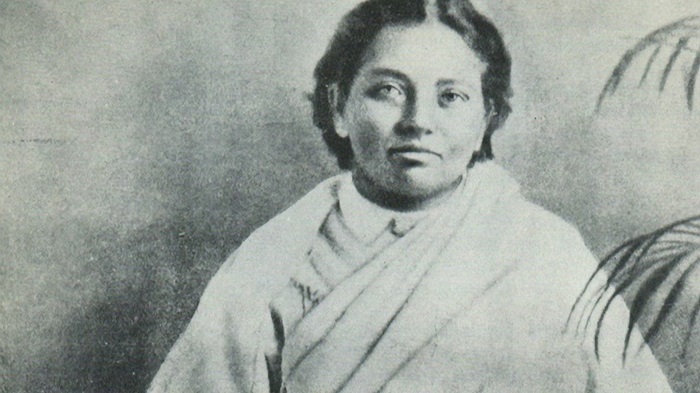
In Calcutta she met Keshab Chandra Sen, who was the supporter of Brahmo Samaj (societal component of Brahmoism- reformist movement of the Hindu religion). He suggested RamaBai to read the Vedas and Upanishads more carefully, going deeper through the contents. Slowly, she started to gain a little confidence she had lost long ago due to bad incidents that happened to her. RamaBai gained exposure to public speaking by participating in the family’s public recitation of Puranas at pilgrimage sites across India, which is how they earned a meager living. Somehow they had started to lead a normal life by now when a sudden demise of her brother in 1880 completely shock her.
She was all alone now. To overcome the emptiness in her life she decided to marry Bipin Behari Medhvi, who was a Bengali lawyer. The groom was a Bengali Kayastha, and so the marriage was inter-caste and inter-regional and therefore considered inappropriate for that time. They were married in a civil ceremony on November 13,1880. The couple had a daughter, after a year of their marriage, whom they named Manorama. But her happiness of a complete family was very short-lived. She lost her husband in the year 1882, just after 2 years of their marriage. She was completely broken but had to hold upon her as she now had a daughter to raise and there were many more revolutions left to be brought by her. RamaBai moved to Pune where she found ARYA MAHILA SAMAJ(ARYA WOMEN’S SOCIETY), influenced by the ideas of Brahmo Samaj and Hindu reformers, the purpose of the society was to promote the cause of women’s education and deliverance from the oppression of child marriage.
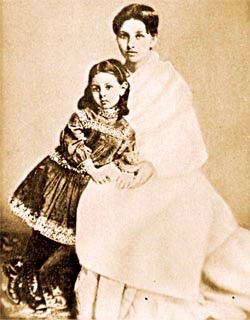
When in 1882 the Hunter Commission was appointed by the Government of India to look into the education system, RamaBai gave evidence before it. In an address before the Hunter Commission, she declared, “In 99 cases out of a 100 the educated men of this country are opposed to female education and the proper position of women”. She also wrote her first Marathi book, Stri Dharma-Niti (Morals for Women) which was published in 1882. With no support coming towards a widows’ institution, RamaBai decided to go to England to seek British support for her Widows’ home- Sharda Sadan in Pune. During the time she travelled from Britain to United States to attend the graduation of her relative and the first female Indian doctor AnandiBai Joshi, she published one of her most important books- The High-Caste Hindu Woman. This was her first book written in English. When she returned back to India she founded the Widows’ shelter, promoted women education and their well-being and later got herself converted to Christianity and changed her name to Marry Rama.
Child Labour- Destruction of Children’s Life
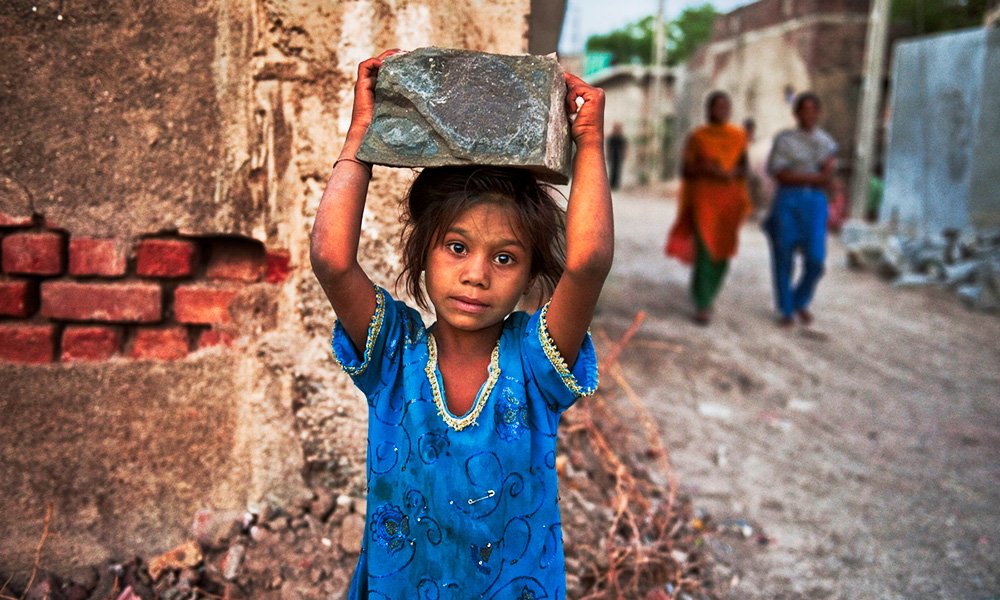
Overview
Child Labour is basically exploitation or destruction of children through any form of work that deprives children of their childhood, and are tend to work for someone even if they do not wish to. It interferes with their ability to attend regular school, and is mentally, physically, socially and morally harmful. Such exploitation is prohibited by legislation worldwide,[4][5] although these laws do not consider all work by children as child labour; exceptions include work by child artists, family duties, supervised training, etc.,. Child labour is not a recent problem, it has been from the past era. Child labour forms an intrinsic part of pre-industrial economies. In pre-industrial societies, there is rarely a concept of childhood in the modern sense. Children often begin to actively participate in activities such as child rearing, hunting and farming as soon as they are competent. In many societies, children as young as 13 are seen as adults and engage in the same activities as adults. In the previous centuries, children were tend to a little bit of Industry work, and for them there was no childhood term.
Situations in different centuries-
Early 20th century
In the early 20th century, thousands of boys were employed in glass making industries. Glass making was a dangerous and tough job especially without the current technologies. The process of making glass includes intense heat to melt glass (3133 °F). When the boys are at work, they are exposed to this heat. This could cause eye trouble, lung ailments, heat exhaustion, cuts, and burns. Since workers were paid by the piece, they had to work productively for hours without a break. An estimated 1.7 million children under the age of fifteen were employed in American industry by 1900.
21st century
Child labour is still common in many parts of the world. Estimates for child labour vary. It ranges between 250 and 304 million, if children aged 5–17 involved in any economic activity are counted. If light occasional work is excluded, ILO estimates there were 153 million child labourers aged 5–14 worldwide in 2008. This is about 20 million less than ILO estimate for child labourers in 2004. Some 60 percent of the child labour was involved in agricultural activities such as farming, dairy, fisheries and forestry. Another 25% of child labourers were in service activities such as retail, hawking goods, restaurants, load and transfer of goods, storage, picking and recycling trash, polishing shoes, domestic help, and other services. The remaining 15% laboured in assembly and manufacturing in informal economy, home-based enterprises, factories, mines, packaging salt, operating machinery, and such operations. Two out of three child workers work alongside their parents, in unpaid family work situations. Some children work as guides for tourists, sometimes combined with bringing in business for shops and restaurants. Child labour predominantly occurs in the rural areas (70%) and informal urban sector (26%).
Causes of Child labour
The major causes are stated below-
- Poverty
‘Poverty is certainly the greatest single force driving children into the workplace.’ When families cannot afford to meet their basic needs like food, water, education or health care, they have no choice but to send their children to work to supplement the household income. Poverty is considered as one of the most important causes of child labour as it is linked to other driving factors including: low literacy and numeracy rates, lack of decent work opportunities, natural disasters and climate change, conflicts and mass displacement. Poverty and child labour form a vicious cycle, without tackling one, we cannot eradicate the other.
- Lack of access to quality education
‘The availability and quality of schooling is among the most important factors.’ School needs to be a welcoming environment, with appropriate class sizes, a curriculum designed for the local context, and affordable for rural communities. Getting children into school and out of harmful work is one thing but keeping them there a means creating quality education accessible for all.
- Poor access to decent work
‘Children who were involved in child labour often lack the basic educational grounding which would enable them to acquire skills and to improve their prospects for a decent adult working life.’ If young people cannot access work which is safe, with social protection, fair pay, equality for men and women and which provides a space for workers to express their opinions, they often have no choice but to do work which is hazardous. When children above the minimum working age are doing hazardous work, this is also considered child labour.
- Limited understanding of child labour
‘The view that work is good for the character-building and skill development of children.’ When families do not understand the dangers of child labour, and how these impact on the health, safety, well-being and future of their child, they are more likely to send their children to work. Some cultural beliefs and social norms can also be drivers of child labour.
- Natural disasters & climate change
‘In rural areas, farmers who see their crops destroyed on account of climate changes have no other choice but to send their children out to work.’ The effects of natural disasters and climate change is one which is becoming of increasing concern. Rural families who depend on reliable seasons for farming are particularly vulnerable to altered patterns of rainfall, soil erosion, or extreme weather. When crops are destroyed or farming land is ruined, families struggle to make a living and are more likely to send their children to work in neighbouring farms.
- Conflicts & mass migration
‘There is a strong correlation between child labour and situations of conflict and disaster’ According to the ILO children make up more than half of the total number of people displaced by war. These children are particularly vulnerable to forms of exploitation, including child labour, due to an increase in economic shocks, a breakdown of social support, education and basic services, and disruption of child protection services. The incidence of child labour in countries affected by conflict is almost twice as high as the global average. Children are also vulnerable to becoming involved in armed conflict, this is considered one of the Worst Forms of Child Labour.
- Fighting child labour
SDG Goal 8.7 calls for the elimination of all forms of child labour by 2025. With 152 million children involved in child labour worldwide, we still have a long way to go. Programmes and policies which take into account the voices of the communities where child labour occurs, and the root causes, can advance real and sustainable progress in the fight against child labour.
What needs to be done to stop child labour in India?
Much more has to be done in the political landscape to stop exploitative child labour in India: the laws against child labour must be further tightened and more strictly enforced. In addition, it is important to combat extreme poverty, a root cause of child labour. Addressing poverty and inequality is crucial to end child labour in India.
Access to education is also vital to break the vicious cycle of poverty and child labour. As children complete higher levels of education, they are more likely to find decent work in adulthood and can use their income to care for themselves and their families without relying on child labour. Although education is compulsory and free in India for children up to the age of 14, widespread poverty forces families to prioritize putting food on the table over sending their children to school. As a result, many children attend school irregularly or not at all because they have to work instead.
Different names of karnan in Mahabharat
✨VASUSENA

Vasusena is the original name of karna. It is named by Adhiratha and his wife Radha.
✨ RADHEYA

Karna is called as Radheya, As he is the adopted son ofRadha who nurtured him as her son.
✨ ADHIRATHI

Adhirathi is the foster father of Karna. That’s why he called as Adhirathi. Son of Adhirathi.
✨ KARNA

Karna means peeler ofhis skin/ natural armor. Indra gave him the tittle of karna.
✨ SURYAPUTRA

Karna is the son of sun deity Surya. He is known as Suryaputra.Theson of surya.
✨ VAIKARTANA


Karna cutting off his (natural) armor and his brilliant earrings, and gave him them to Indra, it is for that he came to be called “Vaikartana”.
✨ ANGARAJA

Karna is also named as Angaraja or Angaraj. Because he is the king of Angadesam. It is also a famous name of karna.
✨ DAANVEER / DAANSHOOR

Daan means charity; Veer means Hero. Karna goes out of the way to help them without thinking about his loss. Therefore he is known as Daanveer.
✨ VRISHA

Vrisha means truthful in speech, engaged in penances, kept his vocos, kind to enemies. Then vrisha means bull. That’s why Karna is addressed as vrisha in mahabharat – the warrior like a bull.
✨ VIJAYADHARI


Vijaya bow is a weapon. It is gifted to karna by his guru parashurama. Then, Karna is known as Vijayadhari.
✨ Suta/ Sutaputra

Karna is the son of charioteer ( Adhirathi) who is of suta or souta caste.
In Reality,. He is not a Sutaputra. He is a suryaputra…
Udemy
Udemy is an American Massive Open Online Courses Provider.It has millions of students,lakhs of courses and thousands of teachers.It have over 480 million c0urse enrollments over 180 countries.Students take courses largely as a means of improving job-related skills.Some courses generate credit toward technical certification. Udemy has made a special effort to attract corporate trainers seeking to create coursework for employees of their company.By 2021, there are more than 155,000 courses on the website.
It mainly focus on bridging the gap between job seeker and industry with the skills they provide. It is one of the best online platform to learn new things from home.The company was launched by Eren Bali, Oktay Caglar and Gagan Biyani in 2010. It is headquartered in San Francisco, with offices in Denver, Brazil, India, Ireland and Turkey.
 Eduindex
You must be logged in to post a comment.