SC panel says Delhi govt inflated Oxygen demand four times during peak of second wave of COVID-19

A Supreme Court-appointed panel has indicted Delhi government for allegedly inflating the Oxygen requirement by four times during peak of the second wave of Covid-19. The panel concluded that the Delhi government exaggerated the consumption figure to claim 1,140 Metric Tonne of Oxygen. It also said that pro-active steps taken by the Union government during the first wave COVID helped to quickly enhance Oxygen production during the second wave.

BJP spokesperson Sambit Patra criticised Delhi government for inflating Oxygen demand during the second wave of Covid-19. He said it is unbelievable to see that the AAP government was playing politics with Oxygen supply when Covid was at its peak.

Prime Minister Narendra Modi to share his thoughts in Mann Ki Baat programme at 11 AM tomorrow

Prime Minister Narendra Modi will share his thoughts with the people in the country and abroad in the ‘Mann Ki Baat’ programme on All India Radio at 11 AM tomorrow. It will be the 78th episode of the monthly radio programme.

It will be broadcast on the entire network of AIR and Doordarshan and also on AIR News website www.newsonair.com and newsonair Mobile App. It will also be streamed live on the YouTube channels of AIR, DD News, PMO and Information and Broadcasting Ministry. AIR will broadcast the programme in regional languages immediately after the Hindi broadcast. The regional language versions will be repeated at 8 in the evening.

More than 31.43 crore doses of Covid vaccine administered so far; Recovery rate improves to 96.7 pct

India’s cumulative COVID Vaccination Coverage has crossed 31 crore. So far, over 31.43 crore Vaccine Doses have been administered in the country. Over 54.48 lakh  Vaccine Doses were  administered yesterday. Around 36 lakh vaccine doses were administered as first dose and over 77 thousand vaccine doses given as second dose in the age group of 18 to 44 years yesterday.

Cumulatively, over 7.87 crore people across 37 States and UTs have received their first dose and a total more than 17 lakh have received their second dose since the start of Phase three of the vaccination drive. Andhra Pradesh, Assam, Bihar, Chhattisgarh, Delhi, Gujarat, Haryana, Jharkhand, Karnataka, Kerala, Madhya Pradesh, Maharashtra, Rajasthan, Tamil Nadu, Telangana, Odisha, Uttar Pradesh and West Bengal have administered more than ten lakh beneficiaries of the age group 18 to 44 years for the first dose of COVID vaccine.

Centre asks seven States, J&K to step up containment measures to prevent spread of Delta plus variant of Corona

Union Health Secretary, Rajesh Bhushan has written to the Chief Secretaries of Tamil Nadu, Gujarat, Andhra Pradesh, Rajasthan, Karnataka, Punjab, Jammu and Kashmir, and Haryana to step up containment and contact tracing, as measures to prevent the spread of Delta Plus variant. They have been asked to take up immediate containment measures in affected districts and clusters including preventing crowds and intermingling of people, widespread testing, prompt tracing as well as vaccine coverage on a priority basis. The Secretary has told them to ensure that adequate samples of positive persons are sent to the designated laboratories promptly so that the clinical epidemiological correlations can be established.

Father of the Nation.

Mohandas Karamchand Gandhi 2 October 1869 – 30 January 1948) was an Indian lawyer, anti-colonial nationalist, and political ethicist who employed nonviolent resistance to lead the successful campaign for India’s independence from British rule and in turn inspired movements for civil rights and freedom across the world. The honorific Mahātmā , first applied to him in 1914 in South Africa, is now used throughout the world.

Born and raised in a Hindu family in coastal Gujarat, western India, Gandhi trained in law at the Inner Temple, London, and was called to the bar at age 22 in June 1891. After two uncertain years in India, where he was unable to start a successful law practice, he moved to South Africa in 1893 to represent an Indian merchant in a lawsuit. He went on to live in South Africa for 21 years. It was in South Africa that Gandhi raised a family and first employed nonviolent resistance in a campaign for civil rights. In 1915, aged 45, he returned to India. He set about organising peasants, farmers, and urban labourers to protest against excessive land-tax and discrimination. Assuming leadership of the Indian National Congress in 1921, Gandhi led nationwide campaigns for easing poverty, expanding women’s rights, building religious and ethnic amity, ending untouchability, and above all for achieving swaraj or self-rule.

Also in 1921, Gandhi adopted the use of an Indian loincloth (short dhoti) and a shawl (in the winter) woven with yarn hand-spun on a traditional Indian spinning wheel (charkha) as a sign of identification with India’s rural poor. He also began to live modestly in a self-sufficient residential community, ate simple vegetarian food, and undertook long fasts as a means of self-purification and political protest. Bringing anti-colonial nationalism to the common Indians, Gandhi led them in challenging the British-imposed salt tax with the 400 km (250 mi) Dandi Salt March in 1930 and in calling for the British to quit India in 1942. He was imprisoned many times and for many years in both South Africa and India.

Gandhi’s vision of an independent India based on religious pluralism was challenged in the early 1940s by a new Muslim nationalism which demanded a separate Muslim homeland carved out of India. In August 1947, Britain granted independence, but the British Indian Empire was partitioned into two dominions, the Hindu-majority India and the Muslim-majority Pakistan. As many displaced Hindus, Muslims, and Sikhs made their way to their new lands, religious violence broke out, especially in the Punjab and Bengal. Eschewing the official celebration of independence in Delhi, Gandhi visited the affected areas, attempting to provide solace. In the months following, he undertook several hunger strikes to stop religious violence. The last of these, undertaken on 12 January 1948 when he was 78, also had the indirect goal of pressuring India to pay out some cash assets owed to Pakistan. Some Indians thought Gandhi was too accommodating. Among them was Nathuram Godse, a Hindu nationalist who assassinated Gandhi on 30 January 1948 by firing three bullets into his chest.

Gandhi’s birthday, 2 October, is commemorated in India as Gandhi Jayanti, a national holiday, and worldwide as the International Day of Nonviolence. Gandhi is commonly, though not formally, considered the Father of the Nation in India and was commonly called Bapu (Gujarati: endearment for father,papa)

bapu’s sacrifices

Mohandas Gandhi is one of the most famous leaders and champions for justice in the world. His principles and firm belief in non-violence have been followed by many other important civil rights leaders including Martin Luther King, Jr. and Nelson Mandela. His renown is such that he is mostly just referred to by the single name “Gandhi”.

Mohandas was born in Porbandar, India on October 2, 1869. He came from an upper class family and his father was a leader in the local community. As was tradition where he grew up, Mohandas’ parents arranged a marriage for him at the age of 13. Both the arranged marriage and the young age may seem strange to some of us, but it was the normal way of doing things where he grew up. Mohandas’ parents wanted him to become a barrister, which is a type of lawyer. As a result, when he was 19 years old Mohandas traveled to England where he studied law at the University College London. Three years later he returned to India and started his own law practice. Unfortunately, Mohandas’ law practice wasn’t successful, so he took a job with an Indian Law firm and moved to South Africa to work out of the South African law office. It was in South Africa where Gandhi would experience racial prejudice against Indians and would begin his work in civil rights

Once back in India, Gandhi led the fight for Indian independence from the British Empire. He organized several non-violent civil disobedience campaigns. During these campaigns, large groups of the Indian population would do things like refusing to work, sitting in the streets, boycotting the courts, and more. Each of these protests may seem small by themselves, but when most of the population does them at once, they can have an enormous impact. Gandhi was put in prison several times for organizing these protests. He would often fast (not eat) while he was in prison. The British government would eventually have to release him because the Indian people had grown to love Gandhi. The British were scared what would happen if they let him die. One of Gandhi’s most successful protests was called the Salt March. When Britain put a tax on salt, Gandhi decided to walk 241 miles to the sea in Dandi to make his own salt. Thousands of Indians joined him in his march. Gandhi also fought for civil rights and liberties among Indian people.

Gandhi was assassinated on January 30, 1948. He was shot by a terrorist while attending a prayer meeting.

His birthday is a national holiday in India. It is also the International Day of Non-Violence. He was the 1930 Time Magazine Man of the Year. Gandhi wrote a lot. The Collected Works of Mahatma Gandhi have 50,000 pages! He was nominated for the Nobel Peace Prize five times


tips to house train your dog

Introduction:

Your puppies become the spotlight of your house and earn the affection of you as soon as they are joined as your new family member. The training of your paw partner is a crucial part and it becomes a piece of cake when you start it at an early stage. Both puppies and kids replicate the same pace of learning in their formative years. Things to be looked after in the first place are the diet schedule and the places where it has to do its regular activities.

A well-planned diet is a well-planned lifestyle:

Starting off with the diet schedule you must first identify some good puppy foods and feed them to your little paw partners and figure out the foods they like the most and the approximate quantity needed on a meal. Proper feeding times must be scheduled prior and food must be provided to them close to the scheduled times every day. This will make your little friends get adapted to the schedule owing to which they will have a healthy diet.

A play day is always a happy day:

A happy puppy is one that locomotes without any limitations. The place where you reside may or may not have such a comfortable option for the same. So it would be better for your pet playmates if you could train them with the places where they can play and where they must avoid moving in. A proper walk with them in the early mornings and evenings would make them healthier and give them a feel that they are not being confined to stay at one particular place all day. This will also help them to regularize their potty schedules. 

A friend by the side is the best place to reside:

Most people are growing a pet in their homes nowadays and your neighbors could be one among them. It is important for the little puppies to know that the pets in your neighborhood are also lovable, friendly as yours and it must not frighten them when they are close to each other. It would be as pretty as a painting if your little paw partner could get some peers at its playtime.

Cleanliness is the best care:

Maintaining a routine to bathe and cleaning your dogs will improve both the health of the dog and the persons living in your household. Initially, certain puppies will not be comfortable for a regular bathe. Playtime in the bathing schedule with their favorite bone toys and products which coils attract them with their flavorful scents will make the situation better. Cleaning of dogs’ ears and eyes must be done in a patient manner for which the puppies must co-operate. While cleaning its ears or eyes a gentle massage or any activity which could make the puppy stay calm must be done. Regular checking for infections must be done at the bathing schedule.

Understanding one is made by observing one:

The new little members of yours will be desperate to return the love you showed to them. It is the time when you teach them about various signs for alerting you, helping you out, and avoiding bitting your kids and other family members.. Make them observe the people who regularly visit the place and understand the difference between those visitors and strangers. Practice them with signs of communication and make sure they respond to those signs appropriately. In case if you have any kids in your house train your dogs not to hurt them by scratching with their nails.

Although the points addressed might seem challenging at the initial stages both you and your puppy will get adapted to it and the cute smile on your canine’s face will make it sound effortless for you.

Doctrine of Repugnancy

The distribution of powers is an important feature of federalism. When a federal state is formed it involves a division of authority between the central and the state government. The tendency of federalism is to limit on every side the action of the govt. and to separate the strength of the state among co-ordinate and independent authorities are particularly noticeable. In terms of different Articles read with Schedule VII of the Indian Constitution, the Union Parliament and State Legislatures have the power to make legislation. It further provides List I which is allocated for the Parliament, List II being those within the domain of the State Legislatures and List III which represent those areas where both Parliament and State Legislatures carry concurrent law making powers. The Constitution of India through Article 254 states that a law on a subject-matter prescribed in List III enacted by the State Legislature would be valid only in case, where it is not in violation to a law made by the Parliament on the same subject-matter. So as to put more light and certainty the principle “Doctrine of Repugnancy” was introduced, which is used to find out when and where a State law turns repugnant to the Parliamentary legislation.

Repugnancy is described as “a discrepancy or contradiction between two or more portions of a legal instrument (such as legislation or a contract)” by Black’s Law Dictionary. The Constitution of India can be easily described as a federal constitution because it contains the essential principles of a federal constitution. However the word federal isn’t directly mentioned in a very qualifying sense anywhere within the constitution. Dr. Ambedkar while addressing to the Constituent Assembly explained that the word “Union” is employed over “Federation” because “Indian Federation is not the result of an agreement among the States, as in the United States of America. Secondly, the states do not have any right to separate from the federation.” And this also articulates the supremacy of the Centre over the constituent States, and therefore the justification for the same can only be appreciated more in a country like India because of its heterogeneous character. Part XI of the Constitution deals with the “relations between the Centre and the States.” From article 245 to 254, these articles especially deal with the legislative relations between the centre and the states and the principle of Central supremacy is also mentioned in the same provisions too. And it’s in the light of this structural impulse, why we must appreciate the implication of the doctrine of repugnancy in its relation with the Constitutional law. The doctrine of repugnancy is often roughly understood as a conflict resolution principle, which is invoked when there exist two different tiers of Legislature, each competent to legislate on a similar subject, and where there is an irreconcilable inconsistency between the provisions of two laws enacted by the two legislatures on this field in exercise of their legislative competency. And the constitutional provisions which are relevant for solving such questions of repugnancy are to be found in Article 254 of the Indian Constitution.

It asserts that repugnant laws are laws that are so incompatible with one another that they can’t stand together at the same time, and that such a situation emerges when one law’s command, authority, or provision directly conflicts with another law’s command, power, or provision. The word “inconsistent” itself, within the legal sense, has been outlined as mutually repugnant in the sense that acceptance of one leads to the abandonment of the other. In such a situation, the ground-norm foresees a mechanism to resolve such a conflict, for “it is not possible to obey one law without disobeying the other”. The resolution proposed may vary from one polity to the other. Generally, one law prevails over another and the paramount legislation is determined by the nature or character of the federation.

Article 254 of the Constitution of India provides for the resolution of conflicts between Central and State legislations that are wholly repugnant to one another. The term “existing laws” which is mentioned under Article 254 has been defined under Article 366, clause 10, and these are the laws which are made by the competent legislatures before the Constitution. The provisions under Article 254 are attracted only if the statutes in question are wholly incompatible with one another and can’t stand together. And that there is no repugnancy unless the two laws are wholly repugnant to each other and their conjunctive application would manufacture absurd results. This doesn’t mean that the laws ought to be inconsistent in each and every letter and provision, but that in so far as the provisions are in fact inconsistent, the inconsistency should be absolute, so as to be militating against any possibility for harmonious construction.

As an interpretation principle, it’s a well-established principle of procedure that there is a presumption in the favor of the constitutionality of laws and also the onus to prove repugnancy lies on the party assailing the challenged law. Even so, the doctrine of harmonious construction dictates that the courts interpret the provisions of the laws in such a way as to avoid repugnancy and allow for the smooth coexistence of the challenged laws, with the laws being struck down on grounds of repugnancy in the manner prescribed by Art. 254(1) only when “the laws are fully inconsistent and absolutely irreconcilable.”

The laws made by the legislature of a state legislature or the Parliament with respect to their exclusively assigned spheres might incidentally with no consequence get in the restricted sphere, but as long as it can be shown that the legislation in its pith and substance falls in the four corners of the assigned sphere, the law would be intra-vires. The doctrine of pith and substance applies to concerns of repugnancy as well, though in a different way. If it can be shown that a law in pith and substance falls under a State or Union entry and any infringement on a concurrent subject is incidental and inconsequential, no repugnancy would arise.

There have been a number of judgments in India, on cases related to repugnancy arising out of conflicts between legislation with respect to Article 254 of the Constitution, and the widely held view on the scope, meaning and implication of repugnancy in several cases. M. Karunanidhi vs. Union of India[1], where a Constitution Bench of the Supreme Court considered the principles to be applied for determining repugnancy between a law made by the Parliament and a law made by the State Legislature, is one of the most commanding and authoritative judgments on the subject doctrine. Honorable court in this case, laid down following conditions which are essential for any repugnancy to arise.

  • That there is a clear cut and direct inconsistency between the Central Act and the State Act.
  • That such an inconsistency is absolutely irreconcilable.
  • That the discrepancy between the provisions of the two Acts is of such a kind that it brings them into direct conflict with one another, making it impossible to obey one without disobeying the other.

Thereafter, the Honorable Supreme Court after referring to reasoning of many judgments on the subject laid down following propositions:

  • That in order to decide the question of repugnancy it must be demonstrated that the two enactments contain conflicting and irreconcilable provisions, so that they cannot stand together or operate in the same field.
  • By implication, there can be no repeal unless the discrepancy is visible on the face of the two Acts.
  • There is no repugnancy where two statutes occupy the same field but there is room or opportunity for both statutes to operate in the same field without colliding.
  • That where there is no inconsistency but a statute occupying the same field looks to create distinct and separate offenses, no question of repugnancy arises and both the statutes continue to operate in the same field.

The aforesaid analysis of the relevance of the doctrine of repugnancy brings forward some salient points. The doctrine of repugnancy as interpreted by the courts in India, applies to law only when they’re wholly irreconcilable. The doctrine of harmonious construction asserts that the courts should interpret the statutes so as to avoid the occurrence of repugnancy and protect the legislative sanctity of the authority. The widely advocated view confines the application of repugnancy to only Concurrent List enactments. The current judicial position on repugnancy has numerous political implications. While the separation of laws under the State List from scrutiny from the perspective of repugnancy gives the State Legislature the freedom to enact on matters under the State List, the Centre’s supremacy has led to a situation where the Centre has professed a tendency to occupy entire fields in the Concurrent List to its exclusive jurisdiction through its laws. There has also been a tendency to use the President’s assent to advance the Central government’s policy in the states rather than allowing for repugnant but locally necessary laws to operate in the states based on discretion based on policy efficiency and in the spirit of the constitution. The most significant problem, however, has been the push to read Art 254 in a broader sense, to include concurrent field disputes in its scope, which would include Articles 252 and 253. The proposed explanation is that the text of the provisions allows for a much broader interpretation, that the terms “in the Concurrent List” are indicated to qualify only existing laws, and that the phrases “which the Parliament is competent to enact” apply to post-Constitutional laws. It’s also proposed that the provisions in Article 246 only provide the guiding principle, subject to which Article 254 must provide for a more comprehensive dispute resolution mechanism.


[1] [1979] AIR 898, SCR (3) 254

BLACK SEA INCIDENT

News

• Russia accused Britain of spreading lies over a warship confrontation in the Black Sea.

Russia – Black Sea

• Russia – To project its power in the Mediterranean. • Black Sea – flashpoint between Russia and its
competitors.

• Russia – Crimean Peninsula from Ukraine in 2014.

• Western countries – reject Russia’s claim to the seas around it.

Black Sea

• A large inland sea – South-eastern extremity of Europe. • World’s largest meromictic basin – deep waters do not mix with the upper layers
of water that receive oxygen from the atmosphere.

• Over 90 percent of the deeper Black Sea volume is anoxic water.

• Transportation artery – Eastern European countries with world markets.

• Fish – widely utilized biological resource of the Black Sea.

• Conservation and antipollution measures:
 Banning of dolphin fishing
 Restrictions on oil tankers
 Disposal of industrial wastes.

• 1992, Istanbul – the Summit Declaration and the Bosphorus Statement.

• Formation of the Black Sea Economic Cooperation (BSEC).
 Countries – Albania, Armenia, Azerbaijan,
Bulgaria, Georgia, Greece, Moldova, Romania, Russia, Turkey and Ukraine.
• Aims:
 Fostering interaction and harmony among the Member States.
 Ensures peace, stability and prosperity.

Child Abuse in India


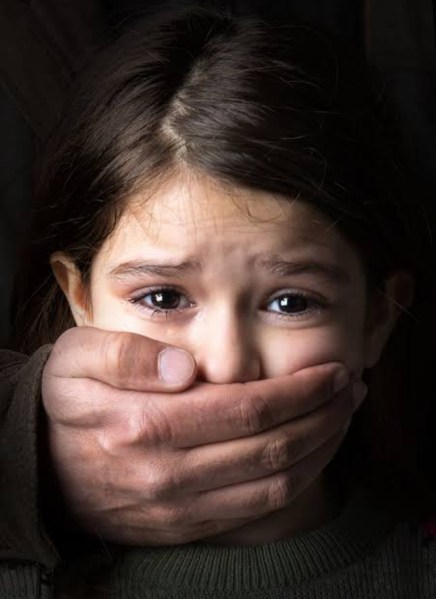
Abusing a toddler is like insulting the God you preach . Children are featured as soft hearted and are free from all their works and enjoying as the way they are. They are kind hearted and adorable. They shower love towards whom they love more.
But there are some culprits who are abusing this adorable children without any courtesy or any humanity towards them.

What is child abusing?

Child abusing is not just a violence directed to them. It includes both physical and verbal abuse. It is a type of maltreatment by the adults, which many be violent or threatening the child and troubling their emotions. It is also called as maltreatment. There are several types of child abuse which includes physical, emotional or psychological, physical neglect , psychological neglect or emotional neglect , sexual abuse and so on .

Causes of child abuse

There are several causes of child abusing and the prime mover is poverty. It happens when the family doesn’t have the resources to supply or to satisfy the necessity of their relations especially children like food, proper dress, education.

Many people who cannot satisfy the needs of their children are leaving their children at orphanage or selling them to the rich people who are ready to accept them for many purposes. As we all know that family is the best place for children and it is the place for crucial sour of affection and care .

Now-a-days maltreatment are occurring within the family and it is not exposed to the society.

Substance abuse is becoming one among the reasons for increasing number of child abuse round the world. Throughout different studies it had been clear that oldsters with history of drug abuse , most ordinarily alcohol, cocaine, and heroin, were more likely to abuse their children.

This substance can results in developing abnormal behaviors by the abuser either they are from family or strangers. The last explanation for maltreatment are often psychological. Parents who don’t have community of close friends or relatives living nearby may feel isolated. Parents with psychological disorders may affect their children without knowing.

How to prevent children from child abusing?


• Parents taking note of their children and talk with them.

• Educating new parents on the parenting skills since Children got to know that they’re special, loved and capable of following their dreams.

• Stopping maltreatment when seeing it.

• Teaching the kid the difference between acceptable and unacceptable touching, and to trust their instincts about people.

• Educating the oldsters about the signs of abuse so it’ll be easy to detect it and making the laws more stronger.

Preventing maltreatment isn’t simply a matter of oldsters doing a far better job, but rather it’s about creating a context during which “doing better” is simpler . Enlightened public policy and therefore the replication of high-quality publicly supported interventions are only a part of what’s needed to successfully combat maltreatment . It remains important to remind the general public that maltreatment and neglect are serious threats to child’s health development which overt violence toward children and a persistent lack of attention to their care and supervision are unacceptable. Individuals have the power to simply accept personal responsibility for reducing acts of kid abuse and neglect by providing support to every other and protectively to all or any children within their family and their community.

As sociologist Robert Wuthnow has noted that every volunteer effort or act of compassion finds its justification not in offering solutions for society’s problems but in offering hope “both that the great society we envision is feasible which the very act of helping one another gives us strength and a standard destiny”.

Save child and save future generations

World poverty


Poverty entails more than the lack of income and productive resources to ensure sustainable livelihoods. Its manifestations include hunger and malnutrition, limited access to education and other basic services, social discrimination and exclusion, as well as the lack of participation in decision-making. In 2015, more than 736 million people lived below the international poverty line. Around 10 per cent of the world population (pre-pandemic) was living in extreme poverty and struggling to fulfil the most basic needs like health, education, and access to water and sanitation, to name a few.


While pre-pandemic global poverty rates had been cut by more than half since 2000, the COVID-19 pandemic could increase global poverty by as much as half a billion people, or 8% of the total human population.


For those who work, having a job does not guarantee a decent living. In fact, 8 per cent of employed workers and their families worldwide lived in extreme poverty in 2018. One out of five children live in extreme poverty. Ensuring social protection for all children and other vulnerable groups is critical to reduce poverty.

Recent estimates for global poverty are that 9.2% of the world, or 689 million people, live in extreme poverty on $1.90 or less a day, according to the World Bank.

Money isn’t a complete measure of poverty. Other dimensions of poverty include access (or lack thereof) to work, health, nutrition, education, sanitation, housing, etc.

A study of 13 developing countries found that government spending on education and health accounted for 69% of the total reduction of economic inequality. The entire health budget of Ethiopia, a country of 105 million people, is equivalent to just 1% of the fortune of the world’s richest man, Amazon CEO Jeff Bezos.

How To Move Offices

Group of young people moving in new office, holding boxes and stuff.

According to the article, what I have understood is that it is not an easy task to shift office or to relocate offices. It requires careful planning and execution. It also involves giving prior notice to each individual working in the organisation about the premise’s relocation.

One needs to prepare a proper checklist which suggests us certain deadlines and guidelines, it says about how the organisation is communicating about it’s shifting premises, a proper role and responsibility should be given to the staff working about the duties one has to fulfull while the shifting is in process and should tell them to prepare for any inconviniences caused. The owner or the leaser should also be informed of moving or shifting and the fact that they will move or shift, should inform the date and the new address the premise is shifting to.

While shifting, there can be recklessness which needs to be minimized as if the required number of days to shift or the deadline to shift the organisation is passed by, it proves an expensive affair and waste  the time of it’s employees working.  At the new premise, the minimum basic requirement should be fulfilled such as WIFI connection, electricity, table, chairs, desks, etc. inorder to ensure smooth work flow in the new premise. It shouldn’t become a hindrance for slow working environment. One useful way is to divide the company’s staff into half where the other half stays at the ol premise for careful and proper shifting of all the equipments which are valuable to the organisation.

In general, it takes about 10-12 months to properly move into new premises and start their normal operations. The most important thing to keep in mind is to ensure that right people are selected to finish the job at the earliest. All of these work requires time and being hasty does not work. It might prove ineffective if there appears issues in the new premises or if the new premise turns out to be small in size or scale of operations increases. Therefore, a careful and long term planning is very essential in terms of scale of operations, size of the employees increasing, new departments increasing, etc. These are just some of the thoughts. Certain effective things to keep in mind would be to start planning as early as possible, label all boxes and all equipments for proper identification, appoint any moving manager to ensure that he/she focusses on the shifting process more smoothly and effectively, also, ensuring everything stays fit at the new premise is very essential. As far as it is possible, move non-significant things later on, first focus on the most essential stuff to be moved or relocated. Most of the time is saved by differentiating the office equipments into categories.

To end, shifting premises require more amount of time and planning and a speedy setup is essential in-order to reduce non-operating days in the office. Do share your thoughts on the same. It will be really appreciated. Thank you.

Climate Change: Should I be worried?

Environmental issues became a huge national and global concern since the 1960s. The media has played a huge role in communicating the situation and through that we get to know about many issues which are taking place in today’s world. Climate change has been a very substantial security concern not because of its direct impact on floods and other natural disasters which can damage mankind and create havoc. The extreme effects of climate change are befalling on the small developing island states first. Small island countries in the pacific are always at the mercy of natural disasters such as tsunamis and cyclones. The effect of climate change on them is so grim that if ever a natural disaster struck them, the whole island could be washed out. The majority of the shares for the releasing of greenhouse gases belong to large countries such as China, the US, India, and Russia.

Environment refers to everything around us from the water bodies to the mountains. Today the most striking reason for the degradation and depletion of the environment is the deteriorating relationship between man and the environment. Everyone gives industrial expansion and technological development all the importance now and forgets that the
surroundings are actually what helps us survive. These actions which are being taken have been so extreme and fast that the rate of degradation has been super quick and widespread. Increasing industries and their expansion have led to the increase in the release of greenhouse gases such as CO 2 , NO x, SO x, CFC’s and other gases.

These usually are the main reasons for climate change. The gases released get trapped in the atmosphere which causes the warming of the planet also called global warming. Due to this phenomenon, there are observed changes in temperature in our globe. Climate change is observed drastically in places such as Greenland, Antarctica, Indonesia, and many more. In the polar zones, climate change has caused significant differences such as in the melting of ice caps and the thinning of the ice. It is our responsibility as responsible citizens of the world to save all our resources from depleting to make our future generations also be able to see the wonders of the world. Earth is our home and only together we can make it green again!

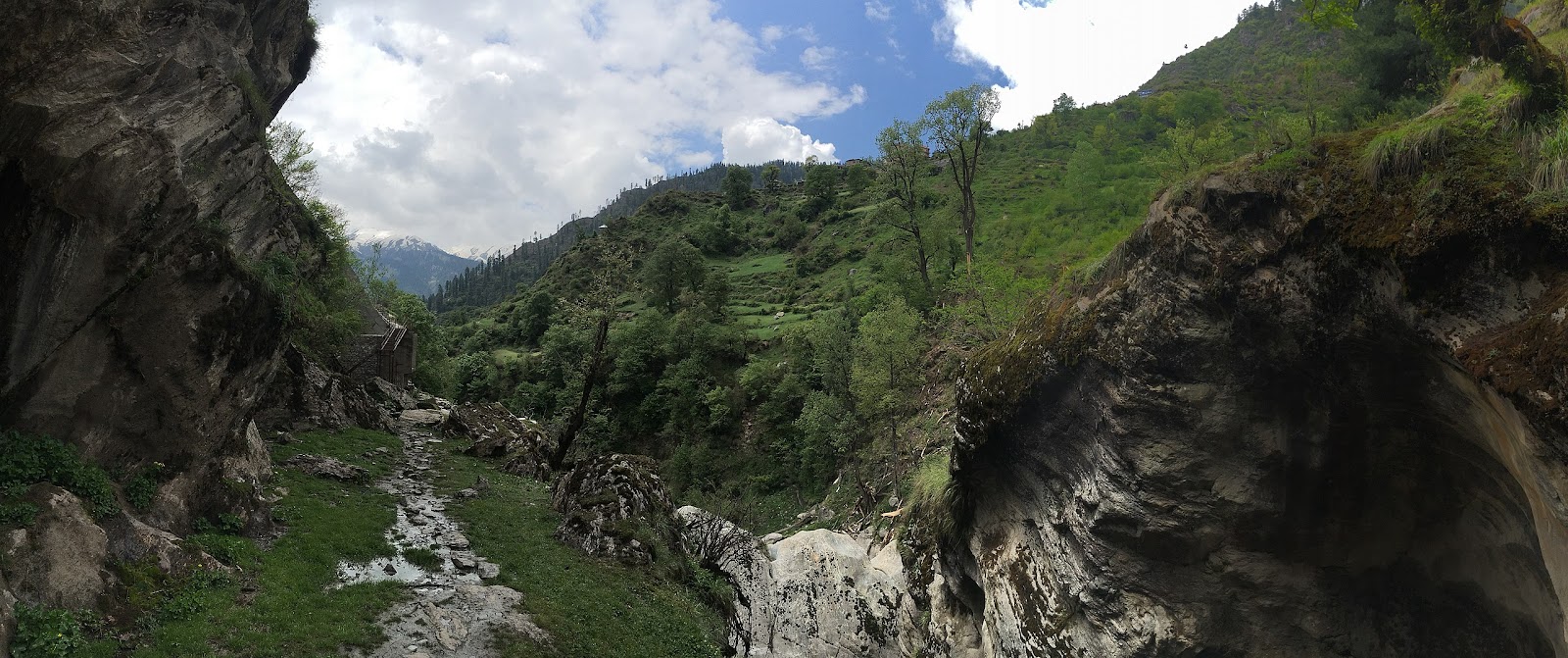
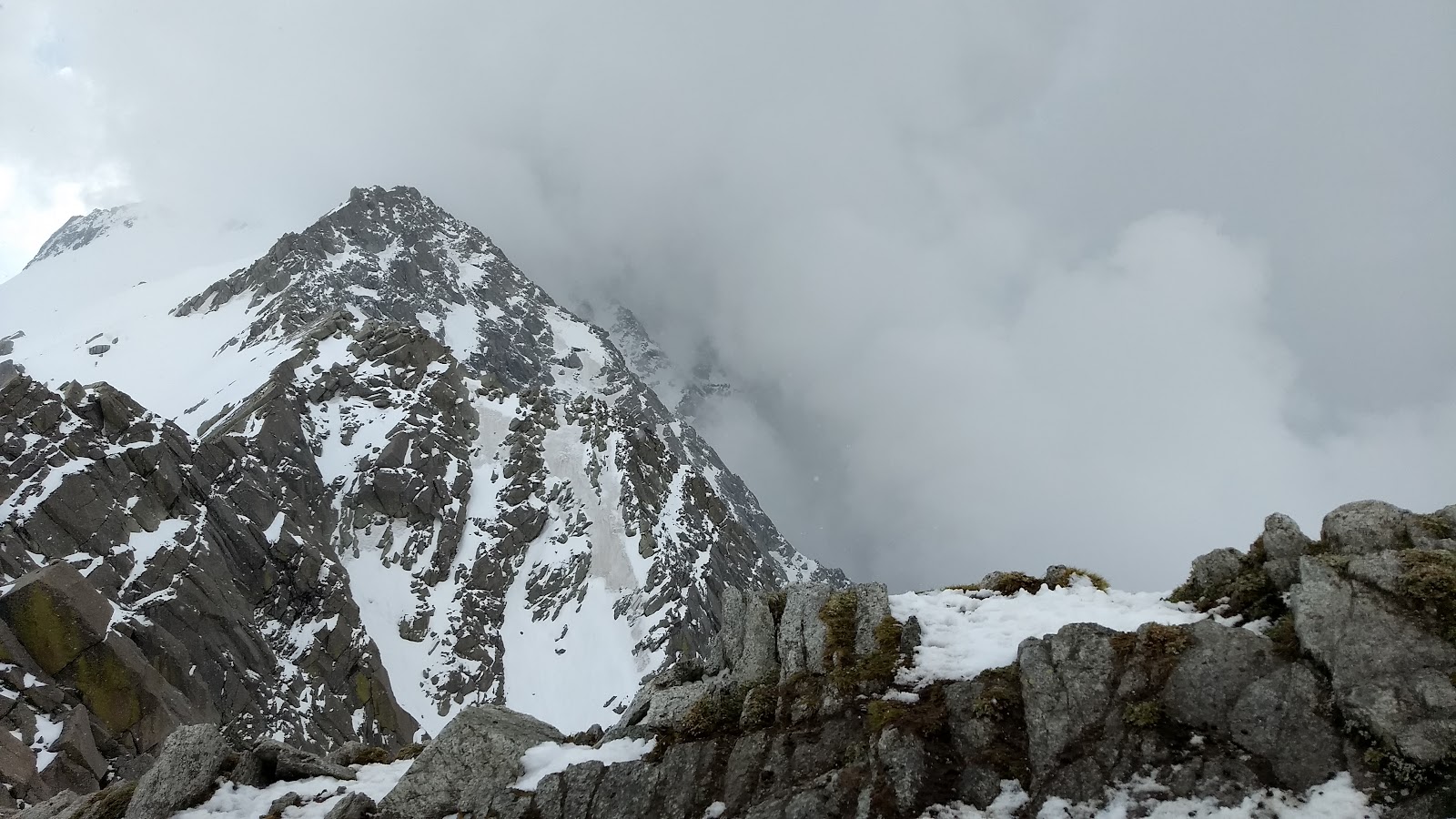
Best trekking destination in Himachal

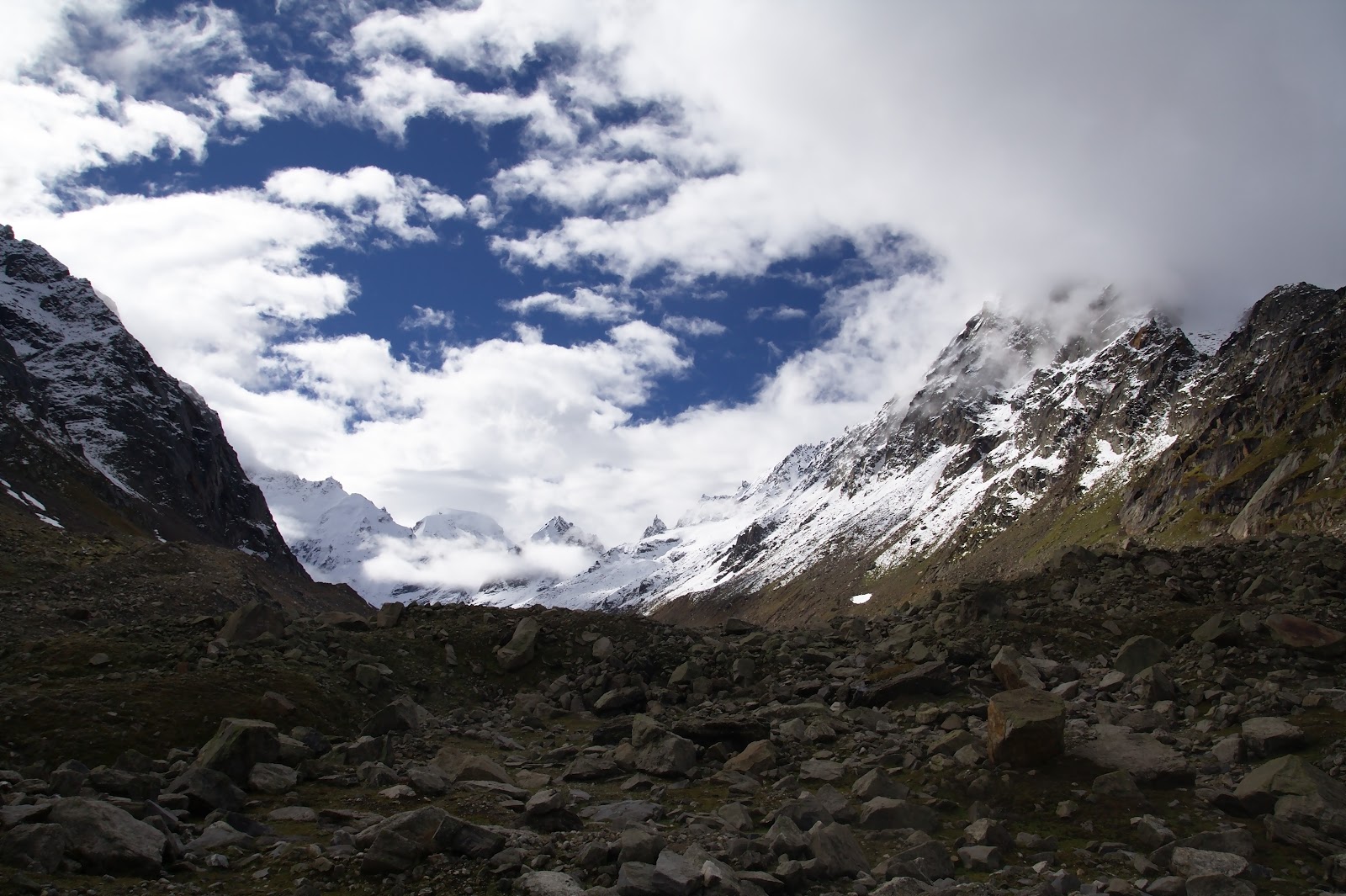
The beautiful range of mountains keep convincing all folks that Himachal Pradesh is definitely an area wherever God should be taking a breath each whereas. Brimmed with snow, the landscapes, temples, and hills glorify the land even further.

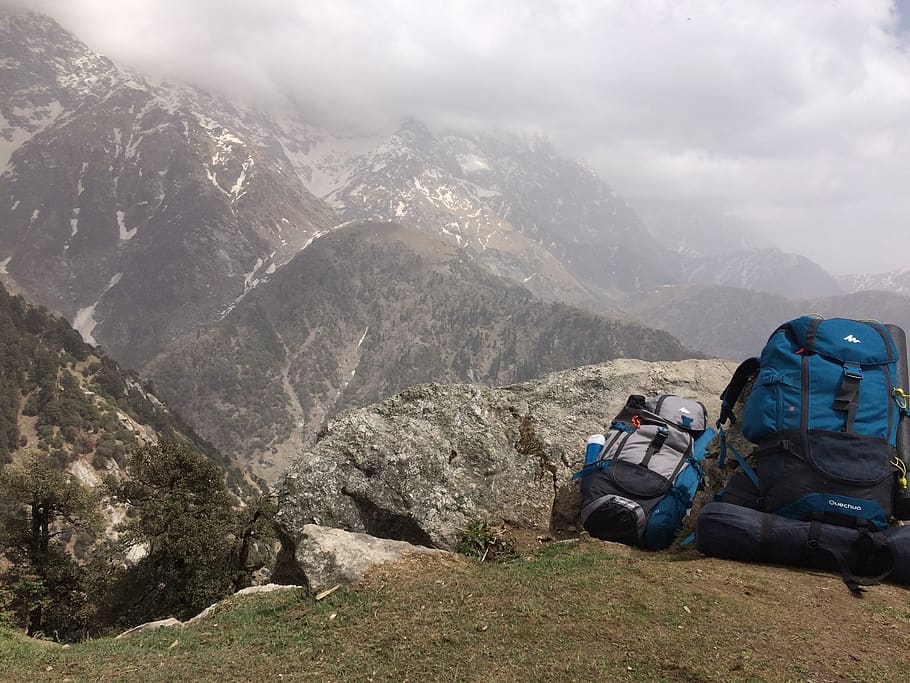
Himachal handily may be a paradise for trekkers. This north Indian state is home to many exciting treks taking to alpine lakes, meadows, sprawling valleys, apple orchards, foot of some lofty range of mountains, Peaks and even to Hindu spiritual sites.

We are going to show top 5 best trekking destinations in Himachal:

1.   Triund Trek, Mcleodganj (Easy)

At a distance of eight klick from McLeod Ganj Bus Stand and thirteen klick from Dharamshala, Triund could be a lovely hill settled in Dhauladhar Mountains in Kangra district of Himachal Pradesh. it’s placed at Associate in Nursing altitude of 2842 m. Triund is a common trekking website in McLeod Ganj and attracts a great deal of holidaymakers each year. It’s additionally one in every one of the most effective trails of short treks in Himachal state. Triund offers the proper reading of the Dhauladhar Mountains on one facet and Kangra natural depression on the opposite.

Triund is Associate in Nursing eight klick trek from the McLeod Ganj Bus Stand. This is often atiny low and a simple trek, which may be done either from McLeodganj or Dharamkot, that is a pair of klick previous McLeodganj. The path is half-dozen klick from Dharamkot and passes through Galu Devi temple. From this temple, it takes around three hours to reach Triund. The initial half the trek could be a gradual incline and also the last a pair of kicks from Snowline restaurant involves a steep climb all the way until Triund. The last one klick has twenty two exhausting curves before finally reaching Triund. on the method there square measure several tiny Tea outlets wherever one will refresh throughout the hike. Trek may also be started from Bhagsu Nag.

There is a Devi Temple placed on the highest of Triund Hill for the best purpose. From here one will have a lovely read of the Moon Peak and Hindu deity Pass. renowned among trekkers and hikers, there’s a snowline at Ilaka visited by adventurers that could be any trek from Triund Hill.

2.   Hampta Pass Trek, Manali (Easy to Moderate)

 Hampta Pass is known for its stunning landscape and totally different terrains that ne’er cross. Witness the postcard-type landscapes, have the bone-chilling expertise of a stream crossing, get a day nap aboard the attractive wildflowers and notice solitude at Chandratal Lake.

Hampta Pass introduces you to the technique of stream crossing, the art of walking on snow bridges and additionally to the challenges of downward-sloping down the slippery mountain. Hampta pass may be an all-round trek wherever you see totally different landscapes starting from forest to meadows to snow and additionally get a glimpse of mountain risks like rough parcels and high altitude challenges. For all sensible reasons, Hampta Pass is one amongst the simplest treks in Himachal.

3.   Bhrigu Lake Trek, Manali (Easy to Moderate)

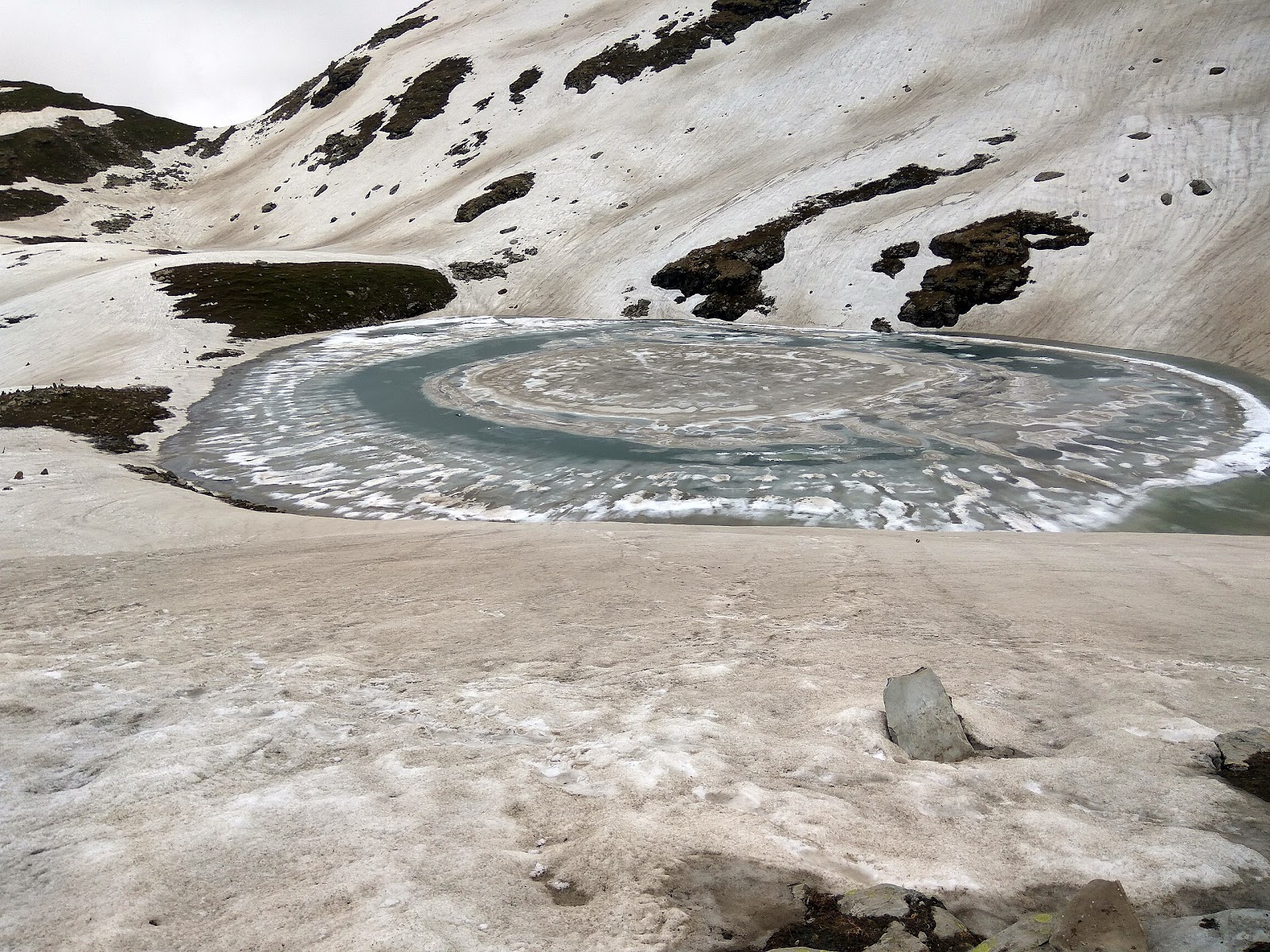
If you’re a beginner in Trekking In Himachal Pradesh, then Bhrigu Lake Trek is definitely a perfect selection for you. No different trek will take you to the fascinating peak in just 2 days than Bhrigu Trek. Also, you need to understand that this place has been the house to Bhrigu Maharishi and folks feel blessed to have achieved it. before moving, check that you’ll trek the steep trails and don’t get petrified of them. Besides that, you need to visit this Bhrigu lake before the Gregorian calendar month because the state changes in the middle of that month.

4.   Kheerganga Trek, Kasol (Easy)

A seductive watercourse, Kheerganga is one among the simplest travel destinations because it looks like a gap between the doors to heaven. you’ll forget the reckoning of your time after you keep passing through the exciting views in your approach. Eventually, you’ll be able to cowl this twelve klick trek in five to six hours or most daily. Trust us, you’ll definitely fall infatuated with the sweetness of Kheerganga.

5.   Indrahar Pass Trek, Dharmshala (Easy)

Among the trekking routes from Dharmshala, Indrahar Pass trek is one among the foremost fashionable places below Himachal Pradesh business. It begins from the Kangra depression and takes you to the Ravi geographic region, endowing you with the fascinating great thing about Dhauladhar ranges on your approach. The issue that you simply area unit getting to love the foremost is that the path comprising snow bridges, curved streams of mountains, and also, the cedar tree trees.


“China’s Coercive(15) Population(15)”- A Cause Of Concern For India (11,12)

(159)

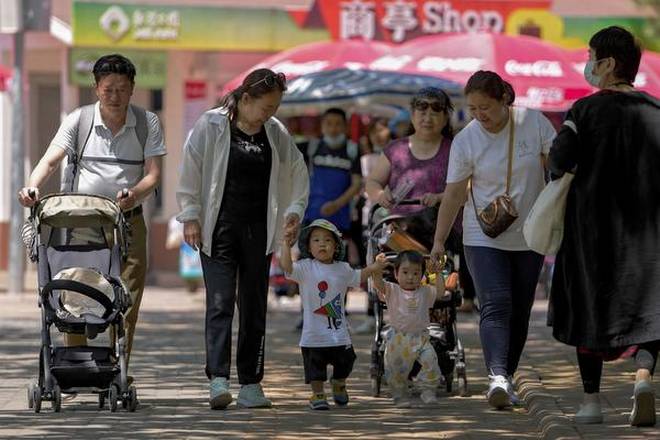
China’s coercive population(15) ie, about having a third child as announced by the Chinese government has become a cause of concern in India. India is supposed to learn from China’s failed attempt to follow the two child system policy more deligently and should implement good strategies for their citizens to follow.

China has been having a population which is getting well old-aged and in many other fast developing countries one can find these problems arising. It is raising cause of concern for China. India, following the policy has ensured that it has the best family planning measures. By educating the citizens in India, especially the women, birth control rate has increased and also, there has been a reduction in the child-marriage cases.

  • (61,69)
  • India can learn from China’ mistakes and can prevent population explosion and successfully implementing strategies to stop immensive demographic problems of finding jobs and empower women to educate their girl child more in-order to prevent them from increasing population and also, to be independent and more controlled over themselves.
  • The fact that China has announced to have third girl child is something which India should not implement as demographically, India has more girls and boys who are of the working age group and it will stop them from earning more and to be on job, their responsibilities will be such that they will not be able to handle.
  • The fact shown ie, the share of population being increased from 8% to 19% in 2050, is, in itself, a great cause of concern and it will not add any output to the Indian economy as they will not work, and will not create good output and increase GDP of the country.
  • A revamped child policy planning measures should be given more importance and also, educated to all the couples as it will be helpful in preventing the population growth.
  • India should also educate and invest on youth for their education and career as this can also be a good attempt on making them understand about this crisis and they are the very future of our country and it is through them that change will be impacted in India.

So, considering these factual statements and implementing them should be the very first step the Chinese Government should follow, as this will provide a lot of control of the population in the long run. Various other ways in which India can learn from China for controlling their population are as follows,

(61)

  1. Religion does not matter, it is always the amount of education both men and women have which ultimately makes them decide about their life.
  2. In fast developing countries, one is not taking care of their age-old parents and they are forced to give birth to someone, who will take care of them. This should stop and be taken care of by our country and age-old parents should never be left in whichever state of their health they will be.
  3. Always ensure of using birth-control devices and please do educate yourself after what you have seen on this link as to how to control our population and invest on youth.

https://www.thehindu.com/news/national/chinas-coercive-population-measures-serve-as-warning-for-india-experts/article34701448.ece (21) (147)

https://thewire.in/rights/india-china-population-control-policies-pfi-two-child (21) (147)

Please do research more on it and share your insights.

(147)