

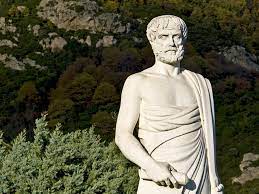
In addition to imitation, representation and expression; mimetic activity produces appearance and illusion that affects the perception and behaviour of people, though this doesn’t negate Plato’s theory on the “realness” of imitation. For, though it is a common belief that perpetual experience allows us to have a closer look at the ‘real’ because works of art are encoded in such a way that humans are not duped into believing that they are the reality but rather recognise features from their own experience of the world within the work of art that cause the representation to seem valid and acceptable – not just existing object or element but beautifies, improves upon and universalises these artistic musings. Aristotle next explores how imitation gives knowledge not just only to the philosophers but to everyone, which in turn creates a delight. Art unlike Plato who dismisses the said notion of art as an imitative form brings about the best in an artist, in terms of how he produces art. It is also essential to note that Aristotle doesn’t put Mimesis in some hierarchical nomenclature like Plato who’d put it to the lowest level of stratification. In any Tragedy, Aristotle insists on a plot arousing Pity and Fear by spectacle/audience which adds more to comprehending imitation; the spectator need not see the object in person which though is crucial, isn’t a deal – breaker, as even a play which has this element of imitation – can convey the plot effectively this can. Be achieved by delivering the speech, actions, the chorus, setting and other elements in such a way that imitation of the desired idea is carried out with brilliance and would successfully be rousing the cathartic element of tragic pleasure is also an important idea with Mimesis.
He dwells upon how Art doesn’t reflect any aspect of natural life as origin of art to the human affinity is through imitation, and while doing so isn’t discarding or trampling is as something necessarily bad but is entirely critical of an artist. Furthermore, he speaks on The Theory of Art as a productive science — for Aristotle, something which only rational human beings can engage in — as the quality produced determines merit of Art, and so art in its absolute formation is acknowledged by Aristotle focusing on its imitative element, as all works of art are modes of mimesis.

 Eduindex