

“Education is the strongest weapon that can be used to change the world.”
– Nelson Mandela
As rightly said by Mr. Mandela ,education gives us knowledge which in turn gives us wisdom which teaches us to differentiate between good and bad. Education is not only needed to have a good economic strata but also to have a righteous sense of living . It gives us the power to stand for ourselves when we are being wronged.
The global pandemic which we are facing today has imposed many restrictions on us and in order to keep ourselves safe we are supposed to maintain social distancing as a result of which all the places which wholeheartedly invited the crowd before, are closed down now, the educational institutes being one among them. Read this blog further to know how covid-19 has affected education in the country like ours where during pre pandemic times also many loopholes were present.
The Indian Education system
Around 60% of the total Indian population is considered to be in poverty that is they barely manage a hand to mouth existence . In this case education is definitely a luxury to them . The Constitution of India has declared an individual’s Right to Education as a fundamental right under which children between 6 to 14 years of age are eligible to get free education in government schools across the country. Also, according to section 12(1)(c) of the Right to Education Act of 2009, all the private schools in the country are supposed to reserve 25% seats for the children belonging to the EWS Category(Economically Weaker Section).
Now, Private schools in India also falls in two categories: one is the category belonging to the government recognized schools which charges fair amount of fees and claims to provide quality education. They are affordable by the middle class families and the families falling about them in the economic strata. Second category belongs to the schools which are not recognized by government, charge decent fees and are affordable by the lower middle class families who has a option of government schools but don’t want their child going there due to the below mentioned reasons.
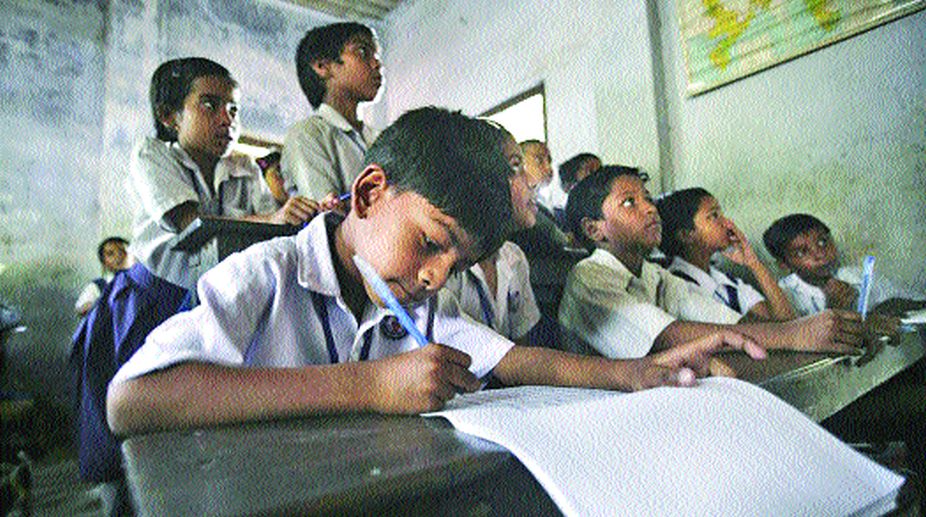
Now coming upon the schools funded by the government, these schools are generally in the limelight for their poor infrastructure, absentee teachers, low student ratio(**this was the case before the commencement of the pandemic). In the pandemic times, the government schools which are well equipped like the ones in Delhi, witnessed only 25 to 30% attendance. The condition of rest of the government funded schools which were just for the namesake can be imagined.
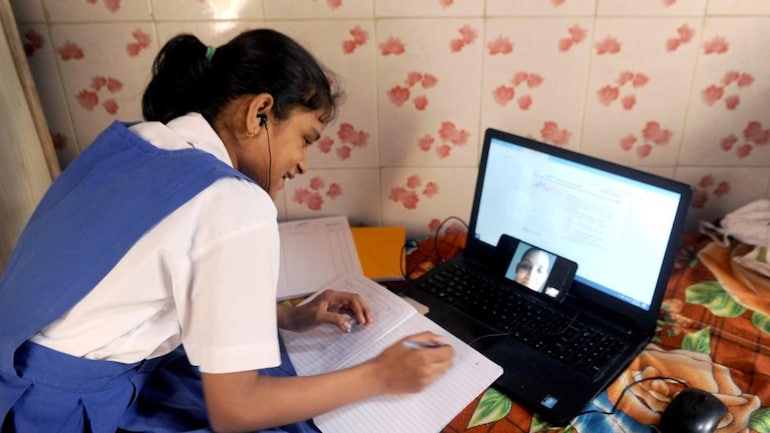
With people adapting to “new normal” in these pandemic times, the world has turned digital and so has the education system. Gone are the times where children would wake up early in the morning, go through their own struggles of going to school to study in the TRADITIONAL WAY OF LEARNING where teachers would come and address a section of class. This “new normal” is the time for ONLINE CLASSES where what matters the most in just learning as to not face a complete loss and at least take out the best in these times . The education in the “new normal” has lost its essence, punctuality , discipline and integrity.
Covid-19 and Indian Education
With the commencement of the pandemic around 1.5 million schools have been closed affecting almost 286 million children in one way or the other from primary to the secondary levels. According to a report released by UNICEF, “The pandemic has affected over 90% of the total student population of the world”. In India itself, the main problem is that not every area has been digitalized yet and in the digitalized areas also not everyone has access to required number of devices and good internet connectivity. Only 24% of the total houses in India have access to internet whereas in rural areas these numbers have dropped upto 4%. Further a survey conducted by the Niti Aayog in 2018 reported that around 55000 villages have no mobile network coverage let alone the internet connectivity and around 35 % schools operate without electricity. In these circumstances, many students have been forced to dropout of the schools which is a destruction of India’s bright future and talent.
Steps taken to solve the digitalization issue
- The introduction of the BHARATNET project which ensure the broadband connectivity to over 2,50,000 gram panchayats through optic fiber technology which will enhance the network quality .
- Many Government schools have started training teachers on how to teach through net which is important for the successful accomplishment of the project which involves ensuring that no child looses his/her right to education even in these pandemic times.
- Many crowd funding platforms have been launched by the government and individuals which aims on providing devices and enhancing infrastructure to enable online classes. The Government of Maharashtra through one such platform has managed to generate rupees 216 crores which will be further used towards the cause. Also, in Kerala 4 tenth standard students have managed to generate rupees four lakhs through one such platform which they will use to buy devices for the students who are not able to afford.
WE CAN JUST HOPE THAT THE COMING TIME WILL NOT BE A DOOM AND WE WILL GET SOME IMPROVEMENTS .

 Eduindex