
INDIAN CULTURE

India is a country of rich culture where people of more than one religious culture live together. The culture of India is the oldest culture in the world around 5,000 years. Indian culture is considered the first and supreme culture of the world.
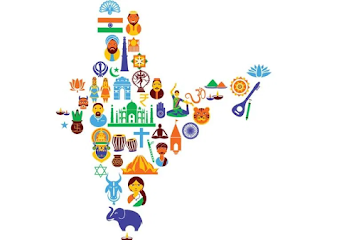
It is the country of the oldest civilizations in the world. The vital components of the Indian culture are good manners, etiquette, civilized communication, rituals, beliefs, values, etc. Even after the lifestyles of everyone have been modernized, Indian people have not changed their traditions and values. There is a common saying about India that “Unity in Diversity” means India is a diverse country where people of many religions live together peacefully with their own separate cultures. People of various religions differ in their language, food tradition, rituals, etc however they live with unity. 

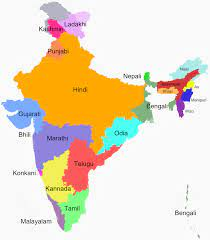
The national language of India is Hindi however there are almost 22 official languages and 400 other languages are spoken daily in India in its various states and territories. According to history, India has been recognized as the birthplace of the religions like Hinduism and Buddhism.
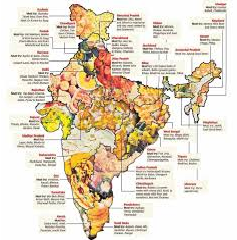
People follow a variety of food cultures such as beaten rice, bread ole, banana chips, poha, potato papad, puffed rice, upma, dosa, idli, sugar, etc. Indian food is wide and includes a lot of variety. Each state of India has its own unique cuisine that reflects the culture and its tradition. Indian food is cooking using various methods, most of which preserve the nutrients contained in the fresh vegetables used.
India today is unfolding a story of a billion-plus people, or more precisely, one sixth of the world’s population, on a big move as India’s large and complex systems rapidly moving top-down and the country emerge as one of the fastest-growing economies of the world, India is probably the only country in the world where people belonging to different religions, castes and creeds, speaking different languages, having different cultures, different modes of living, different clothing, different feeding habits, worshiping different gods and deity live together in harmony and believe to be the children of one mother-MOTHER INDIA,

BY Lahari Muriki

Curious students of batch 2021 eager to know about college admissions.

Students of passing batch of 2021 not only went through tremendous mental stress but have also fallen into dilemma about the admission procedure of various colleges. Reputed universities/colleges have already passed their verdict on the admission procedure for students. Universities like Christ , Symbiosis have already started their admission process and are in the verge of completion. Government university like Delhi University has stated that the admissions for undergraduate courses will only take place on merit basis which cut off the controversy of DU taking admissions for undergraduate courses by entrance mode of examinations.

Chairman of DU admissions Rajeev Gupta stated the registration for admissions in DU may start by third week of July. Most of the universities/colleges are waiting for the declaration of board results. However all colleges / universities have taken into consideration of fixing the academic calendar for students joining this year as the are late of time.

The future of Indian students lies in the hands of reputed Indian education department . Looking at this the Indian education body like UGC and CBSE have taken responsive measures. Lets hope for the best and all the very best for students awaiting for their board results.

Experimental Criminology

The criminal justice system costs taxpayers about billions and billions per year, which is used to pay for municipal policing and the maintenance of state and local prisons. By better understanding of what causes crime and what effective policy responses should be implemented. Experimental criminology tries to minimize the financial burden that crimes impose on nations while also improving safety. Experimental criminology is a branch of criminology concerned with scientific knowledge of crime and its application to the criminal justice system. To put it another way, it employs a variety of scientific analysis to answer issues regarding the crime that occurred, including its prevention, punishment, and injury. These trials are mostly carried out in the actual world rather than in labs. It has a broad scope since it focuses on determining the true cause of the crime and preventing it. In the discipline of experimental criminology, there is a lengthy approach for conducting experiments that includes theoretical, sociological, and methodological stages. In order to completely comprehend crime and the criminal justice system, experimental criminology relies on the work of criminologists, statisticians, and other scientists. Experimental criminology research can use a variety of methods, including observational studies, case-control models, instrumental variables, and natural experiments. Experimental criminology is becoming a major part of the fast growing scientific research and evidence-based social policy movement. This approach is primarily concerned with the improvement and growth of society through the application of high-quality scientific evidence that will assist us in determining what will provide the best results. It includes the controlled investigation of cause and effect, and there are two types of studies: quasi-experimental and experimental. When subjects are chosen at random, research is experimental; however when people are chosen purposefully to explore the cause and effect of a crime, research is quasi-experimental. In experimental criminology, subjects are often divided into two groups and then observed to determine outcome measures that could be used as a deterrent to crime.

Although the state of experimental criminology is currently unknown, it is often regarded as the most effective method for determining the cause-effect relationship of crime and assisting in the development of preventive measures to aid the justice delivery system. However, when experimental criminology is done correctly, it causes fewer risks for society and reports a bigger number of cases that helps in analyzing the causes of crime. This strategy is used by both the police and the court system in India to streamline investigations and judgments. In India, experimental criminology is becoming more well-known. It has decreased the threat of causing harm in the modern era by developing more humane and effective alternatives to long term imprisonment. An observation produced using this method makes a clear point, which makes the evidence credible, and so serves the objective for which it was created.

Finally, the findings of this study showed that the conditions in a community can lead to a rise in both minor offenses and more major offenses. With this in mind, criminologists might advocate for the implementation of a greater number of community-based interventions that will, in return, reduce crime in these communities.

J&K: 5 terrorists associated with LeT terror outfit gunned down by security forces

In the Union Territory of Jammu and Kashmir, District Commander of banned terror outfit, Lashkar-e-Toiba (LeT), identified as Nishaz Lone, one Pakistani terrorist among five terroristshave been gunned down by security forces today in a gunfight which had broken out late last night at Hanjin village of Rajpora area in South Kashmir’s Pulwama district.
 
During the operation, One Army Jawan namely Hav Kashiray Bammanalli also laid down his life in the line of his duties in a fierce firefight with terrorists and attained martyrdom. As per police sources, the encounter started after the joint team of security forces were fired upon who had laid a Cardon and Search Operation (CASO) on the basis of a specific intelligence input about the presence of terrorists in the village and in retaliation, Five terrorists including a Lashkar-e-Toiba District Commander and one Pakistani terrorist were neutralised by the joint team of security forces. 

National COVID-19 Recovery Rate improves further to 97 per cent

The Union Government has said that India is registering a significant decline in active caseloads and fresh cases amid the second wave of Covid-19 pandemic. With this, the recovery rateis continuously improving and it has reached 97 per centin the country. Briefing the media in New Delhi today, Joint Secretary of Health and Family Welfare Ministry, Lav Agarwal has said, the country is witnessing decline in the daily number of cases due to continued efforts of containment and restriction strategies.

He said, India has reported over 46 thousand cases during the last 24 hours. He said, the number of daily active cases has also come down drastically within the two months. He said, almost 86 per cent decline in active caseloads have been registered since the highest reported peak. Mr. Agarwal said that the recovery rate is continuously improving in the country. He said, the recovery rate was over 81 per cent in the country on 3rd May of last month and now it has reached over 97 per cent.

Lav Agarwal has said, the country has ramped up Covid-19 testing for the early detection of the cases. He said, various laboratories are conducting on an average 18 lakh 29 thousand tests in the country these days. Mr. Agarwal has said the country is witnessing a declining trend in case positivity for the last eight weeks. He said the average positivity rate was 21.6 per cent in the first week of May last month which has come down to 3.1 per cent in the last seven days. However, 71 districts in the country are still registering case positivity more than 10 per cent. He said, India is still under the grip of a second wave, hence, the efforts must be put on effective containment strategies to contain the spread of corona virus.

FM Sithraman says, Govt is playing proactive role in addressing prices rise of essential commodities in country

Union Finance Minister Nirmala Sithraman has replied that the Central Government is playing a proactive role in addressing the issue of rising prices of essential commodities in the country. Speaking to media persons in Bengaluru today, she said that the Government has announced a series of financial packages to reduce the burden of the poor during the pandemic.
 
On the possibility of reducing the petrol prices, the minister pointed out that the international prices of petrol have reached 75 dollars per barrel and as the rate increases, the price too has increased. She noted that the Central Government levies fixed charges and the state component is added in the petrol price.
 
On GST compensation to the states, the finance minister clarified that back to back borrowing is already given according to the formula arrived in October of 2020. On the residual amount to be given, she added, that that will be paid as and when there is better revenue collection.

Govt decides to bring retail, wholesale trade under ambit of MSME

The government has decided to bring retail and wholesale trade under the ambit of Micro, Small, and Medium Enterprises (MSME). It has issued revised guidelines to include retail and wholesale trade as MSME and extend to them the benefit of priority sector lending under the RBI guidelines.
 
In a series of tweets, MSME Minister, Nitin Gadkari said, the decision will benefit 2.5 crore retail and wholesale traders. He said that the government is committed to the strengthening of MSME and make them engines for economic growth. With the revised guidelines the Retail and wholesale trades will now be allowed to register on Udyam Registration Portal.

India joins OECD, G20 Inclusive Framework tax deal of global corporate tax

India has joined the Organisation for Economic Co-operation and Development (OECD) and G20 Inclusive Framework tax deal of global corporate tax. According to a Finance Ministry press release, the members OECD and G20 countries adopted a high-level statement containing an outline of a consensus solution to address the tax challenges arising from the digitalisation of the economy.
 
The proposed solution consists of two components- reallocation of additional share of profit to the market jurisdictions and minimum tax subject to tax rules. However, the technical details of the proposal will be worked out in the coming months and a consensus agreement is expected by October.
 
The Finance Ministry statement, released today, said the principles underlying the solution vindicates India’s stand for a greater share of profits for the markets. It said, India is in favour of a consensus solution which is simple to implement and simple to comply with. At the same time, the solution should result in allocation of meaningful and sustainable revenue to market jurisdictions, particularly for developing and emerging economies.
 
Initially, the global corporate tax was proposed by the United States as Global Minimum Tax (GMT). Yesterday, the tax deal was adopted in the OECD and G20 Inclusive Framework on Base Erosion and Profit Shifting (BEPS). BEPS refers to tax-avoiding strategies used by big multinational companies that exploit the gaps and mismatches in tax rules across the globe.
 
Around 130 countries, representing more than 90 percent of global GDP, adopted the global corporate tax rate of at least 15 percent. The countries also agreed on a fairer distribution of ‘profits and taxing rights’ with respect to multinationals including digital giants such as Amazon and Google. However, Hungary and Ireland were part of a small group of countries that did not agree on the tax rate on multinationals.