

Make sure you also read the second part of this post.
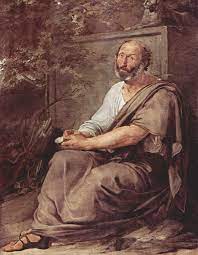
When Aristotle is talking about the tragic hero, it’s important to pan out where the tragic hero is being placed at and accordingly the significance of the ‘tragic hero’ needs to be questioned. This is furthered by the interpretation of the plot and the use of tragedy in the said plot that would give the idea of what Aristotle is describing as the tragic hero. So it’s important to understand tragedy; before anything, and so Poetics seems to be a plausible guide alongside plenty of other definitions within a dictionary which although correct; doesn’t fully help apply the idea of Aristotle. No-one in any absolute sense could define what Poetics denote as words have been genuinely lost in translation and what we could scavenge are a sense of one’s own point-of-view or interpretation to pacify their intellect; one could contest it to be inconsistent and probably is right in doing so, but the fact of the matter is the idea of lost in translation remains undeterred.
Additionally, discussing on the characteristics of the tragic hero is an extremely elaborated idea of what Tragedy is and while, Aristotle’s Tragic Hero is someone who is primary agent in his Tragedy; which is an essential element in the notion of arousing Pity and Fear – the catharsis of Pity and Fear for Tragic Pleasure is also an important characteristic feature for the Tragic Hero.
Humphrey house affirm seven points directed towards the dramatic character or the tragic hero 1) The tragic hero or the character in a tragedy must be Good. Tragedy is a limitation of personages better than the ordinary man. Hence goodness of character is a prerequisite for Aristotle as it is the foundation of initial sympathy in a spectator without which tragic emotions cannot be roused, that is tragic pleasure is ultimately conveyed through sympathy or Pity, a very basic of the whole tragic pleasure. All characters in a tragedy for Aristotle should be equivocally good. Although Aristotle’s good man is not good unless he is desiring specific, positive, good ends and working towards the attainment; therefore its necessary for the execution of a tragic plot that the hero has to be “not prominently virtuous or just”; adding here Immanuel Kant who talks action to be morally worthy, something that should be executed to do the right thing for the right reason and is said to hold that to do the right thing for personal reason isn’t morally right and that the motive of duty should be autonomous and not altruistic. Scholars have questioned on what does Aristotle mean by “good”, and it’s later when reading Poetics is established on the Ethical Goodness of a character. 2) Appropriateness of Character – a fitting character, the Plot should attempt to guarantee the individuality of Character in compliance to its status which is fundamental. 3) “Likeness” of Character – the literary portrait produced by the poet should be ‘like the original’, i.e. like what the personage in question is in history of legend; depriving the poet of his creative freedom and ties him to a quiet indefinable exemplar, because history and legends are largely the creation of other writers. Likeness — Aristotle differentiating Tragedy and Comedy by the consideration of type of characters shown acting in each — characters are either better or worse than ourselves, or just like ourselves: although Comedy makes its personages “worse” and Tragedy makes its personages “better than the men of the present day.” 4) Consistency – Aristotle describes a formula “consistently inconsistent” it is not concerned with momentary conflicting passions but with “the basis or foundation of a character “, — habit, bent or tendency.

 Eduindex