


Gautama Buddha, popularly referred to as Buddha (also referred to as Siddhattha Gotama or Siddhārtha Gautama or Buddha Shakyamuni), was a Śramaṇa who lived in ancient India (c. 5th to 4th century BCE). He’s considered the founding father of the planet religion of Buddhism and revered by most Buddhist schools as a savior, the Enlightened One who rediscovered an ancient path to release clinging and craving and escape the cycle of birth and rebirth. He taught for around 45 years and built an outsized following, both monastic and lay. His teaching is predicated on his insight into the arising of duḥkha (the unsatisfactoriness of clinging to impermanent states and things) and therefore the ending of duhkha—the state called Nibbāna or Nirvana (extinguishing of the three fires).
The Buddha was born into an aristocratic family within the Shakya clan but eventually renounced lay life. consistent with Buddhist tradition, after several years of mendicancy, meditation, and asceticism, he awakened to know the mechanism which keeps people trapped within the cycle of rebirth. Buddha then traveled throughout the Ganges plain teaching and building a spiritual community. Buddha taught a middle way between sensual indulgence and therefore the severe asceticism found within the Indian śramaṇa movement. He taught training of the mind that included ethical training, self-restraint, and meditative practices like jhana and mindfulness. Buddha also critiqued the practices of Brahmin priests, like animal sacrifice and therefore the class structure.
A couple of centuries after his death he came to be known by the title Buddha, which suggests “Awakened One” or “Enlightened One”. Gautama’s teachings were compiled by the Buddhist community within the Vinaya, his codes for monastic practice, and therefore the Suttas, texts supported his discourses. These were passed down in Middle-Indo Aryan dialects through an oral tradition. Later generations composed additional texts, like systematic treatises referred to as Abhidharma, biographies of Buddha, collections of stories about the Buddha’s past lives referred to as Jataka tales, and extra discourses, i.e. the Mahayana sutras.
FORMATION OF THE BHIKKHUNI ORDER
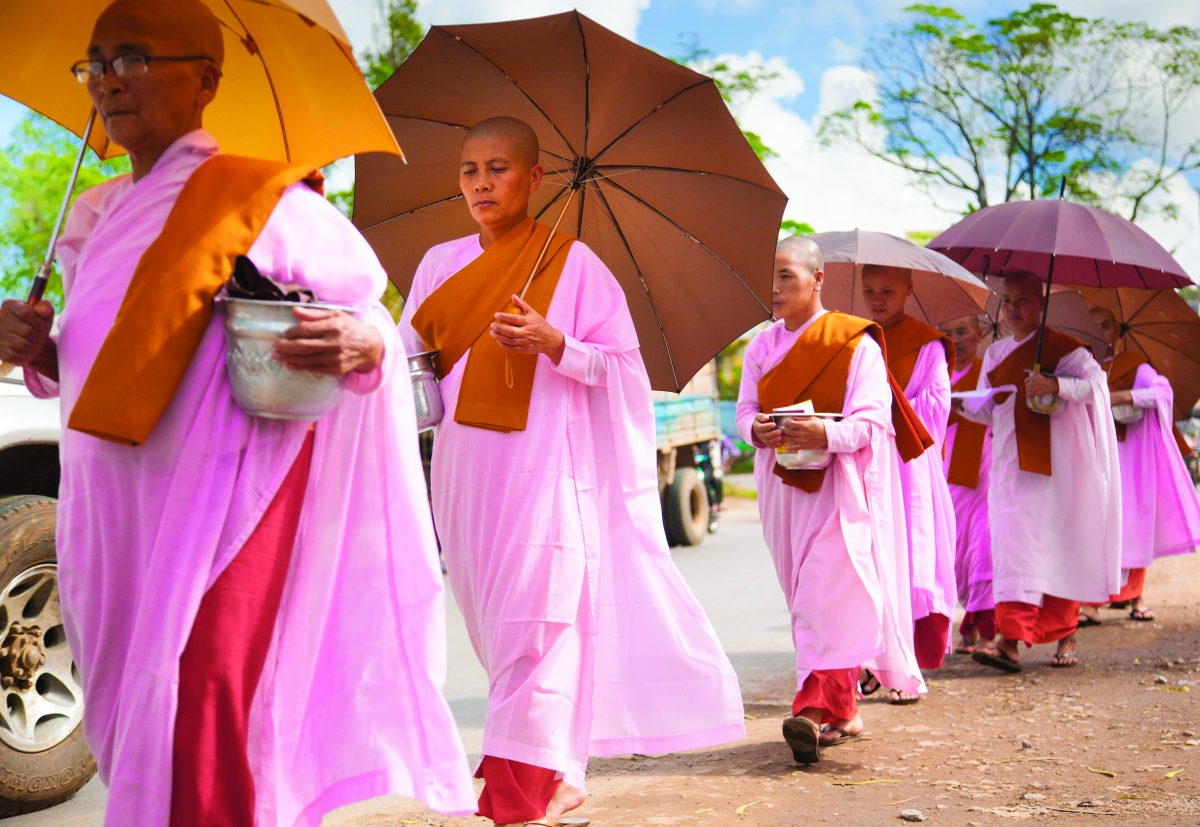
The formation of a parallel order of female monastics (bhikkhunī) was another important part of the expansion of the Buddha’s community. As noted by Anālayo’s comparative study of this subject, there are various versions of this event depicted within the different early Buddhist texts.
According to all the main versions surveyed by Anālayo, Mahāprajāpatī Gautamī, Buddha’s step-mother, is initially turned down by Buddha after requesting ordination for her and a few other women. Mahāprajāpatī and her followers then shave their hair, don robes, and start following Buddha on his travels. Buddha is eventually convinced by Ānanda to grant ordination to Mahāprajāpatī on her acceptance of eight conditions called gurudharmas which specialize in the connection between the new order of nuns and therefore the monks.
According to Anālayo, the sole argument common to all or any of the versions that Ananda uses to convince Buddha is that ladies have an equivalent ability to succeed in all stages of awakening. Anālayo also notes that some modern scholars have questioned the authenticity of the eight gurudharmas in their present form because of various inconsistencies. He holds that the historicity of the present lists of eight is doubtful, but that they’ll are supported earlier injunctions by Buddha. Anālayo also notes that various passages indicate that the rationale for the Buddha’s hesitation to ordain women was the danger that the lifetime of a wandering sramana posed for ladies that weren’t under the protection of their male relations (such as dangers of sexual abuse and abduction). because of this, the gurudharma injunctions may are how to put “the newly founded order of nuns during a relationship to its male counterparts that resembles the maximum amount as possible the protection a laywoman could expect from her male relatives.”

 Eduindex