Life can’t be described by only one or two words. It is a mixture of everything. The mixture of happiness and sadness, success and failure, comfort and pain, love and hatred, relief and sorrow and struggle and giving up. Life is not perfect, but it is beautiful.
Life is a journey. Everyone takes every step in a very unique way. The journey may take you down by great storms and bumpy roads but it does not matter, what matters the most is how many times you stand up and continue. Each moment in your journey of life, you are presented with an opportunity to react differently. You may even make the same choices over and over again because you do not know otherwise. You have the power to change things and not to walk around in a constant circle.
A new experience every time influences a person’s way of looking at life. Thus, there cannot be one single way in which one cannot look at life. Consequently there cannot be one single meaning and purpose that one might find to his or her life. Some of us, especially the ones who suffer in life, try to relate it to the lives of people around us who have suffered the same or more.
It shows how life carries on even after death, almost taking the course of the ancient. Every devotee believe that the soul leaves the body after death, and the body goes back to dust. Life is not about the body or the soul. Life is what is beyond the body and the soul. That is the reason why it continues even after death in various forms.
• New Vaccine passport system has come into effect across the European Union from July 1st
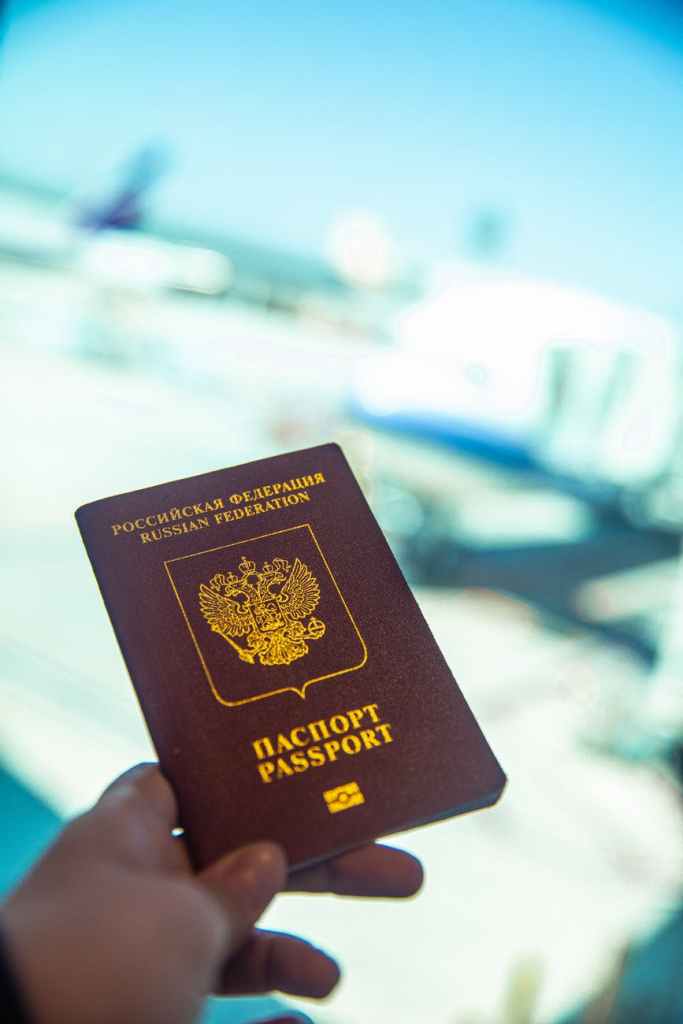
Green Passport
• European Union – EU Digital COVID Certificate. Ease travel restrictions for people travelling to EU countries.
• Digital proof – Attests informations of the person. Vaccinated by any one of the four European Medicines Agency approved vaccines. Received a negative test result. Recovered from the viral infection.
• Certificate – digital signature which is verified when the QR code is scanned. • Issuing body – own digital signature key, all of which are stored in a secure database in each country.
• Certificate – recognized by all 27 EU countries, Switzerland, Liechtenstein, Iceland and Norway.
• Possession of the certificate – exempted from free movement restrictions.
• Member States – refrain from imposing additional travel restrictions unless necessary.
• Lack of certificate – subjected to the usual travel restrictions and quarantine rules which are in effect in every country.
Issue
• EMA – listed only four vaccines. Vaxzevria (Oxford-AstraZeneca) Comirnaty (Pfizer-BioNTech) Spikevax (Moderna) Janssen (Johnson & Johnson).
• None of the three vaccines – approved for use in India till date is featured on the list. Covishield, Covaxin and Sputnik V.
• Only essential travel is allowed into EU countries and that too special permission has to be taken.
• Global concerns – Delta variant (first detected in India), more restrictions are put in place.
Stand of the European Union
• Reason behind excluding – Serum Institute of India’s Covishield is a biologically different product. Needs to apply separately for EMA clearance.
• Serum Institute of India and AstraZeneca – Process of seeking clearances.
• Covaxin – yet to gain recognition from the World Health Organization.
• Claim – Hint of racism. Vaccines cleared by the EMA are those taken by residents in Europe and North America.
World Health Organisation
• Stand of the WHO Vaccine passports should not be made mandatory for travel and should be optional. The proof of COVID-19 vaccination should not be required as a condition of entry and exit from a country.
India’s stand on the Issue
• Recent G20 ministerial conference – External Affairs Minister registered a strong protest over the issue.
• Sources – India was prepared to initiate reciprocal harsh quarantine measures against countries that discriminate against Indians.
India’s concerns – three-fold
• Vaccine inequality – vaccine passports being restricted to passengers from countries that don’t have the same access to vaccines
• Gain recognition to Covishield
• Indian-approved vaccines – Worldwide recognition. Stance of Africa .
• African Union and Africa Centres for Disease Control and Prevention – statement raising concerns Covishield vaccine was the “backbone” of the EU-supported international COVAX alliance’s programme in Africa.
Current Status
• Nine countries – agreed to independently make exemptions for Covishield Austria, Germany, Greece, Iceland, Ireland, the Netherlands, Slovenia, Spain and Switzerland have.
• Estonia – accepted both Covishield and Covaxin.
• Hope – enough pressure will be built on the EMA to include exemptions for Indian vaccines as well.
A pet, or companion animal, is an animal kept primarily for a person’s company or entertainment rather than as a working animal, livestock or a laboratory animal. Popular pets are often considered to have attractive appearances, intelligence and relatable personalities, but some pets may be taken in on an altruistic basis (such as a stray animal) and accepted by the owner regardless of these characteristics.
Two of the most popular pets are dogs and cats; the technical term for a cat lover is an ailurophile and a dog lover a cynophile. Other animals commonly kept include: rabbits; ferrets; pigs; rodents, such as gerbils, hamsters, chinchillas, rats, mice, and guinea pigs; avian pets, such as parrots, passerines and fowls; reptile pets, such as turtles, alligators, crocodiles, lizards, and snakes; aquatic pets, such as fish, freshwater and saltwater snails, amphibians like frogs and salamanders; and arthropod pets, such as tarantulas and hermit crabs. Small pets may be grouped together as pocket pets, while the equine and bovine group include the largest companion animals.
Pets provide their owners (or “guardians”) both physical and emotional benefits. Walking a dog can provide both the human and the dog with exercise, fresh air and social interaction. Pets can give companionship to people who are living alone or elderly adults who do not have adequate social interaction with other people. There is a medically approved class of therapy animals, mostly dogs or cats, that are brought to visit confined humans, such as children in hospitals or elders in nursing homes. Pet therapy utilizes trained animals and handlers to achieve specific physical, social, cognitive or emotional goals with patients.
People most commonly get pets for companionship, to protect a home or property or because of the perceived beauty or attractiveness of the animals. A 1994 Canadian study found that the most common reasons for not owning a pet were lack of ability to care for the pet when traveling (34.6%), lack of time (28.6%) and lack of suitable housing (28.3%), with dislike of pets being less common (19.6%). Some scholars, ethicists and animal rights organizations have raised concerns over keeping pets because of the lack of autonomy and the objectification of non-human animals.
• After a 70-year effort, China has been awarded a malaria-free certification from WHO.
Malaria
• A life-threatening disease caused by Plasmodium parasites.
• Vector – Mosquito.
• P. falciparum and P. vivax pose the greatest threat.
• 2019: 229 million cases of malaria worldwide.
• Most malaria cases and deaths occur in sub-Saharan Africa. • Also prevalent in South-East Asia, Eastern Mediterranean, Western Pacific, and the Americas.
• 40 countries/ territories are malaria-free -WHO.
• China – first country in WHO Western Pacific Region to be awarded a malaria-free certification in more than 3 decades. Other countries in the region – Australia (1981), Singapore (1982) and Brunei Darussalam (1987).
• India is not yet a malaria free country.
China’s Malaria elimination journey
• 1950s: Chinese health authorities worked to locate and stop the spread of malaria. Provided preventive antimalarial medicines.
• A major effort to reduce mosquito breeding grounds
use of insecticide spraying. • 1967: Chinese Government launched the “523 Project”.
Nation-wide research programme aimed at finding new treatments for malaria. Led to the discovery in the 1970s of artemisinin. Core compound of artemisinin-based combination therapies (ACTs) – most effective antimalarial drugs available today. • 1980s: China – one of the first countries in the world to extensively test the use of insecticide-treated nets (ITNs).
• 1988: more than 2.4 million nets had been distributed in China.
• 1990: number of malaria cases in China fell to 1,17,000; deaths were reduced by 95%
• Funding by the Global Fund to Fight AIDS, Tuberculosis and Malaria, launched in 2002.
• 2021: China was declared as a Malaria free country.
Copywriting vs. content writing—it’s all the same, right?
No, they are most definitely not the same. It’s not exactly the difference between apples and oranges—more like oranges and tangerines—but close enough. For young writers looking for work, it’s incredibly important to know the differences between the two; each presents a unique set of challenges and skills to do well. Here, we pinpoint the major differences between copywriting and content writing.
Purpose
The greatest distinction between copywriting and content writing lies in its purpose. Copywriting is selling your personas on your brand; content writing is subtly telling them about it while delivering valuable content.
Copywriting is the art of selling people on an idea, brand, or ideology. The best copywriting fuses the products and ideology of a brand together to create branding. Copywriting is advertorial in nature as its intent is to pitch customers to use a brand’s products and/or services.
For the Mad Men fans out there, this is what Don Draper and Peggy Olson did all the time at Sterling Cooper (or whatever agency they were with at the time). They weren’t selling products, but ideas and emotions that were tied to products.
Content writing is the art of creating content. It needs to either inform, educate or entertain; it needs to have a clear purpose and/or reason behind the piece; it needs to represent the brand’s voice; it needs to be a good read. The best content writing is focused on the quality of the editorial, no matter if it comes from a brand or a publisher. For brands (and some data-driven publishers), content writing aligns with strategic business and marketing goals to attract audiences and potential customers.
Here’s one way to look at the two: content writing passes information along to your audience while copywriting reveals what your brand is all about.
The two, of course, do share similarities. For one thing: goals. Both copywriting and content writing ultimately seek to convert a reader into a sale or a lead. Another similarity: they both need to be well-written. What is well-written for one differs from the other, but quality writing, for whatever purposes, entices readers to keep reading.
Bottom line: The ultimate objective of copywriting is to sell an idea whereas content writing aims to create valuable content to help the audience understand your brand and generate interest.
The job
A truism: copywriters write copy and content writers write content. If you’re confused at what this means, then you should know all shall be explained. Another distinction between copywriting and content writing lies in the job description.
A copywriter is a professional whose job is dedicated to producing copy. This can come in many forms (see below), but the general idea is that a copywriter writes marketing material for a living. It is their trade, craft, skill—whatever you want to call it.
Now, a content writer can be anyone. They are not necessarily a professional writer, but someone who produces content. Thanks to the democratization of the internet, anyone can write now, including professionals, executives, authors, bloggers, software engineers, CEOs, brands, etc. Of course, the best content writers understand the craft of content writing, but it may not be their trade.
Bottom line: A copywriter is a professional who writes marketing copy; a content writer can be anyone producing content.
Types of writing
A copywriter writes marketing material, a content writer writes content—but what kinds of marketing material and content? This is the last major distinction between the two.
Traditionally, copywriting was limited to advertising in the days of yester-yore (again, see Mad Men). But the internet changed the scope of what copywriters can write for beyond witty slogans. Today, the list includes, but is not limited to:
Ads, online and off
Slogans and taglines
Web page content
SEO content
Email campaigns
Television or radio commercial scripts
Video scripts
Press releases
White papers
Catalogs
Billboards
Brochures
Postcards
Sales letters
Direct mail letters
Jingle lyrics
Social media
Copywriters today see plenty of overlap with content writers and technical writers, but remember: the point is to sell you an idea as part of a marketing campaign.
Likewise, content writing has plenty of opportunities to write different kinds of content, including, but not limited to:
Blog posts
Newspaper articles
Magazine features
Whitepapers
Email newsletters
E-books
Books
Print magazines
Social media posts
Podcasts
Television
Film
Radio
Yep—even TV and film is considered content these days, just a different kind (but that’s another story).
What you really need to know is that brands of all kinds need copywriting and content writing to stay fresh, so there’s plenty of opportunities for writers out there to try their hands at both. It’s just a matter of seeing which one you have a knack for and sticking with that one.





 Eduindex
You must be logged in to post a comment.