

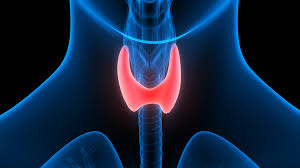
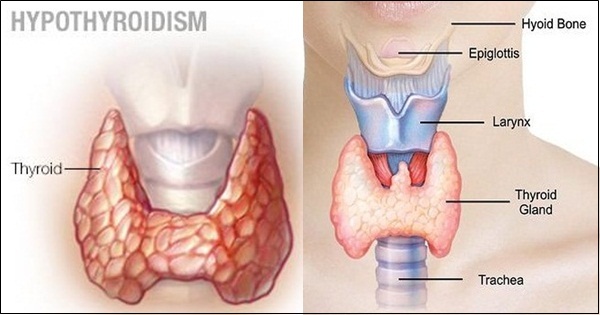
The Thyroid or Thyroid Gland is an endocrine gland in vertebrates. In humans it is in the neck and consists of two connected lobes. The lower two thirds of the lobes are connected by a thin band of tissue called the thyroid isthmus. The thyroid is located at the front of the neck, below the Adam’s apple. The functional unit of the thyroid gland is the spherical thyroid follicle, lined with follicular cells(thyrocytes), and occasional parafollicular cells that surrounds a lumen containing colloid. The thyroid gland secretes three hormones- triiodothyronine(T3) and thyroxine(T4), a peptide hormone- calcitonin.
The thyroid hormone influences the metabolic rate, protein synthesis and in children- growth and development. Calcitonin plays a role in calcium homeostasis. Secretion of the two thyroid hormones is regulated by thyroid-stimulating hormone(TSH) which is secreted from the anterior pituitary gland.
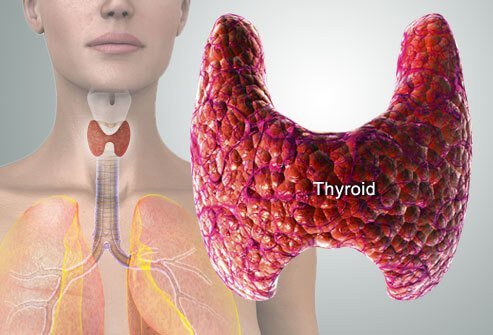
When the thyroid doesn’t work properly, it can impact our entire body. If our body makes too much thyroid hormone, this can develop a condition called Hyperthyroidism. If our body makes too little thyroid hormone, it is called Hypothyroidism. Both the conditions are serious and needs a proper treatment.
WHO CAN BE AFFECTED BY THYROID DISEASE?
This disease can affect anyone be it men, women, infants, teenagers and the elderly. It can be present at birth(typically hypothyroidism) and it can develop as the person age(often after menopause in women). Thyroid disease has become a very common disease. A woman is about five to eight times more likely to be diagnosed with a thyroid condition than a man.
A person may be at a higher risk of developing this disease if he/she:-
- has a family history of thyroid disease.
- has a medical condition, such as type 1 diabetes, Rheumatoid arthritis etc.
- taking a medicine higher in iodine content.
SYMPTOMS OF THYROID DISEASE
Symptoms of an overactive thyroid(hyperthyroidism) include:-
- experiencing anxiety, irritability and nervousness.
- having trouble sleeping.
- losing weight.
- having an enlarged thyroid gland or goiter.
- having muscle weakness and tremors.
- experiencing irregular menstrual periods.
- feelings sensitive to heat.
- having vision problems.
Symptoms of an underactive thyroid(hypothyroidism) include:-
- feeling tired.
- gaining weight.
- experiencing forgetfulness.
- having frequent and heavy menstrual periods.
- having dry and coarse hair.
- having hoarse voice.
- experiencing intolerance to cold temperatures.

 Eduindex
You must be logged in to post a comment.