

All the aqueous solutions may contain hydrogen and hydroxyl ions due to self-ionisation of water. In addition to this ionisation, substances dissolved in water also may produce hydrogen ions or hydroxyl ions. The concentration of these ions decides whether the solution is acidic or basic. pH scale is a scale for measuring the hydrogen ion concentration in a solution. The ‘p’ in pH stands for ‘Potenz’ in German meaning ‘power’. pH notation was devised by the Danish biochemist Sorensen in 1909. pH scale is a set of numbers from 0 to 14 which is used to indicate whether a solution is acidic, basic or neutral.
✓Acids have pH less than 7
✓Bases have pH greater than 7
✓A neutral solution has pH equal to 7

The pH is the negative logarithm of the hydrogen ion concentration
i.e pH = −log [H+]
We can measure the pH of a given solution using pH paper
The pH of a solution can be determined by using a universal indicator. It contains a mixture of dyes. It comes in the form of a solution or a pH paper.
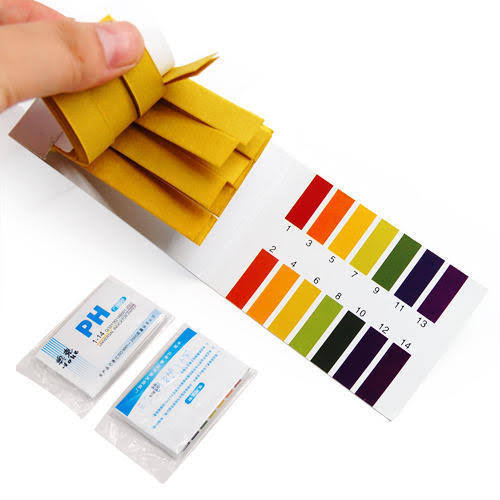
A more common method of measuring pH in a school laboratory is by using the pH paper. A pH paper contains a mixture of indicators. It shows a specific colour at a given pH. A colour guide is provided with the bottle of the indicator or the strips of paper impregnated with it, which are called pH paper strips. The test solution is tested with a drop of the universal indicator, or a drop of the test solution is put on the pH paper. The colour of the solution on the pH paper is compared with the colour chart and the pH value is read from it. The pH values thus obtained are only approximate values.

Role of pH in Everyday Life
Plants and animals are pH sensitive
Our body works within the pH range of 7.0 to 7.8. Living organisms can survive only in a narrow range of pH change. Different body fluids have different pH values. For example, pH of blood is ranging from 7.35 to 7.45. Any increase or decrease in this value leads to diseases. The ideal pH for blood is 7.4.

pH in our digestive system
It is very interesting to note that our stomach produces hydrochloric acid. It helps in the digestion of food without harming the stomach. During indigestion the stomach produces too much acid and this causes pain and irrigation. pH of the stomach fluid is approximately 2.0.

pH changes as the cause of tooth decay
pH of the saliva normally ranges between 6.5 to 7.5. White enamel coating of our teeth is calcium phosphate, the hardest substance in our body. When the pH of the mouth saliva falls below 5.5, the enamel gets weathered. Toothpastes, which are generally basic are used for cleaning the teeth that can neutralise the excess acid and prevent tooth decay.

pH of soil
In agriculture, the pH of the soil is very important. Citrus fruits require slightly alkaline soil, while rice requires acidic soil and sugarcane requires neutral soil.

pH of rain water
The pH of rain water is approximately 7, which means that it is neutral and also represents its high purity. If the atmospheric air is polluted with oxide gases of sulphur and nitrogen, they get dissolved in the rain water and make its pH less than 7. Thus, if the pH of rain water is less than 7, then it is called acid rain. When acid rain flows into the rivers it lowers the pH of the river water also.


 Eduindex
You must be logged in to post a comment.