

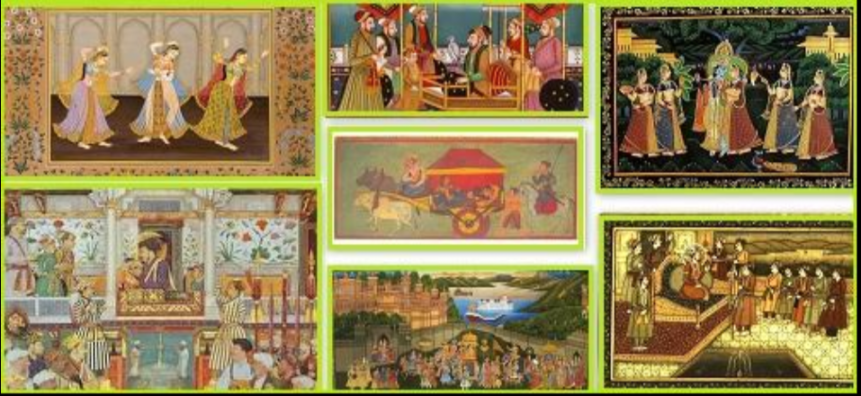
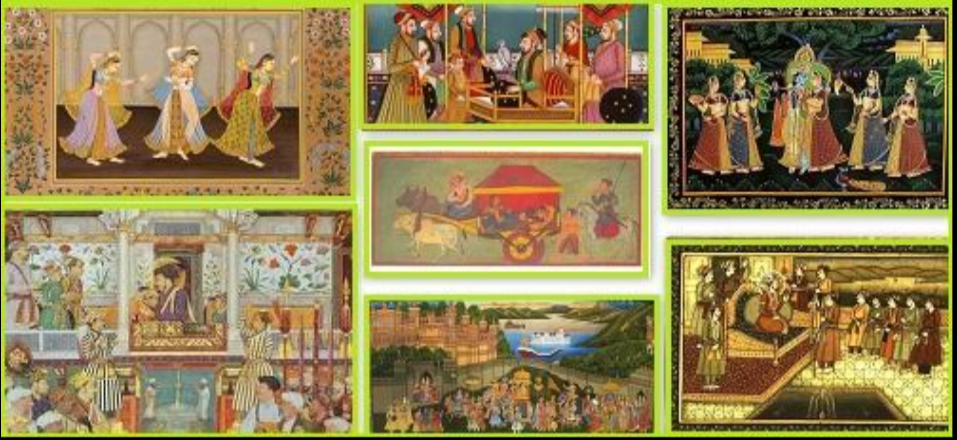
Miniature Art refers to paintings, sculptures, engravings etc. That have small dimensions. Though they are small, they are well detailed. The origin of miniature paintings dates back to the prehistoric times and is profoundly influenced by Indian literature. A miniature painting is generally less than 25 square inches or 100 square centimetres. The subjects in the painting are one -sixth of their actual sizes. Miniature paintings were generally done on materials like cloth, paper, leaves etc. which are quite perishable. These paintings are handmade and very delicate.
Miniature paintings are considered as an ancient art in India and there were many schools for the same, including those of the Rajput’s, Deccan’s and the Mughals. These paintings give an insight into the life of the royals and the common man, the beauty of their womenfolk and the inspirations and devotions of the artists themselves. These paintings are often associated with the Ragas i.e. the melodies of Indian classical music.
Rajasthani School of Miniature Paintings:
This school developed around the areas of Rajasthan, Bundelkhand and Punjab regions. The Rajasthani paintings were greatly influenced by Tulsidas and Kabir. The main theme observed in the illustrations of this school is love in all of its form. Main emphasis is given on the love between human soul and god. This might have been influenced by the Bhakti cult which originated in those days. Paintings are left to the imagination and emotion of the viewers for interpretation.
Features:
Compositions are clear and simple. All figures are in same dimensions. The figure of a woman are duplicated for other women. This is painted as a symbol of femininity. Colours are used harmoniously and are bright with each colour having it’s own specific meaning. The medium mostly used was water colour in tempera hand made paper. The colour scheme is flat and paintings are two dimentional.
Some of the famous Rajasthani miniature paintings:
‘Radha Bani Thani’by Nihal Chand
‘Maru Ragini’ by Sahibdin
‘Chaugan Players’ by Dana
Mughal School of Miniature Painting:
With the advent of Mughal, the Indian miniature paintings shifted to the portraits and richness of colour effects with the unique Persian flavour. During this period, the art specialises in Court and Palace scenes. Themes from Indian epics such as Ramayana, Mahabharata, Bhagvata Purana etc. Are also included. The Indian Miniature painting was at it’s prime time during the period of Mughal Emperor Shah Jahan because he was a great patron of miniature painting. But after his regime, paintings lost their charm and started to decline in the 18th century.
Features:
Mughal paintings denoted the habits of the ruling class. Portraiture was done. Figures were drawn in profile or quarter profile. A decorative border called hasiah was also used. Calligraphy was also done in the paintings. The paintings were male dominated. Portraits of women were drawn from imagination. The medium generally used was water colour in tempera handmade paper.
Some of the famous Mughal Miniature Paintings:
‘Kabir and Raidas’ by Ustad Faquirullah Khan
‘Falcon on a Bird Rest’ by Ustad Mansoor
‘Babur Crossing River Sone’ by Jagannath

 Eduindex
You must be logged in to post a comment.