

EVENTS
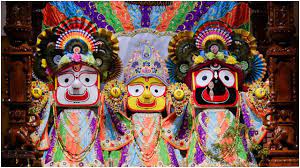
The Puri Rath Yatra begins on the Dwitiya Tithi in Ashadha, Shukla Paksha. This year, Ratha Yatra is being celebrated on July 12, 2021. The festival of Puri Rath Yatra is devoted to Lord Jagannath who is believed to be one of the incarnations of Lord Vishnu. Jagannath Rath Yatra is a nine-day festivity marked by various rituals and traditions. On this day, Lord Jagannath, Balbhadra and Subhadra proceed towards the Gundicha temple (a monument built in the memory of the Queen of Indradyumna) from the Puri shrine on their giant wooden chariots. It is believed that in order to pay their respects to Queen Gundicha, wife of the legendary King Indradyumna, who built the Puri Jagannatha temple, Lord Jagannatha along with brother Balabhadra and sister Subhadra leave their regular abode from the main temple and spend some time in this temple built by Gundicha in their honour. Lord Jagannatha, after resting for eight days in Gundicha temple, returns to his main abode. This day is known as Bahuda Yatra or Return Yatra. It is observed on the eighth day after Ratha Yatra on Dashami Tithi.
During Bahuda Yatra, the Lord makes a short stoppage at Mausi Maa temple, which is dedicated to Goddess Ardhashini. Remember, Lord Jagannatha, returns to his main abode just before Devshayani Ekadashi, when Lord Jagannatha goes to sleep for four months.
The rituals of Ratha Yatra start much ahead of Ratha Yatra day. Approximately 18 days before Ratha Yatra, Lord Jagannatha, his brother Balabhadra and his sister Devi Subhadra are given a famous ceremonial bath which is known as Snana Yatra. Snana Yatra day is observed on Purnima Tithi in Jyeshtha month, which is popularly known as Jyestha Purnima.
On the occasion of Puri Ratha Yatra, having a mere sight of Lord Jagannath on his chariot is considered very auspicious. Three chariots are made for the three respective deities.
Name of the three chariots
The names and important characteristics of the three raths (Chariots) belonging to the three deities are:
Lord Jagannath: Nandighosa

- Lord Jagannath’s chariot is made of approximately 16 wheels
- Lord Jagannath’s chariot is about 45 ft. high
- Red and yellow canopy
Lord Balabhadra: Taladhwaja

- Lord Balabhadra chariot is made of 14 wheels
- Lord Balabhadra chariot is 45.6 feet high
- Red and bluish green canopy
Goddess Subhadra: Darpadalana

- Goddess Subhadra’s chariot is made with 12 wheels
- Goddess Subhadra’s chariot is 44.6 feet high.
- Red and black canopy
Jagannatha literally means Lord of the Universe. It is believed that, if a person participates with full devotion in the Rath Yatra will be free from the cycle of birth and death. Rath Yatra symbolises harmony, brotherhood and unity. Thousands of devotees come here from different corners of the country to take part in this yatra and get good luck by pulling the chariot of the Lord. However in accord with the Covid 19 regulations, devotees were not allowed in the procession. Only the priests and workers with negative reports were allowed.
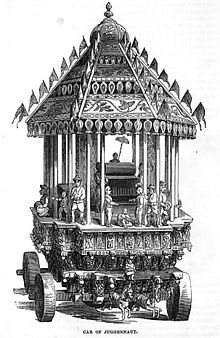
Lord Jagannath is one of the avatars of Lord Krishna. It is said that Rath Yatra is equal to hundred sacrifices. If a devotee takes part in this Rath Yatra and pulls the chariot of God, then he gets god’s blessings. Jagannath Rath Yatra is a ten-day festival. The preparations for the yatra begin with the construction of the chariots on the day of Akshaya Tritiya. According to religious beliefs, just by watching this Rath Yatra one gets freedom from all kinds of sins and salvation is attained after death.
ETYMOLOGY OF JUGGERNAUT
Jagannath is also the etymological origin of the English word ‘Juggernaut’. When the British first observed the Rath Yatra in the 18th century, they were so amazed that they sent home shocking descriptions which gave rise to the term ‘juggernaut’, meaning “destructive force”. They misunderstood that people sacrificed themselves infront of the chariot. However these were accidents which often occur during commotion in pulling of chariot. As a matter of fact sacrificial rituals are banned in Jagannath temple.

 Eduindex
You must be logged in to post a comment.