

Weathering is the breaking, disintegration and decomposition of materials of the earth’s crust by their exposure to atmosphere.
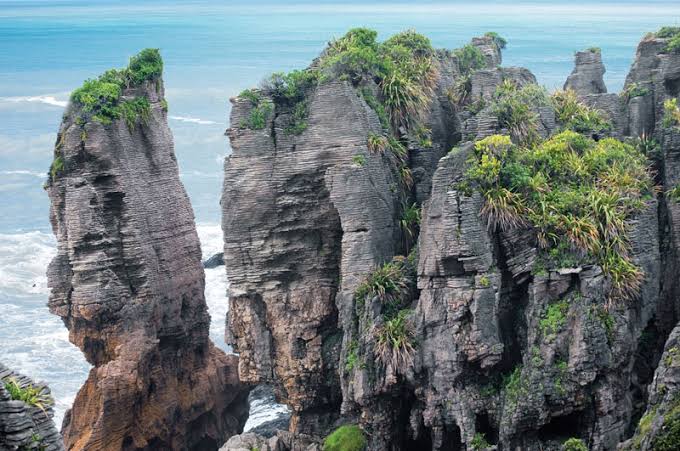
There are three types of weathering
✓Physical weathering
✓Chemical weathering
✓Biological weathering
Physical weathering
It is the breakdown of rocks without changing their chemical composition, through the action of physical forces. The constant freezing and thawing of rocks during the night and day leads to the expansion and contraction of rocks. Cracks are formed and disintegration occurs eventually. Exfoliation, block disintegration, granular disintegration are the major types of physical weathering.

Exfoliation
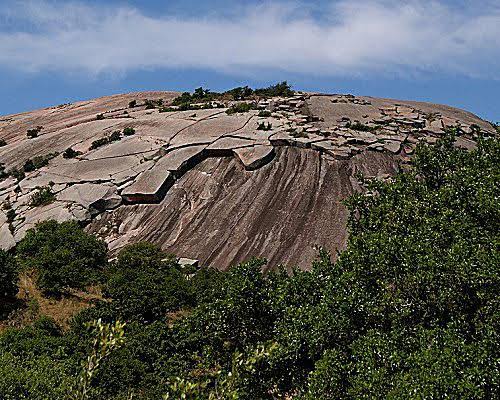
The alternate heating and cooling on rounded rock surfaces leads to the peeling of rocks, layer by layer like an onion. This is called exfoliation. Sheeting and shattering are the other forms of exfoliation.
Granular Disintegration
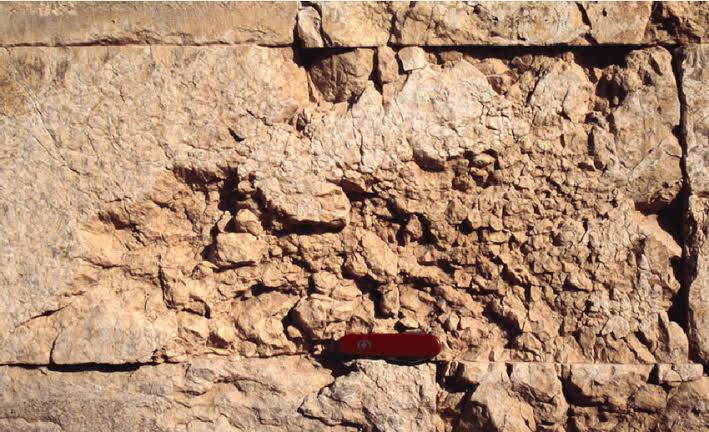
Granular disintegration takes place in crystalline rocks where the grains of the rocks become loose and fall out. This is due to the action of temperature.
Block Disintegration
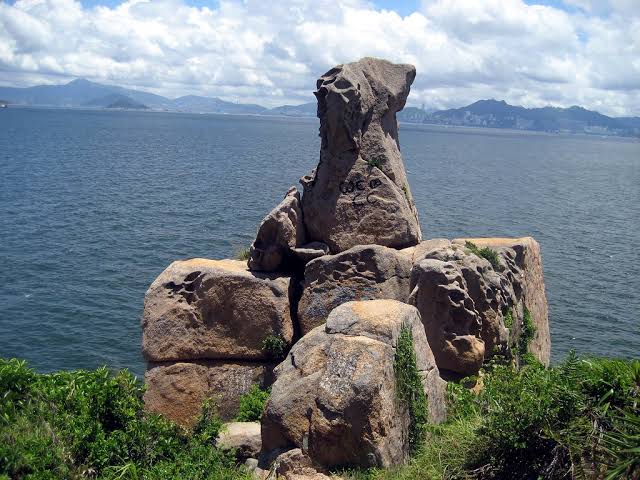
Repeated expansion and contraction of rocks during day and night respectively causes stress on the joints of the rocks which results in block disintegration.
Chemical Weathering
Disintegration and decomposition of rocks due to chemical reactions is called Chemical Weathering. This is predominantly high in the hot and humid regions such as the equatorial, tropical and sub tropical zones. Chemical weathering takes place through the processes of oxidation, carbonation, solution and hydration. The agents of Chemical weathering are Oxygen, Carbon-dioxide, Hydrogen and water.
Oxidation
Oxygen in the atmosphere reacts with the iron found in rocks, thus leads to the formation of iron oxide. This process similar to the rusting of iron, pressure of air and water is known as oxidation, which results in the weakening of rocks.
Carbonation
Carbonation is the mixing of water with the atmospheric Carbon-dioxide, forming carbonic acid. Carbonation is important in the formation of caves, in limestone region. When the carbonic acid reacts with the carbonate rocks , the rocks get disintegrated.
Solution
The dissolution of rock substances in water result in the loosening of the rock particles. This inturn breaks down the rocks.

Hydration
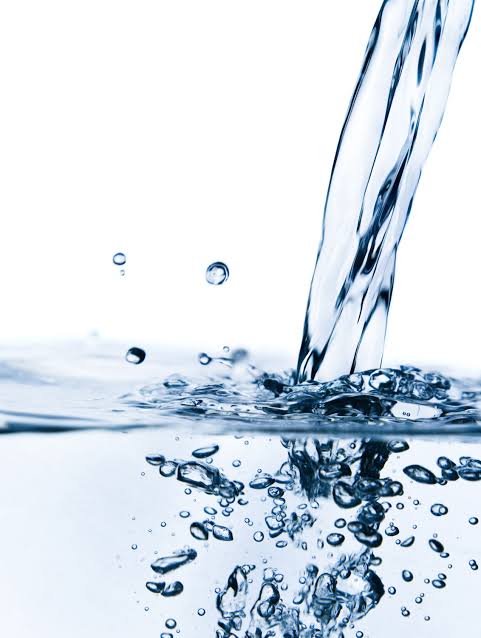
Absorption of water into the mineral structure, certain chemicals in the rock enlarge in size in humid conditions. These minerals found in the rock swell and this results in the development of cracks and the rock wears down. This type of weathering is called hydration.
Biological Weathering
Biological weathering occurs due to the penetration and expansion of plant roots, earthworms, burrowing animals (rabbits, rats) and some human activities.


 Eduindex
You must be logged in to post a comment.