

An ecosystem is a community, where all living organisms live and interact with one another and also with their non-living environment such as land, soil, air, water etc. Ecosystems range in size from the smallest units (Eg: bark of a tree) that can sustain life to the global ecosystem or ecosphere. (Eg: Cropland, Pond ecosystem, Forest ecosystem, Desert ecosystem etc.). Biosphere harbours all ecosystems on the earth and sustains life forms including mankind.
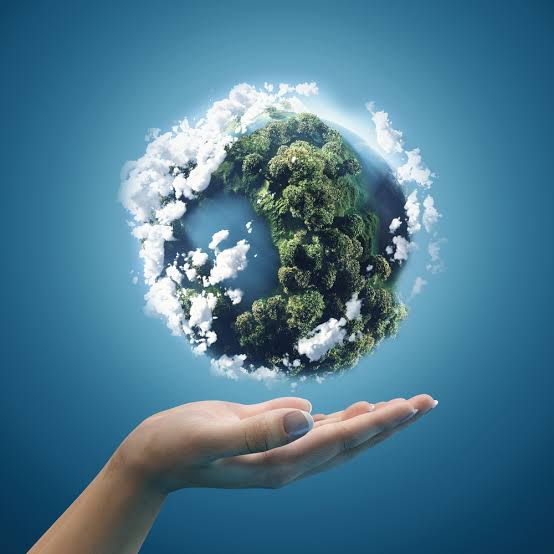
Components of Ecosystem
An ecosystem consists of three basic components, namely
✓Abiotic components
✓Biotic components
✓Energy components
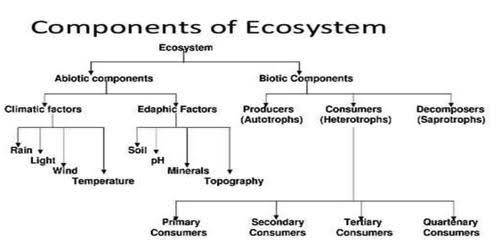
Abiotic Components
Abiotic components include the non-living, inorganic, physical and chemical factors in the environment. Eg. Land, Air, Water, Calcium, Iron etc.
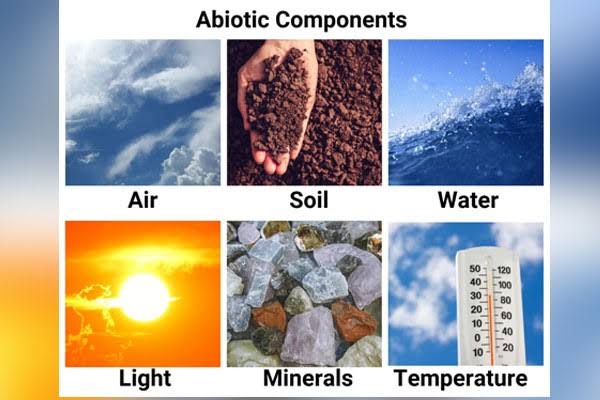
Biotic Components
Biotic components include plants, animals and micro organism. Biotic components can be classified into three categories
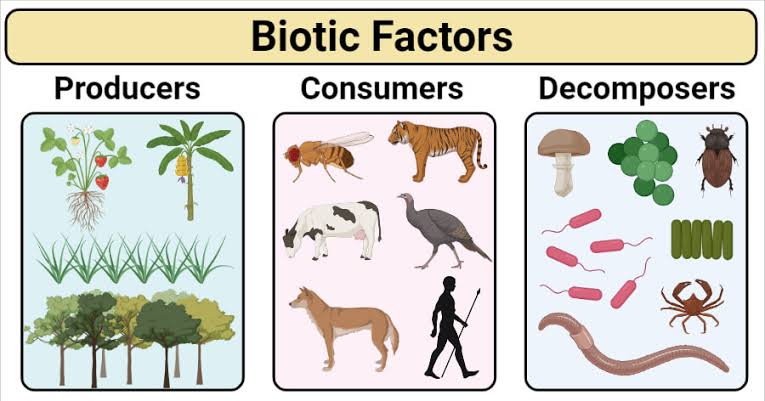
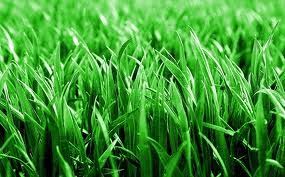
Producers
Producers are self nourishing components of the ecosystem. Hence they are called Autotrophs. They are found both on land and water. Eg. Plants, Algae, Bacteria etc.
Consumers
Consumers are those that depend on producers, directly or indirectly. Hence they are called Heterotrophs.
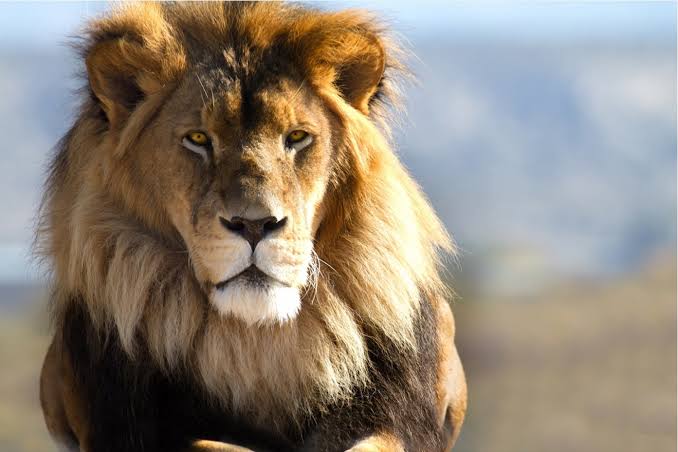
The common category of consumers are:
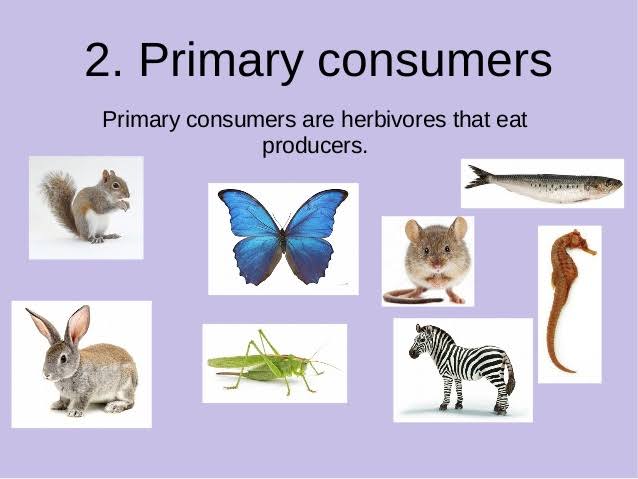
Primary Consumers
Primary consumers depend on producers for their food. They are exclusively herbivores. Eg. Zebra, goat etc.
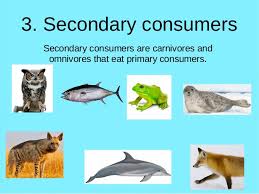
Secondary Consumers
Secondary consumers are small carnivores i.e., they consume herbivores. Eg. Lion, Snake etc.
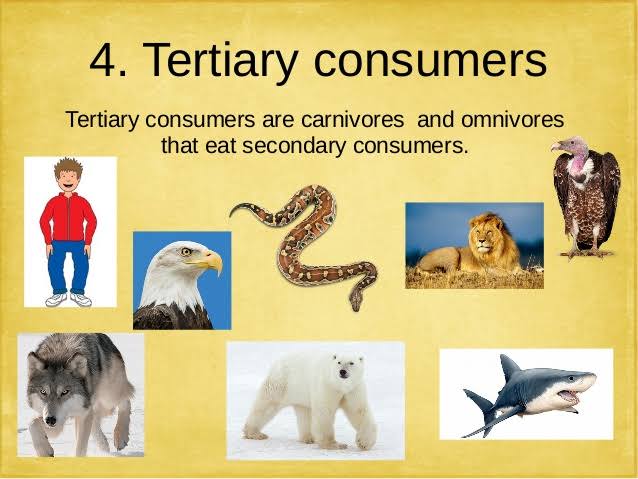
Tertiary Consumers
Tertiary consumers are top carnivores that prey on both herbivores and carnivores. Eg. Owl, Crocodile etc.
Decomposers
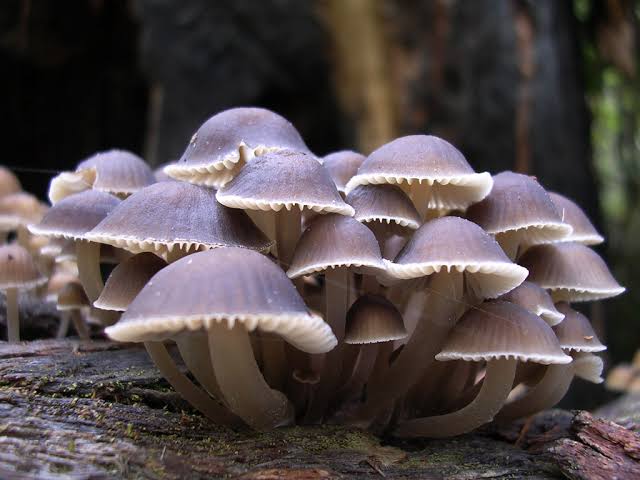
Decomposers are some organisms that are incapable of preparing its own food. They live on dead and decaying plants and animals. Hence they are called Saprotrophs. Eg. Fungus, Mushrooms etc.
Energy Components
All organisms in the biosphere use energy to work and convert one form of energy into another. The Sun is the ultimate source of energy for the biosphere as a whole. The solar energy gets transformed into other forms of energy through the various components in the ecosystem. The producers, consumers and the decomposers contribute a lot to the energy flow in an ecosystem.
Functions of an ecosystem
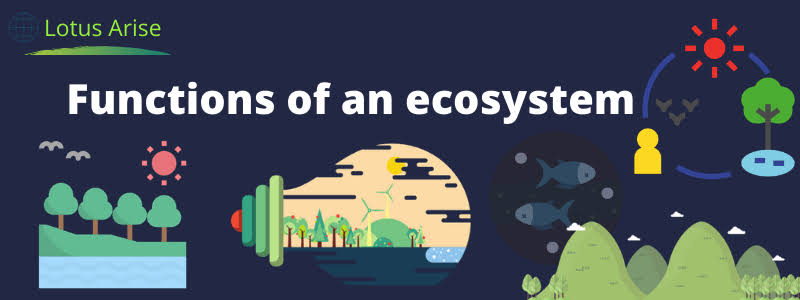
The living organisms form an interacting set of flora and fauna which are organized into trophic levels, food chains and food webs. The functioning of an ecosystem depends on the pattern of the energy flow, as it helps in the distribution and circulation of the organic and inorganic matter within an ecosystem. Energy flow generally takes place in a hierarchical order in an ecosystem through various levels. These levels are called trophic levels.

 Eduindex
You must be logged in to post a comment.