


To celebrate the arrival of monsoon, the joyous festival of Raja is arranged for 3 days by the people of Odisha.
Raja is the only festival in the world which celebrates WOMANHOOD or MENSTRUATION. The term RAJA came from RAJASWALA meaning a menstruating woman. It is believed that mother earth menstruates for three days in the mid of June. It is believed that the mother Goddess Earth or the divine wife of Lord Vishnu undergoes menstruation during the primary three days. The fourth day is named Vasumati Snana, or ceremonial bath of Bhudevi. In the medieval time, the festival became more popular as an agricultural holiday marking the worship of Bhudevi, who is the wife of lord Jagannath. A silver idol of Bhudevi is to be found in the Puri Temple beside Lord Jagannath .The Odia people don’t do any kind of agricultural activity like ploughing or sowing as mother earth is predicted to be browsing rejuvenation.
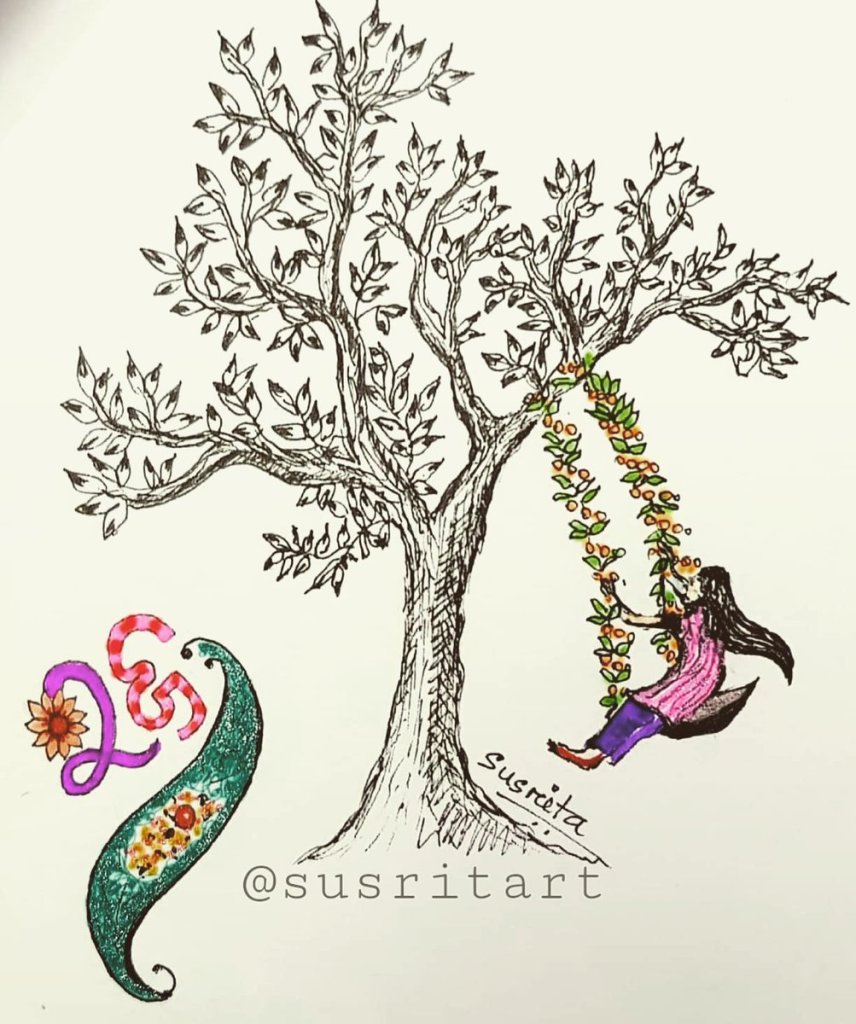
The first day is named Pahili Raja, second day is Mithuna Sankranti, third day is Bhudaaha or Basi Raja. The final fourth day is named Basumati snana, during which the women bath the grinding stone as a logo of Bhumi with turmeric paste and adore with flower, sindoor etc. All type of seasonal fruits is offered to mother Bhumi. The day before first day is called Sajabaja or preparatory day during which the houses, kitchen including grinding stones are cleaned, spices are ground for three days. During these three days women and girls take rest from work and wear new Saree, Alata, and ornaments. According to popular belief as women menstruate, which is a sign of fertility, so also Mother Earth menstruates. So all three days of the festival are considered to be the menstruating period of Mother Earth. During the festival all agricultural operations remain suspended. As a mark of respect towards the world during her menstruation days, all agricultural works involves a standstill during lately . Significantly, it’s a festival of the unmarried girls, the potential mothers. They all observe the restrictions prescribed for a menstruating woman. The very first day, they rise before dawn, do their hair, anoint their bodies with turmeric paste and oil and then take the purificatory bath in a river or tank. Peculiarly, bathing for the remainder two days is prohibited. They don’t walk bare-foot don’t scratch the world , don’t grind, don’t tear anything apart, don’t cut and don’t cook. During all the three consecutive days they’re seen within the better of dresses and decorations, eating cakes and rich food at the homes of friends and relatives, spending long cheery hours, moving up and down on improvised swings, rending the village sky with their merry impromptu songs.

 Eduindex
You must be logged in to post a comment.