

The biggest outcome of the war,the Russian revolution,was unique in world history.The socio political and economic conditions prevailing in Russia were brought to head by the War.There were really two revolutions in the year 1917 ,one in March and the other in November.On the abdication of the Tsar the bourgeois government which followed, wanted to continue the war.But the people were against it.So there was a second great uprising under the guidance their leader Lenin,who seized power and established a communist government in Russia.
Causes of the Revolution
Social causes
In Russia Peter the Great and Catherine I I attempted westernisation without changing the social conditions.The Russian peasents were serfs tied to lands owned by wealthy Russians.Afer Russia’s defeat in the Crimean War,some reforms were introduced.In 1861 Tsar Alexander I I abolished serftom and emancipated the serfs .But they were not given enough land to subsist.These peasents became the powder keg for the revolution.The labourers and workers whose number had increased on account of industrialisation were aggrieved as they got very low wages.
Role of Revolutions
The spread of revolutionary ideas among the intelligentsia and their repression by the Tsar’s government made the socialistically inclined students to carry their propaganda to the peasantry.In course of time these students disillusioned with the outcome of their work with the peasants,took to “terrorism”.yet the revolutionary forces swelled ,with the joining of the many minority groups like Jews and poles.Soon,based on the Marxist philosophy,new ideas began to take shape and a social and Democratic Labour party was formed.The Marxists declared themselves against acts of terriosm.They believed that the working class had to be roused to action,and inky by such mass action could they achieve thier goal.
Autocracy of the Tsar
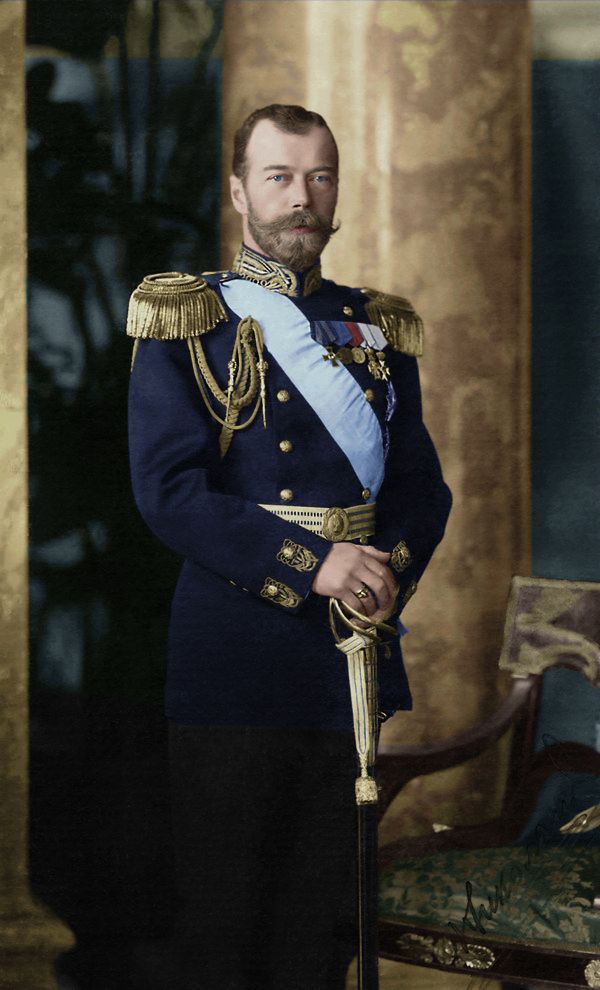
Tsar Nicholas I I of Romanow dynasty had little experience of government.His wife Tsarina Alexandra was a dominant personality and Nicholas was under her strong influence.Nicholax mistrusted most of his ministers and he was surrounded by flatters.Determined that Russia should not be left out in tha scramble for colonial possessions, Nicholas encouraged Russian expansion in Manchuria.This provoked a war with Japan in 1904.The resulting Russian defeat led to strikes and riots.On 23 January 1902 Father Gapon,a priest,organised a march of men, women and children on the Tsar’s winter palace in St.Petersburg demanding a representative national assembly and agraian and industrial reforms.But police and soldiers fired on the procession.Hundreds were killed and many thousands wounded.The events of this day led to riots, strikes and violence in which the governor-general of Moscow,an uncle of the Tsar,was killed by a bomb.Nicholas was forced to grant a constitution and establish a parliament,the Duma.This was no longer satisfactory to the left-wing parties that formed a Soviet of workers delegates in St Petersburg,led by Trotsky.Similar Soviets were set up in other cities.The Duma gave the middle classes,a voice in government.So the moderates were supportive of the government’s policy,while the left wing continued their opposition.
Opposition to Tsar and Dissolution of Duma
The outbreak of the First world war had temporarily strengthened the monarchy,as Russia allied to France and Britian.As there was rumour of a palace revolution.Nicholas made himself the commander-in-chief of the army.At the end of 1916 ,Rasputin,who had a domineering influence over the Tsar and the Tsarina,was murdered by a member of the Tsar’s family.The members of the St.Petersburg Soviet were arrested.Whenever the Duma opposed the Tsar’s move,it was dissolved and fresh elections held.Without change of government policy,the fourth Duma ended with the revolution of 1917.
Popular uprisings

Even on 23 February 1917,when the socialists celebrated International working Women’s Day on that day ,The Tsar seemed unchallengeable.But he had to abdicate on the morning of 2 March.Though none called for strikes fearing that the time was not ripe for militant action,the bread shortages among women textile workers,many with husbands in the army, forced them to go on strike anyway and March through the factory areas of Petrograd ,the capital of the Russian Empire.Masses of women workers demanding “Bread for workers “waved their arms towards factory workers and shouted”Come out !” “Stop work!” The city’s 4,00,000 workers joined the movement the next day (24 February)
Abdication of Tsar


The government used the troops to break the strike.But soon mutinies broke out in the barracks.The Tsar ordered a declaration of material law.But his order was not broadcast in the city,as there was no one to do this job.The Tsar then tired to return to Petrograd.The railway workers stopped his train.The generals at the front and some leaders in petrograd, frightened by these developments pleaded with the Tsar to abdicate.On 15 March, Nicholas I I abdicated.
The revolutionary Tamil poet Bharathiyar cheerfully welcomed the revolution in Russia by penning these poetic lines…
The Mother Great,the power supreme,
Turned her galance benign towards Russia,
The Revolution of the Age,
Behold the wonder ,rises high
The tyrant howling falls down limp,
The shoulders of the heavenly god’s,
Are swelling now with joy and pride,
Eyes hot with unshed tears,the demons,perish.O people of the world, Behold this mightly change!
Provisional Government
There were two parallel bodies to take on government functions.One was of the bourgeois politicians of the old state Duma, comprising prospertied classes.On the other there were workers’ delegates drawn together in a workers council,or Soviet.The workers’ delegates in the Soviet were influenced by the underground left-wingers .Those in the Duma were able to form a provincial government with the consent of the Soviets.The Soviet was dominated by Mensheviks and the minority Bolshevik were timid and undecided.The situation changed with the arrival of Lenin.
Failure of provisional Government
Lenin was in Switzerland when the revolution broke out.Lenin wanted continued revolution.His slogan of All power to the Soviets soon won over the workers leaders.Devasted by war time shortages,the people were attracted by the slogan of ‘Bread ,peace and Land’.But the provisional Government made two grave mistakes.First,it postponed a decision on the demand for the redistribution of land and the other was government decided to continue with the war.Frustrated peasent soldiers deserted their posts and joined those who had restored to land grabbing.
Takeover by the Bolshevik party under Lenin’s leadership
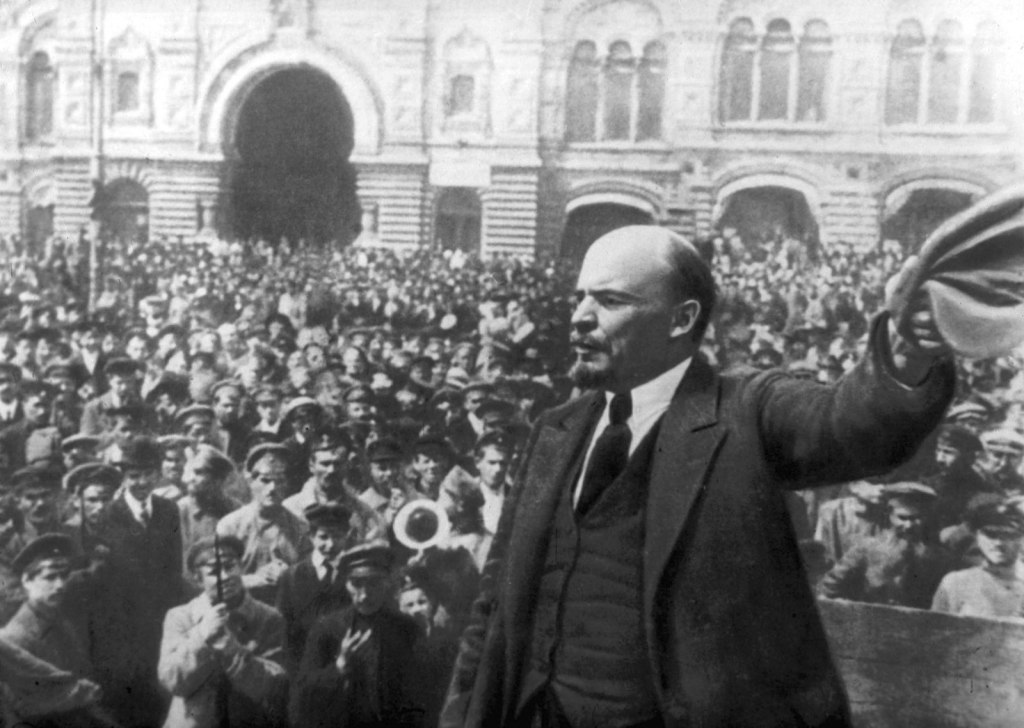
In Oct Lenin persuaded the Bolshevik central Committee to decide on immediate revolution.Trotsky prepared a detailed plan.On 7 November the key government buildings, including the winter palace,the prime minister’s headquarters,were sized by armed factory workers and revolutionary troops.On 8 November 1917 a new Communist government was in office in Russia.Its head this time was Lenin.The Bolshevik party was renamed the Russian Communist party.
Outcome of the Revolution
The Russian Communist party eliminated illiteracy and poverty in Russia within a record time.Russian industry and agriculture developed remarkably.Women were given equal rights, including rights to industries and banks were nationalised.Land was distributed to poor peasents.Lenin thought the most important factor for the fall of provisional Government was its failure to withdraw from world war.So Lenin immediately appeared for peace.unmindful of the harsh terms dicated by the central powers,Lenin opted for withdrawing from the war to concentrate on the formation of new government.In March 1918 the treaty of Brest-Litovsk was signed.
Global Influence of the Russian Revolution
The revolution fired people’s imagination across the world.In many countries, communist parties were formed.The Russian Communist government encouraged the colonies to fight for their freedom.Debates over key issues,and reforms,social welfare, workers’ rights and gender equality started taking place in a global context.

 Eduindex
Nice
LikeLiked by 1 person
Tq
LikeLiked by 2 people