FAMILY

IN THIS WORLD A PERSON CAN WHERE EVER HE/SHE WANT BUT WE WILL COME BACK OUR HOME WHERE WE FEEL SATISFIED…….

FAMILY HAS THE POWER TO CHANGE OUR MIND THOUGH….AND SO ON

WHEN FAMILY SUPPORTS WE CAN ACHIEVE OUR DREAMS AND PURSUING OUR PASSION WITH THE HELP FAMILY BECAUSE THEY SUPPORT US…….ALL SITUATIONS

FAMILY GIVES YOU THE POWER TO FACE ANY PROBLEM SO, DON’T GET FEAR OF ANY THING WHEN YOUR FAMILY IS WITH YOU .

THANK GOD FOR GIVING SUCH A BEAUTIFUL FAMILY………AND TALKING CARE OF YOU SO WELL……….

GANDHI JAYANTI

The birthday of Mohandas Karamchand Gandhi is celebrated as ‘Gandhi Jayanti.’ On October 2nd, 1869, India’s “Father of the Nation,” Gandhiji, was born. Thus, every year on October 2nd, Gandhi Jayanti is commemorated. In India, Gandhi Jayanti is observed as a public holiday. The International Day of Non-Violence is observed on this date around the world. Mahatma Gandhi’s contribution to Indian politics is incomparable. Gandhi suffered and was imprisoned multiple times throughout the tumultuous days of the campaign for Indian independence, but freedom for his motherland remained his cherished objective. He was a key figure in several freedom fights and was the founder of the “Quit India Movement.”

ABOUT MAHATMA GANDHI:

On October 2, 1869, in Porbandar, Gujarat, India, Mohandas Karamchand Gandhi was born. His father was the dewan (chief minister) of Porbandar, and his deeply religious mother was a staunch follower of Vaishnavism (the worship of the Hindu god Vishnu), influenced by Jainism, an ascetic faith built on self-discipline and nonviolence. Mohandas Gandhi left home at the age of 19 to study law at the Inner Temple, one of London’s four legal schools. In mid-1891, he returned to India and opened a law office in Bombay, but it was a flop. He quickly took a job with an Indian company, which dispatched him to its South African branch. Gandhi stayed in South Africa for approximately 20 years with his wife Kasturbai and their children. Mohandas Karamchand Gandhi, also known as Mahatma Gandhi, was a well-known freedom activist and a significant political figure in India’s fight for independence from British control. He was also known as the country’s founding father. He had, without a doubt, made a difference in the lives of India’s impoverished. Every year on Gandhi Jayanti, his birthday, is commemorated. Many people were impacted by his idea of truth and nonviolence, which was embraced by Martin Luther and Nelson Mandela for their respective battle movements.

SIGNIFICANCE OF MAHATMA GANDHI AND GANDHISM:

Mahatma Gandhi was a pivotal figure in both the Indian Independence Movement and the Indian National Congress, and is considered one of the most influential figures in Indian history. Gandhi was born in the city of Porbandar, in western British India, on October 2nd, 1869. Mohandas Karamchand Gandhi was his birth name. He was given the epithet ‘Mahatma’ later in life, which means ‘Great Soul,’ and refers to his role in assisting India in gaining independence from Britain.

“I have nothing new to teach the world. Truth and non-violence are as old as the hills. All I have done is to try experiments in both on as vast a scale as I could.” – M K Gandhi

Gandhism is an amalgamation of Mahatma Gandhi’s ideals and practices, as well as his activities, in plain and simple terms. It comprises of Mahatma Gandhi’s thoughts, which he gave to the world, and his acts, which he termed as “truth experiments.” We know that he lived his life to the fullest extent feasible in accordance with his principles; therefore, people who believe that Gandhism is defined solely by his ideas are mistaken. Mahatma Gandhi cannot be compared to Karl Marx, whose ideas are referred to as Marxism. It would be incorrect to label the Mahatma’s views as Gandhism because he was also a man of action.


FAMILY

IN THIS WORLD A PERSON CAN WHERE EVER HE/SHE WANT BUT WE WILL COME BACK OUR HOME WHERE WE FEEL SATISFIED…….

FAMILY HAS THE POWER TO CHANGE OUR MIND THOUGH….AND SO ON

WHEN FAMILY SUPPORTS WE CAN ACHIEVE OUR DREAMS AND PURSUING OUR PASSION WITH THE HELP FAMILY BECAUSE THEY SUPPORT US…….ALL SITUATIONS

FAMILY GIVES YOU THE POWER TO FACE ANY PROBLEM SO, DON’T GET FEAR OF ANY THING WHEN YOUR FAMILY IS WITH YOU .

THANK GOD FOR GIVING SUCH A BEAUTIFUL FAMILY………AND TALKING CARE OF YOU SO WELL……….

GANDHI JAYANTI

The birthday of Mohandas Karamchand Gandhi is celebrated as ‘Gandhi Jayanti.’ On October 2nd, 1869, India’s “Father of the Nation,” Gandhiji, was born. Thus, every year on October 2nd, Gandhi Jayanti is commemorated. In India, Gandhi Jayanti is observed as a public holiday. The International Day of Non-Violence is observed on this date around the world. Mahatma Gandhi’s contribution to Indian politics is incomparable. Gandhi suffered and was imprisoned multiple times throughout the tumultuous days of the campaign for Indian independence, but freedom for his motherland remained his cherished objective. He was a key figure in several freedom fights and was the founder of the “Quit India Movement.”

ABOUT MAHATMA GANDHI:

On October 2, 1869, in Porbandar, Gujarat, India, Mohandas Karamchand Gandhi was born. His father was the dewan (chief minister) of Porbandar, and his deeply religious mother was a staunch follower of Vaishnavism (the worship of the Hindu god Vishnu), influenced by Jainism, an ascetic faith built on self-discipline and nonviolence. Mohandas Gandhi left home at the age of 19 to study law at the Inner Temple, one of London’s four legal schools. In mid-1891, he returned to India and opened a law office in Bombay, but it was a flop. He quickly took a job with an Indian company, which dispatched him to its South African branch. Gandhi stayed in South Africa for approximately 20 years with his wife Kasturbai and their children. Mohandas Karamchand Gandhi, also known as Mahatma Gandhi, was a well-known freedom activist and a significant political figure in India’s fight for independence from British control. He was also known as the country’s founding father. He had, without a doubt, made a difference in the lives of India’s impoverished. Every year on Gandhi Jayanti, his birthday, is commemorated. Many people were impacted by his idea of truth and nonviolence, which was embraced by Martin Luther and Nelson Mandela for their respective battle movements.

SIGNIFICANCE OF MAHATMA GANDHI AND GANDHISM:

Mahatma Gandhi was a pivotal figure in both the Indian Independence Movement and the Indian National Congress, and is considered one of the most influential figures in Indian history. Gandhi was born in the city of Porbandar, in western British India, on October 2nd, 1869. Mohandas Karamchand Gandhi was his birth name. He was given the epithet ‘Mahatma’ later in life, which means ‘Great Soul,’ and refers to his role in assisting India in gaining independence from Britain.

“I have nothing new to teach the world. Truth and non-violence are as old as the hills. All I have done is to try experiments in both on as vast a scale as I could.” – M K Gandhi

Gandhism is an amalgamation of Mahatma Gandhi’s ideals and practices, as well as his activities, in plain and simple terms. It comprises of Mahatma Gandhi’s thoughts, which he gave to the world, and his acts, which he termed as “truth experiments.” We know that he lived his life to the fullest extent feasible in accordance with his principles; therefore, people who believe that Gandhism is defined solely by his ideas are mistaken. Mahatma Gandhi cannot be compared to Karl Marx, whose ideas are referred to as Marxism. It would be incorrect to label the Mahatma’s views as Gandhism because he was also a man of action.

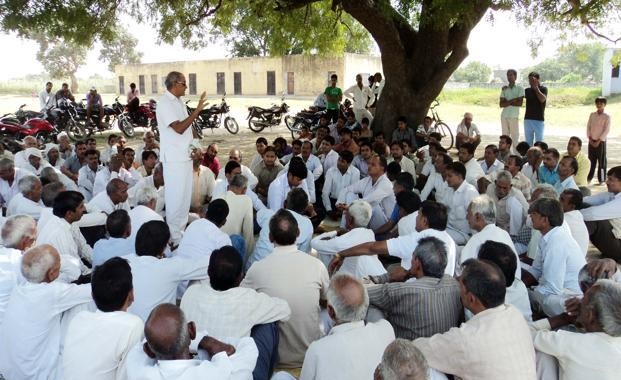
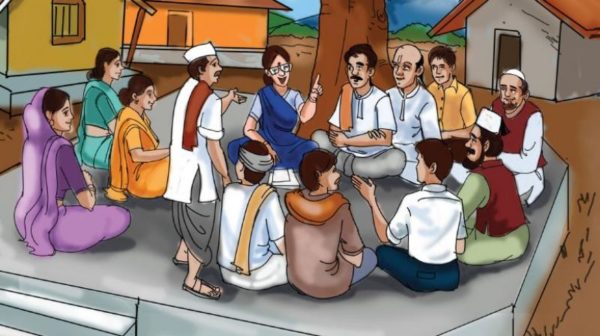
What are Gram Nyayalayas?

Gram Nyayalayas are village courts for speedy and easy access to the justice system in the rural areas of India.

When was it established?

The Gram Nyayalayas were established following the recommendation of 114th report of the Law Commission of India for providing speedy, substantial and inexpensive justice to the common man. Hence Gram Nyayalayas Act, 2008 was passed by the Parliament of India.

Structure of Gram Nyayalayas

Each Gram Nyayalaya is a court of Judicial Magistrate of the first class.

Its Nyayadhikari (presiding officer) is appointed by the State Government in consultation with the High Court.

The Gram Nyayalaya shall be established for every Panchayat at the intermediate level or a group of contiguous Panchayats at the intermediate level in a district.

The seat of the Gram Nyayalaya will be located at the headquarters of the intermediate Panchayat; they will go to villages, work there and dispose of the cases.

Jurisdiction of Gram Nyayalayas

Gram Nyayalayas have jurisdiction over an area specified by a notification by the State Government in consultation with the respective High Court.

Nyayadhikari can hold mobile courts and conduct proceedings in villages.

Gram Nyayalayas have both civil and criminal jurisdiction over the offences.

  • They can try criminal offences specified in the First Schedule and civil suits specified in Second Schedule to the Act.
  • The Central as well as the State Governments have been given the power to amend the First Schedule and the Second Schedule of the Act.
  • The pecuniary jurisdiction of the Nyayalayas is fixed by the respective High Courts.

High Courts can transfer eligible cases from the District court to the Gram Nyayalayas.

The Court shall try to settle disputes via conciliation between the parties and the court can make use of the conciliators to be appointed for this purpose.

Why are Gram Nyayalayas important?

  • Lack of infrastructure like buildings, office spaces and related equipment
  • Lack of man-power resources, notaries, stamp vendors etc. at sub-district level
  • Inadequate Central assistance
  • Lack of awareness among lawyers, police officials
  • Non-cooperation of enforcement agencies
  • The reluctance of state functionaries to invoke the jurisdiction of Gram Nyayalayas
  • Setting up of legal services institutions at Taluk level reducing the dependency on Gram Nyayalayas

What are the critisims associated with the Gram Nyayalayas?

  • The number of disputes settled by Gram Nyayalayas are negligible and most are referred to District forums by appeal. Hence, they are not effective in reducing the burden of District Courts.
  • Absence of a regular cadre of Gram Nyayadhikari
  • Ambiguities regarding jurisdiction due to the parallel existence of alternate dispute mechanisms, tribunals, adalats etc.
  • Some Gram Nyayalayas are located at cities and towns which doesn’t provide any utility to villagers.
  • Inadequate awareness amongst various stakeholders

Some suggestions by experts to improve the functioning of Gram nyayalayas

  • Establishing a regular cadre of Gram Nyayadhikaris
  • Conducting procedures in local language and with simpler procedures
  • Creating awareness amongst stakeholders via seminars, press releases etc.
  • Establishing permanent Gram Nyayalayas at the intermediate level in a suitable location proving easy access to the common people
  • Clearly specifying the jurisdiction of Gram Nyayalayas and re-defining it to remove any ambiguities
  • Providing building, staff etc. for Gram Nyayalayas and provisioning them in the state budget

Conclusion

The Preamble to the Gram Nyayalayas Act envisions access to justice to the citizens at their doorstep and to ensure that opportunities for securing justice are not denied to any citizen.

Despite the many challenges and shortcomings of the existing framework of the Village Courts in India, they have a positive role in providing access to justice to the poor and reaching out to marginalized sections of the society.

It has the potential to reduce the pendency of cases at higher levels. However, to achieve the stated objectives, some efforts must be made to revamp the organizational and jurisdictional aspects of Gram Nyayalayas.

What are Gram Nyayalayas?

Gram Nyayalayas are village courts for speedy and easy access to the justice system in the rural areas of India.

When was it established?

The Gram Nyayalayas were established following the recommendation of 114th report of the Law Commission of India for providing speedy, substantial and inexpensive justice to the common man. Hence Gram Nyayalayas Act, 2008 was passed by the Parliament of India.

Structure of Gram Nyayalayas

Each Gram Nyayalaya is a court of Judicial Magistrate of the first class.

Its Nyayadhikari (presiding officer) is appointed by the State Government in consultation with the High Court.

The Gram Nyayalaya shall be established for every Panchayat at the intermediate level or a group of contiguous Panchayats at the intermediate level in a district.

The seat of the Gram Nyayalaya will be located at the headquarters of the intermediate Panchayat; they will go to villages, work there and dispose of the cases.

Jurisdiction of Gram Nyayalayas

Gram Nyayalayas have jurisdiction over an area specified by a notification by the State Government in consultation with the respective High Court.

Nyayadhikari can hold mobile courts and conduct proceedings in villages.

Gram Nyayalayas have both civil and criminal jurisdiction over the offences.

  • They can try criminal offences specified in the First Schedule and civil suits specified in Second Schedule to the Act.
  • The Central as well as the State Governments have been given the power to amend the First Schedule and the Second Schedule of the Act.
  • The pecuniary jurisdiction of the Nyayalayas is fixed by the respective High Courts.

High Courts can transfer eligible cases from the District court to the Gram Nyayalayas.

The Court shall try to settle disputes via conciliation between the parties and the court can make use of the conciliators to be appointed for this purpose.

Why are Gram Nyayalayas important?

  • Lack of infrastructure like buildings, office spaces and related equipment
  • Lack of man-power resources, notaries, stamp vendors etc. at sub-district level
  • Inadequate Central assistance
  • Lack of awareness among lawyers, police officials
  • Non-cooperation of enforcement agencies
  • The reluctance of state functionaries to invoke the jurisdiction of Gram Nyayalayas
  • Setting up of legal services institutions at Taluk level reducing the dependency on Gram Nyayalayas

What are the critisims associated with the Gram Nyayalayas?

  • The number of disputes settled by Gram Nyayalayas are negligible and most are referred to District forums by appeal. Hence, they are not effective in reducing the burden of District Courts.
  • Absence of a regular cadre of Gram Nyayadhikari
  • Ambiguities regarding jurisdiction due to the parallel existence of alternate dispute mechanisms, tribunals, adalats etc.
  • Some Gram Nyayalayas are located at cities and towns which doesn’t provide any utility to villagers.
  • Inadequate awareness amongst various stakeholders

Some suggestions by experts to improve the functioning of Gram nyayalayas

  • Establishing a regular cadre of Gram Nyayadhikaris
  • Conducting procedures in local language and with simpler procedures
  • Creating awareness amongst stakeholders via seminars, press releases etc.
  • Establishing permanent Gram Nyayalayas at the intermediate level in a suitable location proving easy access to the common people
  • Clearly specifying the jurisdiction of Gram Nyayalayas and re-defining it to remove any ambiguities
  • Providing building, staff etc. for Gram Nyayalayas and provisioning them in the state budget

Conclusion

The Preamble to the Gram Nyayalayas Act envisions access to justice to the citizens at their doorstep and to ensure that opportunities for securing justice are not denied to any citizen.

Despite the many challenges and shortcomings of the existing framework of the Village Courts in India, they have a positive role in providing access to justice to the poor and reaching out to marginalized sections of the society.

It has the potential to reduce the pendency of cases at higher levels. However, to achieve the stated objectives, some efforts must be made to revamp the organizational and jurisdictional aspects of Gram Nyayalayas.

Assam-Mizoram border dispute

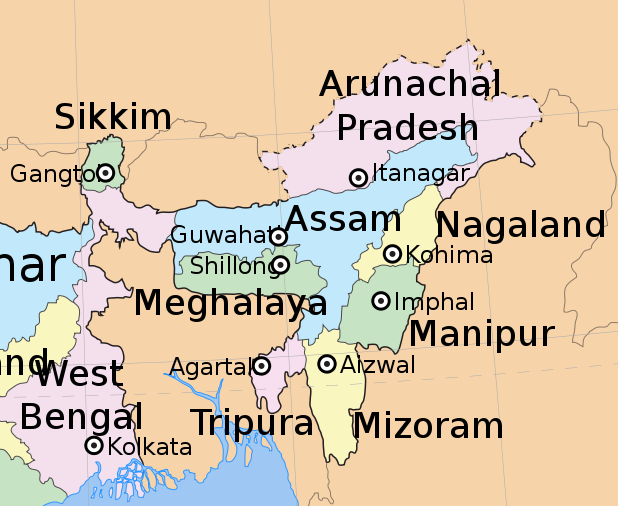
On July 11, 2021, two grenade explosions occurred in Cachar district in Assam near Mizoram border, targeting construction workers. This attack was followed by counter attack from the people of Assam. The main reason appears to be the infamous, unrelenting Assam-Mizoram border dispute.

Image source: https://commons.wikimedia.org/wiki/File:Northeast_india_map.png#filelinks

The Assam-Mizoram border dispute, one of the many state border disputes in India, dates back to the colonial era when several state boundaries were demarcated to suit the British administrative needs. The states of Assam, Meghalaya, Nagaland, Mizoram and Arunachal Pradesh were earlier collectively known as the ‘Greater Assam’. The regional and cultural diversity in this large state was the cause of internal conflict in the state. Also keeping in mind the 1962 border dispute with China, the division of state was essential for national integrity as well as internal peace.

So, the state of Assam was disintegrated to form Arunachal Pradesh(union territory in 1972 and upgraded to a state in 1987) , Nagaland(1987), Meghalaya(1972) , Mizoram(UT-1972 and state-1987) . However, Britishers passed two notifications- 1. The notification of 1875- Defines the boundary between Lushai Hills(present day Mizoram) and Cachar Hills 2. The notification of 1933- Defines the boundary between Lushai hills and Manipur, And thus, when the state of Mizoram was formed, the conflict between Mizoram and Assam started. The state of Assam and Mizoram share a 164 km (approx.) border between Cachar, Hailkandi and Karimganj districts of Assam and Kolasib, Mamit and Aizwal district of Mizoram. Both sides follow a natural border(those of mountains). While disintegrating Assam, the government did not pay due attention to the Tribal realities and ethnic composition. Hence, there continues to be a considerable population of Mizos and Nagas in the Cachar Hills, making it possible for both Mizoram and Nagaland to claim these territories in Assam. Also, the people of Mizoram follow the 1875 notification(they believe the Mizo community was not consulted before issuing the notification) and those of Assam follow the 1933 notification.

This is a long unresolved dispute and its high time that it be solved. Amidst this raging pandemic and its socio-economic implications and growing international tensions, the central government has already got a lot in its plate and dumping these inter-state disputes upon the central government in such times of crisis in no wise move on anybody’s part. And so, the states must themselves come together for a peace negotiation as early as possible or otherwise accept a third party intervention. Or, the central government should revive the inter-state council or set up a zonal council to effectively address these disputes. With the NDA government in power in all these states as well the center, a political solution seems a relatively lucrative option. With growing concerns of Chinese developments amongst several Asian countries, addressing disputes of states that are bound to face Chinese interference via its BRI near India’s North-east becomes all the more important.

Assam-Mizoram border dispute

On July 11, 2021, two grenade explosions occurred in Cachar district in Assam near Mizoram border, targeting construction workers. This attack was followed by counter attack from the people of Assam. The main reason appears to be the infamous, unrelenting Assam-Mizoram border dispute.

Image source: https://commons.wikimedia.org/wiki/File:Northeast_india_map.png#filelinks

The Assam-Mizoram border dispute, one of the many state border disputes in India, dates back to the colonial era when several state boundaries were demarcated to suit the British administrative needs. The states of Assam, Meghalaya, Nagaland, Mizoram and Arunachal Pradesh were earlier collectively known as the ‘Greater Assam’. The regional and cultural diversity in this large state was the cause of internal conflict in the state. Also keeping in mind the 1962 border dispute with China, the division of state was essential for national integrity as well as internal peace.

So, the state of Assam was disintegrated to form Arunachal Pradesh(union territory in 1972 and upgraded to a state in 1987) , Nagaland(1987), Meghalaya(1972) , Mizoram(UT-1972 and state-1987) . However, Britishers passed two notifications- 1. The notification of 1875- Defines the boundary between Lushai Hills(present day Mizoram) and Cachar Hills 2. The notification of 1933- Defines the boundary between Lushai hills and Manipur, And thus, when the state of Mizoram was formed, the conflict between Mizoram and Assam started. The state of Assam and Mizoram share a 164 km (approx.) border between Cachar, Hailkandi and Karimganj districts of Assam and Kolasib, Mamit and Aizwal district of Mizoram. Both sides follow a natural border(those of mountains). While disintegrating Assam, the government did not pay due attention to the Tribal realities and ethnic composition. Hence, there continues to be a considerable population of Mizos and Nagas in the Cachar Hills, making it possible for both Mizoram and Nagaland to claim these territories in Assam. Also, the people of Mizoram follow the 1875 notification(they believe the Mizo community was not consulted before issuing the notification) and those of Assam follow the 1933 notification.

This is a long unresolved dispute and its high time that it be solved. Amidst this raging pandemic and its socio-economic implications and growing international tensions, the central government has already got a lot in its plate and dumping these inter-state disputes upon the central government in such times of crisis in no wise move on anybody’s part. And so, the states must themselves come together for a peace negotiation as early as possible or otherwise accept a third party intervention. Or, the central government should revive the inter-state council or set up a zonal council to effectively address these disputes. With the NDA government in power in all these states as well the center, a political solution seems a relatively lucrative option. With growing concerns of Chinese developments amongst several Asian countries, addressing disputes of states that are bound to face Chinese interference via its BRI near India’s North-east becomes all the more important.

DEFORESTATION – A REAL DANGER TO ENVIRONMENT

Deforestation

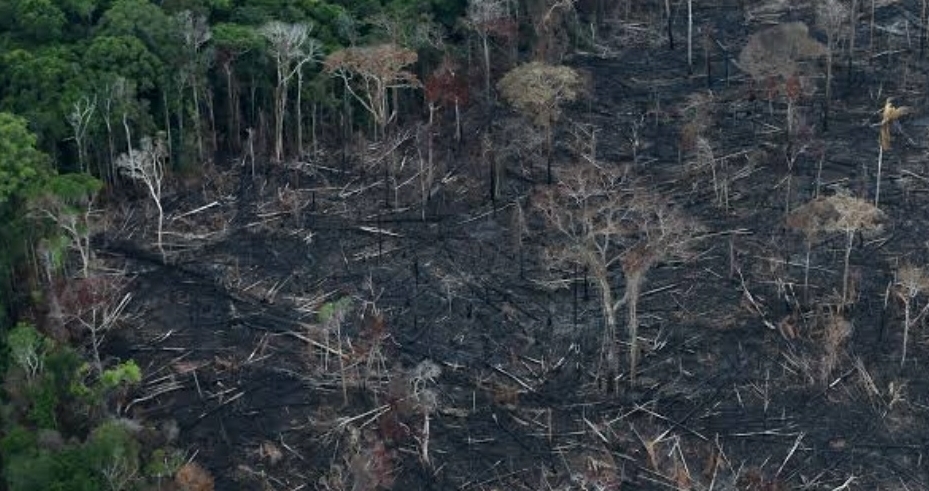
Deforestation is the permanent removal of trees to make room for something besides forest. This can include clearing the land for agriculture or grazing, or using the timber for fuel, construction or manufacturing. 

Deforestation occurs for a number of reasons, including farming, with 80% of deforestation resulting from extensive cattle ranching and logging for materials and development. It has been happening for thousands of years, arguably since man began converting from hunter/gatherer to agricultural based societies, and required larger, unobstructed tracks of land to accommodate cattle, crops, and housing. It was only after the onset of the modern era that it became an epidemic.

Increased Greenhouse Gases

In addition to the loss of habitat, the lack of trees also allows a greater amount of greenhouse gases to be released into the atmosphere. Healthy forests absorb carbon dioxide from the atmosphere, acting as valuable carbon sinks. Deforested areas lose that ability and release more carbon.

Soil Erosion and Flooding

Further effects of deforestation include soil erosion and coastal flooding. Trees help the land to retain water and topsoil, which provides the rich nutrients to sustain additional forest life.

Without forests, the soil erodes and washes away, causing farmers to move on and perpetuate the cycle. The barren land which is left behind in the wake of these unsustainable agricultural practices is then more susceptible to flooding, specifically in coastal regions.

Here are some basic facts about deforestation. These facts are explored in greater depth below.

  • Forests are cut down to clear land for agriculture, livestock grazing, and settlement; for timber; to produce charcoal; and to establish tree plantations.
  • Deforestation occurs across all forest types, but is concentrated in the tropics and boreal regions. Temperate regions are experiencing a net increase in forest cover due to natural regeneration.
  • While deforestation produces food, fiber, and fuel, it can also pose risks to climate, biodiversity, and food security by degrading the ecosystem services normally afforded by healthy and productive forests
  • Scientists estimate that 80% of the planet’s terrestrial species live in forests. Deforestation is therefore one of the biggest extinction risks to many species.

Types of deforestation

The “causes of deforestation” section above focuses on direct drivers of deforestation, but indirect drivers are also important to consider. For example, logging is a major indirect driver of deforestation in the tropics. Logging in tropical rainforests is typically selective, meaning only a few trees are harvested per hectare. But successive logging cycles degrade the perceived economic value of the forest, increasing pressure to convert the forest for intensive use, like agricultural or an industrial plantation (e.g. oil palm, wood pulp, or timber are the most common tropical tree plantations). Logging also usually involves road construction, which facilitates access to remote areas, greatly boosting the likelihood that an area of forest will eventually be cleared or burned.

Drivers of deforestation can be even farther removed however. For example, corruption, governance, and land rights can all be important factors in whether a forest gets destroyed. Corruption can enable companies to circumvent environmental regulations, while poor governance can allow illegal actors to clear forests with impunity since there isn’t any law enforcement. Insecure land rights can spur a free-for-all where forests get cleared because no one has clear stake to maintain them for the public good. Research has shown that forests are more likely to be maintained in indigenous communities that have secure land titles.

DEFORESTATION – A REAL DANGER TO ENVIRONMENT

Deforestation

Deforestation is the permanent removal of trees to make room for something besides forest. This can include clearing the land for agriculture or grazing, or using the timber for fuel, construction or manufacturing. 

Deforestation occurs for a number of reasons, including farming, with 80% of deforestation resulting from extensive cattle ranching and logging for materials and development. It has been happening for thousands of years, arguably since man began converting from hunter/gatherer to agricultural based societies, and required larger, unobstructed tracks of land to accommodate cattle, crops, and housing. It was only after the onset of the modern era that it became an epidemic.

Increased Greenhouse Gases

In addition to the loss of habitat, the lack of trees also allows a greater amount of greenhouse gases to be released into the atmosphere. Healthy forests absorb carbon dioxide from the atmosphere, acting as valuable carbon sinks. Deforested areas lose that ability and release more carbon.

Soil Erosion and Flooding

Further effects of deforestation include soil erosion and coastal flooding. Trees help the land to retain water and topsoil, which provides the rich nutrients to sustain additional forest life.

Without forests, the soil erodes and washes away, causing farmers to move on and perpetuate the cycle. The barren land which is left behind in the wake of these unsustainable agricultural practices is then more susceptible to flooding, specifically in coastal regions.

Here are some basic facts about deforestation. These facts are explored in greater depth below.

  • Forests are cut down to clear land for agriculture, livestock grazing, and settlement; for timber; to produce charcoal; and to establish tree plantations.
  • Deforestation occurs across all forest types, but is concentrated in the tropics and boreal regions. Temperate regions are experiencing a net increase in forest cover due to natural regeneration.
  • While deforestation produces food, fiber, and fuel, it can also pose risks to climate, biodiversity, and food security by degrading the ecosystem services normally afforded by healthy and productive forests
  • Scientists estimate that 80% of the planet’s terrestrial species live in forests. Deforestation is therefore one of the biggest extinction risks to many species.

Types of deforestation

The “causes of deforestation” section above focuses on direct drivers of deforestation, but indirect drivers are also important to consider. For example, logging is a major indirect driver of deforestation in the tropics. Logging in tropical rainforests is typically selective, meaning only a few trees are harvested per hectare. But successive logging cycles degrade the perceived economic value of the forest, increasing pressure to convert the forest for intensive use, like agricultural or an industrial plantation (e.g. oil palm, wood pulp, or timber are the most common tropical tree plantations). Logging also usually involves road construction, which facilitates access to remote areas, greatly boosting the likelihood that an area of forest will eventually be cleared or burned.

Drivers of deforestation can be even farther removed however. For example, corruption, governance, and land rights can all be important factors in whether a forest gets destroyed. Corruption can enable companies to circumvent environmental regulations, while poor governance can allow illegal actors to clear forests with impunity since there isn’t any law enforcement. Insecure land rights can spur a free-for-all where forests get cleared because no one has clear stake to maintain them for the public good. Research has shown that forests are more likely to be maintained in indigenous communities that have secure land titles.

Medical waste

Medical waste is any waste that is generated as a by-product of healthcare work at doctor’s surgeries, dentists, hospitals and laboratories. It includes any material that could come into contact with the body during diagnosis, research, drug administration or any type of treatment.

Medical waste is primarily regulated by state environmental and health departments. EPA has not had authority, specifically for medical waste, since the Medical Waste Tracking Act (MWTA) of 1988 expired in 1991. It is important to contact your state environmental program first when disposing of medical waste. Contact your state environmental protection agency and your state health agency for more information regarding your state’s regulations on medical waste.

Other federal agencies have regulations regarding medical waste. These agencies include Centers for Disease Control (CDC), Occupational Safety and Health Administration (OSHA), U.S. Food and Drug Administration (FDA), and potentially others.

There are generally 4 different kinds of medical waste: infectious, hazardous, radioactive, and general.

The harmful chemicals from biomedical waste may pollute air, water, and land that in turn may cause health problems to the residents. Medical waste is considered as a source of contamination of land and water sources if not rendered harmless before it is buried in land or disposed in water. Health-care waste contains potentially harmful microorganisms, which can infect hospital patients, health workers, and the general public. Health-care waste in some circumstances is incinerated, and dioxins, furans, and other toxic air pollutants may be produced as emissions.

Air pollution, climate change, soil and water contamination.Poor waste management contributes to climate change and air pollution, and directly affects many ecosystems and species. Landfills, considered the last resort in the waste hierarchy, release methane, a very powerful greenhouse gas linked to climate change.

Medical waste

Medical waste is any waste that is generated as a by-product of healthcare work at doctor’s surgeries, dentists, hospitals and laboratories. It includes any material that could come into contact with the body during diagnosis, research, drug administration or any type of treatment.

Medical waste is primarily regulated by state environmental and health departments. EPA has not had authority, specifically for medical waste, since the Medical Waste Tracking Act (MWTA) of 1988 expired in 1991. It is important to contact your state environmental program first when disposing of medical waste. Contact your state environmental protection agency and your state health agency for more information regarding your state’s regulations on medical waste.

Other federal agencies have regulations regarding medical waste. These agencies include Centers for Disease Control (CDC), Occupational Safety and Health Administration (OSHA), U.S. Food and Drug Administration (FDA), and potentially others.

There are generally 4 different kinds of medical waste: infectious, hazardous, radioactive, and general.

The harmful chemicals from biomedical waste may pollute air, water, and land that in turn may cause health problems to the residents. Medical waste is considered as a source of contamination of land and water sources if not rendered harmless before it is buried in land or disposed in water. Health-care waste contains potentially harmful microorganisms, which can infect hospital patients, health workers, and the general public. Health-care waste in some circumstances is incinerated, and dioxins, furans, and other toxic air pollutants may be produced as emissions.

Air pollution, climate change, soil and water contamination.Poor waste management contributes to climate change and air pollution, and directly affects many ecosystems and species. Landfills, considered the last resort in the waste hierarchy, release methane, a very powerful greenhouse gas linked to climate change.

Waste is a Terrible Thing To Mind-Recycle

Waste management, like all environmental endeavors, involves stressors and receptors. Waste management is a conduit at the cross roads of inputs from producers, users and outputs to environmental compartments, with the overall goal to clear the residues and reutilize cleared materials and natural resources.

Importance of waste management:

Waste management reduces the effect of waste on the environment, health, and so on. It can also help reuse resources, such as; paper, cans, glass, and so on. There is Various type of waste management that include the disposal of solid, liquid, gaseous, or hazardous substances.

Waste management are all the processes invoved with managing waste-both solid and liquid-from its inception to its final disposal. The problem of efficiently managing waste is a global one which means it is up to every individual to discuss the need for efficiency In a bid to raise awareness on its effect on earth’s ecosystem. To simplify the tasks of handling a project on waste management, 20 environment projects will be outlined below which you can chose from if any difficulties arise in coming up with your own.

WASTE MANAGEMENT

* Waste cause pollution on land water and air. Proper management of waste is important to reduce pollution.

* Waste are of three types, solid waste, liquid wastes and gaseous wastes. These three types of wastes should be managed separately and carefully so that it does not harm our environment.

* The amount of wastes increase due to the high population. More the people, more waste.

* Waste management refers to the activities connected with the collection and disposal of wastes. Waste management comprises the following activities:

– Waste collection

– Waste transportation

– Waste segregation

– Waste recycling

– Waste disposal

– Waste minimisation and control

GREAT DEPRESSION

The Great Depression was the worst economic downturn in the history of the industrialized world. Lasting from 1929 to 1939. It began after the stock market crash of October 1929, which sent Wall Street into a panic and wiped out millions of investors. Over the next several years consumer spending and investment dropped. Causing steep declines in industrial output and employment as failing companies laid off workers. By 1933, when the Great Depression reached its lowest point some 15 million Americans were unemployed and nearly half the country’s banks had failed.

Throughout the 1920s the U.S economy expanded rapidly and the nation’s total wealth more than doubled between 1920 and 1929 a period dubbed “the Roaring Twenties. The stock market centered at the New York Stock Exchange on Wall Street in New York City, was the scene of reckless speculation, where everyone from millionaire tycoons to cooks and janitors poured their savings into stocks. As a result, the stock market underwent rapid expansion, reaching its peak in August 1929.

By then production had already declined and unemployment had risen leaving stock prices much higher than their actual value. Additionally, wages at that time were low, consumer debt was proliferating the agricultural sector of the economy was struggling due to drought and falling food prices and banks had an excess of large loans that could not be liquidated. The American economy entered a mild recession during the summer of 1929 as consumer spending slowed and unsold goods began to pile up which in turn slowed factory production. Nonetheless, stock prices continued to rise and by the fall of that year had reached stratospheric levels that could not be justified by expected future earnings.

Stock market crash of 1929

On October 24, 1929 as nervous investors began selling overpriced shares mass the stock market crash that some had feared happened at last. a record 12.9 million shares were traded that day known as “Black Thursday”. Five days later on October 29 or Black Tuesday some 16 million shares were traded after another wave of panic swept Wall strret. Millions of shares ended up worthless and those investors who had bought stocks “on margin” were wiped out completely. As consumer confidence vanished in the wake of the stock market crash the downturn in spending and investment led factories and other businesses to slow down production and begin firing their workers. For those who were lucky enough to remain employed wages fell and buying power decreased. Many Americans forced to buy on credit fell into debt and the number of foreclosures and repossessions climbed steadily. The global adherence to the gold standard which joined countries around the world in a fixed currency exchange, helped spread economic woes from the United States throughout the world especially Europe.

Great Depression end

The Great Depression was a worldwide economic depression that lasted 0 years. GDP during the Great Depression fell by half, limited economic movement. A combination of the New Deal and World War II lifted the U.S out of the Depression. Those war jobs seemingly took care of the 17 million unemployed in 1939. Most historians have therefore cited the massive spending during wartime as the event that ended the Great Depression.

GREAT DEPRESSION

The Great Depression was the worst economic downturn in the history of the industrialized world. Lasting from 1929 to 1939. It began after the stock market crash of October 1929, which sent Wall Street into a panic and wiped out millions of investors. Over the next several years consumer spending and investment dropped. Causing steep declines in industrial output and employment as failing companies laid off workers. By 1933, when the Great Depression reached its lowest point some 15 million Americans were unemployed and nearly half the country’s banks had failed.

Throughout the 1920s the U.S economy expanded rapidly and the nation’s total wealth more than doubled between 1920 and 1929 a period dubbed “the Roaring Twenties. The stock market centered at the New York Stock Exchange on Wall Street in New York City, was the scene of reckless speculation, where everyone from millionaire tycoons to cooks and janitors poured their savings into stocks. As a result, the stock market underwent rapid expansion, reaching its peak in August 1929.

By then production had already declined and unemployment had risen leaving stock prices much higher than their actual value. Additionally, wages at that time were low, consumer debt was proliferating the agricultural sector of the economy was struggling due to drought and falling food prices and banks had an excess of large loans that could not be liquidated. The American economy entered a mild recession during the summer of 1929 as consumer spending slowed and unsold goods began to pile up which in turn slowed factory production. Nonetheless, stock prices continued to rise and by the fall of that year had reached stratospheric levels that could not be justified by expected future earnings.

Stock market crash of 1929

On October 24, 1929 as nervous investors began selling overpriced shares mass the stock market crash that some had feared happened at last. a record 12.9 million shares were traded that day known as “Black Thursday”. Five days later on October 29 or Black Tuesday some 16 million shares were traded after another wave of panic swept Wall strret. Millions of shares ended up worthless and those investors who had bought stocks “on margin” were wiped out completely. As consumer confidence vanished in the wake of the stock market crash the downturn in spending and investment led factories and other businesses to slow down production and begin firing their workers. For those who were lucky enough to remain employed wages fell and buying power decreased. Many Americans forced to buy on credit fell into debt and the number of foreclosures and repossessions climbed steadily. The global adherence to the gold standard which joined countries around the world in a fixed currency exchange, helped spread economic woes from the United States throughout the world especially Europe.

Great Depression end

The Great Depression was a worldwide economic depression that lasted 0 years. GDP during the Great Depression fell by half, limited economic movement. A combination of the New Deal and World War II lifted the U.S out of the Depression. Those war jobs seemingly took care of the 17 million unemployed in 1939. Most historians have therefore cited the massive spending during wartime as the event that ended the Great Depression.