

by Kamala Das
“All round me are words, and words and words,
They grow on me like leaves, they never
Seem to stop their slow growing
From within… But I tell my self, words
Are a nuisance, beware of them, they
Can be so many things, a
Chasm where running feet must pause, to
Look, a sea with paralyzing waves,
A blast of burning air or,
A knife most willing to cut your best
Friend’s throat… Words are a nuisance, but.
They grow on me like leaves on a tree,
They never seem to stop their coming,
From a silence, somewhere deep within…”
― Kamala Suraiyya Das, Summer in Calcutta
ABOUT THE POET
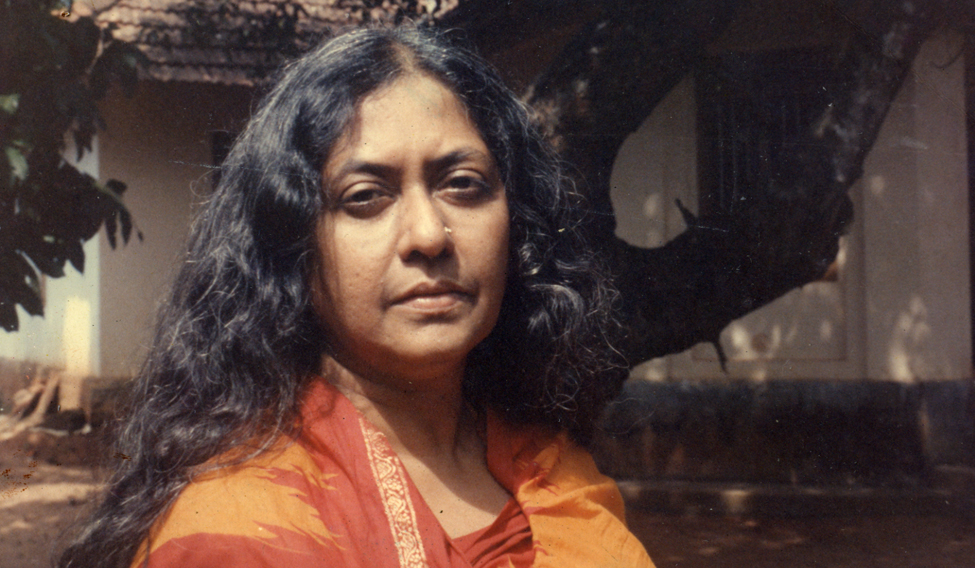
Kamala Das was born in the year 1934 in Malabar, Kerala. She received her education at home. Her mother wrote poetry in Malayalam and Kamala Das also published short stories in Malayalam before her first book of poems, Summer in Calcutta’ appeared in 1965 and brought her recognition. Her works in English include The Playhouse and Other Poems’ and her autobiography ‘My Story’.
Her poetry is frank and open. It impresses by being totally natural and distinctively feminine. Her favourite theme is fulfilment and unfulfillment in love and her expression is striking for its frankness and intensity of feeling. She won the poetry award of the Asian PEN, Manila in 1964 and the Kerala Sahitya Academy Award in 1969.
THE POEM
In this poem Kamala Das recreates idealized moments in her childhood. It is a nostalgic, sentimental reminiscence of her family home in Malabar. She remembers the landscape of Kerala. Others may be annoyed by the heat dust and noise, but she always longs for the hot noon in Malabar because it is associated in her mind with wild men, wild thoughts, wild love.’ It has been often said that her poetry is in the nature of a psychic striptease and she always exudes autobiography. Most of her poems deal with the theme of unfulfilled love, her search for love and her failure to get it. Some of them, like the poem under consideration also deal with the loss of her happy childhood in the family home in Malabar. She writes, from every city I have lived, I have remembered the noons in Malabar with an ache growing inside me, a homesickness.’
The poem is a nostalgic journey down memory lane and the poetess looks back on her pre-marital years when she lived happily in her family home in Malabar. She particularly misses the hot noons of Malabar when the streets of Malabar used to be crowded with interesting people and pleasant sounds, beggars, bangle-sellers, fortune-tellers and other strangers used to throng the streets. She confesses that no doubt her house in Calcutta also gives her a chance to see and hear similar type of people. In the Calcutta streets also can one see a fortune-teller with parrots and soiled cards, beggars and bangle-sellers sell their wares in sing-song voices. But there is a major difference between the noons in Malabar and those in Calcutta.
Everything and everybody in Malabar bore a look that was innocent pure and familiar. All pulsated with a warm and full life her home, the Malabar town and its landscape. Contrasted with it Calcutta appeared strange and dirty. The cries of the beggars, fortune- tellers and bangle-sellers jar harshly to the ears of the poetess. There are jungle voices and their eyes hot burning and wild. The heat of the noon in Calcutta is maddening and strange.
To live in Calcutta is a torture for Kamala Das as her mind and body reject this environment. Her soul yearns to return to her heavenly home in Malabar where she spent a joyous childhood.
Malabar was a place which the poetess associated with love but in Calcutta she finds the people to be freaks, abnormal persons who cannot love. The poetess attempts to show that the transition from childhood is from a world of joy and love into a cold, indifferent world. The childhood memories are a much-needed relief.

 Eduindex
You must be logged in to post a comment.