

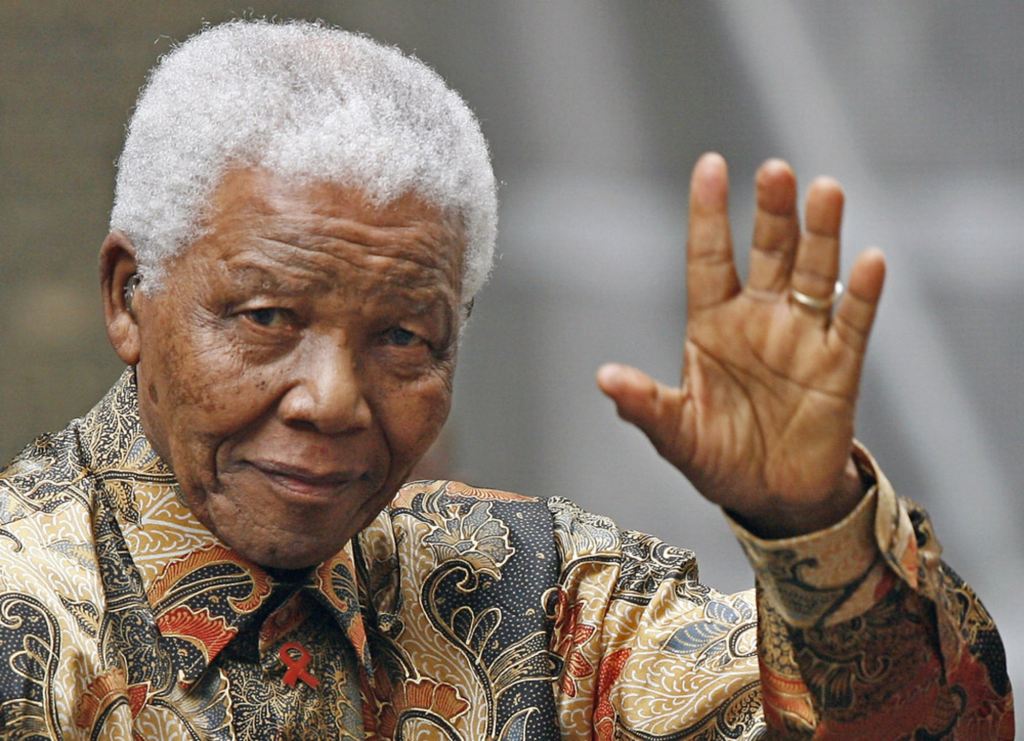
Nelson Mandela, the figurehead of Africa’s Anti-aparthied movement and the first Black President was born on this day, July 18, 1918 into the Thembu royal family in South Africa. He was the first elected Black President who was elected in a fully democratic election. Mandela became involved in protests against the racist policies of South Africa’s government in his 20s, and is known for having spent 27 years in prison for political offenses. He served as the president of the African National Congress (ANC) party from 1991 to 1997. The South Africans who love him refer to him as Tata, father. He was an active member of African National congress. Mandela had always looked for peaceful ways to protest.
However, the Sharpville massacre in March 1960, where 69 Black South Africans were shot and killed by police and hundreds wounded during a peaceful protest; contributed to deteriorating relations with the White minority government. The resistance fighter who for years had denounced violence suddenly saw a need to use arms in the struggle for equality.
Mandel abandoned his peaceful stance and started advocating sabotage against the White Government. He went underground and co-founded Umkhonto we Sizwe (Spear of the Nation), the military wing ofhe ANC. During this time he was known as Black Pimpernal for his ability to evade capture. In 1962, he went to Algeruia to eran the Guirella warfare tactic. On the way of his return he was arrested along with other members at a road block. He was sentenced to life imprisonment for guerrilla war actions against the government. International pressure to free Mandela grew over time and he was released after 27 years of imprisonment. He declared his commitment to peace and reconciliation with the country’s white minority on the day of his release, which turned into a large-scale celebration that included a global media presence. People in the street cheered in support of Tata.
Mandela’s biggest influence on the new South Africa was his personal determination that anger over the crimes of the past, including his 27 years as a political prisoner, should not motivate future laws and actions. Key to this was his 1995 establishment of a Truth and Reconciliation Commission that investigated historic human rights violations and gave vent to grievances.
His negotiations with the South African president in the early 90s, F.W. de Klerk helped in cession of aparthied system of racial segregation. Mandela along with Klerk received Nobel Peace Prize for their efforts in 1993.
Mandela’s other key legacy is his extensive charitable work, including the creation of the Nelson Mandela Foundation, the Nelson Mandela Children’s Fund. Starting from 2002, Mandela encouraged AIDS awareness and treatment. 46664 – the HIV-AIDS initiative was named after his prison number.
In 2009, the United Nations declared that July 18, Mandela’s birthday, would be a worldwide day of community service known as Nelson Mandela International Day.

 Eduindex
You must be logged in to post a comment.