

The internet is quite crucial in our everyday lives. We utilise the internet practically every day for almost every task. Before e-commerce, purchase and sale were done physically in marketplaces, but with the introduction of e-commerce in India, our lives have become more comfortable due to a variety of benefits. Online shopping is a subset of ecommerce that is primarily done by users thanks to e-commerce websites in India that allow us to purchase and sell items of our choosing at reasonable prices. E-commerce websites have a wide range of effects on various marketplaces and merchants. In this article, we will explore the various marketplaces and merchants, as well as the effects of ecommerce on them.
INTRODUCTION:-
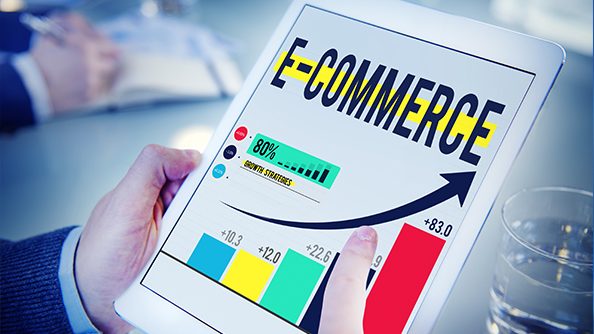
E-commerce is the purchase and sale of products and services through the internet. Earlier e-commerce, buying and selling were done physically in marketplaces, but with the introduction of e-commerce in India, our lives have become more comfortable due to a variety of benefits. The benefits of e-commerce include online purchasing of anything at any time and from any location; buyers may find items on e-commerce websites that are not accessible in physical marketplaces; it saves money and time; and we can obtain our product without leaving our homes. Along with e-commerce, there is also a common word known as e-business, which refers to how businesses have expanded electronically with the assistance of the internet, allowing them to reach a larger number of consumers and so improve their sales. The phrases E-commerce and E-business are used interchangeably and have no precise definition. In reality, E-commerce is a subset of E-business that focuses on external operations, whereas E-business focuses on a company’s internal and external activities. Ecommerce has a variety of positive and negative effects in many sectors. The key to establishing a successful e-commerce is to limit the negative consequences while increasing the advantages.
DIFFERENT MARKETS AND RETAILERS IN INDIA:-
[A] Markets
- Physical Markets:- A physical market is one in which clients come to the market and engage with the vendor face to face before purchasing a product or service in return for money. Shopping malls, department stores, and other physical markets are examples.
- Non-Physical Markets/Virtual Markets:- Non-Physical Market is a market in which clients do not go to the vendor physically and do not engage face-to-face. The customer purchases the merchandise via the internet and exchanges money electronically. These markets include Flipkart, Amazon, and eBay, among others.
- Knowledge Market:- In this market Information and knowledge based products are sold.
- Market for Intermediate Goods:- In these markets, raw materials are offered, while final products are created by combining them.
- Auction Market:- The auction market is one in which items are auctioned to the highest bidder while lower bids are disregarded.
- Black Market:- Unauthorized items like as narcotics, guns, and alcohol are sold at these markets, which are controlled by illegal vendors.
- Financial Market:- This market exchanges liquid assets or money. Financial markets are classified into three types: Stock exchange, where equities are traded; Bond market, in which debt securities in the form of bonds are exchanged; The foreign exchange market, often known as the currency market, is where currencies are exchanged.
[B] Retailer
- Department Store–A department business is a store that combines several small stores under one corporation and offers a large range of items. It offers value for clients by providing a diverse range of items at one location.
- Supermarkets–Supermarkets traditionally sell food and drinks, but owing to client demand, they increasingly now sell fashion and electronic products. It has strong purchasing power, which explains why it sells at low prices.
- Warehouse Retailers–Warehouse retailers are located in areas where the premises rent is relatively inexpensive, allowing them to store, display, and sell a huge number of items.
- Convenience Store–These stores can be found in residential areas. sells a restricted number of items at a premium price because they bring value in the form of convenience
- Discount Retailer–Discount retailers are those that give discounts on less trendy goods by purchasing them from suppliers, reselling them till the end of the line, and then returning the remaining products at the discounted price to the source.
- Specialty Retailers–Specialty retailers provide a unique service or product and give consumers with professional expertise and excellent service. They offer value by selling accessories and related items at the same location.
- E-tailer–E-tailers are vendors who allow clients to buy products via the internet and offer home delivery, allowing them to reach customers in a large geographic region and supply items to them. Because they have little rent and overhead, they can provide reasonable pricing.
IMPACT OF E-COMMERCE ON MARKETS AND RETAILERS:-
Impact on Markets
- Product Promotion-Through Ecommerce, products can be promoted in an interesting way and with lots of information directly to customers, lowering the cost of offline promotion because the internet can interact with a large number of customers and save money on advertisements that can be used in other areas of business.
- Customer Service-Customer service may be improved since customers can look for specific information about a product or marketplace that sells the product and compare pricing from other market places.
- Brand Image– New business owners may develop their brands on the internet by employing beautiful pictures at a low cost.
- Advertisement– Traditionally, advertisements were one-way to attract customers and inform them about a new product or market place; however, with the advent of e-commerce, advertisements are now two-way, allowing customers to browse the market place and products, compare prices, and ask questions to online retailers.
- Customization-Customized items can be made accessible to consumers based on their specific requirements. It will be an excellent site to do business in the market, and new consumers will be drawn in.
- Ordering Process-Traditionally, intermediaries are employed to take orders from consumers, which takes a lot of time and money, but with ecommerce, order taking is so simple that it saves a lot of time and money, and they can generate more sales.
- Customer Value-Traditionally, obtaining a high value from consumers was the primary goal. Consumers were the only ones who were drawn, and they were the most important goal, but now sellers cultivate long-term connections with customers in order to achieve long-term value by providing them with unique discounts.
Impact on Retailers
- Customer Service– Offline businesses provide a variety of services that internet stores do not. Repair and items of services, home delivery, and after sales services, as well as online stores, are examples of such services.
- Window Shopping– Due to the low costs given by internet retailers, people visit physical locations to window shop before purchasing a product online. As a result, they have more prospective consumers than actual customers.
- Advertisement– Offline shops concentrate only on ads in order to attract customers and improve sales. They don’t miss a single opportunity to market.
- Discount– Offline merchants sell their items at reduced prices since online stores provide substantial discounts to customers, and in order to remain competitive and attract customers, they must sell their products at reduced prices.
- Variety of Stocks– Online stores provide a wide range of items that offline merchants cannot compete with since excess stock at the end of the year might result in a significant loss for the retailer.
- Turnover– As a result of e-commerce, the turnover of offline shops has decreased, which is a warning indicator for the business.
- Profit Margin– With the introduction of internet stores into the market, traditional businesses have suffered from price issues. To stay in business, businesses must offer their products at legal rates that cover only their operating expenses, with no profit margin.
CONCLUSION:-
This paper concludes that e-commerce is highly beneficial to us since it offers us with a broad range of items and services, as well as a wealth of information and appealing images, at a cheap price, right at our doorstep. It is convenient for clients and helps businesses to extend their operations over the internet. Ecommerce has a positive impact on markets because it reduces the cost of advertising because many customers can be attracted through the internet, it allows for the development of new brands, it allows for the maintenance of good relationships with customers, and it allows for the creation of customized products based on the needs of the customers. However, e-commerce has a negative influence on offline retailers since people buy at low prices from online shops, forcing them to cut their prices as well, resulting in no profit. Retailers cannot maintain a vast stock like online shops have stores because it would cost them a tremendous loss. To entice customers, they must spend more money on offline marketing. Along with the benefits, e-commerce has some limitations in terms of markets and retailers. These limitations include website cost, which is required to create and maintain a website; infrastructure cost, which is required to fulfil orders online retailers must maintain a large stock in a large warehouse, which is costly; security and fraud, which is due to the popularity of online shops. Criminal elements are also drawn to them, since they may hack personal information and exploit it; consumer trust, it is difficult for customers to trust a new brand without viewing, touching, and face-to-face connection.

 Eduindex
One thought on “E-Commerce and it’s Impacts on Market and Retailers in India…”
Comments are closed.