

The Indian Space Research Organisation is the national space agency of India, headquartered in Bengaluru. It operates under Department of Space (DOS) which is directly overseen by the Prime Minister of India, while Chairman of ISRO acts as executive of DOS as well. ISRO is the primary agency in India to perform tasks related to space based applications, space exploration and development of related technologies. It is one of six government space agencies in the world which possess full launch capabilities, deploy cryogenic engines, launch extraterrestrial missions and operate large fleets of artificial satellites.
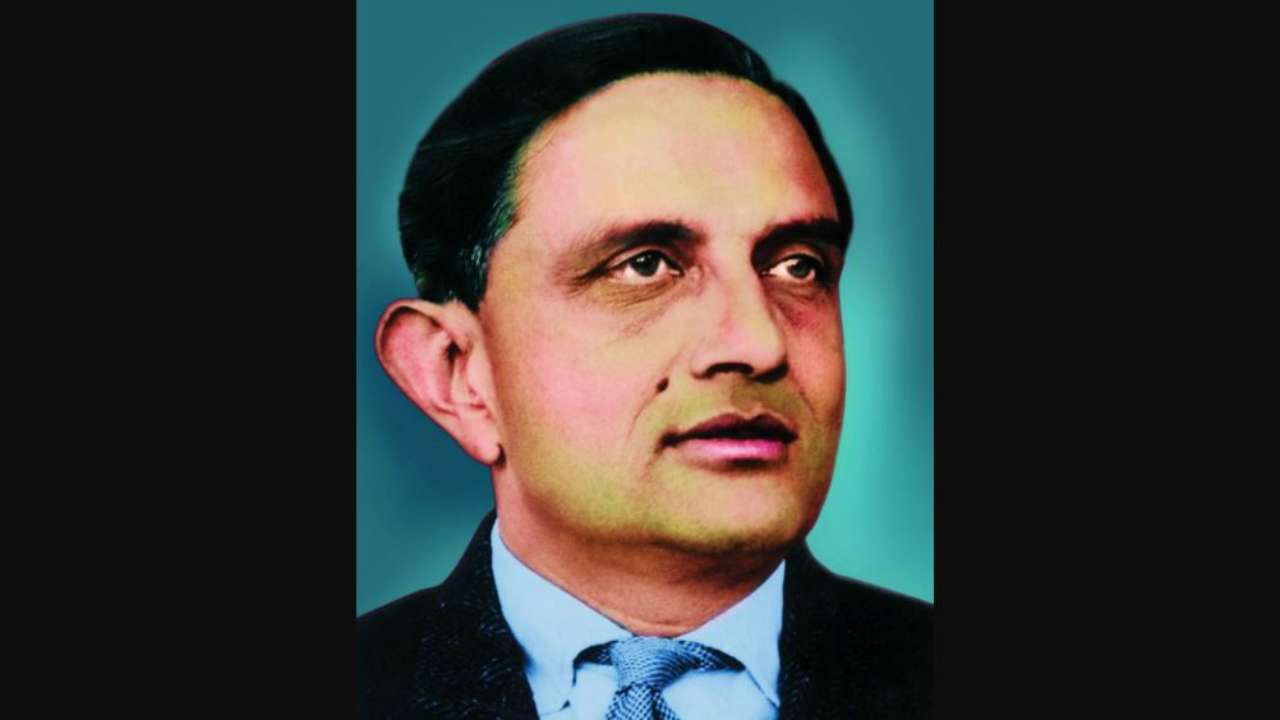
The Indian National Committee for Space Research (INCOSPAR) was established by Jawaharlal Nehru under the Department of Atomic Energy (DAE) in 1962, on the urging of scientist Vikram Sarabhai recognising the need in space research. INCOSPAR grew and became ISRO in 1969, within DAE. In 1972, the Government of India had set up a Space Commission and the Department of Space (DOS), bringing ISRO under the DOS. The establishment of ISRO thus institutionalised space research activities in India. It since then has been managed by the DOS, which governs various other institutions in India in domain of astronomy and space technology.
ISRO built India’s first satellite, Aryabhata, which was launched by the Soviet Union on 19 April 1975. In 1980, ISRO launched satellite RS-1 onboard its own SLV-3 making India the sixth country to be capable of undertaking orbital launches. SLV-3 was followed by ASLV which was subsequently succeeded by development of many medium-lift launch vehicles, rocket engines, satellite systems and networks enabling agency to launch hundreds of domestic and foreign satellites and various deep space missions for space exploration.
ISRO was the world’s first space agency to find water on the moon and insert a probe in orbit of Mars in its maiden attempt. It has the world’s largest constellation of remote-sensing satellites and operates two satellite navigation systems namely GAGAN and NAVIC.
Goals in near future include expanding satellites fleet, landing a rover on Moon, sending humans into space, development of a semi-cryogenic engine, sending more unmanned missions to Moon, Mars, Venus and Sun and deployment of more space telescopes in orbit to observe consmic phenomena and outerspace beyond solar system. Long term plans include development of reusable launchers, heavy and super heavy launch vehicles, deploying a space station, sending exploration missions to external planets like Jupiter, Uranus, Neptune and asteroids and manned missions to Moon and planets.
ISRO’s programs have played a significant role in the socio-economic development of India and have supported both civilian and military domains in various aspects including disaster management, telemedicine and navigation and reconnaissance missions. ISRO’s spin off technologies also have founded many crucial innovations for India’s engineering and medical industries.
FUNCTIONS OF ISRO
- Design, development and realisation and launching of Space Launch Vehicle Systems and Sounding Rockets.
- Design, development and realisation of communication satellites (carrying transponders) for meeting the National Demand towards telecommunications, television broadcasting, security requirements and societal applications.
- Design, development and realisation of satellites and/or space based systems for navigational applications
- Design, development and realisation of Earth Observation Satellites for mapping and monitoring of natural resources, Disastser Management Support and Meteorological services.
- Design, development and realisation of space systems for carrying out research related to space sciences and planetary exploration.
- Implementation of innovative space applications in the domains of natural resources management, disaster management support and several societal applications.
- Undertaking Research and Development activities towards advanced launch vehicles, spacecrafts and ground systems for space missions.
- Operation and maintenance of space assets and critical infrastructural facilities.
- Fostering international co-operation in peaceful uses of outer space including adherence to international charters and treaties.
- Development of Human Resources and capacity building to carry out the space Research Activities.


 Eduindex