

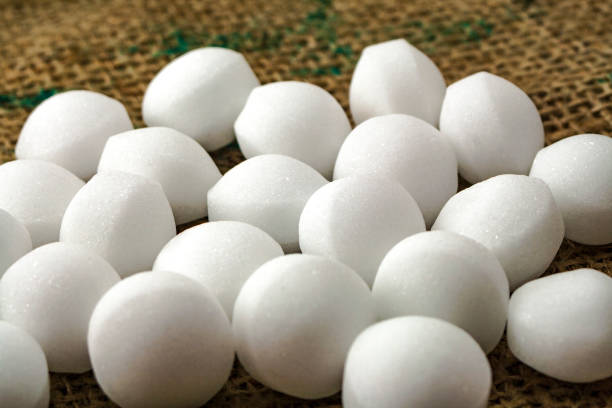
Naphthalene balls have been used for decades as household preservative of clothes and as deodorant tables for toilets, urinals etc. They are manufactured from naphthalene flakes by a tablet making machine having a ball shaped die. The product has wide market and the investment cost is low. The raw material is required for manufacturing Naphthalene Balls are Naphthalene flakes, camphor, phenol etc.
Dictionary meaning:
a white, crystalline, water-insoluble hydrocarbon, C10H8, usually obtained from coal tar: used in making dyes, as a moth repellant, etc.
Mothballs or Naphthalene balls are small balls containing smell of a deodorant and are used for storing clothing and articles susceptible to damage from mold or moth larvae. It is also used as a repellent to keep away mice, snakes, or other pests and for use as a stovepipe cleaner.1 Mothballs have been used by drag racers to enhance the octane rating of fuel, by dissolving the mothballs in some of the fuel and filtering out the remains with a filter paper. Generally mothballs are made from ingredients containing either naphthalene or para-dichloro benzene. Due to health risks of naphthalene and para-dichloro benzene, these chemicals have been prohibited for the use in mothballs. Nowadays, camphor is being used as a substitute for these chemicals.
Proper Use of Mothballs
Mothball labels typically direct users to place mothballs in a tightly closed container that will prevent the pesticide fumes from accumulating in living spaces where people and pets can breathe them in for long periods of time. Inside airtight containers, the vapors released by the mothballs build up and kill the clothes moths.
One common mistake is using mothballs in containers that aren’t airtight, allowing the toxic vapors to escape into the surrounding air. This can lead to long-term exposure, which may cause health problems.
Another common mistake is using mothballs in gardens or other outdoor locations to control insects, snakes or other wildlife. Using mothballs outside can harm children, pets and other animals. Mothballs used outdoors can also contaminate soil, plants and water. The information below contains additional resources for the proper use of mothballs and some alternative methods of controlling clothes moths.
Other places you may find naphthalene being used include:
- Abrasives
- Fuels
- Agricultural chemicals, other than pesticides
- Paint additives
- Adhesives
Health Effects of Mothballs
Mothballs are nearly 100% active ingredient, and the active ingredient may be either naphthalene or paradichlorobenzene. Each active ingredient can cause different health effects if the exposure is high enough. Mothballs slowly turn from solids to toxic vapor. When you smell mothballs, you are inhaling the insecticide. Mothballs can also be dangerous if they are chewed or eaten. Children, pets and wildlife may mistake them for food or candy and eat them. One mothball can cause serious harm if eaten by a small child.
Inhalation of naphthalene may cause skin and eye irritation; gastrointestinal symptoms, such as nausea, vomiting, abdominal cramps, and diarrhea; neurologic symptoms, such as confusion, excitement, and convulsions; renal problems, such as acute renal shutdown; and hematologic features, such as icterus and severe anemia.

 Eduindex
You must be logged in to post a comment.