Ford tbc Fault

Tbc is trailer brake controller that can help make braking with the trailer attached smooth and effective when the tow vehicle brake pressed .It has a manual control lever that sends the independent power to the trailers brake .If manual control is activated while the brakes are also applied ,the greater of the two inputs determines the power sent to trailer. Usually the trailer brakes controller is at the centre but it varies from model and year of manufacture. On the screen you can see the power gain or loss when you’re foot is on the pedal.Braking force applied is directly proportional to the force applied to the braking pedal , depending upon gain settings.

Ford tbc fault is the problem in tbc connection in ford vehicles.There are tbc codes which appear on your dash saying tbc fault that indicates tbc faults.
If you have trailer attached to your vehicle it means you are losing your connection or ground to the trailer and if trailer is not there it means there is some problem with the brakes. So ,check your connections whether they are in good condition or are loosen ,dull or is there any other problem and visit the mechanic to get it done properly.

Importance of NCERT Books

The National Council of Education Research and Training (NCERT) attribute towards developing the valuable content for the CBSE students.
The NCERT books published on the principle of child-centred system .The books inculcating creativity and treat children as participants in learning ,not as receivers of a fixed body of knowledge.The NCERT books enhance this endeavour by giving higher priority and space oppurtunities for contemplation and wondering.

Why to use NCERT books ??
Syllabus designed of the NCERT books tried to address the problem of curriculum burden by reorientating knowledge at different stages.

Especially designed for CBSE students
The NCERT books are especially designed in curriculum with CBSE students .NCERT books are the best choice for CBSE students .
All the answers to the tricky questions asked in CBSE exams could easily be answered by using these NCERT books. There will not be a single question which would be beyond the scope of NCERT books.

Easy to understand language
The best advantage of using NCERT books is that ,its quite easy to understand .The NCERT books are written in very simple and easy to understand language. The NCERT books are very simple to understand.

NCERT books especially adhere to CBSE syllabus
CBSE students should use NCERT books as they are strictly adhere to CBSE syllabus .Each and every single topic of CBSE syllabus is covered in NCERT books.

Important question
NCERT books contains all the important question at the end of the books.The questions are very helpful in scoring handsome marks in the Exams .Even if you touch them at the last minute of examination ,you can score good marks in exams .

CONCLUSION
The NCERT books are very helpful for CBSE students .The CBSE board itself suggest the students to use it .Its quite logistics to use NCERT books for CBSE exams .

Selfitis era!!

Yup, we exist in the technologically advanced Cenozoic era! This beginning of the knowledge age, is widely into the invent of making the human’s role, a passive one for the sake of making everything accessible. Now everybody have their access for smartphones. I hope a child could lecture it’s usage better than me. The term selfie was coined in the year 2013 when smartphones were made with front cameras. But this indeed lead to the formation of the term ‘Selfitis‘. The word just passed about as a spoof, but the word was coined in 2014 by American psychiatric association. Dr. Mark Griffiths, professor of behavioural addiction in Nottingham Trent University had approved it’s existence and had found out the first Selfitis behavioural scale.

Selfitis can simply be defined as the obsessive habit of taking more selfies and is regarded as a kind of mental illness. This disorder is prevalent on amidst the youths and millennials. The pathetic thing is many of us don’t recognise that we have such thing in us. When things exceeds the limits, it becomes dangerous. While the students were interviewed in certain surveys, their reply was that; they tend to take selfies, since they felt that they are beautiful, their urge to expose themself in social media, to seek certain attention, to feel their elevated self-esteem and so on. The six components responsible for taking selfies are listed below: Environmental enhancement: for the people to feel better and express themselves, more often to create some memories. Social competition: As social media serves as the platform to express themselves, people tend to post their pics and there are various hashtags and public pages present to post their pics. Seeking attention: Now a days teens tend to receive admiration of their self to feel their self-esteem. Mood modifier: when young people feel their stress, they tend to take selfies and this just proves to change the mood condition of certain people. Self-confidence: Many filters have been brought to modify the appearance in an artificial manner. The confidence level is increased, which leads to self love towards the condition such as narcissism. Social conformity: By posting one’s pics, they tend to go with the trend and as they accompany more people, it brings them out of their loneliness.

Thus the excessive addiction towards taking selfies had increased in recent times and it is evinced even by surveys. Especially women were found to be obsessed in taking selfies than men. The selfitis behavioural scale is formed with the survey taken from 3,700 Norwegian social media users. The borderline stage is defined as taking atleast 3 to 4 selfies per day, which is considered as a normal behaviour. The Acute stage is considered as the urge to post 2 or 3 pics in social media sites, everyday. The chronic stage is the severe one where people takes countless selfies everyday, without their realization. A survey was jointly conducted by Carnegie Mellon University from Pittsburgh and Indraprastha University from Delhi during the year 2014-2017. They have found that 213 people died while taking selfies and 128 people amidst them are Indians. The Pakistan and America stands in the consecutive places. This disorder affects physically and mentally in a way that it may lead a person towards anxiety, depression, lack of confidence and acceptance of oneself, feeling of fatness, physical attractiveness and lesser body satisfaction. Since the selfie apps are featured with the modification of one’s appearance according to their wish, it could channel one’s mental health in an unhealthy way.

Though there is no approved medications for treating this disorder, it can be cured by asking for advice from wellwishers, practicing relaxation techniques and setting realistic goals to achieve; so that these things can divert a person. Cognitive Behavioral Therapy (CBT) proves to be effective for such OCD; along with medications. Such therapies involve the exposure of the person to the object of obsession and making them to practice the coping skills; in order to avoid the instinct. Thus the obsession or addiction of any habit may lead someone to disaster.

OVER-THINKING (Part-2)

How To Get Your Mind Under Control?

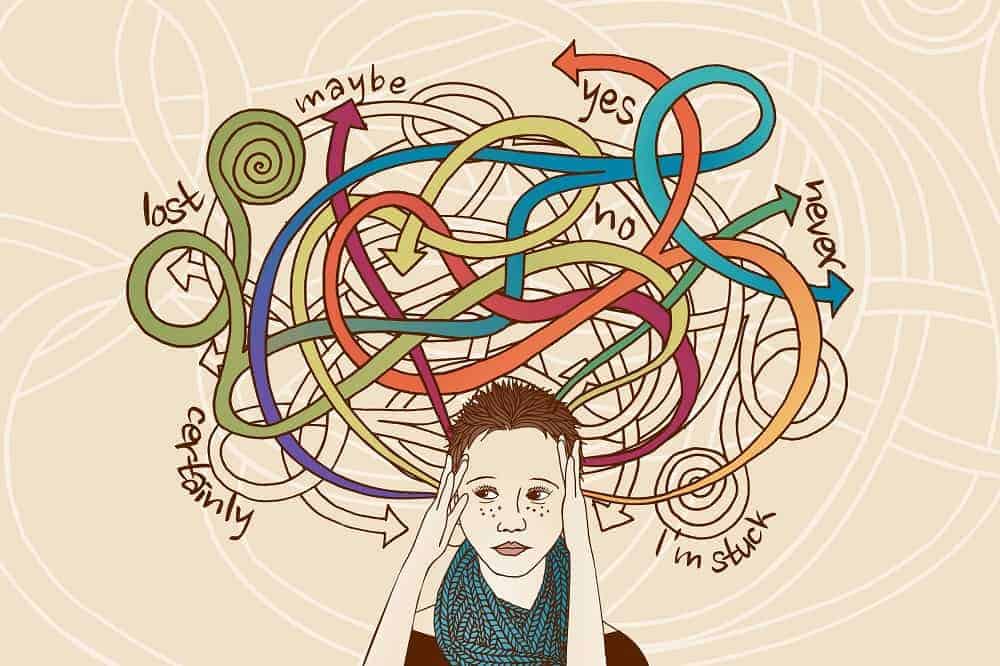
Over-thinking is a state where your mind runs at 100 miles per hour when you have to make a decision. It doesn’t matter how important the decision is, your mind will automatically go into overdrive if you are a textbook over-thinker. This situation can be dangerous for your mental health in the long run. Getting a control over your mind is not an easy task. Over-thinking is exhausting but the mind still does it every time something is to be done, and so letting go of this habit is not something that will happen overnight. It will require a conscious effort on your part.

HOW TO STOP OVERTHINKING?

  1. LET GO OF YOUR PAST: Past memories keep a lot of people up at night thinking about that one embarrassing thing you did years ago that probably no one even remembers. Your mind however forces you to think that everyone does remember that and you go into a spiral at 2 in the morning. You need to get over your past experiences and know that you cannot change them. They re out of your control. You need to let go of all the negative emotions that are holding you back in order to move forward. This will clear up the mental space and help with the over-thinking.
  2. DO NOT OVER-THINK ABOUT YOUR FUTURE: Just like your past, your future events are also out of your control. But this does not stop you from over-analyzing every aspect of it and soon you start to worry about the stuff that hasn’t even happened yet and might not even happen. Live in the present. Stop worrying about the things that have happened and the things that are going to. All of it is out of your control. Every time you start to over-think, just take a deep breath and ask yourself “Can I control it?” and if the answer is ‘no’, just let it go.
  3. DISTRACT YOURSELF: Distraction can prove to be helpful when your mind is running amok. Perform an activity that you can control. For example cook something, go for a walk or do a workout, just keep yourself busy until your mind has made peace with the situation and is in your control.
  4. MEDITATION: Meditation is a proven method to help you calm down. Start with meditating for 10 minutes daily. This might not sound tough but calming your mind for 10 whole minutes is not easy for an over-thinker. All you need to do is find a quiet place, light an incense stick, close your eyes and just take deep breaths. Calm your mind and get a hole of it. As an added advantage, meditating will put you into a good mood too. Keep increasing your time a little bit and you will be very happy with the results.
  5. BE GRATEFUL: Most people over-think about their failures. They constantly emphasize on the fact that if they had done things differently, they would not have failed. What they don’t think about is how far they have come and how most people don’t get to be that lucky. Being grateful not only keeps you grounded but also keeps your mind at ease because you know that things are happening for a reason.
  6. TALK IT OUT: Never underestimate the power of a good talk. Any time your brain plays tricks on you just talk it out with someone who you admire. Talking to someone will take a huge load off your shoulders. The other person might have a different perspective about the dilemma you are facing and they can help you with it.

Somewhere in the subconscious part of our mind there is a voice that warns us when we are about to over-think. But if you have no control over your mind, you will ignore that voice and let the mind run off to drawing its own conclusions. Over-think is a undoubtedly a part of human experience but if that part is not controlled it could adversely affect your mental well being. So, try the above techniques and stop over-analyzing every aspect of everything that happens with you. Don’t let it be the reason for your unhappiness.     

Hormones That Makes Us Happy

Image result for hormones

Our body constitutes innumerous chemicals performing functions that makes us feel happy, sad, nervous. Most of them are released by the Hypothalamus and Pituitary glands. There are 4 major chemicals secreted by our body that makes us feel happy:

Dopamine

Dopamine is a neurotransmitter that helps in the transmission of signals in the brain and other areas. It is released by Hypothalamus and acts on receptors that are specific for it. It acts on sympathetic nervous system leading to increase heart rate and blood pressure. Therefore it is used in medication. It is is associated with pleasurable sensations, along with learning, memory, motor system function, and more.

Endorphin

Endorphins  are endogenous opioid neuropeptides and peptide hormones which are produced and stored in the pituitary gland. It consists of α-endorphin, β-endorphin, and γ-endorphin. Its main function is to compress pain signals. It can act in both the central nervous system  and the peripheral nervous system. It also produces a euphoric state in cases such as sex, listening to music, and eating chocolate. According to a research meditation triggers endorphin secretion.

Serotonin

Serotonin is a complex monoamine neurotransmitter. Approximately 90% of our body’s total serotonin is located in the enterochromaffin cells in the GI tract, where it regulates intestinal movements. About 8% is found in platelets and 1–2% in the CNS. It modulates mood, reward, learning, memory, and various physiological processes such as vomiting and vasoconstriction. Serotonin levels spike when we reflect on past achievements, practice gratitude, and celebrate victories.

Oxytocin

Oxytocin  is a peptide hormone and neuropeptide which is produced in the hypothalamus and released by the posterior pituitary. It functions during social bonding, reproduction, childbirth, and the period after childbirth which includes bonding with the baby and milk production. It can also be considered as an antidiuretic since it lowers the urine secretion. We need oxytocin to form strong bonds in our personal and professional relationships. 

Although these hormones are essential for our body but there are drugs such as heroine, nicotine etc. which alleviates the levels of these chemicals in excess and it may result in harmful repercussions.

Indian vs American Education System

Being literate is not enough today. Being educated is what we require. Standing and living amidst a competent world, the ability to identify, think, and evaluate for oneself is of utmost importance for any human. The foundation for this is built through education. Hence the education system plays a major role in shaping an individual. It’s inevitable to not discuss and compare the different education systems around the world, however, the American and Indian education systems tend to garner huge attention in contrast to others. It’s especially evident from the large number of Indian students’ who flock to America to pursue their further education. In this article, I too am going to elaborate and sketch out the different characteristics of the Indian education and American education system with the help of expenditure, education structure, course structure, teaching focus, and flexibility of subject choices.


The Indian System of education has long been influenced and changed since the British Colonisation. With India’s independence hurling better opportunities, the education system itself has witnessed very few changes in its learning methodology. It is found that an estimated expenditure of around 6.3 lakh crore in the year 2019-20 is spent by the Indian Govt upon the education sector, ranking India at the 35th position on the ‘Worldwide Educating for the Future Index’ in 2019. India’s education system currently follows the 10+2+3 learning system and the grade levels are divided into Pre-Primary, Primary, Secondary, Higher Secondary, and College. The course structure followed by the schools and colleges is highly rigid as it focuses on certain subjects such as Science and Maths more compared to others and provides absolutely no choice to choose subjects until Higher Secondary. The learning methodology used in early education is solely dependent on cramming and memorization techniques with no room for creative aspects to flow. Students are made to focus on academic subjects more than non-academic and extra-curricular activities. Another unique characteristic of Indian Education is that the teachers are often made in charge to handle 40-50 students per class. This ratio may even go up to 100 students per class in rural areas. Furthermore, students are not required to answer any exam to enroll themselves in universities except for a few selected courses like Medical, Engineering, and Architecture (NEET, JEE, NATA). The admission process for universities is usually based on the marks received by the students in their Higher Secondary Board exams.


America on the other hand, also known as the ‘Nation of Dreams’, proves to be very different compared to the Indian education system. The American government spends over $700 billion every year on its education sector making it the topmost nation to invest in education. American Education also varies in its structure as it follows a 10+2+4 system. The level of grades remains the same as Indian Education, however, they possess different terminologies. For instance, Elementary school refers to Pre-Primary and Primary Education, Middle School refers to Secondary Education, High school refers to Higher Secondary Education and Post-secondary refers to College in the Indian Grade Systems respectively. The American Education also offers a highly flexible course structure from the beginning of lower grades where students are free to opt for courses that they like. Math and Science are not the dominant subjects and activities like sports and non-academics are given equal importance as academic courses. The learning methodology focuses on enhancing the child’s creative and critical thinking skills while minimizing the memorization load. For every class the teacher is assigned not more than 30 students, making it easier for the teacher to pay attention to every child in the class. Lastly, for admissions in Universities/Colleges students are required to answer SAT and ACT compulsorily. In addition to all this, both the Public and Private divisions of American schools have better infrastructure and well-equipped technologies compared to the Indian Government schools.

It’s clear that the American Education System is distinctive from the Indian Education System in many ways, yet it’s not the best in the world. Education Systems should not be focused only on flexibility but should also take into account the needs of its citizens and country. The NEP is a step forward in terms of education in India and this is what every country needs to strive towards. As the years go by the education system needn’t stay static but strive to be dynamic to accompany and enhance the educational power in every citizen. In the end, we should never forget that ‘Education’s true purpose is to replace an empty mind with an open one.’

MIRRORS- Spherical and parabolic mirrors

We use mirrors in our daily life for various purposes. Mainly, we use them for beautifying us. The mirror is an optical device with a polished surface that reflects the light falling on it. A typical mirror is a glass sheet coated with aluminum or silver on one of its sides to produce an image. Mirrors have a plane or curved surface. Curved mirrors have surface that are spherical, cylindrical, parabolic and ellipsoid. The shape of a mirror determines the type of image it forms. Plane mirrors form the perfect image of an object. Whereas, curved mirrors produce images that are either enlarged or diminished.


SPHERICAL MIRRORS
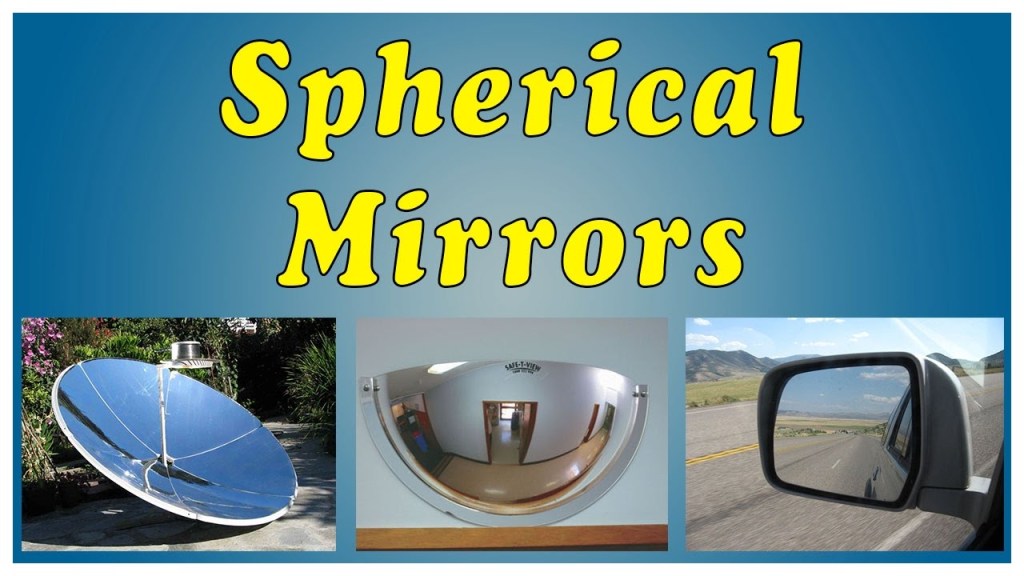
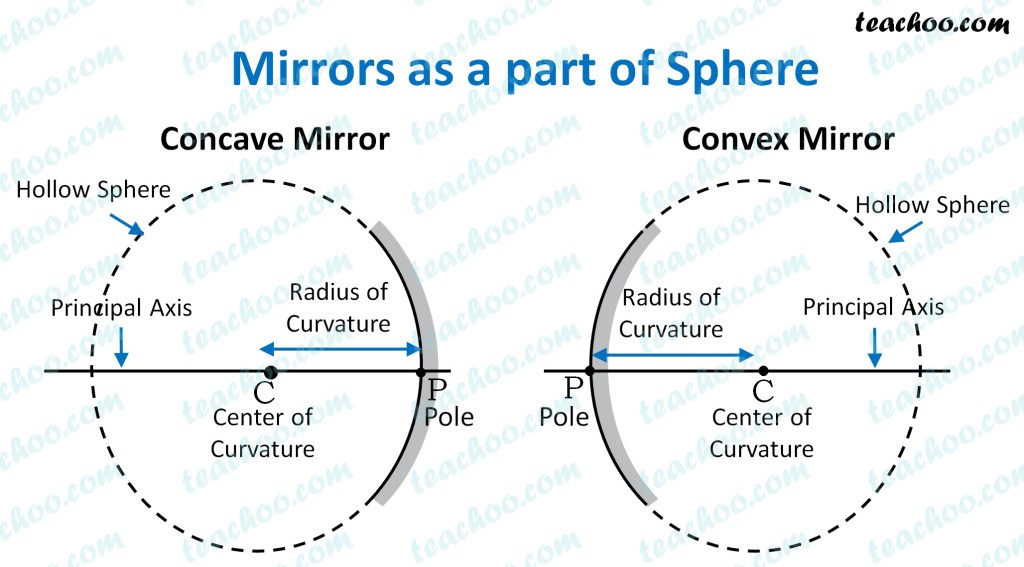
Spherical mirrors are one form of curved mirrors. If the curved mirror is a part of a sphere, then it is called a ‘spherical mirror’.

It resembles the shape of a piece cut out from a spherical surface. One side of this mirror is silvered and the reflection of light occurs at the other side.


CONCAVE MIRROR
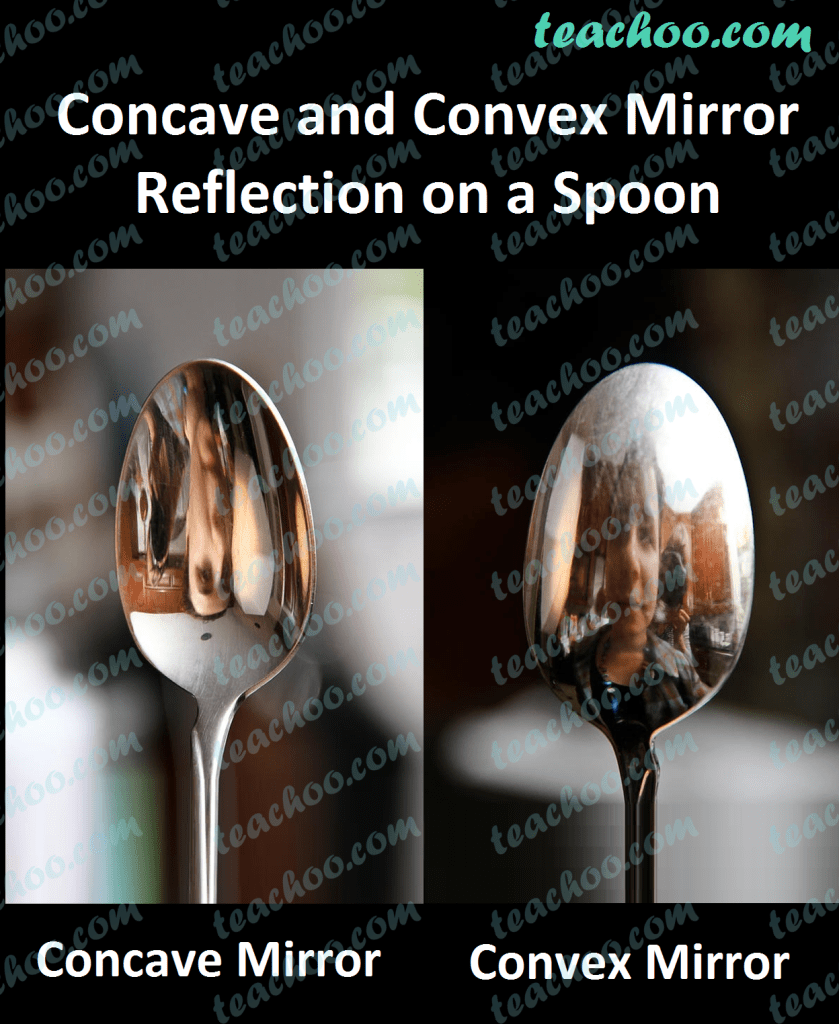
A spherical mirror, in which the reflection of light occurs at its concave surface, is called a concave mirror. These mirrors magnify the object placed close to them. The most common example of a concave mirror is the make-up mirror.


CONVEX MIRROR
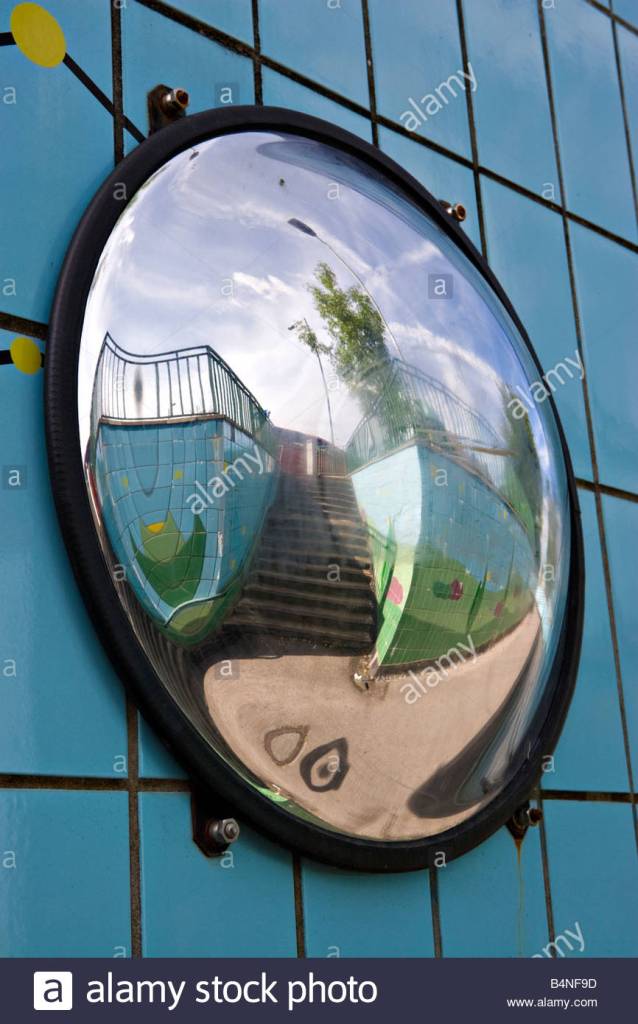
A spherical mirror, in which the reflection of light occurs at its convex surface, is called a convex mirror. The image formed by these mirrors is smaller than the object. Most common convex mirrors are rear viewing mirrors used in vehicles.


PARABOLIC MIRRORS
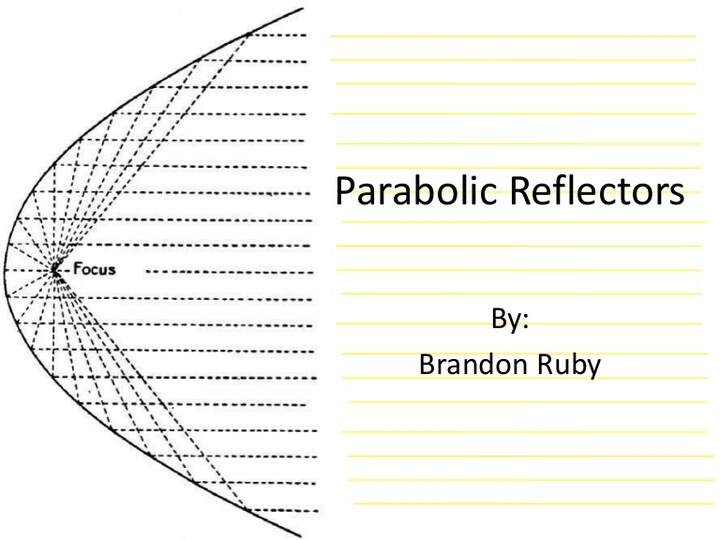
A parabolic mirr, which is in the shape of a parabola, is one type of curved mirror. It has a concave reflecting surface and this surface directs the entire incident beam of light to converge at its focal point.


In the same way, light rays generated by the source placed at the focal point will fall on this surface and they will be diverged in a direction, which is parallel to the principal axis of the parabolic mirror. Hence, the light rays will be reflected to travel a long distance, without getting diminished.


Parabolic mirrors, also known as parabolic reflectors, are used to collect or project light energy, heat energy, sound energy and radio waves. They are used in reflecting telescopes, radio telescopes and parabolic microphones. They are also used in solar cookers and solar water heaters.