

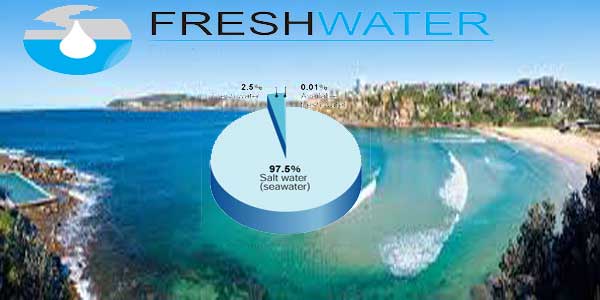
Water resource management is the activity of planning, developing, distributing and managing the optimum use of water resources.
With the growing uncertainities of global climate change and the long term impacts of management actions, the decision making will be even more difficult.

Fresh water is an important natural resource necessary for the survival of all ecosystems. The use of water by humans for activities such as irrigation and industrial applications can have adverse impacts on down stream ecosystems.
Fresh water is any naturally occurring liquid/solid water containing low concentrations of dissolved salts and other total dissolved solids.
Although the term specifically excludes seawater and brackish water, it does include non-salty mineral rich waters such as chalybeate springs.
Fresh water may encompass frozen and meltwater in ice sheets, ice caps, glaciers, snowfields and icebergs, natural precipitations such as rainfall, snowfall, hail/sleet and graupel, and surface runoffs that form inland bodies of water such as wetland, ponds, lakes, rivers, streams, as well as groundwater contained in a quires, subterranean rivers and lakes.
Water is critical to the survival of all living organisms. Many organisms can thrive on salt water, but the great majority of higher plants and most insects, amphibians, reptiles, mammals and birds need fresh water to survive.
Fresh water is not always potable water, that is, water safe to drink by humans. Much of the earth’s fresh water on the surface and groundwater is to a substantial degree unsuitable for human consumption without some treatment. Fresh water can easily become polluted by human activities or due to naturally occurring processes, such as erosion.
Fresh water is a renewable and variable, but finite natural resource. Fresh water can only be replenished through the process of the water cycle, in which water from seas, lakes, forests, land, rivers and reservoirs evaporates, forms clouds, and returns back inland as precipitation.
Locally, however, if more fresh water is consumed through human activities then is naturally restored, this may results in reduced fresh water availability or water scarcity from surface and underground sources and can cause serious damage to surrounding and associated environments.
Water pollution and subsequent eutrophication also reduces the availability of fresh water.

 Eduindex
You must be logged in to post a comment.