

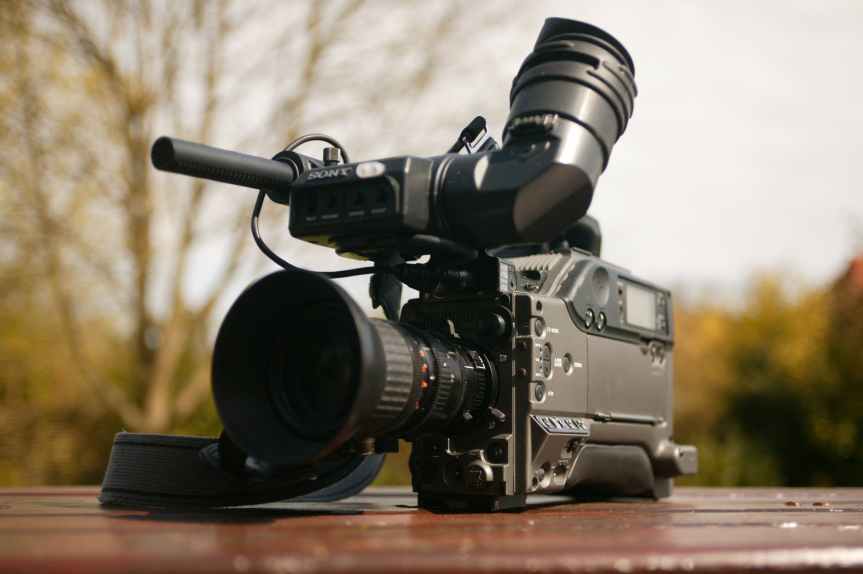

Let’s begin by knowing what Mass Media or Mass Communication is. Mass media refers to the media technologies such as movies, songs, news, podcasts, advertisements and photos, that are utilized to carry information to the masses.
Importance of Mass Media
This blog you are reading is helping you gain knowledge about Mass Media and communication. Hence this blog becomes a media technology and educating you in the field of Mass Media defines its importance. From applying for a job to reaching out to a friend on your phone, everything becomes a portion of Mass Media as they help users pass on information from one place to another or one person to another.
Here are some advantages of Mass Media to highlight its importance.
- It becomes a voice for the voiceless: Mass Media provides every individual with an opportunity to practice their freedom of speech and spread their ideas among the world. YouTube is a great example of Mass Media. As a platform in this 21st century it helps both small and large creators publish their videos for everybody to watch.
- Enables widespread communication: Today, the world is often referred to as a global village. This is made possible due to several types of mass media technologies such as social media, internet, and other digital content. It helps governments, businesses and organizations to communicate with each other and stay connected.
- Diversifying culture: Mass Media helps in diversifying languages and cultures beyond its place of origin. A good internet connection and a mobile phone or a computer is all you need to learn a new language or gain knowledge about a new culture. You can even take a peek around the world without leaving your home.
The Evolution of Mass Media
Mass Media can be traced back to the 800 AD which consisted of prehistoric arts, writings and some basic printing technology. The introduction of Gutenberg’s printing press in the 1450s helped art and literature gain a wider reach among the people.The year 1605 witnessed the publishing of the first weekly newspaper in Antwerp, known as ‘Relation’. This was followed by the inventions of radio and television in 1895 and 1925 respectively. Finally in 1990, the world wide web was introduced by Tim Berners Lee.
The number of people benefiting from these media technologies witnessed a steady growth from a handful, to thousands, and millions with the introduction of newspapers, radios and televisions. Today, due to the internet, these numbers are reaching billions. In 2018, the number of World Wide Web’s users was estimated to be 4 billion.
The 21st century has introduced the ability for even individuals to broadcast a customised message for thousands across the globe. You no longer need to be a part of some huge networking channel to do so. A good internet connection and a hand held device can do the job.
The functions of Mass Media
Mass Media, in the form of writing, podcasting, and publishing, has a significant effect on the masses. Commercials on television, billboards and social media influence the audience into buying a product or availing a service. Hence companies across the world look for suitable mediums such as social media, blogs, forums, or video streaming platforms to convey their messages based on their businesses. Once they find the right mass media technology, they conduct campaigns to communicate their ideas.
Majority of the companies today create and maintain their social media pages, maintain blog posts on their websites, and run advertisements on video streaming platforms to educate viewers about their products or to entertain them. These define the functionality of Mass Media.
Courses in the field of Mass Media and communication

After addressing the ‘Wh’ questions of Mass Media, let us dive into the courses one can opt for in the field of Mass Media and communication. There are three kinds of courses available for aspiring students in the field of Mass Media and communication. Courses at undergraduate, postgraduate and diploma levels.
- BJMC (Bachelor of Journalism & Mass Communication)
- BJ (Bachelor of Journalism)
- BMC (Bachelor of Mass Communication)
- MJMC (Master of Journalism & Mass Communication)
- MJ (Master of Journalism)
- MMC (Master of Mass Communication)
- PG Diploma in Mass Communication
Both the course levels familiarise students both practically and theoretically in the field of Mass Media and Communication.
Eligibility for courses in Mass Media and communication (UG PG)
A student aspiring to seek admission in a Bachelor of Arts in Mass Communication course, he or she must fulfil some eligibility criterias.
- The applicant should have completed senior secondary schooling (10+2) from a recognized university.
- The applicant must have scored a minimum of 50% from the aggregate in their senior secondary schooling.
Similarly, students aspiring for seeking admission in the Master of Arts in Mass Communication course must fulfil the following eligibility criterias.
- The applicant must have a Bachelor’s degree in any stream from a recognized university.
- The applicant must have scored a minimum of 50% from the aggregates in their Bachelor’s degree.
Institutes may also require you to give an entrance exam to fulfil the admission process.
Here’s what you will learn from Mass Media and Communication courses
Courses in Mass Media helps you get acquainted with subjects such as Public Relations, Design and Graphics, Digital Media, Reporting and Editing for Print Media, Data Journalism, Photojournalism, Event Management, and Media Law and Ethics. The courses are inclusive of Computer based learning, Guest Lectures, Seminars, Workshops, Massive Open Online Courses, Individual and Group projects, and community based projects.
Scope for Mass Media courses under employment prospect.

With an increase in media technologies following new inventions and establishments such as Television Channels, Radio Stations, Advertising Agencies, PR Agencies, etc. Scope in this field is also parallely increasing. Here are some of the job profiles candidates can look out for upon completion of the course.
- Journalism
- Public Relations
- Advertising
- Media Planner
- Broadcasting and Production
- Event Manager
Conclusion
Mass Media and Communication as a field in academics has a great scope in India and overseas. Freshers with expertise in specific areas and sufficient experience will be hired by prominent media companies for different job profiles. Individuals with good communication skills, writing proficiency, and passion for learning can pursue an undergraduate or a postgraduate course in Mass Media and Communication.
References
Ritika Shrivastava, May 17, 2021 09:36 IST, shiksha.com
Akanksha Sirohi, July 15 2020, collegedekho.com
https://www.careers360.com/courses/mass-communication-course





 Eduindex
You must be logged in to post a comment.