

Google honors Dr. Kamal Ranadive with a Google doodle on her birthday

IMAGE: GOOGLE

On the occasion of the 104th birth anniversary of Dr Kamal Ranadive, an Indian biomedical researcher, Google dedicated a Google doodle to her where she can be seen holding a microscope. She is well-known for her revolutionary cancer research and her commitment towards promoting social justice through education and science.

Dr. Kamal Ranadive was born in Pune on November 8, 1917. Her father, who was a biologist, encouraged her to study medicine but she had different aspirations. She decided to study botany and zoology as her main subjects and got her Bachelor of Science (B.Sc) in the same field from Fergusson College in Pune. She then moved to the Agriculture College in Pune for her post-graduation.

She successfully won a doctorate in Cytology (also known as cell studies) in the same year as working as a researcher at the Indian Cancer Research Center (ICRC), and thereafter, was qualified to gain a fellowship at Johns Hopkins University in Baltimore, USA. She thereafter returned to India and established the first tissue culture laboratory in the country in Mumbai.

She closely examined the links between cancer and different viruses, and also the link between breast cancer and heredity. She also studied Mycobacterium leprae (a type of bacterium that causes leprosy) and gave her contribution in the development of a leprosy vaccine.

Dr. Kamal Ranadive and a few of her workmates initiated the establishment of the Indian Women Scientists’ Association (IWSA) in the year 1973 to promote women in the scientific field. The organization as of now has 11 branches across the country. It provides scholarships and childcare to women in working or researching in the scientific area.

Ranadive received the Padma Bhushan, the third highest civilian award, in 1982 for her contributions to medicine. In 1964, the Medical Council of India presented her with the first Silver Jubilee Research Award. This award comprised of a gold medal and an amount of Rs. 15000. Another award that she received was the G. J. Watumal Foundation Prize in 1964 for her work in leprosy.

Dr Kamal Ranadive was loved and admired by many of her students and colleagues. They fondly called her ‘bai’. She always encouraged her colleagues and students to work and do various scientific researches in their own country. She also worked in rural Maharashtra after her retirement, training women as healthcare professionals and teaching them about health and nutrition.

Dr. Kamal Ranadive passed away in the year 2001 but she still continues to inspire the youth especially the women of this country to work hard and be an inspiration for many.
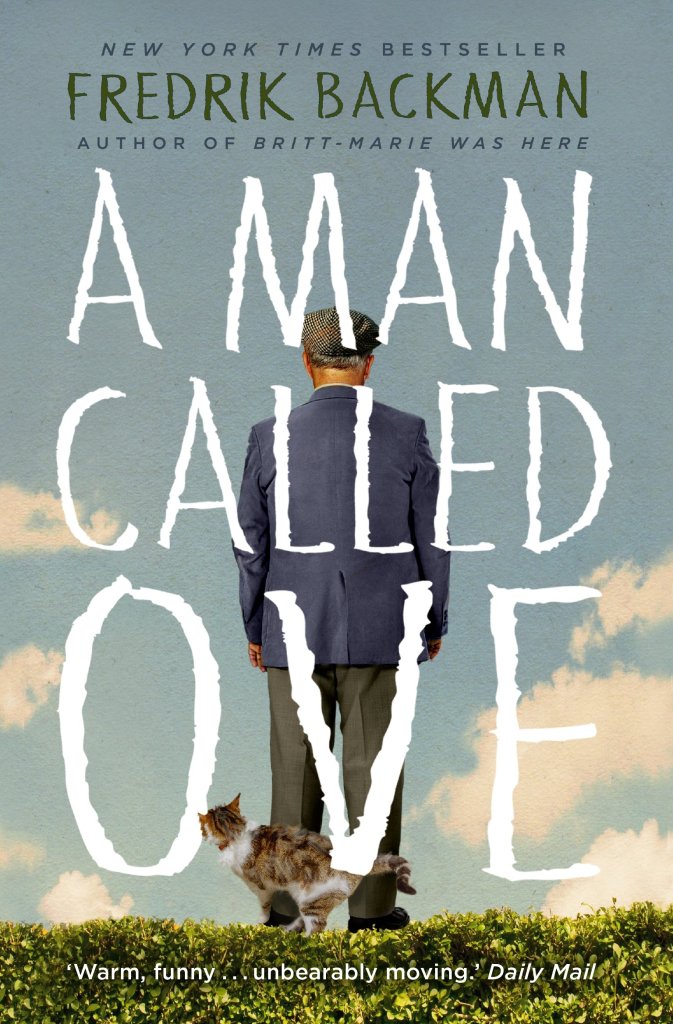
A man called Ove: Review

A book beyond the principles of judgment and society, barring the barriers of age, this masterpiece will remold your soul towards the kvetches in your life. A man called Ove, Created and written miraculously by Fredrick Backman, is a thin but infinitely everlasting book that will always stay with you once you turn the last page. As described on the cover page, it is a story about a man called Ove, and the short but satisfactory chronicles of his life. Being a cranky curmudgeon, he has a big habit of floccinaucinihillipilliphication. Big word, isn’t it? Google it (secretly gushing). He basically thinks every new technological thing that he cannot understand is paltry. His neighbors, His friends, everyone thinks he is an old trout. Well, when you are always seen with disgust and disappointment searing in your eyes, you wouldn’t expect much. But if you get to know the man who is called ‘the sorehead’, there is something irresistibly beautiful about Ove.

The story starts with a pouty old man who is seen buying an IPad or at least trying to buy an IPad, with a ‘you just broke my most precious possession and now I am going to kill you’ look. At that moment, the bewitching chronicle takes its first step into a beautiful tale about love, lived and lost.

Ove is a man who believes in practicality. Inaccuracy. In reality. Having a mighty adoration for tools, he was a straightforward man with no tolerance for nonsense, contrasting opinions, or even a happy sunshiny personality. Even after all this, there were so many things about Ove that were magnificent and adorable. That man’s life was simply great, he was arrogant, but down to earth. A man with a heart too big.

You’ll only feel the inklings of dismay and somewhat a sigh as the right side of the gem grows thinner page by page. The words start to reach the deepest core of our hearts, the dark noir on the crisp paper seems like the only world to exist. This little infinite tale will make you laugh out loud, and cry till you can’t breathe. My heart goes out to the author who has created such a magical fable, such an everlasting magnet of love and appreciation. Thank you. Fredrick Backman. Well done. Overall, I recommend this book to you, and I will do it again and again. Believe me.

it is worth it.

Lessons we learn from watching Squid Game

Image by <a href="Image by Chetraruc from Pixabay“>Pixabay

Around 400 people sign-up to participate in games that they might have played during their childhood. Winners are promised cash prizes worth billions! Sounds too good to be true right? However, here’s the catch. Failing to succeed in these games may cause you to lose not only the money, but also your life! If that wasn’t shocking enough, with each eliminated player, more money gets added on to the intended cash prize. The events that follow post this realization forms the rest of the story in this series. 

This Netflix series went on to earn critical acclaim upon its release. Millions of viewers across 94 countries tuned in to watch this thriller series. Its gripping plotline will surely keep you at the edge of your seats! But with the statistics and its popularity aside, let us look at some of the lessons this South Korean survival-drama taught us viewers. 

If you haven’t watched the series yet. Be warned, there are serious spoilers ahead!

  1. Kindness can come from the strangest of places.

Image by <a href="Image by 🌞 Myriam 🌞 Dreamer from Pixabay“>Pixabay

The very first game in the series stands as a witness to this claim. Amidst all the chaos and panic that erupted due to the massacre in the game ‘Red light, Green light’. A character named Ali had the heart to lend a helping hand to Gi-hun, one of the pivotal characters in the series. He risked his life to save a complete stranger during a life or death situation. 

This certainly gives the viewers a hope that help will surely come during the different walks of life. It also encourages us to lend a helping hand like Ali, irrespective of familiarity with the person or the kind of situation. 

  1. As you sow, so you reap.


In the Squid Game series, Gi-hun’s generosity towards Il-nam was truly heartwarming. When nobody expected Il-nam to stand a chance in the games. Gi-hun stood by his side, encouraged him and supported him when necessary. However, little did he know that the person he was helping was much more than a frail old man with brain tumor. His kindness earned him the favor of a multi-billionaire well wisher who turned his life around for the better. Well….financially at least. 

  1. Being strong is good, but thinking smart can take you a long way. 

Image by Burst Shopify

Take the game of ‘Tug of war’ from the Squid Game series for example. The opponent team appeared strong indeed. But we were rooting for the team that consisted of a relatively less muscular batch of players. With the addition of a frail old man in the team, their chances of winning were very less. But Il-nam the old man was full of surprises! 

The techniques of winning the game that he shared with the team gave them a temporary upper hand over their opponents.  When they seemed to be losing in front of their opponents’ sheer strength. Sang Woo’s idea of the element of surprise brought them a life-saving victory over their adversaries. Moral of the story: Be strong, think smart. 

  1. Money is important, try not to run out of it.

The billionaires who created the squid games, played with the desperation of almost 400 money deprived people. Many of the participants were in huge debts and needed the cash prize to survive in the real world. Although one can do more than just survive with the cash prize on the line, greed and need forced the common and subtle people to go up to extreme lengths. 

Hence, it is better to be educated, find a stable job, have insurance for your future, and make investments and expenditures wisely. Sang Woo from the Squid Game series is often criticised for the deceit he carried on against his friends and trustees. But it isn’t hard to understand why he did what he did. After drowning upto his neck with financial difficulties and his lonely mother waiting for him. Anyone would have done the same thing if they were in his shoes.

  1. Sure, Money is important. But money isn’t happiness

Image by Burst Shopify

 Winning the intended cash prize along with the 455 others’ share of money. Gi-hun indeed won big in life. But what was left of him by the end of the Squid Game was a traumatized soul after witnessing the death of his friends and the dead body of his mother. 

Il-nam, who is revealed to be the billionaire master-mind behind the squid game, couldn’t buy joy and happiness with all the money he had. As he participated in the games alongside the other participants, he experienced happiness as he re-lived his childhood memories and found a good friend in Gi-hun. But his idea of Squid Game was inhumane and barbaric. 

The series ends with Il-nam dying, having made a questionable decision about starting the Squid Game and being the reason for the deaths of almost 400 people. Gi-hun is shown moving to the US after a significant makeover with his appearance, only to discover the Squid Game’s establishers seeking the next batch of participants for their game.