This 1981 novel Tar Baby by Toni Morrison explores the mythic image of Tar Baby to evoke the racial stereotyping. The novel brings together different oppositions like white and black, high and low culture, north and south etc. The title of the novel suggests the folk tale of Tar baby. The fable is an archetypal trickster tale and it describes how a fox entraps a rabbit by using the tar figure. The doll or ‘tar baby’ is made by Br’er fox and placed in the roadside to trap his archenemy Br’er Rabbit. Br’er Rabbit speaks to the doll or tar baby and gets angry as it is not responding, and strikes it and get struck. The more the Br’er Rabbit kicks, the more he becomes attached. In the modern scenario, we can consider this theme as a problematic situation that is only aggravated by additional involvement with it.
In the novel Morrison portrays the love and relation between central characters Jadine and Son, two African Americans, with the social background of a racial hierarchy and high and low cultures. Jadine is a beautiful fashion model, who has been sponsored by Valerian Street, a white man , candy manufacturer who marries Margaret Street, the principle beauty of Maine. When the novel begins Valerian is spending his life on the Caribbean island, Isle des Chevaliers. Son is a strong minded man, who washes up on the streets. Ondine and her husband Sydney, through their dialogues reveal the fact that, they have devoted most of their life serving Valerian Street, who considers them as “good Negroes”. There is another major mysterious character named Charlie, who never appears on the course of events of the novel. The novel progresses through the events that happened after the arrival of Son in the island.
The novel revolves around themes like nature v/s civilization, the subordinate black life and the shades of femininity. Morrison made the novel rich with dialogue episodes, symbolism and mythological involvement. Tar Baby powerfully portrays the plight and struggle of African Americans for livelihood in the second half of twentieth century. And this makes Tar Baby an essential read in the historical and cultural writings of American literature.
Imagine this. It’s the beginning of a new academic year in a new school or college and you enter a classroom full of chattering students. Does that sound like a nightmare to you? Do you wish that a teacher or a professor should enter the class soon so that there will be silence and you won’t feel left out? If you do, you know that you are a shy person. Shyness is an obstruction that prevents you from presenting yourself in a social situation. One might even find ways to avoid a social situation due to his or her shyness.
Shy people often wait for the others to begin a conversation and hope to be invited into their friend circle. Once they become comfortable around a bunch of people, they seem to have overcome their shyness and become the life of the party around them.
Why could you be shy?
Image by Pixabay
During such daunting social situations, you might have had this question in your mind, “Why am I so shy?” The answer could range from something serious such as being bullied, or subtle such as lack of experience with social situations. There are also biological aspects such as genetics that influence the trait of shyness within a person. Shyness is often the result of the environment and an individual’s relationship with their parents.
Having had strict or doting parents during childhood could result in the development of shyness in an individual. Shy parents could also render their children to be shy. Public humiliation or overly critical workspaces develop a sense of shyness among adults.
How to overcome your feeling of shyness
image by Pixabay
You might be racking your brain right now, trying to figure out how you can overcome the feeling of shyness like me. But let us first take a moment to figure out our strengths as a shy person. It might seem less likely but you might get pleasantly surprised!
Being shy puts you at an advantage in certain kinds of job profiles. In this aggressive and competitive world, being calm and considerate is valued and anticipated among therapists, counselors and other social-service oriented careers.
Your shyness, which results in a calm and composed stature may seem as less intimidating and approachable for many people. Newbies might feel more comfortable approaching you than the competitive and loud person nearby.
Being a shy person, you might rethink choices you need to make in difficult situations. It might probably slow you down but would help you arrive at the right decision.
With our strengths out of the way, let us focus on the steps you can take to overcome shyness.
Observe your friends or a family member
Image by Pixabay
There are people around us like close friends and family members who relatively lean on the bolder and talkative side of the spectrum. They might be able to get things done by talking and socialising at an event might be easier for them. You can take cues from them and act accordingly when you feel shy.
Start simple
Initiating a conversation with a stranger is often intimidating as we might not always know what to say. You can start simple by introducing yourself and asking questions such as “Where are you from?”, “What kind of hobbies do you enjoy?”, or you can ask for a simple favor or information. Asking questions can help you know the person better and you may find some similar hobbies and interests that you can talk about.
Join groups with similar interests
Find groups of similar interests and hobbies, you will have a lot to talk and share about with people in such places.
Visualise being bold
Image by Pixabay
One of the effective ways to overcome shyness is to imagine yourself as bold and confident. An upcoming social situation need not be feared with the imagination of embarrassment and humiliation. Instead, visualise yourself having a good time talking to people.
So there you go! These are some of the ways you can overcome shyness. Do embrace yourselves as you make progress with overcoming your shyness. There are considerate and helpful people who are willing to accept you the way you are.
Gaming addiction is a type of mental disorder leads to insomnia,stress, pressure.Gaming is not a waste of time limited time of playing games can reduce pressure.
SIGN OF GAMING ADDICTION:-
* Thinking about game for lot of time.
* Feeling bad when you are not playing games.
* Want to spend more time in games to feel good.
* Having problems in school, office,work because of games.
ALTERNATION OF GAMES:-
In place of playing games you can replace it with:
* Arts ,dance,music.
* playing outside.
* playing indoor games like chess,carrom etc.
* you can do exercise,martial arts.
EFFECT OF GAMING ADDICTION:-
* It leads to mental disorder.
* sleepless.
* It creates lack of social interaction.
* Feeling lonely.
IS GAMING A ADDICTION:-
Gaming is not a addiction it is a type of mental disorder.It leads to psychological problems like insomnia,lack of social interaction.By research a normal healthy person can play less than 5 hours per day.
RELIVE FROM GAMING ADDICTION:-
* Schedule your time for Playing games and follow it.
* Replace the video games with the outdoor games.
* Talk to your friends, family.
* uninstall your game from the mobile or computer.
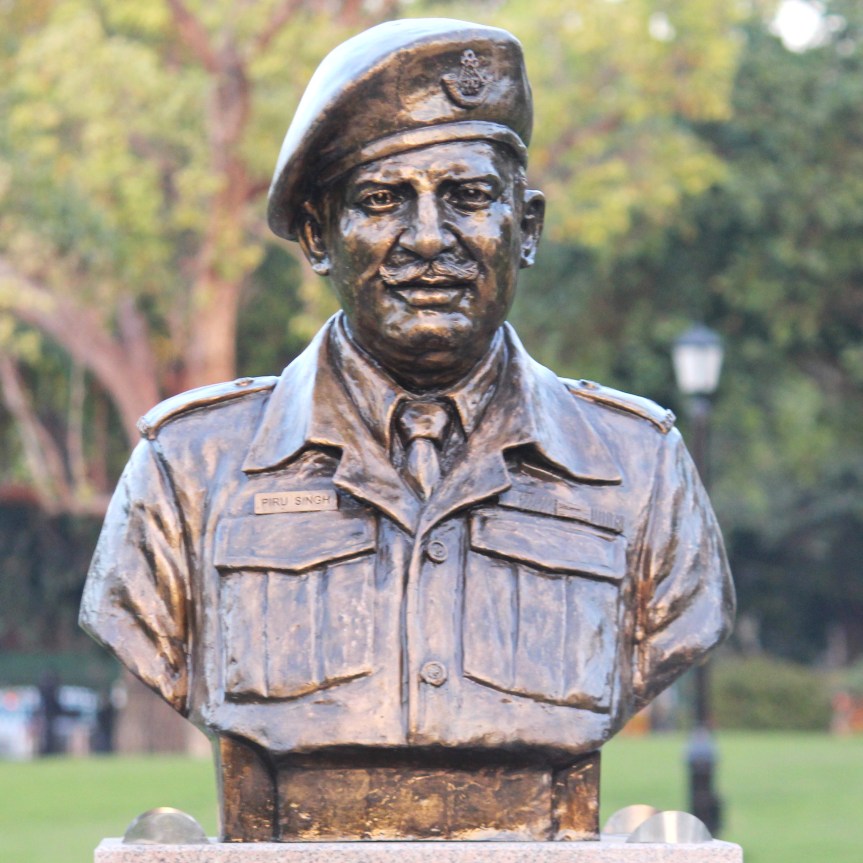
The credo of Indian Military Academy – ‘ The safety, honour, and welfare of your country comes first, always and every time. The honour, comfort and safety of the man you command comes next. Your own ease, comfort & safety comes last, always and every time.’ – is a mantra that every Indian soldier lives by. The commitment of a soldier to his duty and his sheer determination to fulfill it is something that sets him apart from the rest of the crowd. Company Havildar Major Piru Singh, the hero of battle of Darapari, was no different.
Early Life
Piru Singh was born on 20th May 1918, in Rampura village, Churu, Rajasthan.He came from an agricultural family of the warrior clan of the Rajputs. His father Lal Singh and mother Tarawati Kanwar (Jarav Devi) had seven children – three boys and four girls – with Singh being the youngest. Even as a young boy, he loved outdoor life and had an aversion to restricted environments. Singh discontinued schooling at a young age. The rest of his childhood was spent helping his father in his farm. Right from his younger days he had an inclination to join the army. Despite being rejected twice, Singh never gave up and eventually got selected on his third attempt. He joined the British Indian Army coincidentally on his 18th birthday on 20th May 1936.
On joining, Singh was initially assigned to the 10th Battalion of the 1st Punjab Regiment at Jhelum. After completion of his training, he was transferred to the 5th Battalion of the same regiment on 1st May 1937. Surprisingly, the boy who despised school and had no interest in studies had transformed into a committed soldier who took serious interest in education. He cleared the Indian Army Class Certificate of Education and a series of other army examinations and got promoted to the rank of lance Naik within a brief span. He served on the North-West Frontier during his tenure with the 5th Battalion of the 1st Punjab regiment. It took less than a year before he was promoted from Lance Naik to the rank of Naik. In September 1941, he was posted to the Punjab Regiment Centre at Jhelum, as an instructor.
Singh was also a wonderful sportsman and represented his regiment in basketball, hockey and cross-country running at the inter-regimental and national level championships. In February 1942, he was promoted to Havildar and later to the rank of Company Havildar Major in May 1945. Until October 1945, he served the army as an instructor. He was deployed to Japan as part of the British Commonwealth Occupation Force after the Second World War, where he served until September 1947. By the time he returned from Japan, India had been partitioned and therefore the Indian army had undergone reorganization. Consequently CHM Piru Singh was transferred to the 6th Battalion of the Rajputana Rifles Regiment.
Battle of Darapari : Background
It was during this time around that the tensions between India and Pakistan were escalating, over the control of the princely state of Jammu & Kashmir. Eventually in October 1947, war broke out between the two countries.The Spring of 1948 was utilised, by the Indian Army, to rid the Kashmir valley of the infiltrators. General Thimayya, General Officer commanding Sri division, decided to launch the offensive with the main thrust along the Uri-Domel road by 161 Infantry Brigade under Brigadier L.P Sen. 163 Infantry Brigade under Brigadier Harbaksh Singh was detailed to carry out a divisionary operation towards Tithwal from Handwara. To deal with the enemy forces around the Bagh area, the Poonch Brigade was assigned to carry out a battalion operation towards Bagh. In the third week of May, Dogarpur, Trehagam and Chokibal were captured and on 22nd May, Tithwal sector was captured by the Indian forces.
Source: Wikimedia Commons
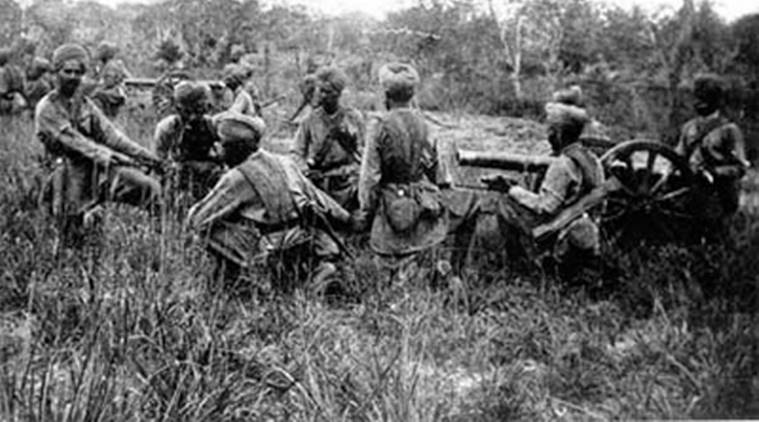
Pakistan, enraged by the setback in the Tithwal sector, launched repeated counter attacks and recaptured the village of Tithwal in the hills of Jammu and Kashmir. The Pakistani raiders launched offensive strikes in this region and captured a ring contour on the 8th of July 1948. The enemy pushed to seize control over the positions across the river Kishanganga and the Indian Army was forced to vacate their forward positions across the river. In the wake of this setback , in order to strengthen the advance on the Tithwal sector, Piru Singh’s unit – the 6th Battalion of Rajputana Rifles – was moved from Uri to Tithwal and was assigned to the 163rd Brigade. The unit took position on the Tithwal bridge.
The attacks commenced on the 11th of July. The operation went on for four days till the 15th of July. However, according to the reconnaissance report, the Pakistanis were still in command of two strategically important positions. The capture of these two positions was essential for making any further advancement. The task of securing these two features was assigned to the 6th Rajputana Rifles. Two companies – Charlie ( C ) and Delta ( D ) – were assigned to the operation. The C company was in charge of securing the second position after the D company had captured the first.
Battle of Darapari : The Day of Action
The D Company, of which CHM Piru Singh was a part, was sent to capture the Darapari feature in Tithwal sector. Darapari is a hill feature located at an altitude of over 11000 feet. The path leading to the position held by the Pakistanis had deep ravines on either side and was just about one meter wide. According to the intelligence reports received, the battalion was told that the enemy had not had enough time to dig-in intensively and hence could be dislodged without much struggle. This however proved to be inaccurate. The narrow path through which the battalion was advancing was overlooked by five hidden Pakistani bunkers ,which gave the defending troops a clear advantage in terms of position. The time constraints restricted the battalion from having a proper reconnaissance of the enemy position. In order to take advantage of the darkness, the attack to secure Darapari was planned to take place after the moon had set and was launched at 01.30 a.m on the 18th of July. As the attack advanced, the company was subjected to heavy shelling and within a matter of about half an hour, the casualty count had reached to a whooping 51. The platoon commander Subedar Bhika Singh was hit. A sinking feeling of panic had swept over them and there was absolute chaos amidst the rest of the team. It was then that Piru Singh rose to the occasion and took charge of the team and led his platoon with a determination that not even the raging bullets from the rival MMG posts could waver.
The enemy medium machine guns had been sited to cover all possible approaches. The platoon led by Singh was met with heavy firing from both flanks and a volley of grenades from the bunkers. Neither the murderous firing nor the fact that half of his platoon was either dead or wounded, could falter him. With the battle cry of ‘Raja Ramachandra ki Jai’, he rushed forward to crush the MMG post which was playing havoc with his troops. His exceptional leadership motivated the rest of the crew to follow their leader ferociously. With the curtain of grenades tearing through him, wounding him at several places, he continued to advance. He rushed to the MMG which was causing the maximum destruction and bayoneted the men on guard and occupied the post.
By this time the rest of his men were either dead or wounded and he was the sole survivor of his company. Alone and injured, but with a never-say-die attitude, Singh inched forward to achieve the objective assigned. While advancing towards the second MMG post, a grenade was thrown at him, which wounded him in the face. Neither the blood dripping from his face nor an empty reserve of ammunition could kill his spirits. He crawled out of the trench, hurling grenades at the next enemy post and then jumped to the next trench bayonetting two Pakistani soldiers to death. As Singh emerged out of the trench to attack the third bunker, he was hit in the head by a bullet. Just before he succumbed to his injuries, he had managed to throw a grenade into the enemy trench, which did a perfect job of wiping off the enemies. CHM Piru Singh had thus bravely and selflessly completed his mission before he closed his eyes for the final time.
Source: Wikimedia Commons
Param Vir Chakra
His act of bravery was witnessed by the commander of the C company, who was directing fire in support of the D company. Inspired by Singh’s actions the rest of the company put up a ferocious fight and Darapari was captured against death defying odds.
CHM Piru Singh was awarded the Param Vir Chakra for his single-handed bravery, exceptional leadership and extreme devotion to duty, posthumously. In remembrance of this brave soldier, his unit – 6 Rajputana Rifles – commemorates the Battle of Darapari every year.
Every soldier has a story buried under his gravestone and Piru Singh’s is that of his extreme courage, supreme sacrifice, exemplary leadership and above all his unconditional love for his motherland.
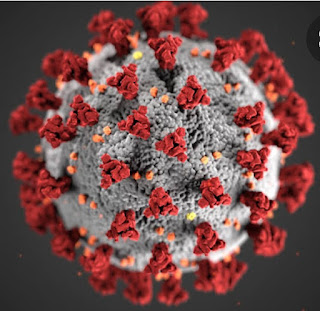
Coronavirus has 3.45Cr new cases right now with 4.64L deaths. Presently it is not spreading severely and has decreased its effect slightly. But still, we should be careful by wearing masks, using sanitizers, maintaining hygiene, and get vaccinated as the third wave is in its way. The covid-19 virus became a part of our daily lives. We should not forget its adverse destruction as it is less right now cause it hasn’t ended yet. It might have started as a small virus in Wuhan city in China, but now it is spread worldwide. It had stopped the world and drove away many people like flood erodes soil.
Coronavirus has made many people jobless, leaving them stuck in the middle of this pandemic fighting with a new virus, and as if it was not enough, food was scarce, and even if they found some food, they didn’t have money to buy it. The Coronavirus was taking the lives of our loved ones, leaving our lives shattered. Many street sellers and small shop owners lost their livelihood. Because of this virus, big companies like Ford only closed their company in India, leaving many employees unemployed. What can we talk about other companies after this?
But this pandemic had some excellent effects, too it brought us together, arose humanity in our hearts, and let us put the world first. People like Sonu Sood helped many people to go to their villages. A girl gave all the money their parents saved for her studies for the betterment of the world. And many other people living in this fast-moving world started realizing that unity is strength; instead of just working for their improvement or providing their family with everything, they began helping others. It brought out kindness and made us realize that we are all human beings. It also increased relations among family members as they started staying at home, their interaction with family increased, thereby family relations improved.
Some NGOs also remembered the street animals, fed them, and proved that we are still concerned about fellow creatures. However, some people who used to stick together and always had each other’s backs are now becoming self-centered. They are not helping other people when they are affected by covid-19. But they do not realize that others won’t help them when they are involved too. Some didn’t help their own family by leaving food at their doorstep or taking them to the hospital when the entire family was affected by COVID. Coronavirus brought out the true colors of the people around us, showing us who truly cares about us.
As everyone stayed at their homes, the pollution decreased immensely, leading to the timely rains and improved the environment. This virus also took away the difference between rich and poor. The rich man has realized that even if he had set aside a lot of money throughout the years, money couldn’t always save a life. Poor people who lived near the roads and didn’t even have food due to no work had no other option than to see their loved ones die in front of their eyes. A woman sat in front of a government hospital with her husband laying in her laps, suffering from Corona, hoping a bed would be free. But her hope shattered when he died in her lap because of no vacancy of beds, and this incident touched many people’s hearts, and this is not the only one; the list goes on.
Youth who lost jobs started freelancing until they found a job. Few people had started their online businesses. Some lost their lives at the start because they were scared of the new virus and, even if they were mildly affected, started committing suicide as they were not used to staying alone in the house, isolated. But we need to be strong as maybe not this virus, but surely life will put you through challenging situations, and you need to be strong enough to face them. The education sector broke because of this virus, and students were most affected. Many students who did so well in the school became uninterested in studies as results were not as they deserved. When they applied for re-evaluation, as many students applied, they didn’t do that properly either. Now they lack motivation and try to study but end up procrastinating about it.
Anyway, Coronavirus at least taught us hygiene. All we can do right now is hope that the future will be better, and more than that, help each other and stay united in thought and spirit while doing the work we are supposed to do.
For India, right now, the victory of cashless economy is as far as the eyes see. India is becoming a large middle income country, too complex, and varied to be controlled centrally. The government will need to withdraw from occupying the commanding heights of the economy, confining itself to providing public goods and the governing framework and, leaving economic activity to the people.
To harness their collective energy, India will need many such reforms in the years o come if it is to grow rapidly in a sustainable and equitable way. These were the words of our former RBI Chief Mr. Raghuram Rajan.
GST and Demonetisation
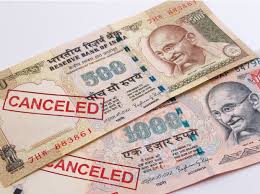
If our country’s people are still under the influence of the infamous twin-shock of GST and demonetisation, then how can we consider the thought of cashless economy at such a tender stage. This is not just a rhetoric, it is the fuming question with only one answer, NO.
Why is India not ready yet?
Enough of the statements from the philosophical jar, lets talk facts.
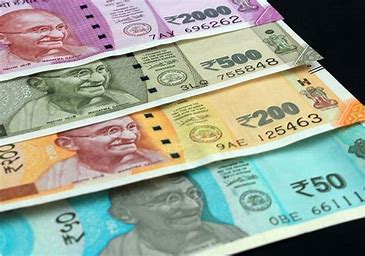
India is an economy where 98 per cent of all transactions are in cash. This is due to the large informal sector, which employs 90 per cent of the workforce. The overwhelming majority of them are not hoarders of black money. And yet, India cannot become a cashless society unless its mammoth informal sector transitions to digital payments.
Lack Of Cyber Security
And right now with hackers giving proofs of how one can misuse Aadhar details by stealing a real life example of none other than the TRAI Chief, I am saying that India will be ready for a cashless economy but definitely it is not now.
We need to built homogenous network of digital security to take the baby steps for a walk which has a long road.
“A cashless economy needs robust cyber security capabilities and India isn’t ready” – KPMG INDIA CHIEF, Arun M. Kumar.












 Eduindex
You must be logged in to post a comment.