

Students and social service

 Great things are expected of students as they are the citizens of tomorrow. On their broad shoulders rests the responsibility of eradicating illiteracy and ignorance and uplifting the society. India expects them to do their duty and to donate willingly and smilingly, blood, toil, hard work and labour. The aim before students should not be strikes and hooliganism but selfless social service. Students are not mercenaries bit missionaries. They are the torch bearers. They are to burn other lamps with their light. They are to go out to serve their country fellow men. They are to inject their blood into the dry bones of the nation. They are to spread light and laughter wherever they go.

Students get long vacation. It is criminal to let them go waste. Students from vital areas can help the villagers in agriculture. They can turn the fallow lands into smiling fields with their own hands. Students can demonstrate to the villagers the scientific methods of agriculture. They can teach them how to collect village refuse and turn it 8nto manure which doubles the yield of crops per acre. They can impress the villagers that to burn cow dung is to burn gold. It is the students who can do immense social service in the community projects and national extension services. They can brings about a revolution in the villagers and completely change the face of the country.

Illiteracy is rampant in India. It prevails in every nook and corner. Students owe a debt to society. It is their duty to impart education to their illiterate brethren. They must give in the same measure as they have received and are still receiving. The villagers cannot exercise their right to vote intelligently and correctly if they cannot read a book or a newspaper. The students can do a lot in this respect and they must not shirk off their responsibility.

True social service lies in learning the dignity of labour, learning to do things with our own hands. Students must serve the masses as a matter of national duty and as a in labour of love. It would be in the interest of the country if social service is made compulsory for the award of a university degree.

To sum up, every one must work hard to raise india. More work falls to the share of the students as they are more energetic than others. Students must have a burning desire to serve India. They must not expect any reward in return. A good action is its own reward 
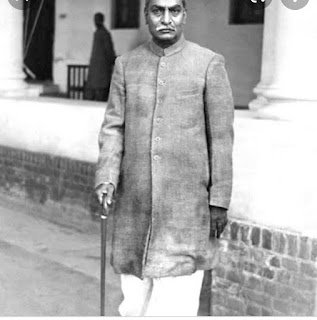
Dr. Rajendra Prasad

 Dr. Rajendra Prasad was born on 3rd December, 1884 in a small village named Ziradai in Saran district of Bihar. He was the youngest child of his parents. He was a student of Chapra Zilla school. In 1902, he appeared for the Entrance Examination of Calcutta University and got the first position. 

Then he joined the Presidency College, Calcutta. There he worked very hard and stood first in the intermediate and B.A. examinations. It was his desire to go to England for higher education. But he had to give up his idea as his father died. So he passed M.A. in 1907 and B.L. in 1910.

After completing his education, he started his practice as a lawyer in the Calcutta High court. In 1916, he came to Patna High court when it began to function. Due to his hard work and knowledge he was the most favourite advocate of his time in his province.

He was much influenced by the non cooperation movement of Gandhiji. The English landlords were very cruel towards the indigo farmers of Champaran. When Gandhiji went to Bihar and started his satyagraha to make their conditions better, Rajendra Prasad left his practice and joined him. He toured and organised meetings in the interest of the common people.

In 1934, an earthquake created havoc in Bihar. Rajendra Prasad did his best to help the victims and the sufferers. He did his best to raise funds for the help of the suffering millions. By his selfless work, he became very popular in the country. So he was called the Desh Ratna.

He joined the Quit India movement of Gandhiji. He suffered much for the freedom of his country. He was an honest and simple man. He had immense sympathy for the poor and the downtrodden. He was a man of life upright. In Indian politics, he was known as an Ajat Shatru. Even his opponents admired him for his sense of justice, fair play, integrity and sincerity.

Dr.S.Radhakrishnan

 Dr.Sarvapalli Radhakrishnan was one of the greatest philosophers of modern times. He was born at Tiruttani now in Tamilnadu on September 5, 1888. His father’s name was Sarvapalli Vira Swami and mother’s name was Sattima. Sarvapalli was the name of his ancestral village in Andhra Pradesh. Born in an orthodox brahmin family, it was not very difficult for him to study epics and puranas at an early age.

He had his early education at Tiruchani. He did his Intermediate (F.A.) at the Voorhees College, Vellore and degree at the Christian College, Madras(now Chennai) at the age of 17 years. While studying at the Christian College, he came under the influence of the Bible but he could never tolerate the criticism on Hindu Religion and culture. He analysed the truths in both the Hindu and the Christian religions and was convinced that truth is the same in all religions. Hence his interest in Indian philosophy, religion and culture grew more and more. He was a very intelligent and brilliant student and had a keen interest in studies right from the beginning, consequently he got scholarships at various stages of his student life. In 1908 he wrote a paper, Moral Principles of Vedanta. After securing his Masters degree in philosophy he was appointed first as Assistant Professor and later as Professor of Philosophy in the Presidency College, Madras. During this time he read thoroughly the Upanishads, Vedanta, the Bhagwat Geeta and books on Buddhism and widened his knowledge on these subjects. He also read Western Philosophy of Plato, Plutinus and many other eminent philosophers.

He was a great orator. He could critically analyse and explain philosophical truths. Students liked his lectures and simplicity. He was considered as a model teacher. He often used to say,”Teaching gives me satisfaction and peace of mind.”

He served as a Junior Professor in government training college, Rajahmundry for sometime. In 1918, he joined the Maharaja college,Mysore as a professor of Philosophy. He was a prolific writer.He hot published his lectures and speeches in a book entitled”The Essentials of Psychology.” This added to his fame. He also wrote the books – Reason of religion in contemporary philosophy, Indian philosophy (in 6wo volumes). These books made him world famous. In 1926 he went abroad for the first time, and delivered lectures on Indian philosophy, Vedanta, civilization and Indian culture. The intelligentsia over the were greatly influenced by him. He was  a visiting  professor of philosophy to many western universities including Oxford University, England. He served as vice chancellor of many universities notably 1931-1936 ad vice chancellor of Andhra University,1939, Banaras Hindu University. He served at the same post for some time even in Calcutta.

He brought about many administrative reforms in these universities. While serving at Banaras he came under the influence of Gandhiji.

He had an ‘exceptional style’ in delivering lectures which was his forte. After independence from 1949-1952 he served as an Ambassador of India in Moscow and he was the first one to be received in person by the great leader Stalin. In 1952 he became the vice President of India. During his tenure as vice President he visited many countries eg Peru, China, Belgium, Poland, Czechoslovakia, Hungary, Bulgaria, Japan, and Africa. From 1953-1962 he served as vice chancellor of Delhi University. He was made head of the sahitya academy, Delhi. In 1954 he was honoured with the”Bharat Ratna” the highest award of the country. He also received many other awards eg ‘German order of merit’ , ‘ Goethe prize’,’Master of Wisdom’, ‘Templeton Award’ etc.

He served as Vice President of India upto 1962. In 1962 die to the illness of Dr. Rajendra Prasad the then President of India, he became the acting president and later succeeded as the 2nd President of India. 

Dr. Radhakrishnan relinquished his office as President in 1967 and he died in April, 1975. His birthday is being celebrated as Teacher’s Day throughout the country every year on 5th of September. On this occasion the talented teachers are felicitated by the President of India. This is the greatest honour and tribute being paid to the great philosopher by the nation.