Science had made rapid progress in the recent years. Much of our comfort in life is due to the work of famous scientists. We turn a switch on and the whole of the building is illuminated with a dazzling light. This is just like Aladdin’s magic lamp.
It has given us discoveries and inventions that have revolutionised the ways of our life and our outlook in general. Science with its invention of aeroplanes and ships has made us the lord of air and water. We fly in the air and sail on the bosom of the seas and oceans.
Science has harnessed the forces of nature. The river valleys are dammed up to arrest water and then to make it available for irrigation through the network of canals. The deserts are changed into fertile arable fields. The waterfalls made artificially are generating electricity for varied uses
Train, ships, vehicles and aeroplanes are the gift of science. They have made transport and journey easy, quick and comfortable. Long journeys that used to take days and weeks can now be covered in very short periods of time.
Science has given us weapons for safety; television, radio and cinema for entertainment. It has controlled the most fatal diseases. So the wonders of science are uncountable. There is no sphere in life in which science has not brought a change. Today we have many things of which our ancestors had never dreamt.
Electronic stoves cook our meal and X-rays tell us where a bullet is embedded in our body. Electric shocks are given to men of deranged brains. Radium is no less important than electricity. A tiny particle of it can drive our trains. It also provides a cure against deadly diseases, such as cancer. Exposure to its rays burns up the disease. Then atomic energy is another discovery of science. If put to constructive use it is a boon.
Science has given eyes to the blind and ears to the deaf. Science has made serious operations a reality. Transplantation of heart has become a possibility. Thus we see that science is a double edged weapon. It is useful if we use it for our comfort and convenience.
Science has dazzled humanity. It has turned impossibilities into possibilities. Time and distance have killed. Agriculture has been considerably mechanised. There is a remarkable development of industry. The radio brings to us the songs of the greatest musicians of the world. The television enables us not only to hear distant voices, but also to se distant functions, matches and other sights. Many diseases have been conquered. Germ die, victims live.
But there is another sight of the picture. Science has invented atom bombs and hydrogen bombs which destroy millions in a split second. They let loose death and destruction on the head of humanity. Science has, on the one hand, given us numerous comforts and amenities but, on the other hand, it is also driving us into the valley of death. It is signing the death warrant of humanity. It is murdering the humanity.
Man has become the slave of machine. One factory throws thousands of laborers out of work. Unemployment is ever on the increase. Gandhiji favoured not mass production of mills and factories but production by the masses.
Another curse of science is that it has made man godless. Science has fed our body but starved our soul. How does man benefit himself if he gains the whole world but loses his soul in the game? It has destroyed man’s character and personality. Man has lost neighborliness, sympathy, love and fellow feeling. He has become a brute. He has become mad. Science has created more problems than it has solved. It has brought comforts, but it also brought death with it. Science is the murderer. A murderer cannot be exorcised on the ground that before killing his victim, he feasted him or gave him comforts. Science has placed untold power in the hands of man and man misuses it. The memory of death and large scale destruction that followed in the two beautiful cities of Hiroshima and Nagasaki of Japan is still fresh in our memory. The same story may be repeated in a much more virulent form.
To sum up, we must use science for the good of humanity and not for its destruction.
Exercise is good for health. It keeps us fit and healthy. It keeps the diseases away. It gives us energy and strength. We should take exercise daily.
There are many types of exercises. Swimming, walking, jogging, cycling, swinging, running are different forms of exercise. Different people have different choice of exercises. Some people like light exercise. Many choose running and swimming as exercise. Some people join gym for regular and proper exercise.
Modern life is very fast. People do not find time for exercise. This is not good for health. We should always do exercise. We should walk on foot. We use scooter, bicycle or motor cycle even for a short distance. This makes our body lazy.
The best way to keep our body healthy is through exercise. Walking is the easiest exercise. Morning walk is the most useful. Morning is the best time to take exercise.
Radio is a means of mass communication. It is one of the cheapest media of entertainment and information. It is still a popular means of mass media. Both old and young, educated and uneducated, rich and poor listen to the radio with great interest. It is equally popular in villages and metro cities.
Radio is a powerful means of information and entertainment. We have speeches, songs, news and debate and discussion. Even a poor man can have a radio set. It is a very cheap and so everybody can afford it. It helps to create public awareness. A village farmer gets information about latest technology of farming through radio. Radio helps him to learn about the weather condition. An illiterate woman can learn through radio about her household activities. Radio is important for students. They learn new things with the help of radio. Thus, radio holds great importance for a country like India.
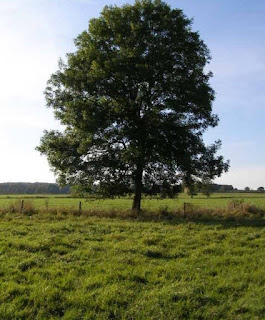
Trees are valuable natural resources. They are the gift of nature. They provide shelter. They give us fruit. They are the source of herbs and medicine. Trees give us wood also.
Trees are very helpful to man. They control pollution. They prevent soil from erosion. They maintain the fertility of soil. They bring rains. Rains are very important for India. India is an agricultural country. They give us food, fruits, etc. Papers are made from wood pulp. We write on the papers. Rubber, lac, silk, etc. are produced from the trees. These things have great commercial value.
Trees give us fresh air. Fresh air is good for health. They absorb the carbon dioxide and give out oxygen. We breathe in oxygen. Trees provide shelter to birds and animals. Trees help to check floods. Floods are great natural calamity. So, we should protect trees. We should plant more and more trees.
Some trees like mahogany, sal and rosewood give us hard timber to make furniture and doors, etc. Some trees like poplar give us soft wood to make corks. Leaves, branches and fruits of many trees have medicinal value.
Telephone is a gift of science. It is the fastest means of communication. We can talk to a person sitting thousands of kilometres away. The communication is held with the help of wires. There is a wide network of wires. Telephone is becoming very popular. Today, even a common man can afford this.
Telephone was invented by great scientist Alexander Graham Bell in 1875. This invention proved to be a great boon to mankind. It became popular all over the world. Communication became fast. Before it’s invention, communication was very difficult. It took many days for the message to reach its destination. But telephone has reduced the time of giving and receiving messages. Within a minute, a man can have a contact with a person sitting too far.
Telephone has greatly helped people. It has helped in trade and business. It has contributed to the growth of education. Now the telephone facilities are available in the remote villages.
Computer is an electronic machine. It is very common these days. It can be seen everywhere. It is widely used in banks, post offices, offices, factories, schools, colleges, shops and malls.
Computer works very fast. It’s results are very quick. Computer is superior to human brain. It remembers masses of data and performs calculations at lightning speed. It is highly efficient. Life cannot be imagined without computer.
Computers are very useful to school students. They help students learn new techniques of study, graphic designs, games and other useful applications. They are also helpful for office executives and college students. They help the librarians in efficient management of libraries. They are used in space science and laboratories. Any information can be found by surfing internet. Computers have become a necessity today.
Students should learn computers. They are easy to learn. They help in their education. They enrich their knowledge.
Pollution is a serious problem. It is a cause of great concern for mankind.
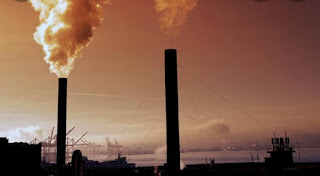
Pollution is of many kinds. They are air pollution, water pollution, noise pollution and soil pollution. With the growth of population, pollution is also increasing. Industries have added greatly to pollution. The air we breathe is filled with smoke. Water is polluted.
Towns and cities are growing fast. Population is increasing. New factories are being set up. Trees are being cut. The wastes of the factories go into the rivers. They cause water pollution. Household wastes also fall in the rivers. They also make source of water dirty.
The number of buses, cars, scooters and motorcycles is multiplying. They emit poisonous gases. The smoke of factories also adds to the air pollution. Uses of loudspeakers and DJs create noise pollution.
We should be aware of these problems. We should plant more and more trees and eco-friendly habits. Lf we do not pay proper attention to the problem of pollution, the life on this Earth will become difficult. Health standard of people will fall.
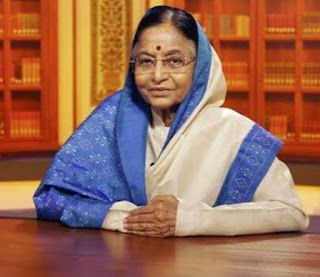
India is a democratic country. As per the constitution, the rank of President is the highest. Smt Pratibha Patil is the first woman President of India.
Smt Pratibha Patil was born on 19 December, 1934 in a small village of Jalgaon district in Maharashtra. She received her education in Maharashtra. She was married to Sh. Devi Singh Shekhawat of Rajasthan.
Smt Pratibha Patil has been a successful advocate. Later she joined politics. She became an MLA in Maharashtra first in 1962. She remained MLA till 1985. She served the Maharashtra government as urban development, education, tourism, health, cultural and social welfare minister. She also became the leader of opposition in Maharashtra assembly. In 1985, she was elected the member of Rajya sabha. She was elected deputy chairman in the rajya sabha also. She was appointed governor of Rajasthan in 2004. She is a dedicated and hardworking politician.
On 25th July 2007, Smt Pratibha Patil created history. She was sworn in as the first Indian woman President. At the age of 72, she became the 13th President of India. Under her experienced leadership, the country will make great progress.
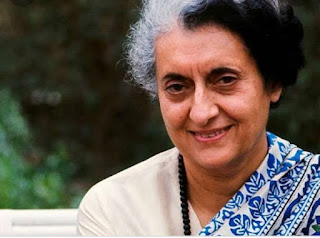
Indra Gandhi was the first woman prime minister of India. She was the daughter of the first prime minister of India, pandit Jawaharlal Nehru. She was born on 19th November 1917. She was a great leader. She led the nation to the path of progress.
Her childhood name was Indira Priyadarshini. She was born in Anand Bhawan. At that time Anand Bhawan was the centre of political activity. She received education both in India and Europe. She was very active from her early childhood. She took part in the freedom struggle of India. She was put to jail in 1942 during the Quit India Movement.
Indira Gandhi worked for Hindu Muslim unity. She solved many problems at home and abroad. She nationalised banks in India. Bangladesh was created during her time. She defeated Pakistan in 1971 war. She was a courageous leader. She was a great patriot. She improved the image of India in the world.
More than fifty years ago, traveling was dangerous and difficult because modern means of transport such as trains, buses, cars and aeroplanes were very rare. But with the advancement in the means of transport, traveling has become a means of education, and is no longer limited to books or the teachers.
Education here does not mean purely bookish knowledge. Education here is referred to in its wider sense. It means the complete understanding of the different ways in which our society and the world work. It includes the field of industry, commerce, agriculture and thousands of other skills. It is only by coming in contact with larger sections of humanity, in different parts of the world, that we can receive the right type of education.
Bookish knowledge has its own importance. It give us the basic knowledge of human activities. We learn the theoretical details. But that knowledge becomes complete by gaining practical knowledge. It is, therefore, quite essential that we move from place to place. Only traveling can help us give a practical shape to the knowledge we have obtained from books. Therefore traveling is essential for the development of intellectual, moral and even commercial aspect of our life.
Students must travel now and then to know for themselves how the world is going. Businessman also have to travel to acquire knowledge of the business techniques. It also helps them to establish contacts with their colleagues at other places. Even doctors and lawyers must travel to improve the quality of their work.
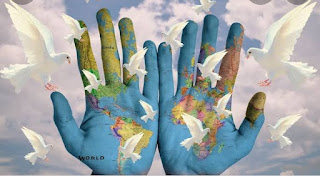
There is a great controversy going on in the world now a days about peace in the world. Some people believe that there can be permanent peace in the world. On the other hand some think that permanent peace is an impossibility. Let us examine these views critically.
There are some thinkers who believe that the world can have permanent peace, because science has developed to such an extent that the only alternative to peace is the total extinction of the world. As war will be suicidal to human race, there will not be any world war.
This view is based upon the sincere desire for living and letting others live. These people say that a man is a social being. Somehow or the other, the leaders of the world will not commit the folly of leading the world towards destruction.
These are some thinkers who are of the opinion that in our world permanent peace is not possible. According to professor C.E.M. Joad, our world has reached that stage, where even a single event may blaze the whole of it. The antagonistic attitude of the democratic world towards the communist block and vice versa resulted in the mad race of armaments. Various kinds of destructive weapons like atom bombs, hydrogen bombs and rockets are manufactured on such a wide scale that even rich countries have now no money left for useful, social, and political works.
In the UNO issues are discussed and voted on the basis of groupism. None cares for the honest, sincere and practical solution of the problem. Hence, it is foolish to think that there will be cessation of war. And if once there is a war, it will surely develop into a world war which means the destruction of the world.
If we think over these views seriously, we come to know that there is a particle truth in each of them and each view is one sided, as it is impossible to believe that balance of power will always remain with two antagonistic blocks. In the same way, it is also unbelievable that politicians of the world are so insane that an ordinary fighting between any two countries will lead to a world war. For example, in the case of Korea, Iran, Iraq, and Kuwait, the situation was not allowed to take a serious turn, though it is also true that the division of the world into two camps is certainly not in the interest of permanent peace.
Although we have the entire world today at an arm’s length, our mobile phone. We can’t help feeling bored and empty after scrolling through endless feeds on Facebook and Instagram, binge watching an uncountable number of series and movies across different video streaming platforms, unlocking each and every item available in our favourite video games, and using almost every app on our phone.
It is time to look beyond what our phones have to offer. It’s as simple as looking for another source of happiness when something you have been doing fails to excite you. Here are some of the activities that can help you while suffering from boredom.
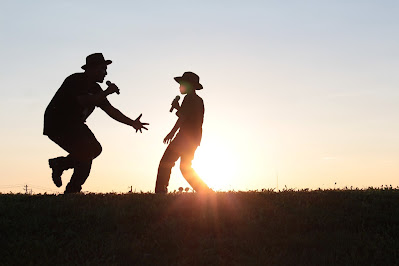
Sing a song
Sing for yourself. Not for someone else. Don’t seek approval from anyone. Play your favourite song in the background and sing along. You will eventually get better at it and also feel better. Doing things for oneself is the best gift we can give to ourselves.
Dance to your favourite song
Dance in your room when no one’s looking, or dance at a party without caring if anyone’s looking. You’ve got to get your blood and adrenaline pumping. That’s how you end your suffering from boredom and kill it under your prancing feet.
Play your favourite song
If you don’t feel like trying the activities above, play your favourite song. You will automatically find yourself singing and dancing to the tunes. Playing music on your phone is surely the easiest form of entertainment you can seek. But avoid the urge to visit social media as you play your favourite song in the background. Observe and understand the lyrics of the song, and let your imagination run wild on the foreground. You can be the hero romancing your heroine, or the other way around in your favourite song.
Write a song
It sounds complicated, but it’s not. Have you ever jokingly or unknowingly replaced a word or a phrase from your favourite song, and it still sounded perfect? Do it a little seriously this time at a greater length for the sake of your suffering from boredom. Try doing it over consecutive days instead of doing it at a single stretch of time.
Take pictures
Here’s another activity that involves your phone, but it’s worth your time. Take pictures of anything that appeals to your sight. From the colourful rubix cube sitting on your desk, to the sun rising from the east. There are many things worth capturing around you, which you can find as you observe your surroundings with your eyes wide open. Suffering from boredom might actually come in handy here as you try finding beauty in little things to entertain yourself.
Call a friend
We humans are social beings, so why not share your suffering in boredom with your friends? The conversation might probably begin with, “Dude, I am so bored”, to “so see you at 5”. You can come up with something interesting between the opening and closing lines. There, you have managed to kill it and end your suffering from boredom.
Play an instrument
It’s time to pick up that keyboard, guitar, or drums that is catching dust in the corner and start creating music. It does sound like a daunting task, to me. But playing an instrument to your favourite song will be a more delightful experience.
Draw something
Be it a doodle at the last page of your notebook, or a full sized drawing on an A4 size paper. Drawing gives the satisfaction of having created something. Creation is the best medicine for someone suffering from boredom. You might have heard yourself saying many times that I am bad at drawing, but the final results of your creation on paper is often much better than you imagined. At least if you draw from reference instead of drawing from your imagination.
There are other activities you can take up such as learning a new language or taking up a specialization course in a field of your interest. But this article focuses on simple pleasures one can experience while suffering from boredom and finding ways to kill it.
You can also come with some of your own activities and mention them in the comment section to help others kill boredom. Myself included.
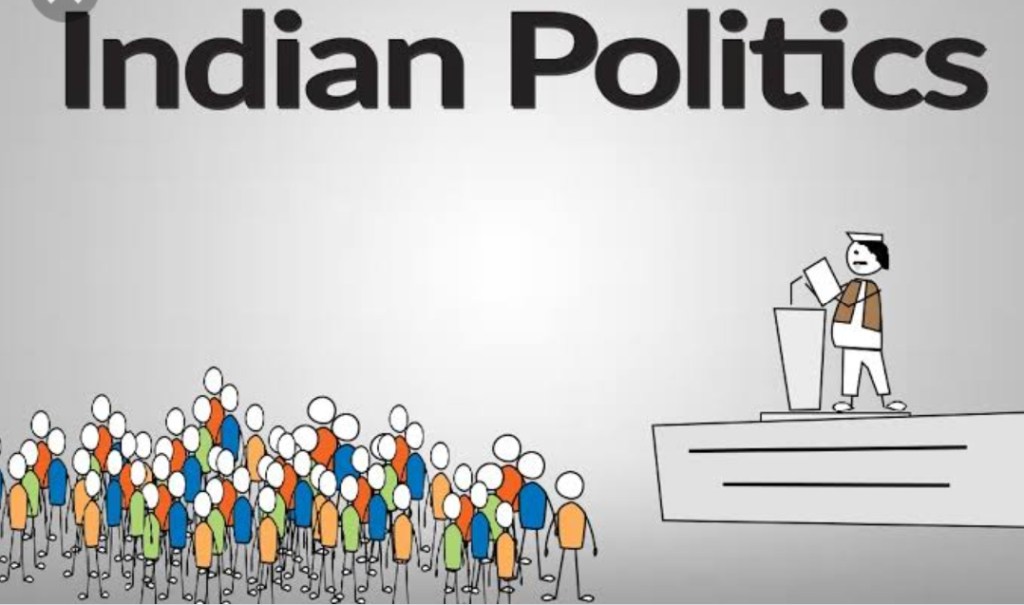
Politics work with inthe constitution of India.India is a parliamentary democratic republic in which the president of India is the head of state and the prime minister of India is the head of government.
POLITICAL PARTY IN INDIA:-
As per 23, September 2021 the election commission of India total number of parties registered was 2858, with 8 national parties, 54 state parties and 2796 unrecognised parties.
THREE BRANCHES OF INDIAN GOVERNMENT:-
* Executive.
*Legislative.
* Judiciary.
EXECUTIVE:-
Executive type of Indian government include,
* president of india.
* prime minister of India.
* union cabinet.
* council of ministers.
* Bureaucrats.
PRESIDENT OF INDIA:-
President of India is the highest post and is the constitutional head of the country. According to our constitution, President is the first citizen of our country and a symbol of unity and integrity.President is also responsible for appointing other executives and judicial members in the country like the Chief Justice of India, Judges of all the High courts, the Election Commissioner of India and states too. President of India is also the Commander in Chief of all the Indian forces i.e. Indian Army, Indian Navy, and Indian Air force.
PRIME MINISTER OF INDIA:-
Prime Minister is the chief of the Central government of India and also acts as the advisor of President. He is also head of the Council of Ministers and is responsible for appointing or dismissing any minister from the council. In case Prime Minister resigns from his office or dies during his tenure then the cabinet will automatically dissolve.
UNION CABINET:-
Union Cabinet consists of the Prime Minister and Cabinet Ministers. This is the decision making body in the central government.The Cabinet Minister cannot make a law concerning his department on its own, he can only propose the decision and then the Union Cabinet will make the final law.
COUNCIL OF MINISTERS:-
Council of Ministers works under the Union Cabinet. All the members of the Union Cabinet are members of the Council of Ministers and here the Minister of States appointed by the President on the advice of the Prime Minister.
BUREAUCRATS:-
Bureaucrats are selected and appointed by Union Public Service Commission and for states there is a State Public Service Commission. They are responsible for implementing the laws and all the other functions of government. Bureaucrats consist of IAS, IPS, IFS and other officials leading various government agencies.
LEGISLATIVE:-
Legislative type of government include president,lok sabha also known as lower house,Rajya sabha also known as upper house.
LOK SABHA:-
Lok Sabha is more powerful in both the houses. Members of Lok Sabha are elected directly by citizens of India. There are total 530 members from the states and 20 members from the union territories. They are elected in general election. Their term is five years.
RAJYA SABHA:-
There cannot be more than 250 members in the Rajya Sabha. Members of Rajya Sabha are elected by state legislative assemblies out of which 12 members are directly appointed by President who come from different backgrounds like Literature, Art, Social Services etc.
JUDICIARY:-
Judiciary type of government includes supreme court,high court and district court.
SUPREME COURT:-
Supreme Court is the highest judicial body of the country. The decision by Supreme Court of India is acceptable by all judicial bodies and no other judicial body has the power to change a decision by Supreme Court. Indian judiciary is an independent body and is not affected by Legislature or Executive. Supreme Court has the power to question any decision made by Legislative Bodies or Executive if the decision is not in accordance with the Constitution of India.supreme court of india consists of 34 judges maximum in which there can be a Chief Justice and 33 other judges.
HIGH COURT:-
The High Court is the highest judicial body of a state. High court functions under Supreme Court. High court maintains the rule of law in the particular state and in case of two small states there can be one common High court.
DISTRICT COURT:-
District court or sub-ordinate courts function under High court. They maintain rule of law in a particular district or locality in which they function. They look after the civil and criminal matters of that particular region.
There are many problems before our country today. The problem of unemployment is one of them. It is a serious problem. It implies an involuntary idleness. The individual who has no means of earning his bread by means of labour becomes a nuisance to the society. Unless every one is given work, the problem cannot be solved.
There are many causes of unemployment. The first cause is that the system of our education is defective. Much importance is given to theoretical and literary education. The practical side is almost neglected. The result is that the schools and colleges have become machines producing unemployed persons. When boy comes out of the school, he find himself unemployed. Whenever he goes, he finds the doors closed for him. In the end, he becomes desperate.
Machines are also responsible for unemployment. They have destroyed cottage industries which were a source of income to poor people. The result is that a man gets lesser amount of acres of land than his father used to have. Generally, it is seen that in villages there is no work to do when the farmers are unoccupied.
In order to remove unemployment, our government should do her best; as unemployed citizens generally become a prey to the informal ways of living. The state which cannot provide employment to her people can never claim to be a welfare state.
The system of education should be changed. Emphasis should be laid on the importance of manual labour. Special attention should be paid to technical education. Cottage and small industries should be encouraged and money should be made available to the villagers on a nominal interest to run their industries. Some sort of arrangement should be made so that the landless workers must have some land to cultivate. Import of foreign goods should be stopped and Indian industries should be patronised.
Though our government is fully alive to the problem, yet any immediate solution is nowhere in sight. Unless the problem is solved satisfactorily, all talks of welfare state and Ramraj are meaningless.
















 Eduindex
You must be logged in to post a comment.