Our Neighbours

By – Supriya

India is situated in South Asia, which comprises majority of the Indian sub-continent . India has a coastline which stretches over 7000 km and shares its borders with Pakistan to the west ; the People ‘ s Republic of China and Nepal to the north; Bhutan to the north – east and Bangladesh and Myanmar ( formerly Burma) on the east. On the Indian Ocean , India is adjacent to the island nations of the Maldives on the south – west , Sri Lanka on the south, and Indonesia on the south – east . India also claims a border with Afghanistan to the north – west. The official name of the country, India , is derived from the river Indus ( known as Sindhu in ancient times) . As a growing power, India depends extensively on her relationship with the countries in and around her neighbourhood . Maintenance of peace and security within and outside its immediate borders at a satisfactory level is a pre-requisite to create the conditions necessary for one billion citizens of the country to help them enjoy the fruits of economic growth and social development. The first four decades after independence were truly difficult years. As a new nation emerging from the throngs of two centuries of colonialism , which had sapped the country ‘ s progress , the impact of centrifugal and unstable forces in the country and its neighbourhood, made the task of economic and social development a steep and arduous journey. External and internal conflicts during this period added to the burden of our nascent emerging economy designed to fulfil the aspirations of the new found freedom of our people . Despite this truly difficult situation , the country grew in slow measure and we largely avoided large – scale crisis. However, our growth was stunted in this period and this no doubt contributed to large swathes of our population remaining under grinding poverty . At the end of the Cold War period ,the country achieved moderate results in its efforts to promote education , health care and empowerment of women, and growth of all sectors of the economy , but it was clear that the country has many more miles to go. India’ s improved relation with all the major powers of the world has contributed to its relaxed attitude and ability to deal with its neighbourhood in a rational and responsible manner. Once, the rest of the world acknowledged India’s stand that it could solve its problems peacefully and bilaterally with its neighbours without outside interference , the strategic situation in the region changed for the better. Even the fear that India ‘s nuclear tests in 1998, followed by Pakistan ‘s immediate reaction, would lead the region into a nuclear quagmire , has subsided considerably on the understanding that India is a responsible nuclear power, not given to adventurism or proliferation activities. The international community now realises that India can and will do all it can to maintain and strengthen peace and security in the region. Within the sub – continent , India ‘s national security interests are closely linked to her immediate neighbours- Bangladesh , Bhutan , China, Maldives, Myanmar , Nepal , Pakistan and Sri Lanka. Her relations with Nepal , Bhutan , Bangladesh , Sri Lanka and Maldives are stable and based on friendship and understanding.
India ‘ s largest neighbour , China is working towards the goal of achieving superpower status in the new millennium. Today, China occupies approximately 38,000 sq km of India’ s territory . In addition , under the so called Sino – Pak boundary agreement , Pakistan has illegally ceded 5,180 sq km of India’ s territory to China in POK. China also claims approximately 90000 sq km in Arunachal Pradesh. It is rapidly modernizing its armed forces. According to a recent report by the Washington Post , ” China is quickly modernizing its military and has set its sights on extending its influence deep into the Pacific and Indian Oceans now that the military balance with its longtime nemesis, Taiwan , is tilting in its favor.” Today, China has the most active land – based ballistic and cruise missile program in the world. Beijing now possesses one of the largest forces of surface – to – air missiles in the world, and it has the largest force of principal combatants , submarines , and amphibious warfare ships in Asia. Also ,a recent revolution by WikiLeaks warned that, ” As China ‘ s international presence and nationalist sentiment grow, commensurate with greater political , economic and military might , Chinese analysts anticipate a more assertive Chinese foreign policy.” The asymmetry in terms of nuclear forces is strongly in favour of China which alarmingly , has helped Pakistan to build missile and nuclear capability . China is a declared nuclear power with a wide range of military capabilities. India and China have an unresolved boundary . Although the border areas have remained largely peaceful , from time to time, on account of differences of perception of the Line of Actual Control ( LAC) , tough situations have arisen on the ground that could have been avoided , had the LAC clarification been completed . The two sides have reiterated their commitment to adhere to the provision of the 1993 and 1996 Agreements. Over the sixty years since Independence, India has been able to maintain a high level of harmony , social order and security within its borders. Arising out of the redrawing of borders, the uprooting of whole communities on religious and ethnic grounds and the division of economic assets in non – economic factors, South Asia has been repeatedly engulfed with bouts of strife and instability that has at times challenged the very foundation of India ‘ s democratic fabric. Despite India ‘ s obvious pride in its democratic track record, it has also steadfastly followed the twin tenets of (a) no export of ideology and , (b) no territorial ambitions in its dealings with all countries, including its neighbours. Such a clear – cut stand has no doubt contributed to maintaining peace and stability in the region.

THANKYOU !

DEFORESTATION

Deforestation is the process of removal of trees from forest for the human purposes.Deforestation has greatly altered landscapes around the world.Deforestion is one of the major threats to the environment.Deforestation refers to the decrease in forest areas across the world that are lost for other uses such as agricultural croplands, urbanization, or mining activities.Deforestration cause landfall,soil erosion and drought.

The loss of forest is an issue that predominantly affects tropical areas, regions with the highest biodiversity on Earth. In 2018 alone, 30 million acres of tropical rainforest were destroyed, with more than a third of the Earth’s land now being used for agriculture, a process that involves the clearing of woodland to create pasture.Most of this loss has been focussed around the Amazon, a rate of destruction that has only increased in recent years with policy shifts in Brazilian government – 3,769 square miles of Amazonian forest cover was lost between 2018 and 2019.Southeast Asia that has seen the greatest rate of forest loss of anywhere in the world, losing 30% of its forest surface in the last 40 years.

Coupled with huge population growth – with the region’s population forecast to rise by almost 250 million by 2030 – human settlements are increasingly coming into contact with animals that had previously been naturally contained in woodland habitats.The increase of disease linked to deforestation and increased contact between humans and tropical animals speaks to the risks involved when ancient natural ecosystems are disrupted.The loss of trees and other vegetation can cause climate change, desertification, soil erosion, fewer crops, flooding, increased greenhouse gases in the atmosphere, and a host of problems for indigenous people.

C.V.RAMAM

Sir Chandrasekhara Venkata Raman FRS was an Indian physicist known for his work in the field of light scattering. Using a spectrograph that he developed, he and his student K. S. Krishnan discovered that when light traverses a transparent material, the deflected light changes its wavelength and frequency.He was born in 7th November 1888 in Thiruvanaikoil, Tiruchirappalli His parents was R. Chandrasekhar Iyer, Parvathi Ammal.He did his education in st Aloysius Anglo Indian High school, presidency College.
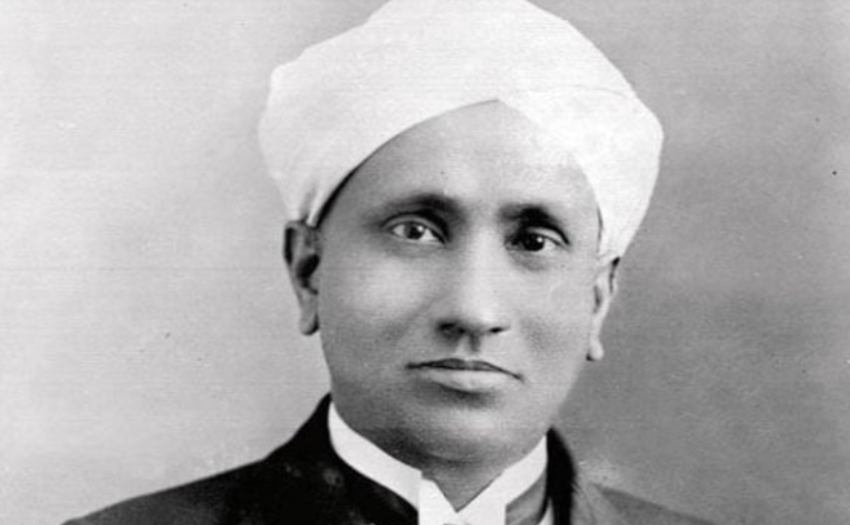
C.V.Raman Theory proposed a theory that when light that shines through a material is scattered and its wavelength changes from that of the original incident light because of its interactions with the molecules in the material.This is also called as Raman effect.C.V. Raman is also known as Chandrashekhara Venkata Raman. He was a man of brilliant mind who has done his matriculation at the age of 11 and 12th class at the age of 13. Let us solve an interesting quiz on Dr. C.V. Raman which throws light on his life and inventions done by him.07-Nov-2019

He received many awards,

* 1928-Matteucci medal.

* 1930-Hughes medal.

* 1930-Nobel prize in physics.

* 1941-Franklin medal.

* 1954-Bhart ratna.

* 1957-Lenin peace prize.

Capital Punishment

By – Supriya

Capital Punishment or execution as means of giving justice has become the most controversial issue , which pertains to the laws that govern our society. With the rise in demand for human rights, taking away a criminal’ s life has become the most talked about thing not only at the national level but also at the global platform. The recent hanging of Saddam Hussein , the ex – dictator of Iraq, led to worldwide protests. People and reformists have been demanding humane treatment for criminal and offenders, which is justified . In fact, the prison system was evolved keeping in mind the notion that people who go astray in their life and start providing harmful to the society should be kept in confinement for sometime and be given a chance to change and reform themselves. The prisons were supposed to be such places where the prisoners could be slowly reformed and reinstated in the mainstream of the society. But many a times, the re – conciliation remains a far- fetched frame. The idea works well in cases of theft , Robbery or other minor offences. Complications and problems arise when the offence involves brutal or inhuman acts like murders etc. The old Mesopotamian Law advocates ” a tooth for a tooth and an eye for an eye”. Thus, the idea of capital Punishment is not a new one regarding offences which are extremely serious. In fact, justice delivered in ancient times was brutal and inhuman. With the progress of civilization , justice started becoming more humane. Earlier, criminals were not treated as human beings. But now capital punishment stands in great controversy over the right of society at large to deny a person right to life . Some people are of the view that no one has the right to take away anyone’s life for any reason. Man cannot play God’s role nor should ever try to. When we cannot give life, we have no right to take away anybody ‘s life. On the other side, people also take into consideration victim’s right to life. The criminal too has no right to take away anyone’s life for any reason at all . So , if he could go to the extent of taking away one’s life, he too has no right to live in a civilized society. This takes us back to the – often condemned law of Moses.
Various arguments of both the sides can be cited to support viewpoints that are poles apart. When told by the opposing side that the death penalty is cruel, inhumane and degrading , most proponents argue that murder is too. In fact, some people consider execution to be more humane than life imprisonment because it is quick and instantaneous. Those in support of capital punishment feel that making the prisoner suffer by rotting in jail for the rest of his life is more torturous and inhumane than execution. To sum up the basic views of the proponents , imprisonment is simply not a sufficient safeguard against the future actions of criminals because it offers the possibility of escape and release on parole. They think that some criminals must be made to pay for their crimes. They should get the punishment they deserve . If they happen to make it out to the world, who ‘ s to say that they wouldn’t kill again. The punishment for the culprit that fits the crime would soothe the victim’s family and society would be relieved , knowing one murderer is not there on the streets. Executing a person certainly prevents recurrence of violence , or quite possibly the first occurrence of other murderous acts. More timely enforcement of the death penalty would help to reduce the crime rate by installing a sense of respect and fear of the law. Crimes carry penalties – this should be understood very well by the people. If you do something wrong , you are going to be punished , will act as deterrent to such heinous crimes. Another argument against the death penalty is that it costs less to imprison someone for life than to execute them. The argument seems to be very utilitarian but is countered by the supporters of death penalty – ” Why should the society shoulder the responsibility for feeding the hard – hearted criminals , that too for their cruel deeds?”, is what they argue. The strongest argument using capital punishment for retributive purpose, is the argument that capital punishment is cruel and completely inhuman. The methods by which executions are carried out involve physical torture. Many a times electrocution has caused extensive burns and it needs more than one application of electric current to kill the condemned. No one, not even the state , has the authority to play God. Contrary to the popular belief that the death penalty reduces the crime rate, various surveys have shown that the threat of the death penalty does not in any way reduces the occurrence of violent crimes. Capital punishment , it is argued, is a barbaric remnant of uncivilized society. It is immoral , unfair and discriminatory in practice . It is discriminatory because at times some innocent people are executed due to a faulty judgement. Another argument against the death penalty is that where does lie the difference between the criminals and the society? The society in turn commits the same offence of killing when it punishes the criminals for taking away life.
Thus, the issue of capital punishment involves determining whether the execution of criminals is ever justified , and if so , under what circumstances is it permissible and how to determine the limits of a crime demanding execution ; it also involves the issue whether the society believes in corrective justice or retributive justice. The basic assumption of retributive notion of punishment in general is that a criminal deserves punishment , and punishment should be equal to the harm done. Thus, society may punish the criminal any way it deems necessary so as to set an example for others would – be criminals. On the other hand, the theory of corrective justice believes that capital punishment should be abolished since it is undignified , inhumane , or contrary to love. Thus, the controversy still continues and legal experts debate over the fact whether capital punishment is permissible or not. Instead of debating over this, society should rather find ways of lowering crime rate so that no need of such debates arises. But as it is not possible to create a paradise in this otherwise imperfect world, the question will linger on for years to come – it seems.

THANKYOU!

Have you read this book?

Something I Never Told YouSomething I Never Told You, published in the year 2019, written by Shravya Bhinder, who is one of the remarkable authors of romance genre of this era. This is a nonfictional event based on the life of two characters named Raunak and Adira. Raunak is an introvert guy who falls in love with Adira at the first sight when she comes to live as a PG at his grandma. But he finds it difficult to confess his feelings to Adira. On the other hand Adira is unaware about this and does not expect anything of this sort.

Raunak tries to gain confidence to speak out his thoughts to Adira, but is very nervous to do so. He keeps wondering about to say or not to say. Later one day it’s Adira’s birthday and he plans to gift her a silver bracelet as a present. Since it was so expensive he borrows money from one of his friends. but because of his nervousness he finds it difficult to face Adira. And since they were not friends so he thinks it would be quite awkward to do so. Hence, he secretly puts the present in her purse. when Adira finds the bracelet in her purse she is very surprised! She is curious who it would be and asks everyone in the party who it was. But will Raunak accept that it was he by expressing his feeling? Or by any chance will Adira come to know it was Raunak? what will happen next? If you have already read this novel, comment your opinion about the story. if want to read the entire story……

How to take notes?

Preparing to take good notes in class


The first step to taking good notes in class is to come to class prepared. Here are some steps you can take to improve your note-taking before class even begins:

  • Preview your text or reading assignments before the lecture. Previewing allows you to identify the main ideas and concepts that will most likely be discussed during the lecture.
  • Look at your course syllabus so that you know the topic / focus of the class and what’s going to be important to focus on.
  • Briefly review notes from previous class sessions to help you situate the new ideas you’ll learn in this class.
  • Keep organized to help you find information more easily later. Title your page with the class name and date. Keep separate notebook sections or notebooks for each class and keep all notes for each class together in one space, in chronological order.

Note-taking during class

Now that you are prepared and organized, what can you do to take good notes while listening to a lecture in class? Here are some practical steps you can try to improve your in-class note-taking:

  • If you are seeking conceptual information, focus on the main points the professor makes, rather than copying down the entire presentation or every word the professor says. Remember, if you review your notes after class, you can always fill in any gaps or define words or concepts you didn’t catch in class.
  • If you are learning factual information, transcribing most of the lecture verbatim can help with recall for short-answer test questions, but only if you study these notes within 24 hours.
  • Record questions and thoughts you have or content that is confusing to you that you want to follow up on later or ask your professor about.
  • Jot down keywords, dates, names, etc. that you can then go back and define or explain later.
  • Take visually clear, concise, organized and structured notes so that they are easy to read and make sense to you later. See different formats of notes below for ideas.
  • If you want your notes to be concise and brief, use abbreviations and symbols. Write in bullets and phrases instead of complete sentences. This will help your mind and hand to stay fresh during class and will help you access things easier and quicker after class. It will also help you focus on the main concepts.
  • Be consistent with your structure. Pick a format that works for you and stick with it so that your notes are structured the same way each day.
  • For online lectures, follow the above steps to help you effectively manage your study time. Once you’ve watched the lecture in its entirety, use the rewind feature to plug in any major gaps in your notes. Take notes of the timestamps of any parts of the lecture you want to revisit later.

Determining what’s important enough to write down

You may be asking yourself how you can identify the main points of a lecture. Here are some tips for recognizing the most important points in a lecture:

  • Introductory remarks often include summaries of overviews of main points.
  • Listen for signal words / phrases like, “There are four main…” or “To sum up…” or “A major reason why…”
  • Repeated words or concepts are often important.
  • Non-verbal cues like pointing, gestures, or a vocal emphasis on certain words, etc. can indicate important points.
  • Final remarks often provide a summary of the important points of the lecture.
  • Consider watching online lectures in real-time. Watching the lecture for the first time without pausing or rewinding can help force you to focus on what’s important enough to write down.
Preference

https://learningcenter.unc.edu/tips-and-tools/effective-note-taking-in-class/
Real Equality

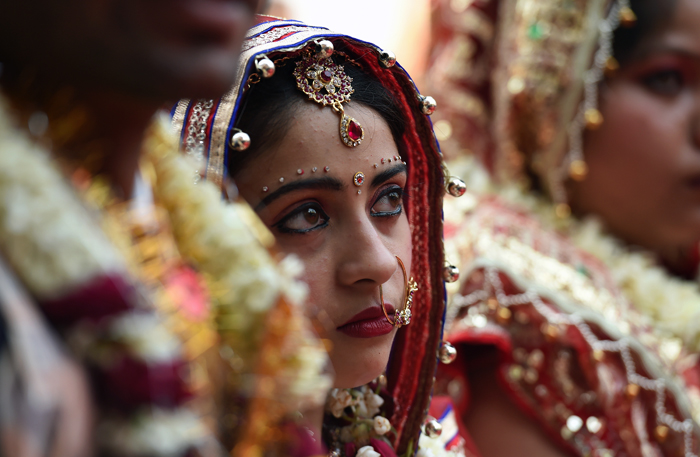
India Is Home To A Third Of World's Child Brides. Half Of India's Girls Get  Married Before 18

I read a quote somewhere a while back which I would like to put here before I start with my topic. The quote was by Diane Mariechild and it read, “A woman is a full circle. Within her is the power to create, nurture, and transform”. Things are slowly getting for women. While many might disagree about this because there are, still so many atrocities and sufferings women go through to date but the rise of women in various aspects and platforms stands as evidence of the progress and growth of women.  

This article is about the most recent incident that occurred in the Lok Sabha. The passing of the historic bill increased the eligibility criteria of marriage for women from 18 to 21. Well according to what I feel is this was a necessary change that needed to be made as we are living in 2021 moving forward to 2022 and having so much progress and development then our thoughts about women getting the same kind of treatment as men cannot be stuck in the old generation. What did surprise me and got me thinking was how a bill, which was meant for the betterment of women, had presented contentment and at the same time managed to bring a sense of resentment in people. Shockingly more women seemed to be questioning the bill than men are. Before we get into this, first let us understand what exactly the bill exactly means.

INTRODUCTION OF THE BILL

Photo Gallery : Lok Sabha

A bill seeking to fix 21 years as the legal age for marriage for women came to be introduced by the Union Minister of India Mrs. Smriti Irani. This bill knows as the Prohibition of Child Marriage (Amendment Bill) 2021. The bill aims to show and bring about a sense of equality among men and women by keeping the same age for marriage for both genders. This bill also seeks to amend the other seven laws that are quite personal as well. Those bills are the Indian Christian Marriage Act; the Parsi Marriage and Divorce Act; the Muslim Personal Law (Shariat) Application Act; the Special Marriage Act; the Hindu Marriage Act; and the Foreign Marriage Act. The bill also aims to overpower all present working laws. This also included any kind of customs, usage, or practices that holds the parties responsible.  This brought about a lot of backlash from various opposition parties of the country and therefore this bill is present in the standing committee. The union minister also made an important point when she says and I quote “As a democracy, we are 75 years late in providing equal rights to men and women to enter into matrimony”. The union minister also made very important points when she brought out the fact that even in 2021 7% of the girls as young as 15 years are becoming pregnant and nearly 23% of girls have been married away even before the age of 18. This bill not only aims to bring this down but also brings about responsibility in both the parents and brings about an increase in nutrition and care for women. This bill is going to become effective 2 years from the dates it receives Presidential confirmation

Why it is being considered a decisive step?

Women all over the world have been fighting for their rights and equality for almost many decades now. Women have learned to struggle and sacrifice many things for their rights, equality, and importance in society from the very beginning and still have a long way to go. Therefore, when this bill was brought out in the Lok Sabha by a woman minister, I am sure this created a feeling of relief, joy, and happiness in the minds of all women.  This also created a sense of hope to keep moving forward and had a huge impact on women and their strength in a positive and supportive manner. The bill not only aims at making the physical life better for women but also the emotional mental part of their lives. Impactful things like this bill is a much necessary change that needs to be brought into society so that women are not expected to do things because they have reached a “certain age” which again is not decided by the women but all the other people that the small girl child is growing up with.

Why is there a sense of resentment?

Two things need to be understood by the readers. The sense of resentment has no connection with the opposition parties or their sentences of backlash. Here one is trying to understand the resentment or questions that lie in the common person’s mind. The second and the most important thing is that there is no resentment or sadness towards the bill or the aim behind the proposal of the bill. The resentment comes from a place of the bill not being enough to bring about change. There is so much more that needs to be done so that this bill has some value and establishment in society. This change and betterment should not just come from the urban sector but also the rural sector.

Child marriage is still predominant and present in societies, especially in small towns and villages. Girls are still considered a curse, a burden that needs to be cleared off before it is too late. Girls are married off even before they turn 18 and expect to look after household activities and chores from a very young age. Yes, things have gotten better at least to a small percentage concerning their education but they still have not been able to complete their education. The idea of being kept at home after they mature and at the same time making sure they leave their home is very perplexing and intriguing.

Both these sides make us question the very idea of equality, which is not just between men and women but also between women themselves. Yes, this bill does bring a sense of equality but true equality can only be achieved when more things are done to make women’s lives better. This change does not necessarily have to be as big as passing the bill; it could be as small bringing about awareness and taking small measures to make sure that every girl or woman whether she belongs to the urban society or the rural society has equal rights and opportunities like anybody else on the planet.

To conclude with a quote by Michelle Obama as she says and I quote “As women, we should stand up for ourselves. We must stand for each other. We must stand up for justice for all.”

References

  1. https://theprint.in/india/modi-govt-introduces-bill-to-increase-womens-marriage-age-to-21-years-in-lok-sabha/785232/
