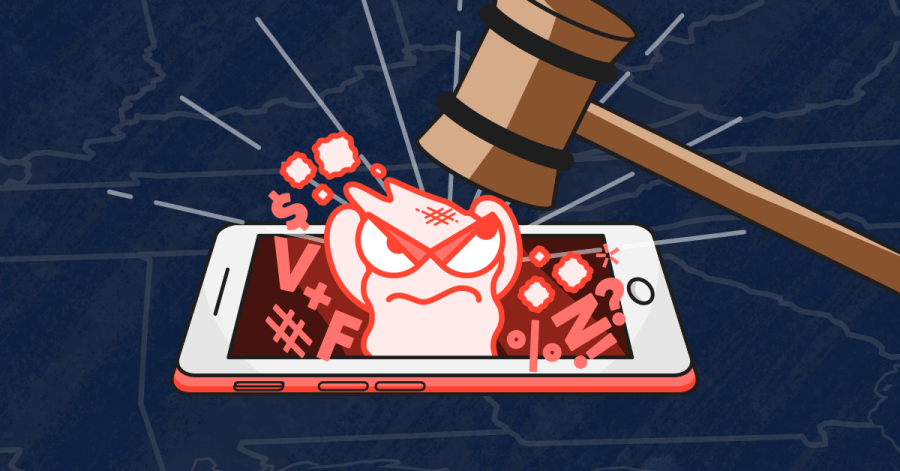
BODY SHAMING

Body shaming is characterized as the demonstration of offering inappropriate and pessimistic remarks about someone else’s weight or size. Habitually, this is the kind of thing that overweight individuals are exposed to yet there’s an expanding pattern in criticising the people who look ‘excessively thin’.

Body shaming is universal. It’s in magazines, papers, network shows, motion pictures, discussions between companions, on the Internet and online media locales. Remarks can be terrible and once in a while utilized in poor-taste jokes. Nobody ought to need to experience a daily reality such that they’re caused to regret their bodies by others, particularly considering individuals are frequently basic enough of their own appearance.

The results of body shaming are extreme, regardless of whether you’re rebuking yourself or another person, and can add to psychological well-being issues.

Body shaming appears in numerous ways:

  • Criticizing your own appearance, through a judgment or correlation with someone else.
  • Criticizing one more’s appearance before them
  • Criticizing one more’s appearance without their insight.

Unfortunately, body shaming happens among all kinds of people of every unique shape and body sizes. Body shaming has included the two reactions of being “excessively fat”, or “excessively thin”, frequently singling out imperfections that are totally inappropriate. Numerous magazines, online media stages, and promotions add to body shaming in manners that have begun to standardize these harming practices. Numerous TV shows and motion pictures have fallen into this example too, where the “fat” character is frequently the subject of analysis and lighthearted element. With the moving practices of superstar fat shaming via web-based media, it is critical to comprehend the potential results that might emerge.

EFFECTS OF BODY SHAMING

  1. Depression: Individuals who are victimized because of weight are at a higher danger of wretchedness and other mental issues.
  2. Eating disorders: Fat shaming is connected to an expanded danger of dietary problems, for example, binger eating.
  3. Reduced self-esteem: Fat shaming is connected to decreased confidence.
  4. Others: By causing pressure, weight gain, expanded cortisol levels, and mental issues, weight separation might raise your danger of different chronic disease.
  • Thus, depression is one of the top reasons for expanded self-destruction hazard – and individuals who are victim of body shaming are bound to be discouraged. It’s conceivable that weight separation might expand self-destruction hazard.

DEALING WITH BODY SHAMERS

1. Fight hate with love: It’s extremely simple to become involved with others’ web of antagonism. You are above what the world says or thinks about you. Battle the hate you get with love by showing empathy to the people who don’t track down esteem in themselves and want to cut others down. Forgive the individuals who betray you and send love just as light to the people who need it. Life is too short to even consider hate yet there’s a lot of space for all of us to engage each other with kindness, sympathy and love.

2. Always be authentic: Being authentic is your own super power and authenticity comes from extraordinary and persistent self-study and self-information. That implies knowing your great side, yet additionally knowing your not-super great side. Recall no piece of you is your adversary. When we know both our sides, we will actually want to rehearse extremist self-acknowledgment and really at that time would our actual inward power be able to sparkle. At the point when we practice self-acknowledgment, we can likewise acknowledge others without judgment.

3. Embrace positivity: Being careful means being in the present moment with your body and brain. It’s a heavenly energy that conveys inside a bliss that we as a whole long to communicate in our lives. At the point when we figure out how to overcome our own instabilities, we accept a care that ingrains power, harmony, empathy, pardoning and love. We enlighten genuine magnificence that goes past the world’s assumptions for who we ought to be. We move others around us as they share in our weaknesses that we were told to stow away.

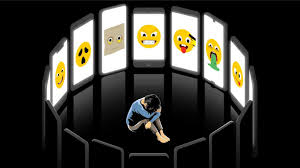
CYBERBULLYING

BULLYING

Bullying is undesirable, forceful conduct among school matured kids that includes a genuine or perceived power imbalance. The conduct is repeated, or can possibly be repeated, over the long run.

CYBERBULLYING

Cyberbullying is harassing that happens over computerized gadgets like cells, PCs, and tablets. Cyberbullying can happen through SMS, Text, and applications, or online in web-based media, discussions, or gaming where individuals can see, take an interest in, or share content. Cyberbullying incorporates sending, posting, or sharing negative, hurtful content, or mean substance about another person. It can incorporate sharing individual or private data about another person causing shame or embarrassment. Some cyberbullying goes too far into unlawful or criminal conduct.

The most well-known spots where cyberbullying happens are:

  • Online Media, like Facebook, Instagram, Snapchat, and Tik Tok
  • Text informing and informing applications on versatile or tablet gadgets
  • Texting, direct informing, and web based talking over the web
  • Online discussions, talk rooms, and message sheets, like Reddit
  • Email
  • Web based gaming networks

Cyberbullying can be:

Determined – Digital gadgets offer a capacity to quickly and constantly convey 24 hours every day, so it very well may be hard for kids encountering cyberbullying to track down help.

Long-lasting – Most data communicated electronically is extremely durable and public, if it is not reported and removed. A negative web-based standing, including for the people who bully, can affect school affirmations, business, and different everyday issues.

Difficult to Notice – Because instructors and guardians may not hear or see cyberbullying occurring, it is more difficult to perceive.

With the prevalence of web-based media and advanced gatherings, remarks, photographs, posts, and content shared by people can frequently be seen by outsiders just as colleagues. The information a person offers on the web – both their own personal or any bad, mean, or terrible content – makes a sort of long-lasting freely available report of their perspectives, exercises, and behaviour. This openly available report can be considered as a web-based standing, which might be open to schools, bosses, universities, clubs, and other people who might be exploring an individual now or later on. Cyberbullying can hurt the internet-based reputation of all interested parties – in addition to the individual being harassed, yet those doing the bullying or taking interest in it.

  • The 2019 School Crime Supplement to the National Crime Victimization Survey (National Center for Education Statistics and Bureau of Justice) demonstrates that, from one side of the country to the other, around 16% of understudies in grades 9-12 experienced cyberbullying.
  • The 2019 Youth Risk Behavior Surveillance System (Centers for Disease Control and Prevention) demonstrates that an expected 15.7% of secondary school students were electronically tormented in the year before the overview.

LAWS

All states have laws expecting schools to react to bullying. As cyberbullying has become more predominant with the utilization of innovation, many states currently incorporate cyberbullying, or notice cyberbullying offenses, under these laws. Schools might make a move either as legally necessary, or with local or school policies that permit them to train or make another move. A few states additionally have arrangements to address bullying if it affects the performance of school.

Steps an individual can take after cyberbullying:

Tell somebody: The primary thing to do is tell a grown-up you trust.  Individuals who are cyberbullied may feel humiliated or hesitant to report a harasser. Some might delay since they’re not 100 percent sure who is doing the bullying. Yet, bullying can deteriorate, so shout out until you track down somebody to help. In some cases, the police can find a mysterious web-based harasser, so it’s frequently beneficial to report it.

Report harassing: Social media sites view it in a serious way when individuals post awful or mean stuff or set up fake records. If an individual reports an abuse, then the site administrator takes serious action such as blocking the user to prevent further cyberbullying and not allowing the person to use the site in future. Assuming somebody sends you mean messages or messages, report it to telephone administration or email suppliers (like Comcast, Google, and Verizon).

Block the bully: Most gadgets have settings that let you electronically block the bully or bullies from sending notes. In the event that you don’t have any idea how to do this, ask a companion or grown-up who does.

Be protected on the web: Password protect your smartphone and your online sites, and change your passwords often: Make certain to share your passwords only with your parent or gatekeeper.

IMPORTRANT NOTE

Make sure to step forward and take action against cyberbullying if you or anybody around you is facing. Let the bully know it is not okay and it is not okay to affect other person both emotionally and mentally.

POVERTY

“Overcoming poverty is not a gesture of charity. It is an act of justice”

-Nelson Mandela

Poverty is articulated hardship in prosperity, and contains many aspects. It incorporates low salaries and the failure to acquire basic goods and products fundamental for living with nobility. Poverty likewise incorporates low degrees of wellbeing and training, helpless access to clean water and disinfection, deficient actual security, absence of voice, and inadequate limit and chance to better one’s life.

Issues like hunger, disease, and helpless sterilization are major causes and end results of poverty. In other words, that not having food implies being poor, yet being poor additionally implies being not able to manage the cost of food or clean water. The impacts of poverty are frequently interrelated with the goal that one issue rarely happens alone. Terrible sanitation makes one helpless to illnesses, and yearning and absence of clean water makes one considerably more defenseless against sicknesses. Impoverished nations and networks frequently experience the ill effects of separation and end up trapped in a pattern of poverty.

POVERTY AND SOCIAL LIFE

The endless loop of poverty implies that deep rooted obstructions and inconveniences are passed from one age onto the next. Joblessness and low wages establish a climate where youngsters can’t attend the class. Youngsters should regularly work to provide a revenue for their family. With respect to youngsters who can go to school, many neglect to perceive how difficult work can further develop their lives as they see their parents battle at each day undertakings. Other plagues accompanying poverty include:

  • Devastating mishaps because of risky workplaces consider the new structure breakdown in Bangladesh.
  • Poor housing- an enduring reason for illnesses.
  • Water and food related sicknesses that happen just on the grounds because poor can’t bear “safe” food sources.

At last, poverty is a significant reason for social pressures and takes steps to separate a country due to income disparity. This happens when the wealth of a nation is ineffectively circulated among its residents and when a little minority has a greater part of the cash. Wealthy or developed countries maintain stability because of the presence of a middle class. Be that as it may, even Western nations are continuously losing their working class. Therefore, there has been an expanded number of riots and conflicts. For society, poverty is an exceptionally dangerous variable that can undermine a whole country. The Arab Spring is an extraordinary illustration of how revolts can begin due to not many open positions and high poverty levels.

POVERTY AFFECTING CHIDREN

  • Children from helpless background fall behind at all phases of training.
  • By the age of three, more unfortunate kids are assessed to be nine months behind kids from more affluent foundations.
  • Before the finish of elementary school, students getting free school dinners are assessed to be around three terms behind their companions.
  • By 14, this hole surges to above five terms.
  • By 16, kids getting free school dinners are around 1.7 grade points underneath their more prosperous companions’ normal GPA.

SELF CARE

“It could be anything that floats your boat — anything that puts a smile on your face,” Dr. Gill Lopez says. “Anything that makes you feel cared for, even if it’s you caring for yourself.”

The World Health Organization defines self-care as: “the ability of individuals, families, and communities to promote health, prevent disease, maintain health, and to cope with illness and disability with or without the support of a healthcare provider. “As per this definition, taking care of oneself incorporates everything connected with remaining physically healthy – including cleanliness, nourishment, and looking for clinical consideration when required. It’s all the methods an individual can require to oversee stressors in their day-to-day existence and deal with their own wellbeing and prosperity.

Taking care of oneself requires checking in with yourself and asking yourself how you’re doing and what your body’s requesting. Certain individuals use it to manage troublesome reports, others just to keep up with their satisfaction every day. Taking care of oneself doesn’t mean exactly the same thing for everybody. Various individuals will embrace distinctive taking care of oneself practices, and even your own definition may change over the long run. “What is self-care for one person will likely differ from someone else, and what’s self-care for you one day might not feel like self-care another day,” Dr. Amsellem says.

 Taking part in taking care of oneself routinely could assist you with doing your absolute best. “At the point when we are consistently dealing with ourselves, we are better ready to respond to the things that continue in our lives,” It’s something we do to keep up with positive well-being.

At a point when taking care of oneself is routinely rehearsed, the advantages are expansive and have even been connected to positive wellbeing results like decreased pressure, improved immune system, expanded productivity, and higher confidence.

TYPES OF SELF-CARE

Emotional self-care, for example, self-talk, week by week bubble showers, saying “no” to things that cause pointless pressure, allowing yourself to take a respite, or setting up a week after week espresso date with a companion

Physical self-care, for example, focusing on rest, taking on an activity routine you can stay with, picking sound and sustaining food sources over profoundly handled ones.

Spiritual self-care, like going to a religious service, investing energy in nature, reflecting, consolidating normal thoughtful gestures into your day, or keeping an appreciation diary.

SELF-CARE PRACTICES

Exercise: People who practice somewhere in the range of two and eight hours out of each week all through their lives diminished their danger of passing on by 29 to 36 percent.

Finding Purpose: As indicated by the researchers having a strong life purpose   was related with diminished death rates.

Diet: Eating a diet loaded up with five servings of leafy foods each day is related with a lower hazard of mortality, particularly from heart-related issues.

Sleep: Too-little rest (under seven hours out of each night) is connected with higher death rates, however a lot of rest wasn’t sound all things considered.

Getting Outside: According to a recent report distributed in Lancet Planet Health, investing energy in green space is related with a lower death rate.

An Analysis of Philip Larkin’s poem “Church Going”

Philip Larkin is a British poet of twentieth century. His poem “Church Going” deals with the issues regarding the declining religious beliefs and spirituality of the twentieth century. The title of the poem carries multiple connotations. In a primary analysis the title may refer to going to the church for participating in the sermons or for praying. Another meaning is just visiting the church for the sake of visiting. And in a deeper analysis it can be said that the title may refer to going away from the church which means an escape from religion and spirituality.

The poem is filled with various rhetorical questions through which poet brings a sense of sarcasm. Poet is at the church in the beginning. As he enters he thuds close the door. But he refuses to enter first, because he doesn’t want to disturb the practices. Then there are several instances in the poem which reflects the lack of faith in the poetic persona’s mind.

He has seen many pillars, bible, altar and he doesn’t feel any respect towards them. He reads from the Bible in a sarcastic way and exits. He feels a kind of uncle or irreverence towards the church and religion. The poetic persona wonders that what will happen to the church if the people completely stop the visit. He says that some will be tourist attractions with their documents and ceremonial plate wares. Others will decay and take over by sheeps and cows. Or some women with superstitious beliefs would visit.

The narrator also wonders who will be the last person to visit the church as a church. One may be a history buff, or an antique lover. Someone who loves the Christmas will also be a visiter. But the last person may be a poet like the narrator, bored and ignorant about religion. Even though the poetic persona is ignorant and having irreverence, says that the church held everything together from the shattered form. It is the place of marriage, birth and death and gives meaning to all human action. The church, which is a serious and meaningful place in a meaningful ground combine all human instinct and humans seek wisdom from here. Through the poem Philip Larkin presents a contrast between shattering beliefs and the spirituality of the twentieth century and the role of church and religion in giving meanings to human life.