

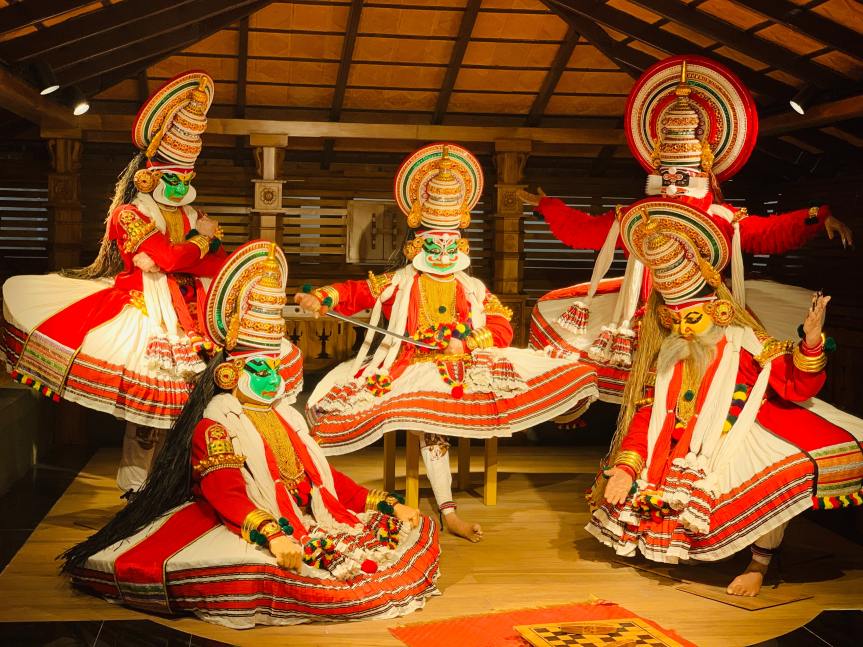
The state of Kerala is well known for its luscious landscapes and beautiful backwaters. It is also home to a treasure trove of art forms and literature. These art and dance forms symbolize the rich historical and cultural heritage of the state. Let us take a look at some of the classical dance forms of Kerala that will no doubt mesmerize anyone.
Kathakali
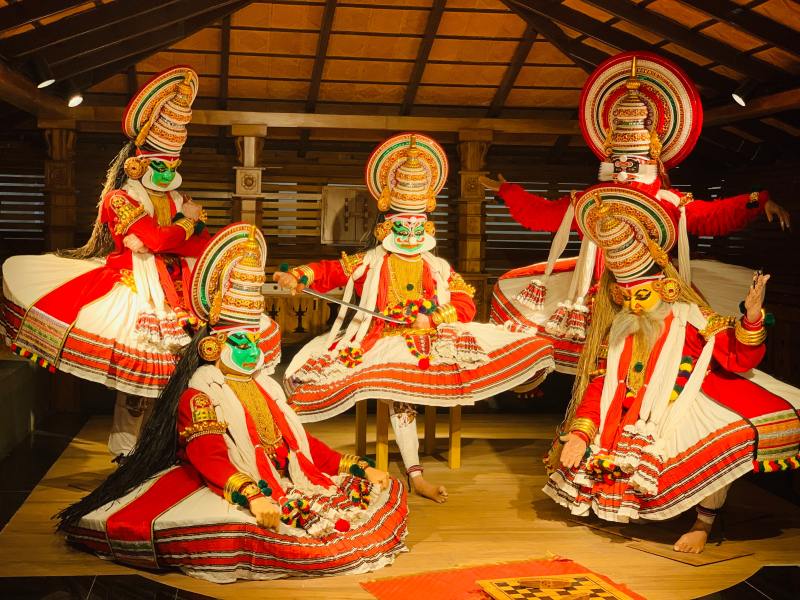
Kathakali is one of the most famous dance forms of Kerala, iconic for its elaborate costumes, colourful make-up, complex gestures and facial expressions. Formally systematized in the 17th century, this dance form has its roots in the temple and folk arts which are traceable to at least the 1st millennium CE. The term ‘Kathakali’ literally means ‘Story-play’. It has elements and aspects taken from Bharatamuni’s Natya Shastra as well as movements incorporated from ancient Indian martial arts and athletic traditions of South India.
A Kathakali performance perfectly blends musical instruments like Maddalam, Chenda, and Idakka, vocal performers, choreography, hand gestures and facial expressions to express ideas. The performances show folk stories, religious legends and spiritual ideas from the Puranas and Hindu epics. Traditionally, it was performed only by males, with female roles also being performed by men. Since the 1970s, women have also entered this field of classical dance. The performances used to be long and extended to many nights but have now been shortened. Taught in the past through the ancient Gurukula-based training system, students of Kathakali today are trained in professional schools like the Kerala Kalamandalam and Trivandrum Margi School.
Kathakali has 6 basic make-up types – Pachcha (green, typically for noble characters like Krishna, Rama, Nala), Kathi (Knife, for villain characters), Kari (Black, for she-demons), Thaadi (Beard, for characters like Hanuman), Minukku (Shining, for female characters), and Teppu (for special characters like Garuda, Jatayu, Hamsa).
Mohiniyattam
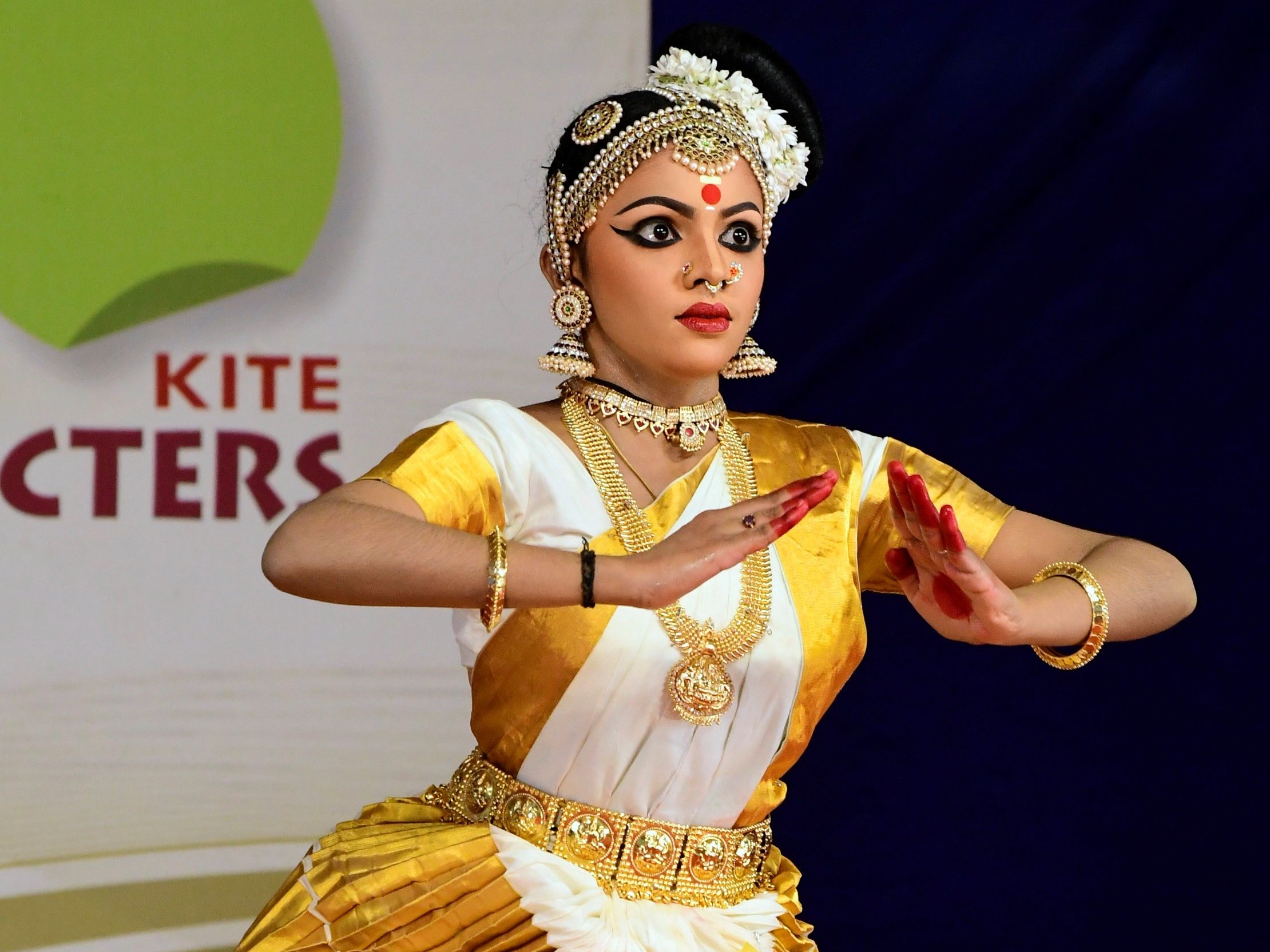
The roots of Mohiniyattam are in the Natya Shastra, following the Lasya style of delicate, graceful and feminine movements, The name comes from Mohini – a divine avatar of Lord Vishnu. It was traditionally performed solo by women although men perform it now as well. A typical Mohiniyattam performance includes Carnatic music and singing, with the songs in a Malayalam-Sanskrit hybrid called Manipravalam. The performers wear a plain white, off-white, or cream coloured saree with gold-laced embroidery. This dance form was banned by the British during their rule, ridiculed as a dance form of the devdasi system. The reintroduction and revival of Mohiniyattam after the Colonial era was spearheaded by the poet Vallathol Narayana Menon, who established the Kerala Kalamandalam dance school, encouraging the training and practice of the dance form.
Mohiniyattam and Kathakali form a part of the 7 classical dance forms of India.
Chakyar Koothu
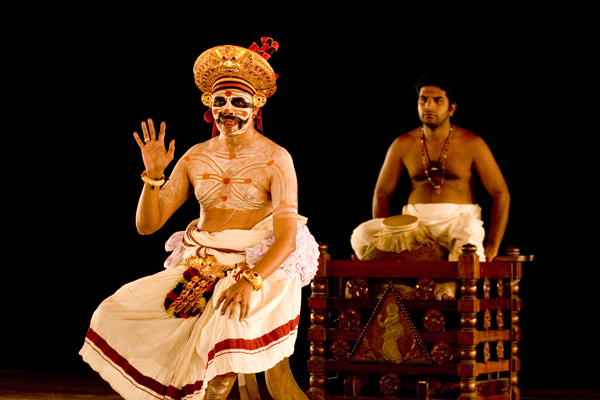
Chakyar Koothu is an art form performed in a place specifically designed inside Hindu temples called a Koothambalam. This dance form was traditionally performed by members of the Chakyar community in times of temple festivals. It is performed solo, with the performer narrating stories from Puranas and Hindu epics like Ramayana and Mahabharata. The performer wears a distinctive headgear and black mustache and has his torso covered in sandalwood paste and red dots. The performance is basically a monologue, oftentimes incorporating humor and wit to comment on current events and members of the audience. The performer is accompanied by musical instruments namely the pot drum Mizhavu and a pair of Ilathalam.
Nangiar Koothu
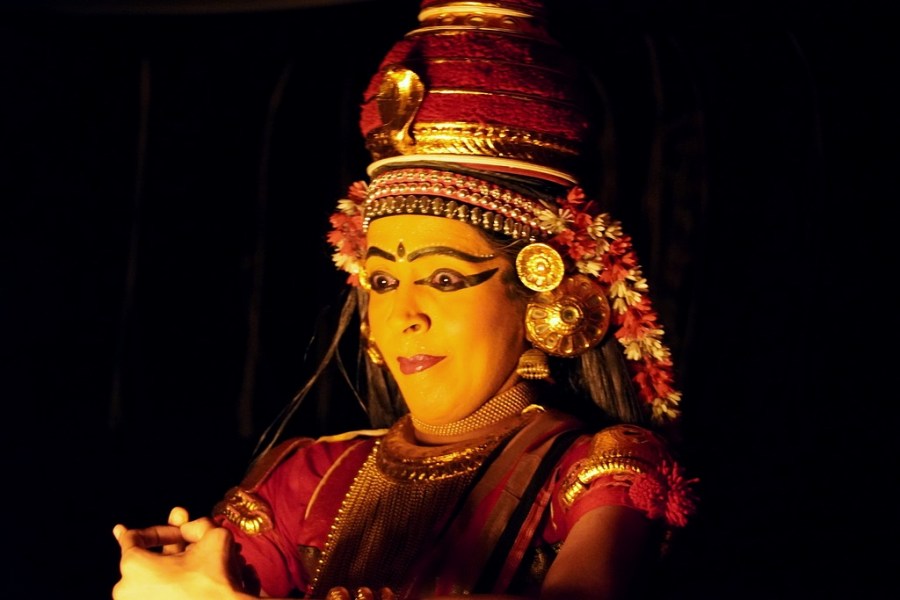
Nangiar Koothu is a traditional dance form related to the art of Koodiyattam. Similar to Chakyar Koothu, it was presented only in Koothambalams, Performed solely by women, this dance form traditionally allowed only women of the Ambalavasi Nambiar community to learn it, but now is open to all. Nangiar koothu shows stories from Sree Krishna Charitam – a text depicting the life of Lord Krishna. The performer or Nangyaramma presents stories of Krishna using body movements, hand gestures and facial expressions and is accompanied by the Mizhavu.
Koodiyattam
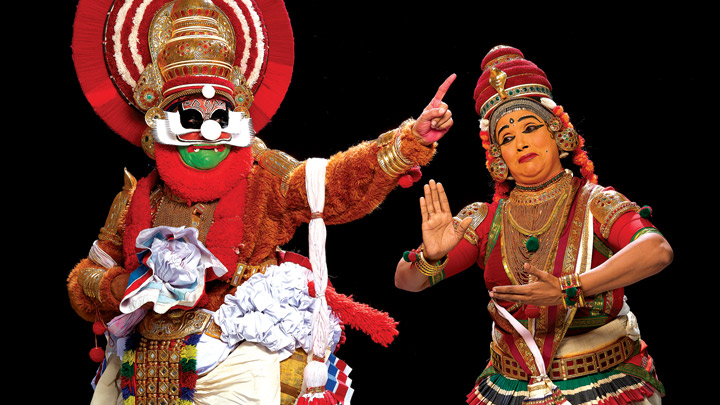
Koodiyattam which literally translates to ‘Combined Act’ is an art form recognized by UNESCO as Masterpiece of the Oral and Intangible Heritage of Humanity. It is also performed in Koothambalams and combines Sanskrit theatre performances with elements of traditional Koothu, much like Chakyar Koothu. It is performed by Chakyars and Nangyarammas, who perform together on stage, unlike the solo performances of Chakyar Koothu and Nangiar Koothu.
In both Koodiyattam and Chakyar Koothu, Guru Mani Madhava Chakyar is considered the greatest master and artist. He introduced the art form to people outside the Chakyar community and outside Kerala.
Ottan Thullal
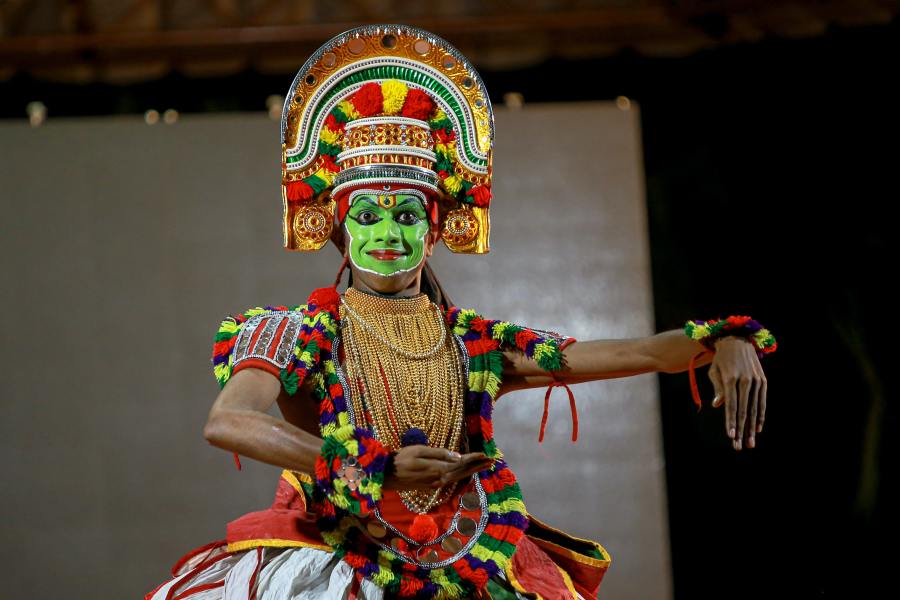
There are 3 varieties of Thullal – Ottan Thullal, Seekanthan Thullal and Parayan Thullal, of which Ottan Thullal is the most popular. It was introduced by the legendary poet Kunchan Nambiar in the 18th century, with its principles based on the Natya Shastra. It is said that Kunchan Nambiar developed this dance form to get back at a Chakyar who ridiculed him for falling asleep during a Chakyar Koothu performance. Ottan Thullal performances are often laced with humour, criticizing and commenting on society. The performer is accompanied by a Mridangam, Idakka and a pair of Ilathalam.
The performers wear green make-up much like a Pachcha character in Kathakali, with colourful costumes. They dance and recite while a chorus of 1 or more artists repeats the sentence that is recited. They perform in Malayalam, making it easily understandable for the local audience, and use old sayings and elements of folklore.

 Eduindex
You must be logged in to post a comment.