Online Vs Offline Education

This is one of the most common topics nowadays on all social media like Facebook, WhatsApp, Twitter, Instagram, and also in newspapers, articles, etc… While some opt for online education and others opt for offline education. There are certain advantages to both. Let’s see some of them.

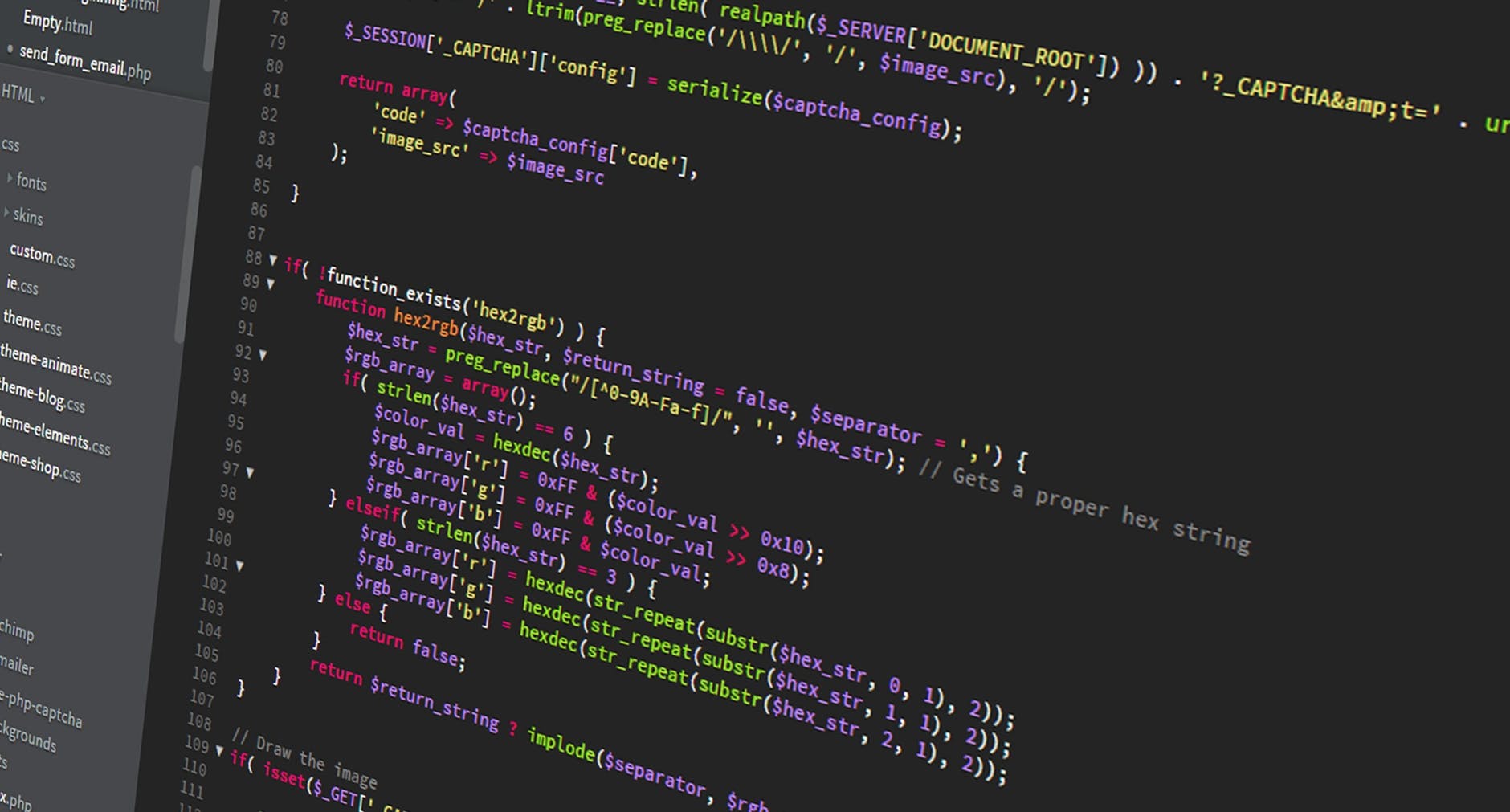
Photo by Pixabay on Pexels.com

Online Education

Online education is not something that was established just after covid. It has existed before the coronavirus too, but the need for online education is not there. It was a highly considered method during this pandemic due to the inability due to spread the contagious virus. The classes which were conducted with board and chalk are replaced with PowerPoint presentations and mouse cursors. It was a bane to some, while it was a boon to others.

Advantages of Offline education

  1. Environment : May it be a school, college or work place the most important factor is the environment surrounding it. It is the environment that gives us the exposure and the needed opportunities and chances to fall and raise again. Even if we fall, we will definitely will have someone to pull up again and there are will be some who will share their experiences on the current field.
  2. Doubt Solving : In Offline, anyone can ask doubts to teachers and professors at any time. There is no need of waiting for the right place and the right time. Either as a school student or a college student , we can ask doubts at the period at that time itself.
  3. Guidance : We can always ask our doubts to our seniors who had experienced similar situations. There will be no barrier between them and us.
  4. Discipline : Discipline is one of the core principles of life and it will be taught only in offine education. Everyone will be regular to their respective places , maintaining obedience and discipline. The value of discipline is not realised until the 20’s. It will make us reach heights of life even we wouldn’t have dreamed about it.
  5. Consistency : Consistency comes together with people who are disciplined. Consistency is the way to learn any skill and be talented in that. It will not be a problem for disciplined people since they follow it everyday and keeps their day productive as possible.

Advantages of Online education

  1. Recorded Sessions : The main advantage of online education is the videos can be seen any number of times at any place. If some doubt sarises, we can refer the videos. Most of the online classes nowadays are recorded to provide the students this wonderful facility to clear doubts.
  2. Time Saving : Online classes saves a lot of time such as travelling time. Students can use this time to upskill themselves and to be productive.

Disadvantages of Online education

  1. Non-availability of Phone : Even though online education is a convenient,flexible and cost efective method of education, not everyone can afford smart devices like Phone, Laptop, Tablet etc… This disadvantages is mainly for people who face difficulty in even afford daily expenses. This was quite proven in many places during this pandemic.
  2. Network facilities : After Smart devices, internet facility is another important thing to see online classes.
  3. Lack of Discipline
  4. Lazyness
  5. Losing the ability to think
  6. Increased usage of devices

Conclusion

Each has its own advantages and disadvantages. If we think and follow online classes just like offline classes, the productivity will be maximum and there will be no issue .
Chokher Bali: The Book Review

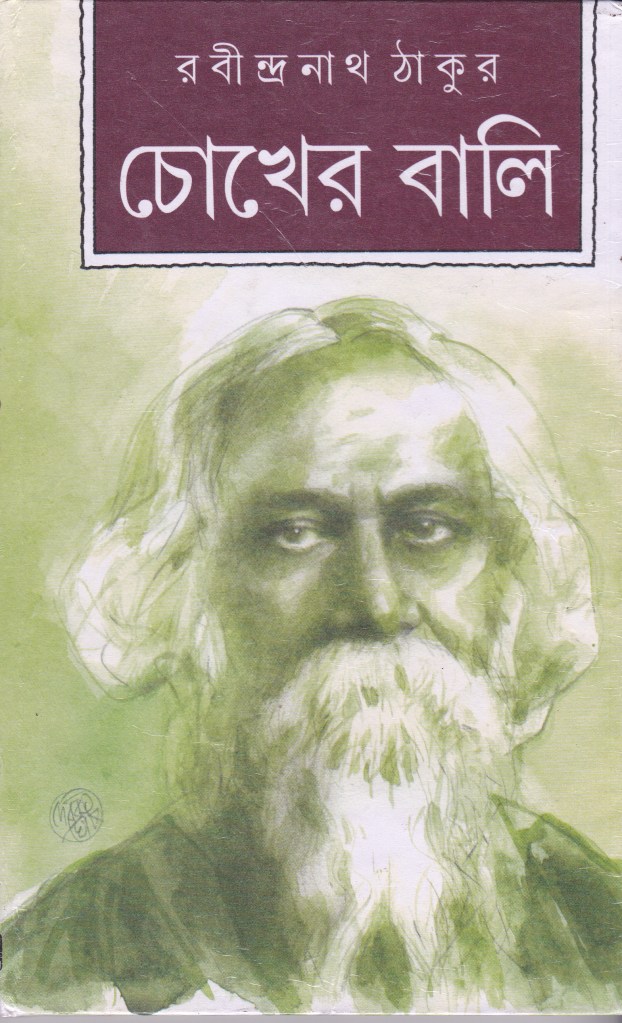
Cover of Chokher Bali (1903) in Bengali

Introduction

Rabindranath Tagore’s 1903 Bengali novel Chokher Bali is often referred to as India’s first modern novel, where he highlighted the issues of women’s education, child marriage and the treatment of widows in 19th and 20th century Bengal. It was first serialised in the Bengali literary magazineBangadarshan first founded in 1872 by Bankim Chanra Chattopodhay and later resuscitated under the editorship of Tagore in 1901.

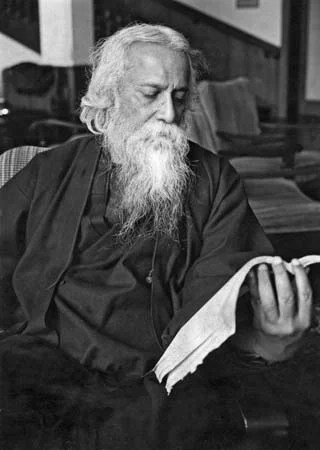
Rabindranath Tagore

About The Author

Rabindranath Tagore (7 May 1861 – 7 August 1941) was a Bengali  Polymath —poet, writer, playwright, composer, philosopher, social reformer and painter. He reshaped Bengali Literature  and music  as well as Indian Art with Contextual Modernism in the late 19th and early 20th centuries. Author of the “profoundly sensitive, fresh and beautiful” poetry of Gitanjali, he became in 1913 the first non-European and the first lyricist to win the Nobel Prize in Literature. Tagore’s poetic songs were viewed as spiritual and mercurial; however, his “elegant prose and magical poetry” remain largely unknown outside Bengal. He was a fellow of the Royal Asiatic Society.  Referred to as “the Bard of Bengal”, Tagore was known by sobriquet: GurudevKobiguruBiswakobi.

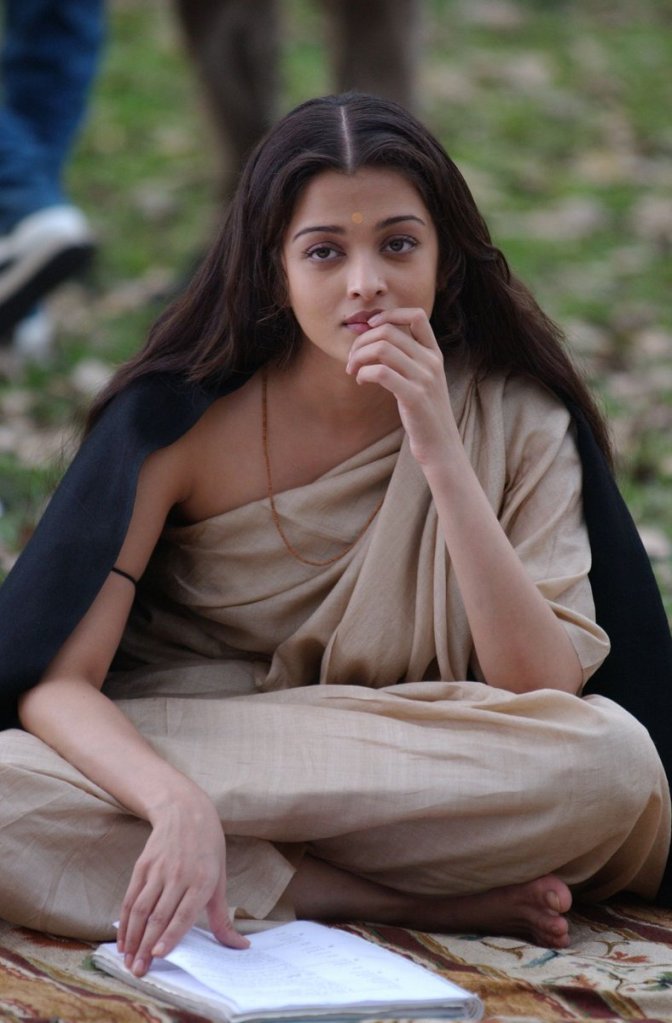
Aishwarya Rai Bachhan as Binodini in Chokher Bali (2003)

Storyline of The Novel

The plot revolves around four protagonists- Mahendra, Ashalata, Binodini and Bihari. Mahendra is the only scion of a rich family based in Calcutta. Bihari is his childhood friend, who frequents his house. Mahendra’s mother wanted him to marry Binodini, her friend’s daughter. But Mahendra refused. Then his mother requested Bihari to marry Binodini and save the poor girl which Bihari refused. Eventually, Binodini got married to a man who died soon after marriage. Meanwhile, Mahendra married Ashalata, a poor orphan girl. Mahendra was besotted with his wife when Binodini came to live in their house. With time, an extra-marital relationship develops between Mahendra and Binodini, which threatens to destroy his marriage with Ashalata. But soon Binodini discovers that Mahendra is a self-obsessed person, unable to provide a safe shelter to her. So she inclines towards Bihari, who lives life by principles. Throughout the novel, there is an implicit implication of Bihari’s affection towards Ashalata, though he never crosses the boundaries of the relationship. In the end, Bihari falls in love with Binodini when realizes her feelings for him. He proposed to marry her, which Binodini refused saying that she doesn’t want to ‘dishonour’ him further. During that period (the novel was written in 1902), widow remarriage was not well accepted in society. That may partially explain the reason behind Binodini’s refusal. In the end, Binodini leaves for Varanasi– a fate that awaited most of the widows in those days.

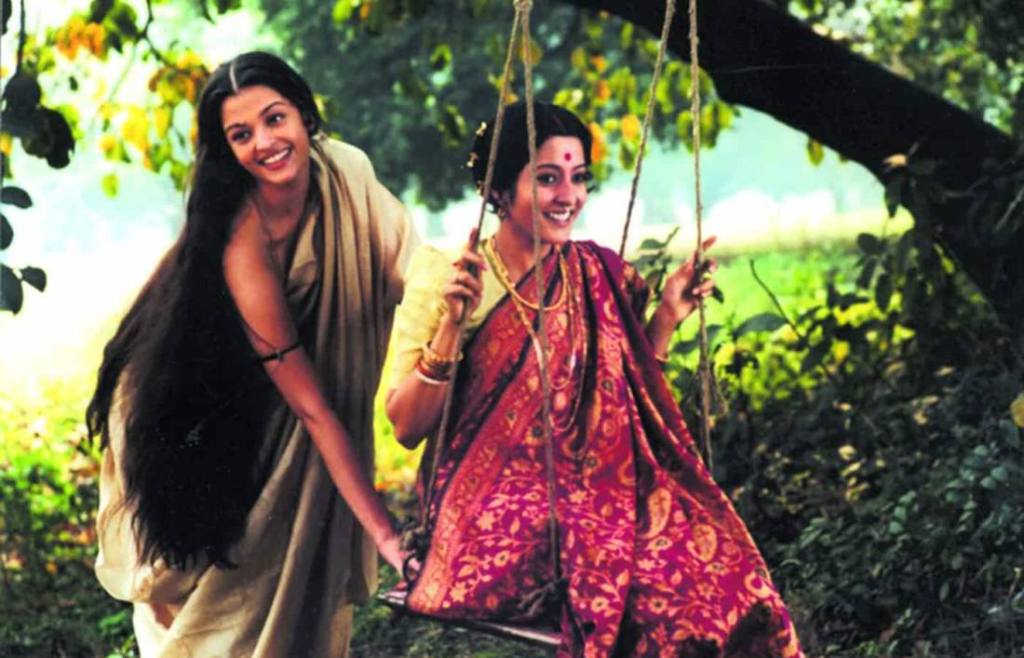
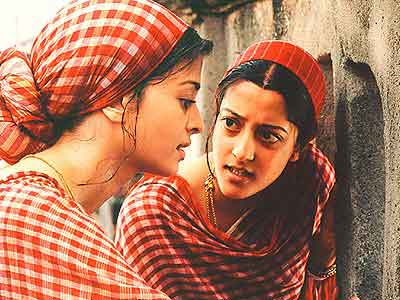
Aishwarya Rai Bachhan as Binodini and Raima Sen as Asha in Chokher Bali (2003)

Analysis of The Storyline

The term ‘Chokher Bali’ literally means a sand grain in eye  in Bengali  and metaphorically means to be a source of irritation or disturbance in someone’s eyes, which is what Asha and Binodini become for each other. Binodini is presented in many avatars a hopeless widow, a friend, a temptress, and a remorseful woman. Tagore gives readers an insight into her desires and longings, the feeling that many widows at the time had silently undergone. On the other hand, Asha is presented as naive and innocent, which combined with her illiteracy initially results in her subjugation. The narrative almost becomes an implicit debate on love and morality, urging readers to understand Asha and Binodini outside of the social norms of Bengali society. The central character Binodini is not an idealised Indian woman but a woman with shades of grey and very human flaws. Binodini cannot come to terms with her life as a widow, as she is still young and has wants and desires. She feels wronged as she believes she is superior to Asha in all respect and deserves the life she is living. Tagore’s depiction of Binodini is impressive as she subverts the expectation of society for widows to forgo all worldly desires.

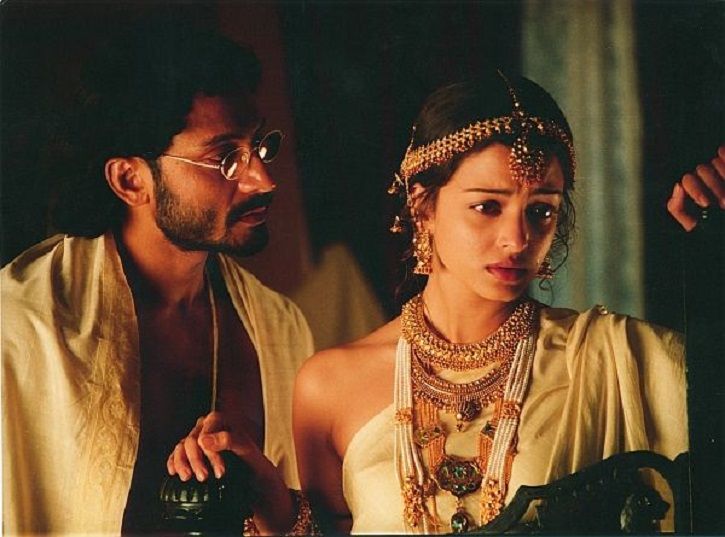
Tota Roy Choudhury as Bihari and Aishwarya Rai Bachhan as Binodini in Chokher Bali (2003)

Criticism of The Storyline

The story of this novel delves deep into many facets of human relationships and how a single wrong decision can make the life disharmonious. Jealousy and deprivation of happiness can result into an emotion strong enough to forget all other ties and relationships.Tagore shows the intellectual interchange between the characters, possible due to education and the interception of letters. The innocent and illiterate child bride Asha fails to understand the exploitation she faces at the hands of her husband and dear Bali (Binodini) whom she trusted blindly. Tagore does not justify Binodini’s actions and actually is sympathetic to Asha, perhaps stressing that Asha would have been able to avoid Binodini’s interference in her marital life, if she were educated enough to understand the intentions behind her friendly nature. However, one of Tagore’s greatest regrets in the novel is the ending. Despite his progressive portrayal of Binodini and Bihar, he does not allow them to marry at the end. Although, today we may see the girl marrying the guy as regressive today in Tagore’s time a widowed woman was not permitted to re-marry. Thus, ending the novel with Binodini and Bihari marrying would have been the most revolutionary.

Scene from Chokher Bali (2003)

Movie Adaptation of The Novel

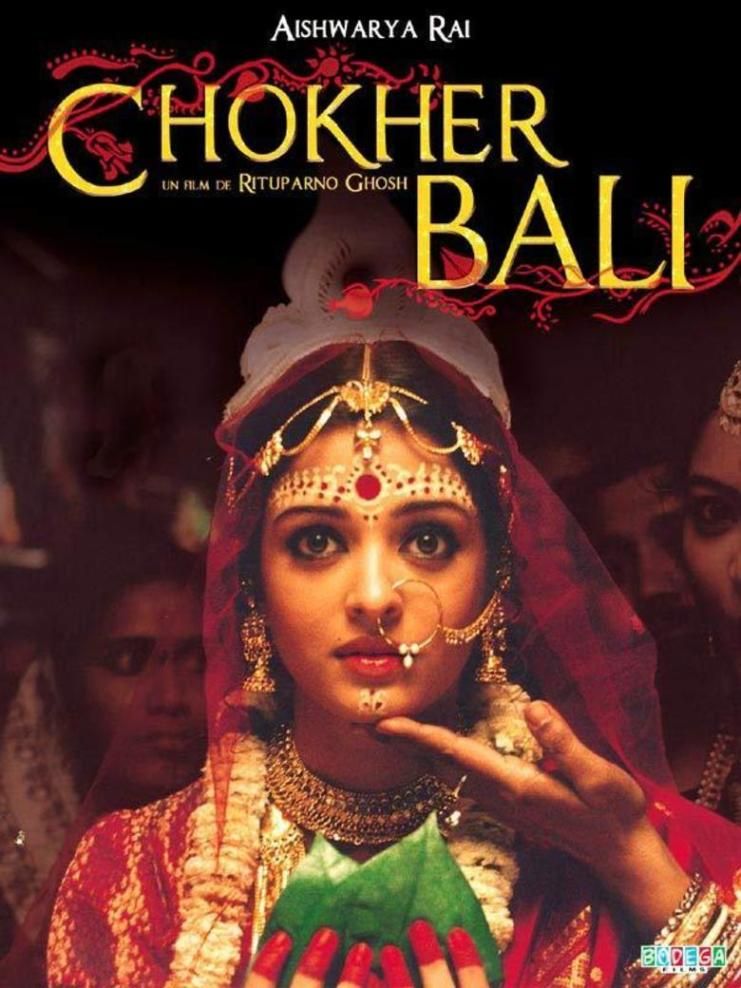
Adapted from Tagore’s Chokher Bali, the movie with the same name was released in 2003, directed by eminent Bengali Moviemaker Rituparno Ghosh, starring Aishwarya Rai Bachhan, Raima Sen, Prosenjit Chatterjee and Tota Roy Choudhury in the lead roles. The movie won the National Film Award for Best Feature Film in Bengali and was nominated for the Golden Leopard Best Film award at the Locarno International Film Festival in 2003. Aishwarya Rai won the Best Actress award at the Anandalok Awards 2003.

Conclusion

A century after Chokher Bali, education is still a struggle for many women to access easily globally. Tagore’s novel is radical and unconventional presenting a viewpoint that is ahead of the conservative times of 19th and 20th century India. Through the story of Binodini, Tagore questions the societal norms. He condemns all kinds of taboos and unjust customs which deprive women and especially widows of their rightful freedom and autonomy; confined to live a mournful colourless life. As a man from a privileged background, his understanding of the emotions of Indian women and his empathetic attitude towards them is remarkable.

Nikola Tesla’s Inventions – Working of AC current

“I don’t care that they stole my idea, I care that they don’t have any of their own”, said by one of the greatest inventors to have ever lived, the Serbian inventor Nikola Tesla who developed the framework for modern-day electrical engineering. When Nikola Tesla began work at Edison’s DC (direct current) power plant in the United States, his new employer was not interested in his ideas for a new type of power called AC (alternating current). At the time DC was the only electrical supply, but it could only be transmitted across short distances before it lost power. To Edison, AC sounded like competition and he persuaded Tesla to work on improving his DC system by offering him a huge sum of money. But when Tesla had done what he had been asked, Edison reneged on his promise. Tesla resigned and returned to his AC power concepts. DC power is constant and moves in one direction and the resistance in wires causes it to lose power over distance. AC power does not have this problem as it varies in current so the resistance is less, and yet it varies in current so the resistance is less, and yet it delivers the same amount of power.

How AC current works?

In an atom, the negatively charged electrons are bound to the nucleus due to their electromagnetic attraction to the oppositely charged nucleus. But the electrons in the outer most shell called valence shell can sometimes become free due to external forces. These electrons that escape from the valence shell are called free electrons and they can move from one atom to another. This movement is called charge and the flow of electric charge is called electricity. Materials that allows many electrons to move freely are conductors and don’t allow are called insulators. That why copper is a great conductor. Alternating current would flow back and forth 50-60 times per second, this is called the frequency. Even though Thomas Edison one of the famous and powerful men of the 19th century, he tried his best to compete with Tesla. The mathematic formula of the current is P = I×V, with this formula, the same amount of power can be transmitted either at high current and low voltage or low current and high voltage. But when you transmit current through wires, there will be also loss of heat. To overcome this problem, we have to higher the voltage to reduce the heat loss.

In modern electric power grids, electricity is transmitted at hundreds of thousands of volts. But the voltage cannot be this high when it arrives at your home. So a transformer steps down this high voltage to typically between 100 and 240 volts. The step down process of AC current is way easier than the DC current. Transformers require a time varying voltage to function, and since direct current is constant, and only alternating current is time varying, transformers like these only work with AC electricity. In Edison and Tesla’s time, there was no easy way to transform voltage with direct current. And this is the primary reason Tesla’s AC won out over Edison’s DC in the early era of electrical transmission.

AC current – a scientific breakthrough

This made AC power more cost effective, as fewer power plants were needed. Entrepreneur George Westinghouse saw the potential of Tesla’s AC power and bought his patents for AC motors. Edison began a propaganda war in an attempt to keep DC power on top, but it was inevitable that ac power would win. Almost all electricity is now delivered as Tesla’s AC power. Edison’s place in history as an inventor and electrician is secure. But in many ways Tesla went even further. He envisioned fluorescent lights, technology of the radio, and remote control. Nikola Tesla was one of the most forward thinking, and dynamic visionaries that ever lived.

“If your hate could be turned into electricity, it would light up the whole world”. – Nikola Tesla

Keeping Pace with the Web Designing Industry

Whether it is graphic designing, animation, or web designing, the designing field is one of the most in-demand industries to be working in right now. One of the unavoidable truths about working in the field of web designing is how quickly everything seems to change. Something new always comes up. So, it would be difficult to sustain yourself as a professional in this industry if you are not up-to-date with the relevant technical updates and improvements. Keeping yourself updated would help you perform better at your job and against the competition. Not to forget, it helps make your clients satisfied and happy. Even if your clients may not necessarily know what the new frameworks and their technical names are, they probably want their website to have all the good features and designs as other trending web pages at the time.

Here are some tips on how to be up-to-date with the fast-changing web designing industry:

Be Curious:

As a designing professional, you should always be curious and open to learning something new at any given opportunity. It is probably impossible to learn every new technical update. It is okay not to know absolutely everything in this field. But change is constant and having an open mindset to change is essential.

Get Your Fundamentals Right:

Having a good idea of your fundamentals and maintaining your basic skill sets is one of the most useful practices you can do. Your core programming language skills such as JavaScript, HTML and CSS can make it easier for you to learn a new framework or library. Even if you do not need code in your UI/UX design, it is beneficial to maintain a bit of your programming skills.

Do Not be Too Eager with New Technology:

Just because you should be curious and open-minded does not mean that you have to necessarily jump in with the new techniques and tools immediately when they come out. Instead of getting into it immediately, give it some time for others to figure it out and see if it sticks or goes out of the market as quickly as it came. If it looks like it is going to be stable and relevant, you can then learn that tool or framework. Otherwise, you are probably wasting a lot of your time learning something that is not about to be used by anyone for long.

Have Side Projects:

Having a little side project other than your company’s/client’s works will help you explore your creative potential and hone your skills. You can take up some volunteer work or maybe even do something just for fun if there is nothing on your mind.

Networking and Resources:

Just like any other field, keeping in contact with and meeting new people in the design field is always advantageous. You get more insight into the designing industry and get to find like-minded people this way. Connecting digitally on platforms like Twitter, Facebook and LinkedIn also helps you learn about the latest news and trends from other designers and design companies.

Design professionals can make use of books, websites, newsletters, podcasts and other resources to learn new skills and know what is going on in the designing field. You can also gain inspiration from others’ works shared on amazing platforms like Behance and Dribble.

If you start feeling bored at your designing job, it might just be because you are not finding any new or challenging techniques to learn. In the rapidly changing web designing world, maintaining a lot of interest in the field is key to keeping up-to-date with it.

Mollywood to Bollywood…

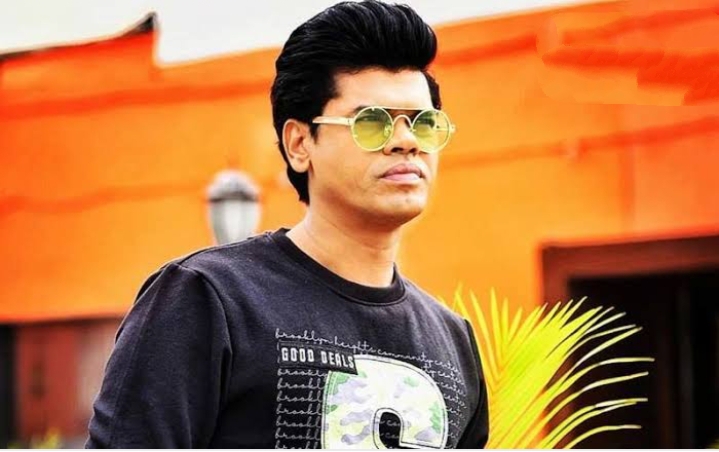
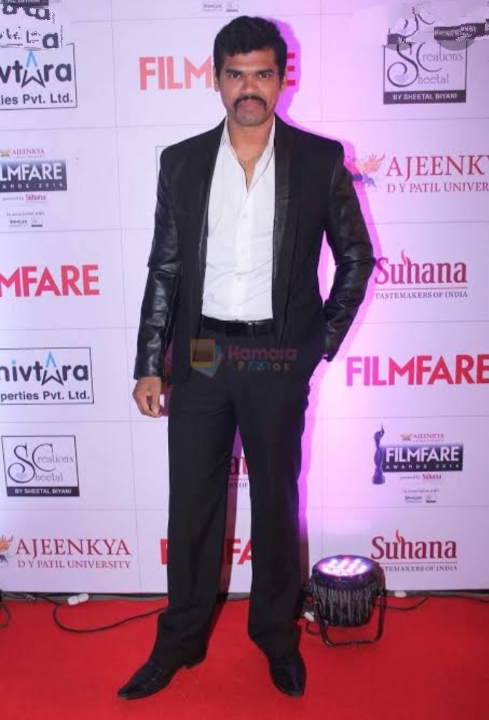
Indian stage, television, actor, entertainer, and comedian Sidharth Jadhav, born on 23 October 1981 in Ratnagiri, Maharashtra. Sidharth was born and brought up in a lower-middle-class family. Siddharth began his acting career at a young age and also received several awards including the Best Actor Award at the Ravikiran Balnatya Spardha in 1996 when he was just 15 at that time.

Aga Bai Arechha was his first film in Marathi released in 2004. Then he made several movies like Jatra, De dhakka, Changbhal, Jabardast, Huppa Huiya, and many more.

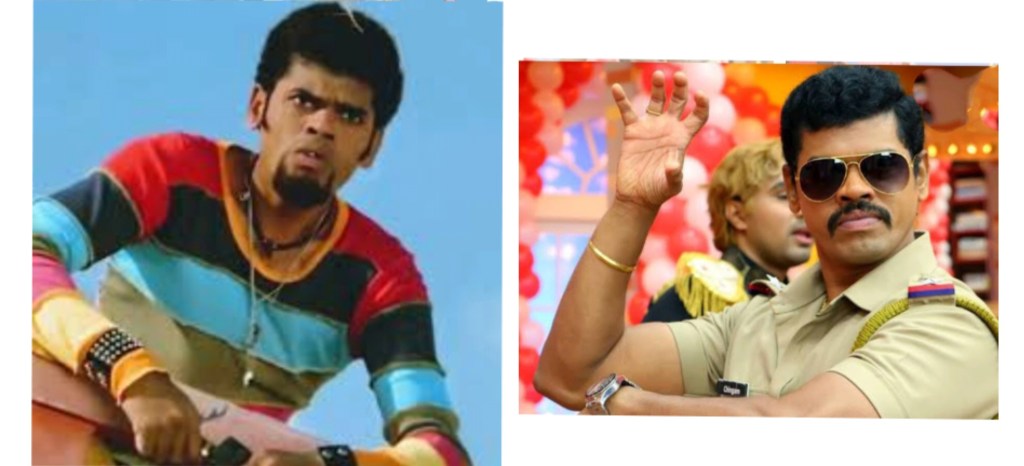
from Golmaal: fun unlimited from Simmba

In 2006 he entered Bollywood from Rohit Shetty’s film “Golmaal: fun unlimited”. Later in 2018, he made the role of sub-inspector Santosh Tawade in “Simmba” and the same role in “Sooryavanshi” in 2021.

He also made many roles in television. He was a contestant in Kahani Comedy Circus Ki, Comedy Circus Ke Ajoobe. He played the role of the judge in “Maharashtracha Dancing Superstar” in 2014. In 2017, he was participated as a contestant in Nach Baliye 8 with his wife Trupti. He was assistant host in “Big Boss Marathi” season 3 in 2021. Currently, he is the judge of the Marathi comedy show “He Tar Kahich Nay”.

In 2017, he received Filmfare Award.

Sidharth at Filmfare Marathi Awards in 2017