Best Friend – Books

Books are indeed best friends for many book readers and book lovers. Some may feel like there is time wastage in reading books and thought of spending that time in something else. But only the book readers know the true value of the Book. Sometimes it gives happiness, sometimes sad, sometimes anger, and sometimes the combinations of all. A book cannot be categorized in any order unless the full depth and till the last page is read. This article will either involve you in the line of book readers or it will be a tribute to all the wonderful books read by book lovers.
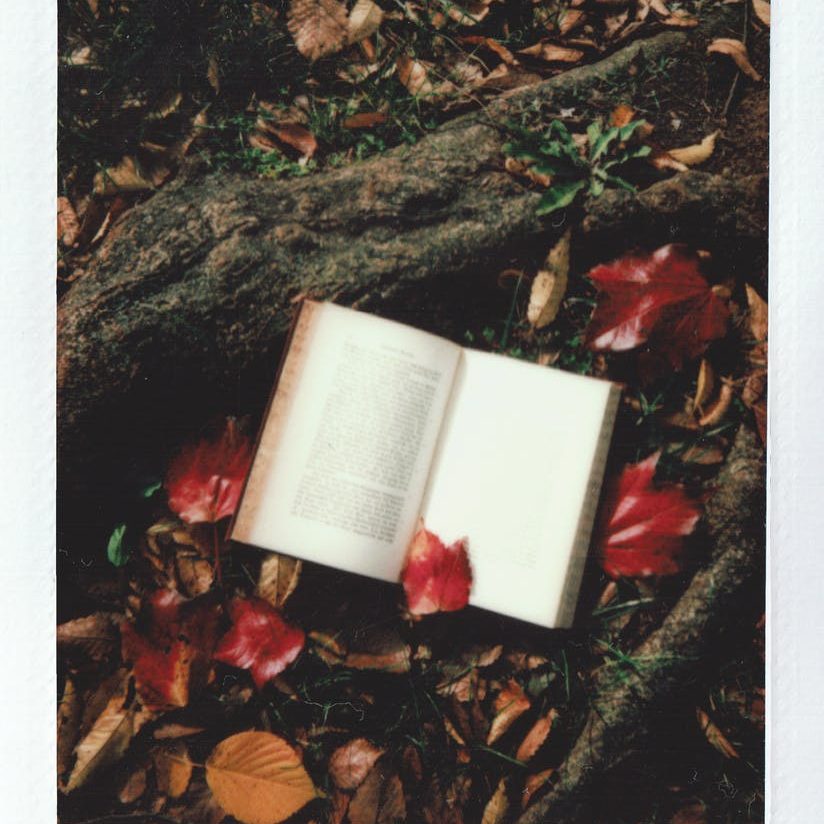
Photo by rikka ameboshi on Pexels.com

Advantages of Reading Books

  1. Reduces Stress : Books are a great way of reducing stress because there are no such thing like happy books and sad books. Books fed readers with the plethora of emotions like Happiness, Sad, Anger, Excitement,Interesting and many more. Just like spices, each book has its individual flavor and content.
  2. Environment : Book reading sometimes seperates us from the real world and makes us wander in that virtual book world. It keeps our mind and body calm and stress free. There is no need of carrying the real world stress while going through the great books.
  3. Increases Vocabulary : Words used in books are not always common and same words. By reading books, we can learn many new words. It increases our vocabulary and knowledge.
  4. Motivational : Books of freedom fighters , scientists , doctors etc.. are motivational books that can give immense amount of happiness and motivations. People who are stressful and who are facing down time can use the books as a key to their life. It will inspire us and will instill creativity in our minds.
  5. Improves Memory : Daily habit of reading books improves and increases our mental ability to learn new things. The consistency will help us learn new skill in short span of time with greater memory power.
  6. Perspective of Life : Each book has a seperate content, seperate meaning and seperate emotions. Each will gives us a different perspective of life and it will gives us tricks and tips to lead our life. The more we learn, the easier we can lead our life.
  7. Improves Sleep : Reading books instruct our brain to calm down. Since it is a stress-buster , it will greatly helps us in getting good sleep with calmer brain.

Induce the habit of Book reading

  1. Daily goals : Schedule a short goal for everyday to read some pages daily.
  2. Eliminate Distractions : Keep your environment and room as clean as possible. Clean environment gives our brain the feeling of calmness. Keep the devices like Phone, laptop, tablet etc.. away from the place.
  3. Plan a time : Schedule a time for reading . Read the book either during sunrise or sunset to keep us fresh and as well as for having a good start for the day.
  4. Keep the book always with you : By doing it, we automatically want to read the book even during a ten minute break.

Books are a uniquely portable Magic.

Stephen King
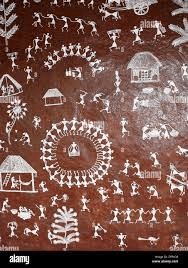
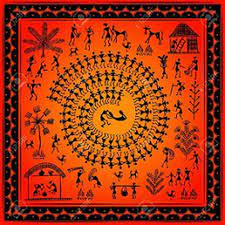
THE MAGNIFICENT FOLK PAINTINGS OF ARUNACHAL PRADESH

The ART and CRAFT of Arunachal Pradesh take their inspiration from the diverse cultures and traditions of the state. One finds a plethora of ethical richness when looking into the deep space, that is “The Land of Dawnlit Mountains” i.e. the ancient culture of Arunachal Pradesh.

Tanaka paintings are religious scroll paintings that depict Buddha and his preaching. These paintings are also an important tool to teach Buddhism primarily displayed in monasteries. The display of Tangkha signifies a great dedication towards religion and self-reliance to achieve salvation. The painting is prevalent in the Buddhist-dominated regions of Tawang, West kameng, Upper Siang Districts of Arunachal Pradesh.’

The women of Arunachal Pradesh excel in weaving handlooms and making handcrafts.

Thangka serves as important teaching tools depicting the life of the Buddha, various influential lamas and other deities and bodhisattvas. One subject is The Wheel of Life (Bhavachakra), which is a visual representation of the Abhidharma teachings (Art of Enlightenment).

The paintings describe historic events related to Lamas. Devotional images act as the centerpiece during a ritual or ceremony and are often used as mediums through which one can offer prayers or make requests.

  • Because the art is explicitly traditional, all symbols and allusions must be in accordance with strict guidelines laid out in Buddhist scripture. The artist must be properly trained and have sufficient religious understanding, knowledge, and background to create an accurate and appropriate Thangka.
  • Some common symbols found in these paintings are :
  • Treasure Vase
  • Conch Shell
  • Victory Banner
  • Lotus Flower
  • Parasol
  • Varada Mudra
  • Vitarka Mudra

Atomic Bomb – History of Nuclear Weapons

During the World War II the united sates used an unprecedented $2 billion to feed an ultra-secret research and development program, the outcome of which would alter the relationships of nations forever. Known as the Manhattan project, it was the search by the United States and her closest allies to create a practical atomic bomb. It is a single device which capable of mass destruction, the threat of which alone could be powerful enough to end the war. The motivation was simple. Scientists escaping the Nazi regime had revealed that research in Germany had confirmed the theoretical viability of atomic bombs. In 1939, in support of their fears that the Nazis might now be developing such a weapon, Albert Einstein and others wrote to President Franklin D. Roosevelt (FDR) warning of the need for atomic research. By 1941 FDR had authorized formal, coordinated scientific research into such a device. Among those efforts would ultimately unleash the power of the atom was Robert Oppenheimer, who was appointed the project’s scientific director in 1942. Under his direction the famous laboratories at Los Alamos would be constructed and the scientific team assembled. On July 16 1945, in a small town called Alamogordo, New Mexico, the course of human history was changed; the first atomic bomb was detonated that day.

By the end of 1945, the bombing had killed an estimated 140,000 people in Hiroshima, and a further 74,000 in Nagasaki.

Principle of an atomic bomb

An atom bomb works in the principle that when you break up a nucleus of an atom, a large amount of energy is released. Because it takes a large amount of energy to keep the nucleus bound together. When you split it apart, the energy is released. Scientists chose the biggest and heaviest nucleus that is found in nature to be the best object for splitting. It is uranium, it is unique in that one of its isotopes is the only naturally occurring element on that is capable of sustaining a nuclear fission reaction. A uranium atom has 92 protons and 146 neurons together to give an atomic mass of 238 or U238. A very small portion of uranium, when it is mine, is in the form of an isotope U235, this isotope  has the same 92 protons but only 143 neutrons, or three fewer than U238. U235 is highly unstable, which makes it highly fissionable. When uranium U235 is slammed by a neutron, it becomes uranium 236. In the process of splitting and creating two more stable atoms, a whole bunch of energy is released, along with three more neutrons. These three more neutrons fly out and slam more U235 atoms. And thus, a chain reaction occurs, causing more and more U235 to be split, and ultimately causes a huge explosion. The uranium contains only 0.7% of this U235 isotope, and a whole bunch of it is needed to make one atomic bomb.

Another engineering challenge is to create a vessel with the correct shape and material to contain the neutrons after fissioning, so that they do not escape, but rather cause more atoms to fission. And it is lined with a special mirror so that it forces neutrons back in to the fissionable material rather than escape the vessel. Then the correct amount of fissionable material has to be placed inside this vessel. This is called ‘super critical mass’. There has to be enough mass to sustain an uncontrollable chain reaction resulting in an explosion.  The super critical mass has to be kept apart until you are ready for an explosion. Otherwise an explosion can occur when you don’t want it. The reason is because these isotopes are unstable, and are throwing off neurons randomly. In an atomic bomb, two subcritical masses are slammed together usually with a conventional bomb contained inside the outer bomb. This conventional explosive charge initiates the chain reaction. This project ultimately created the first, man-made nuclear explosion, which Robert Oppenheimer called “trinity” on July 16, 1945. The concept of an atom bomb is simple but, the process of actually creating a bomb is not so simple.

“Now I am became Death, the destroyer of worlds.” – J. Robert Oppenheimer


Mother of Orphans

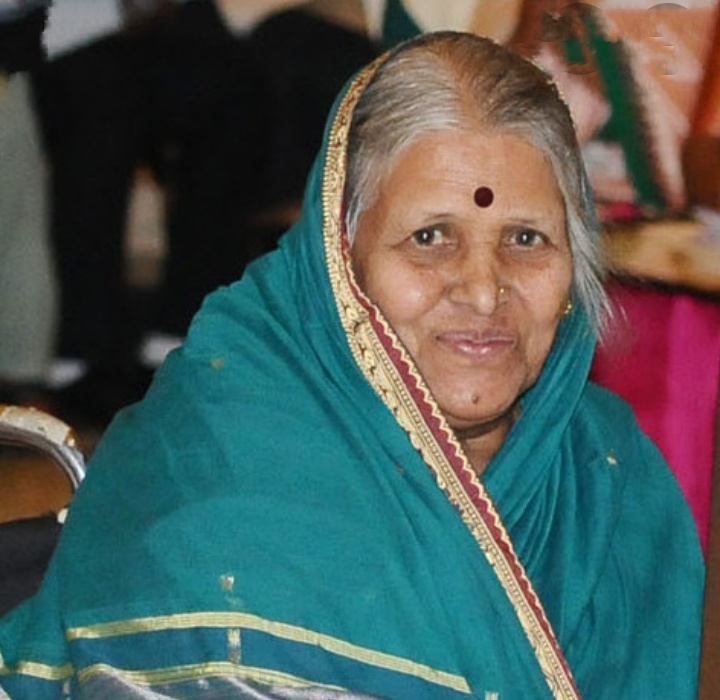
Padma Shri winner an Indian social worker and social activist are known particularly for working for orphaned children Sindhutai Sapkal was born on 14 November 1948 in Wardha, Maharashtra. She is popularly known as Mai of Indian orphans. Being an unwanted child, her childhood name was Chindhi known as a “torn piece of cloth” (in Marathi). She got married at age of 12 to Shrihari Sapkal, who was 20 years elder than her. She bore three sons by the time she turned 20 years. She fought for herself on a collection of dried cow dung used as fuel in India, without paying anything to the village. Her agitation brought the district collector to her village and on realizing she was right, he passed an order that the strongman did not like. Stung by this insult, he managed to convince her husband to abandon her when she was beyond 9 months of her pregnancy. Her husband thrashed and kicked her on her full-term belly and threw her in the cowshed. She gave birth to a baby girl. Sindhutai cut her umbilical cord with the stone which was lying there. After she came back to her senses she went to her maternal village but everyone rejected her. Sindhutai was alone in the world with her little daughter.

Sindhutai was blessed with a natural flair for singing. She used to sing and beg and feed herself and her baby. She would visit temples, travel by train, begging and singing. Sindhutai would work wholeheartedly for orphans and destitute and other less fortunate. She had devoted her entire life to orphans. As a result, she is fondly called “Mai” known as mother. She has nurtured over 1050 orphaned children. As of today, she has a grand family of 207 sons-in-law. She has been honored with more than 700 awards for her work. She used the award money to buy land to make a home for orphaned children. Mother Global Foundation Pune, Sanmati Bal Niketan Bhelhekar Vasti Pune, Mamata Bal Sadan Purandar, and many more organizations are founded by Singhutai for orphan children. At age of 70, her husband came back to her apologetically. She accepted him as her child stating she is only a mother now! If anybody visits her ashram, she proudly and affectionately introduces him as her oldest child.

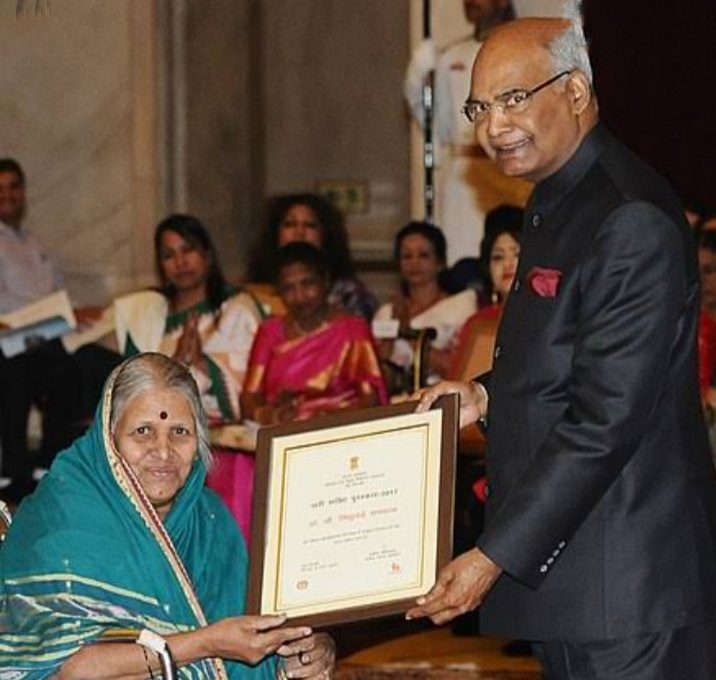
In 2010, a Marathi film “Mee Sindhutai Sapkal ” was released. It is a biopic inspired by the true story of Sindhutai Sapkal. The film was selected for world premiere at the 54th London Film Festival. She got Padma Shri Award in the social work category in 2021 by President Ram Nath Kovind.

Sindhutai receiving Padma Shri Award by President Ram Nath Kovind

She died on 4 January 2022, due to a heart attack in Pune at age of 73 years.